
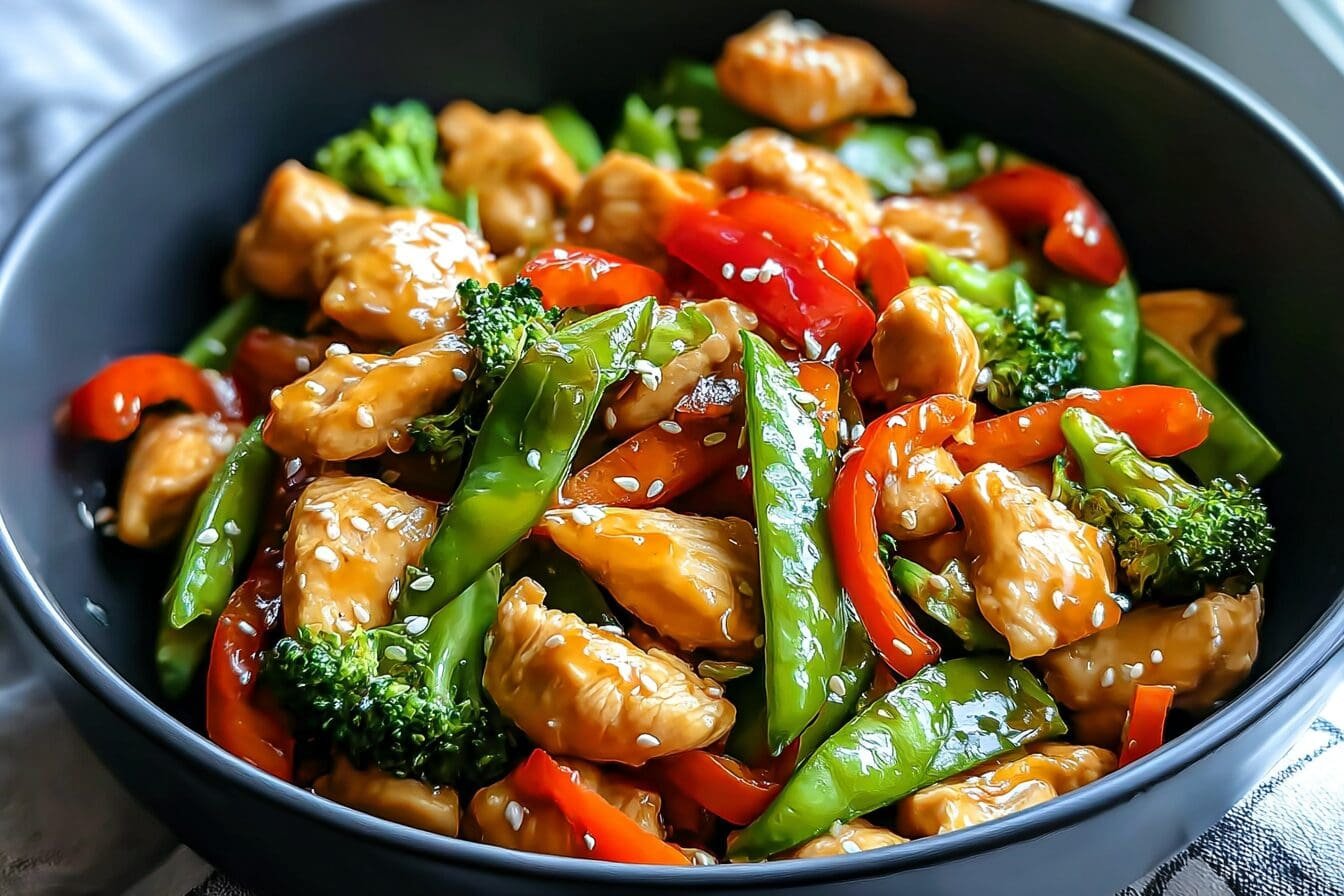
Why You’ll Love This Chicken Stir Fry
If you’re a busy parent or a home cook looking for a quick meal that packs a punch, chicken stir fry is one of those go-to options that’ll make your evenings easier. This recipe whips up in about 20 minutes, making it perfect for those nights when everyone’s hungry and time is short. You’ll appreciate how it combines fresh vegetables like broccoli, bell peppers, and carrots with tender chicken for a dish that serves four people just right.
Beyond its speed, the health perks are what really set this chicken stir fry apart. It’s loaded with lean protein from 1 pound of boneless, skinless chicken breast, along with vitamins and antioxidants from the veggies, keeping it low in calories at around 343 per serving. This meal supports a balanced diet, offering 26 grams of protein, 29 grams of carbs, and essential nutrients like vitamin C and iron, all while tasting amazing with its savory sauce made from honey, low sodium soy sauce, and toasted sesame oil.
What’s more, this recipe is super adaptable, fitting various lifestyles whether you’re a student watching your budget or a diet-conscious individual tweaking for preferences. You can swap in chicken thighs for extra juiciness or add extras like mushrooms or snow peas for variety. Overall, the distinctive flavor from garlic, ginger, and that flavorful sauce makes every bite a delight, turning a simple stir fry into a family favorite that encourages everyone to try new things in the kitchen.
Jump To
- 1. Why You’ll Love This Chicken Stir Fry
- 2. Essential Ingredients for Chicken Stir Fry
- 3. How to Prepare the Perfect Chicken Stir Fry: Step-by-Step Guide
- 4. Dietary Substitutions to Customize Your Chicken Stir Fry
- 5. Mastering Chicken Stir Fry: Advanced Tips and Variations
- 6. How to Store Chicken Stir Fry: Best Practices
- 7. FAQs: Frequently Asked Questions About Chicken Stir Fry
- 8. Chicken Stir Fry
Essential Ingredients for Chicken Stir Fry
Gathering the right ingredients is key to nailing this chicken stir fry, and I’ve listed everything you need below in a clear, structured way. This ensures you can follow along easily and measure out precisely for the best results. Remember, fresh vegetables make all the difference, as they keep the dish crisp and full of flavor.
- 1 pound (about 450 grams) boneless, skinless chicken breast, cut into one-inch cubes and seasoned with salt and pepper
- 2 cups broccoli florets
- Half a yellow bell pepper, cut into pieces
- Half a red bell pepper, cut into pieces
- Half a cup baby carrots, sliced
- 1 tablespoon cornstarch
- 2 tablespoons cold water
- 1/4 cup low sodium chicken broth
- 3 tablespoons low sodium soy sauce
- 1/4 cup honey
- 1 tablespoon toasted sesame oil
- 1/2 teaspoon crushed red pepper flakes (optional, for a bit of heat)
- 1 tablespoon olive oil (for cooking the chicken)
- Another 1 tablespoon olive oil (for cooking the vegetables)
- 2 teaspoons minced ginger
- 2 cloves minced garlic
These ingredients come together to create a savory sauce that coats everything perfectly. For instance, if you’re aiming for a gluten-free version, swap the soy sauce for tamari, as mentioned in variations like the one in our creamy chicken and broccoli pasta recipe.
How to Prepare the Perfect Chicken Stir Fry: Step-by-Step Guide
Getting started with this chicken stir fry is as simple as pulling out your skillet or wok. First, get all your ingredients prepped since this dish cooks quickly in about 20 minutes. You’ll begin by making the savory sauce, which is the heart of this fresh vegetables-packed meal.
To prepare the sauce, whisk 1 tablespoon cornstarch with 2 tablespoons cold water in a bowl, then mix in 1/4 cup low sodium chicken broth, 3 tablespoons low sodium soy sauce, 1/4 cup honey, 1 tablespoon toasted sesame oil, and 1/2 teaspoon crushed red pepper flakes if you like a little spice. This step ensures the sauce clings beautifully to the chicken and veggies, giving that signature chicken stir fry flavor everyone loves.
Now, heat 1 tablespoon olive oil in your skillet over medium-high heat and cook the 1-pound cubed chicken breast in batches until it’s fully done, then set it aside. Lower the heat to medium, add another tablespoon of olive oil, and toss in the 2 cups broccoli florets, half a yellow bell pepper and half a red bell pepper cut into pieces, and half a cup sliced baby carrots. Stir-fry until they’re crisp-tender, about 4-5 minutes, then add 2 teaspoons minced ginger and 2 cloves minced garlic, cooking for another minute to release their aroma.
Return the chicken to the skillet, pour in the sauce, and stir gently until everything combines. Bring it to a boil and cook for one more minute to thicken. Serve it up hot with rice or chow mein for a complete meal. For more ideas on pairing, check out our chicken pot pie pasta, which pairs well with stir-fried sides.
Nutritional Breakdown
To give you a better idea of what you’re eating, here’s a quick table of the nutritional info per serving:
| Nutrient | Amount per Serving |
|---|---|
| Calories | 343 |
| Carbohydrates | 29 grams |
| Protein | 26 grams |
| Fat | 13 grams (including 2 grams saturated fat) |
| Cholesterol | 72 mg |
| Sodium | 570 mg |
| Potassium | 709 mg |
| Fiber | 2 grams |
| Sugar | 19 grams |
| Vitamin A | 3095 IU |
| Vitamin C | 89.1 mg |
| Calcium | 35 mg |
| Iron | 1.4 mg |
This breakdown shows why it’s a great choice for diet-conscious folks, with plenty of vitamins to keep you going strong.

Dietary Substitutions to Customize Your Chicken Stir Fry
One of the best things about chicken stir fry is how easy it is to tweak for different needs. If you’re vegan, swap the chicken for tofu or tempeh to keep that protein punch without changing the fresh vegetables and savory sauce. For those watching sodium, stick with low sodium soy sauce and maybe cut back on the honey to adjust sweetness.
- Replace chicken with firm tofu or tempeh for a plant-based option.
- Use shrimp or lean pork slices if you want to mix up the protein.
- Opt for tamari instead of soy sauce to make it gluten-free.
- Swap broccoli with snow peas or green beans for a seasonal twist.
- Try coconut aminos for a soy-free sauce alternative.
These changes let you tailor the dish to your family’s tastes, much like in our Mediterranean ground beef stir-fry, where we play with flavors too.
This flexibility means you can make chicken stir fry work for busy parents or seniors who need lighter meals, all while keeping that vibrant, fresh taste.
Mastering Chicken Stir Fry: Advanced Tips and Variations
Once you’re comfortable with the basics, leveling up your chicken stir fry is fun and simple. For the best results, always use fresh vegetables like broccoli and bell peppers instead of frozen, as they hold their crunch better during cooking. If you’re trying chicken thighs, they add extra flavor and juiciness compared to breast, so slice them into similar one-inch pieces for even cooking.
- Add mushrooms, bean sprouts, water chestnuts, bamboo shoots, snow peas, shredded Brussels sprouts, cauliflower, pineapple, or baby corn to mix things up.
- Adjust the sauce by reducing honey for less sweetness or doubling it for a bolder flavor.
- Substitute pork for chicken if you want a new twist on this savory sauce classic.
Other pro tips include using high-heat oils for a crisp texture, and you can experiment with add-ins like hoisin sauce for extra depth. For more inspiration on variations, our site has recipes that build on these ideas, showing how adaptable stir-fries can be for food enthusiasts.
As you get better, remember to prepare ingredients ahead, just like in many of our quick meal ideas. For external info on chicken’s benefits, learn more about the health benefits of chicken to see why it’s a staple.
How to Store Chicken Stir Fry: Best Practices
Storing your chicken stir fry the right way keeps it tasty for leftovers, which is a big win for working professionals. After cooking, let it cool quickly and pop it into airtight containers in the fridge, where it’ll stay fresh for 3-4 days. This makes it easy to grab a quick, nutritious meal without much fuss.
- Freeze portions in freezer-safe bags for up to 2 months to preserve that fresh vegetables crunch.
- Reheat on the stovetop with a splash of broth to keep everything moist and flavorful.
- Plan for meal prep by making larger batches and dividing into single servings for the week ahead.
Tips like these help maintain the dish’s appeal, especially when you’re dealing with busy schedules. And for more storage hacks, checking reliable sources can be helpful, like this resource on food safety.
FAQs: Frequently Asked Questions About Chicken Stir Fry
What vegetables are best for a chicken stir fry?
The best vegetables for chicken stir fry are those that cook quickly and keep a bit of crunch. Popular choices include broccoli florets, sliced bell peppers, carrots, snap peas, green beans, mushrooms, onions, and green onions. You can mix and match depending on your preference. Using a colorful variety not only adds flavor but also enhances the dish’s visual appeal and nutritional value.
What ingredients do I need to make a chicken stir fry sauce?
A classic chicken stir fry sauce usually includes low sodium soy sauce for saltiness, toasted sesame oil for nutty aroma, honey for sweetness, low sodium chicken broth to add depth, and a cornstarch slurry (cornstarch mixed with water) to thicken it. Optional crushed red pepper flakes can add a mild heat. These ingredients combine to create a balanced sauce that coats the chicken and vegetables evenly.
Can I use chicken thighs instead of chicken breast for stir fry?
Yes, chicken thighs are a great substitute for chicken breast in stir fry recipes. Thighs tend to be juicier and more flavorful due to their higher fat content. They also stay tender during high-heat cooking. Just make sure to slice them into bite-sized pieces so they cook evenly and quickly, matching the cooking time of the vegetables.
Should I use fresh or frozen vegetables for stir frying?
Fresh vegetables are generally preferred for stir fry because they maintain a crisp texture and bright flavor after quick cooking. Frozen vegetables can be used in a pinch, but they tend to release excess water, which can make the stir fry soggy. If using frozen, be sure to thaw and drain them well before adding to the pan to avoid dilution of flavors and texture.
Why is the stir fry sauce important for the dish?
The sauce is key to a successful chicken stir fry because it brings all the ingredients together with a balance of sweet, salty, and savory flavors. It adds moisture, prevents the dish from being dry, and enhances the taste of both the chicken and vegetables. Without a well-made sauce, the stir fry can taste bland and lack cohesion.

Chicken Stir Fry
- Total Time: 20 minutes
- Yield: 4 servings 1x
- Diet: Non-Vegetarian
Description
🥢 Create a quick and healthy weeknight dinner packed with tender chicken and crisp vegetables in a savory homemade sauce
🍽️ Enjoy a restaurant-quality stir fry that’s ready in 20 minutes and easily customizable with your favorite vegetables
Ingredients
1 pound (about 450 grams) boneless, skinless chicken breast [cut into one-inch cubes and seasoned with salt and pepper]
2 cups broccoli florets
Half a yellow bell pepper [cut into pieces]
Half a red bell pepper [cut into pieces]
Half a cup baby carrots [sliced]
1 tablespoon cornstarch
2 tablespoons cold water
1/4 cup low sodium chicken broth
3 tablespoons low sodium soy sauce
1/4 cup honey
1 tablespoon toasted sesame oil
1/2 teaspoon crushed red pepper flakes [optional, for a bit of heat]
1 tablespoon olive oil [for cooking the chicken]
1 tablespoon olive oil [for cooking the vegetables]
2 teaspoons minced ginger
2 cloves minced garlic
Instructions
1-Getting started with this chicken stir fry is as simple as pulling out your skillet or wok. First, get all your ingredients prepped since this dish cooks quickly in about 20 minutes. You’ll begin by making the savory sauce, which is the heart of this fresh vegetables-packed meal.
2-To prepare the sauce, whisk 1 tablespoon cornstarch with 2 tablespoons cold water in a bowl, then mix in 1/4 cup low sodium chicken broth, 3 tablespoons low sodium soy sauce, 1/4 cup honey, 1 tablespoon toasted sesame oil, and 1/2 teaspoon crushed red pepper flakes if you like a little spice. This step ensures the sauce clings beautifully to the chicken and veggies, giving that signature chicken stir fry flavor everyone loves.
3-Now, heat 1 tablespoon olive oil in your skillet over medium-high heat and cook the 1-pound cubed chicken breast in batches until it’s fully done, then set it aside. Lower the heat to medium, add another tablespoon of olive oil, and toss in the 2 cups broccoli florets, half a yellow bell pepper and half a red bell pepper cut into pieces, and half a cup sliced baby carrots. Stir-fry until they’re crisp-tender, about 4-5 minutes, then add 2 teaspoons minced ginger and 2 cloves minced garlic, cooking for another minute to release their aroma.
4-Return the chicken to the skillet, pour in the sauce, and stir gently until everything combines. Bring it to a boil and cook for one more minute to thicken. Serve it up hot with rice or chow mein for a complete meal. For more ideas on pairing, check out our chicken pot pie pasta, which pairs well with stir-fried sides.
Notes
🥬 Use fresh vegetables rather than frozen for the best texture and flavor in your stir fry
🍗 Consider using chicken thighs instead of breast for more flavor and juiciness
🌶️ Adjust the amount of crushed red pepper flakes to control the spice level to your preference
- Prep Time: 10 minutes
- Cook Time: 10 minutes
- Category: Main Course
- Method: Stir Frying
- Cuisine: Asian
Nutrition
- Serving Size: 1 serving
- Calories: 343
- Sugar: 19g
- Sodium: 570mg
- Fat: 13g
- Saturated Fat: 2g
- Unsaturated Fat: 9g
- Trans Fat: 0g
- Carbohydrates: 29g
- Fiber: 2g
- Protein: 26g
- Cholesterol: 72mg
Keywords: Chicken Stir Fry, Fresh Vegetables, Savory Sauce, Asian Recipe