
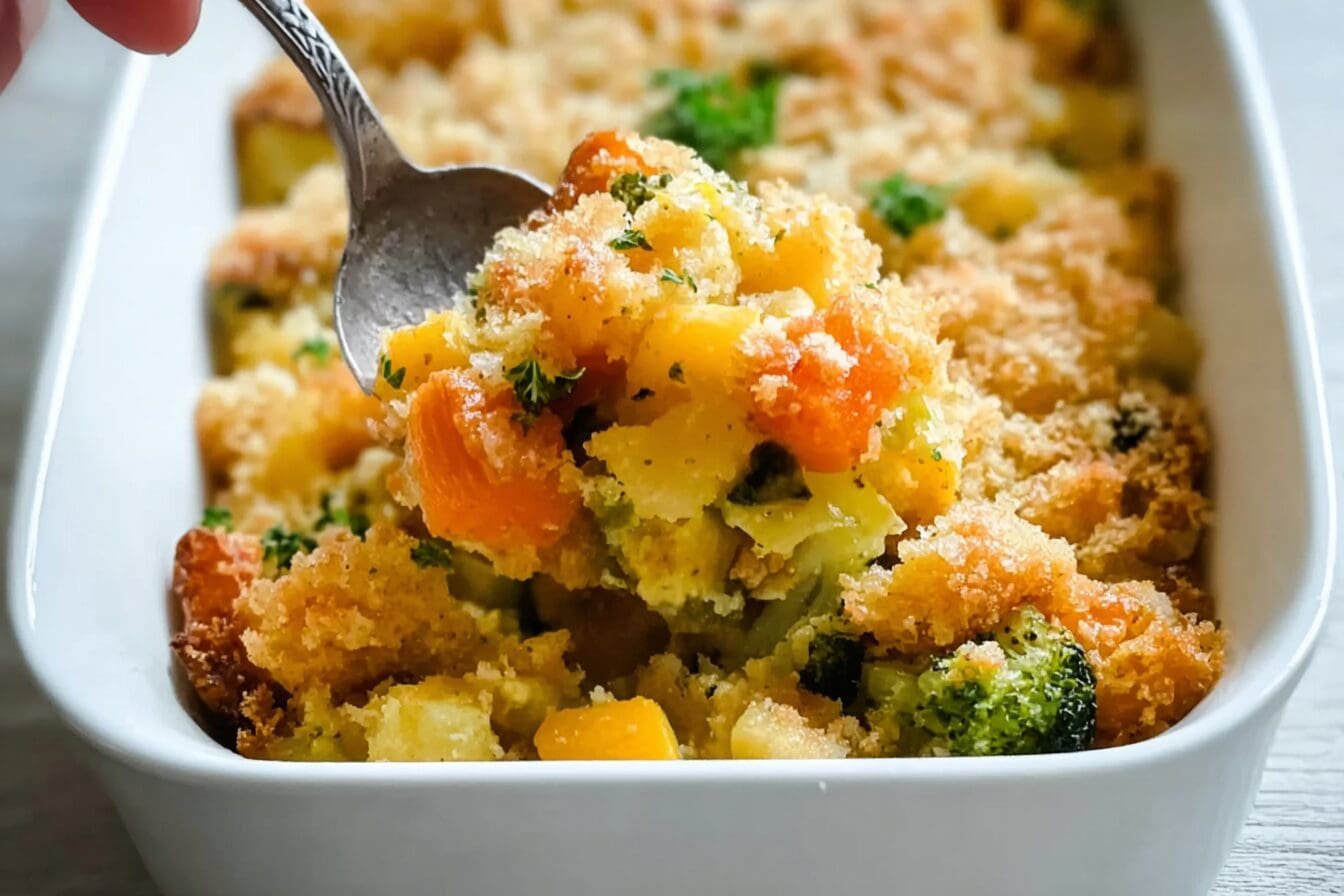
Why You’ll Love This Vegetable Casserole
This vegetable casserole is perfect for those seeking a simple yet tasty side dish that brings comfort to any meal. Its easy preparation makes it ideal for busy days, and it’s packed with healthy veggies that add a nutritious twist. You’ll appreciate how versatile it is for different diets while enjoying its warm, flavorful bite.
The recipe stands out for its straightforward steps, using everyday ingredients that blend into a dish full of flavor. It’s a hit for family dinners, offering a balance of taste and wellness. This casserole not only fills the table but also creates those special moments around food.
- Ease of preparation: This vegetable casserole recipe is incredibly simple to prepare, requiring minimal ingredients and short cooking times, making it ideal for busy weeknights or quick meals.
- Health benefits: Packed with fresh vegetables, this casserole delivers essential vitamins, antioxidants, and fiber, promoting overall wellness and supporting a balanced diet. For instance, discover the health benefits of broccoli, a key ingredient here that boosts nutrition.
- Versatility: The recipe adapts easily to various dietary needs including vegan, gluten-free, and low-calorie preferences, making it a flexible choice for diverse palates.
- Distinctive flavor: The blend of fresh herbs, spices, and savory ingredients creates a unique taste profile that sets this vegetable casserole apart from ordinary side dishes.
What’s more, each serving provides around 178 calories, with 7 grams of carbohydrates, 11 grams of protein, and 12 grams of fat, making it a smart option for balanced eating. You can prepare it ahead and store it in the fridge for up to 4 days for easy reheating. This means less stress on those hectic evenings, letting you focus on what matters most.
Jump To
- 1. Why You’ll Love This Vegetable Casserole
- 2. Essential Ingredients for Vegetable Casserole
- 3. How to Prepare the Perfect Vegetable Casserole: Step-by-Step Guide
- 4. Dietary Substitutions to Customize Your Vegetable Casserole
- 5. Mastering Vegetable Casserole: Advanced Tips and Variations
- 6. How to Store Vegetable Casserole: Best Practices
- 7. FAQs: Frequently Asked Questions About Vegetable Casserole
- 8. Vegetable Casserole
Essential Ingredients for Vegetable Casserole
Gathering the right ingredients is key to making a great vegetable casserole. This recipe focuses on frozen veggies for convenience, layered with cheese and a crunchy topping. Below, you’ll find a complete list based on the details shared, ensuring everything is measured out clearly for success in the kitchen.
Main Ingredients
- 16 oz frozen broccoli
- 16 oz frozen carrots
- 16 oz frozen cauliflower
- 16 oz sliced cheese
- One roll of crushed crackers
- 1/4 cup (approximately 56 grams) of melted butter
These items come together to create a comforting dish that’s simple to assemble. For special dietary options, consider swaps like plant-based cheese for vegan versions or gluten-free breadcrumbs in place of crackers. Always check measurements to keep things balanced and tasty.
How to Prepare the Perfect Vegetable Casserole: Step-by-Step Guide
Getting started with this vegetable casserole is straightforward and fun. Begin by preheating your oven and prepping the veggies to set the stage for a delicious result. Follow these steps to make sure everything turns out just right.
First, microwave the frozen broccoli (16 oz), frozen carrots (16 oz), and frozen cauliflower (16 oz) until they are warm, which takes about 5-7 minutes. Once done, place them in a 9×13-inch baking dish for even layering. This helps the vegetables hold their texture during baking.
Next, layer 16 oz of sliced cheese evenly over the vegetables to add creaminess. Then, mix one roll of crushed crackers with 1/4 cup (about 56 grams) of melted butter to create a crunchy topping, and spread it on top. For a personal touch, you can add extra herbs if you like.
Bake the casserole at 350 degrees Fahrenheit for 30 to 45 minutes until the cheese melts and the topping turns golden brown. This yields about 12 servings, perfect for sharing. Let it cool a bit before serving to enjoy the full flavors.
If you’re experimenting, try using fresh blanched vegetables instead of frozen for a different twist. Remember, variations like different cheeses or alternative toppings such as gluten-free breadcrumbs or nuts mixed with olive oil and herbs can make it your own. For more ideas on casseroles with crunchy elements, check out our Ritz cracker chicken casserole recipe for inspiration.

Dietary Substitutions to Customize Your Vegetable Casserole
Making this vegetable casserole fit your needs is easy with a few smart swaps. Whether you’re aiming for more protein or a different flavor, these changes keep the dish enjoyable. Let’s look at some options to tailor it just for you.
Protein and Main Component Alternatives: You can replace cheese with tofu or tempeh for a plant-based boost. Adding chickpeas or lentils works well for vegan versions and adds heartiness.
Vegetable, Sauce, and Seasoning Modifications: Swap out the frozen veggies for eggplant or sweet potatoes based on what’s in season. Try different sauces like a tomato-based one or pesto, and play with seasonings such as cumin or smoked paprika for new tastes.
These adjustments, including using fresh blanched vegetables or alternative toppings like nuts with olive oil and herbs, make the recipe even more flexible. Additional vegetables can be added for variety, keeping things fresh and exciting.
Mastering Vegetable Casserole: Advanced Tips and Variations
Taking your vegetable casserole to the next level is simple with a few expert tips. Start by roasting the vegetables separately to enhance their texture and flavor. This step complements other veggie-based dishes like our squash dressing.
Pro cooking techniques: To enhance texture, roast vegetables separately before mixing to reduce moisture and intensify flavors. Flavor variations: Incorporate bold seasonings such as fresh basil, garlic powder, or sun-dried tomatoes to customize taste. Presentation tips: Serve in individual ramekins for elegant plating, garnished with microgreens or edible flowers. Make-ahead options: Prepare the casserole assembly a day in advance, cover, and store in the refrigerator to save time on busy days.
You can also try substituting different types of cheese or adding extra vegetables for variety. Options like gluten-free breadcrumbs or nuts with olive oil and herbs keep it adaptable.
How to Store Vegetable Casserole: Best Practices
Keeping your vegetable casserole fresh is key to enjoying it later. Proper storage helps maintain its taste and texture for days. Follow these guidelines to make the most of your leftovers.
Refrigeration: Store leftovers in an airtight container in the refrigerator for up to 3 days to maintain freshness. Freezing: For long-term storage, freeze portions in sealed containers for up to 2 months; thaw overnight before reheating. Reheating: Reheat gently in the oven at 350°F (175°C) or microwave until warmed through, preserving texture and flavor. Meal prep considerations: Divide casserole into single-serving containers for convenient grab-and-go meals throughout the week.
Remember, this dish can be prepared ahead and stored for up to 4 days, making it ideal for meal planning. Reheating is straightforward, ensuring you get that golden-brown topping every time.
FAQs: Frequently Asked Questions About Vegetable Casserole
Can I use fresh vegetables instead of frozen in a vegetable casserole?
Yes, you can use fresh vegetables in a vegetable casserole. To prevent excess moisture, lightly steam or roast the vegetables before assembling the casserole. This helps maintain texture and prevents the dish from becoming soggy while baking.
How do I store leftover vegetable casserole safely?
Store leftover vegetable casserole in an airtight container in the refrigerator for up to 3-4 days. To reheat, cover with foil and warm in the oven at 350°F (175°C) until heated through, or microwave in short intervals to keep it moist.
What types of cheese work best in a vegetable casserole?
Cheeses that melt well and add flavor are ideal for vegetable casseroles, such as cheddar, mozzarella, Monterey Jack, or Velveeta. Mixing cheeses can add depth, but avoid hard cheeses that don’t melt easily to maintain a creamy texture.
Can I make a vegetable casserole ahead of time and freeze it?
Yes, vegetable casseroles can be assembled ahead and frozen for up to 2-3 months. Freeze before baking, then thaw overnight in the refrigerator. Bake as directed, adding a few extra minutes to ensure it’s heated through completely.
What are some easy ways to add protein to a vegetable casserole?
To add protein, consider mixing in cooked chicken, turkey, ground beef, tofu, or beans. Adding protein makes the casserole a more filling main dish and offers a balance of nutrients while maintaining the vegetable-forward flavor.

Vegetable Casserole
- Total Time: 40-55 minutes
- Yield: 12 servings
- Diet: Vegetarian
Description
🥦 Enjoy a wholesome and comforting Vegetable Casserole that’s packed with nutritious veggies and a rich cheesy topping.
🧀 This simple, flavorful dish is perfect for easy meal prep and can be customized with your favorite cheeses and toppings.
Ingredients
– 16 oz frozen broccoli
– 16 oz frozen carrots
– 16 oz frozen cauliflower
– 16 oz sliced cheese
– One roll of crushed crackers
– 1/4 cup (approximately 56 grams) melted butter
Instructions
1-First, microwave the frozen broccoli (16 oz), frozen carrots (16 oz), and frozen cauliflower (16 oz) until they are warm, which takes about 5-7 minutes. Once done, place them in a 9×13-inch baking dish for even layering. This helps the vegetables hold their texture during baking.
2-Next, layer 16 oz of sliced cheese evenly over the vegetables to add creaminess. Then, mix one roll of crushed crackers with 1/4 cup (about 56 grams) of melted butter to create a crunchy topping, and spread it on top. For a personal touch, you can add extra herbs if you like.
3-Bake the casserole at 350 degrees Fahrenheit for 30 to 45 minutes until the cheese melts and the topping turns golden brown. This yields about 12 servings, perfect for sharing. Let it cool a bit before serving to enjoy the full flavors.
Notes
🍅 Use fresh blanched vegetables for a fresher taste.
🧀 Try different types of cheese for varying flavors and textures.
🌿 Swap toppings with gluten-free breadcrumbs or nuts mixed with olive oil and herbs for a twist.
- Prep Time: 10 minutes
- Baking time: 30-45 minutes
- Category: Side Dish
- Method: Baking
- Cuisine: American
Nutrition
- Serving Size: 1 cup
- Calories: 178
- Sugar: 4g
- Sodium: 350mg
- Fat: 12g
- Saturated Fat: 6g
- Unsaturated Fat: 4g
- Trans Fat: 0g
- Carbohydrates: 7g
- Fiber: 3g
- Protein: 11g
- Cholesterol: 30mg
Keywords: Vegetable casserole, Cheesy casserole, Easy side dish, Comfort food