
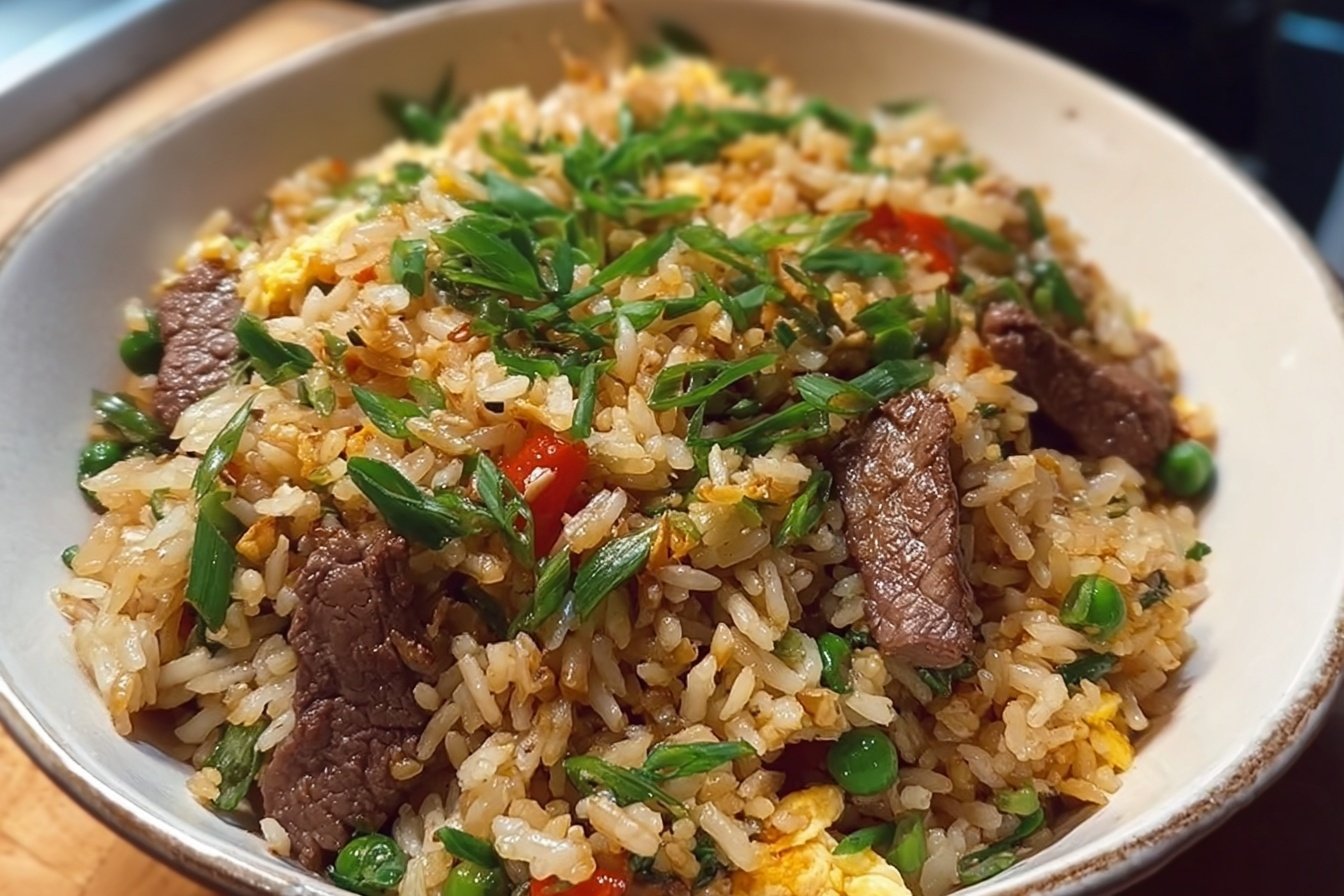
Why You’ll Love This Steak Fried Rice
There’s something magical about a steaming plate of steak fried rice fresh from the wok. It’s the kind of dish that turns ordinary weeknight dinners into something special without keeping you in the kitchen for hours. Whether you’re a busy parent scrambling to get dinner on the table or a student craving something better than takeout, this recipe delivers on every front.
Quick and Satisfying
From start to finish, you’re looking at just 25 minutes of active cooking time (plus marinating). The high-heat stir-fry method means dinner comes together fast, making this perfect for those evenings when time is short but you still want something homemade and delicious. Once you’ve prepped your ingredients, everything hits the pan in sequence, building layers of flavor without fuss.
Better-For-You Takeout Alternative
Restaurant versions often drown in oil and sodium, but making steak fried rice at home puts you in control. Each serving packs 27g of protein and only 509 calories, plus you’re getting real vegetables, quality beef, and the satisfaction of knowing exactly what’s in your food. The combination of tender beef, fiber-rich green beans, and energizing carbohydrates creates a balanced meal that keeps you satisfied.
Endlessly Adaptable
One of the best things about this recipe is how easily it adapts to what you have on hand. Don’t have green beans? Swap in bell peppers, peas, or carrots. Want to make it gluten-free? Use tamari instead of regular soy sauce. The technique stays the same, but the ingredients can shift based on your preferences, dietary needs, or whatever needs using up in your refrigerator.
Restaurant-Quality Flavor at Home
The secret lies in the marinade: baking soda tenderizes economical cuts of beef until they’re silky-soft, while the combination of fish sauce, oyster sauce, and garlic creates that unmistakable Thai-inspired depth. You’ll be amazed at how these simple pantry staples transform basic ingredients into something that tastes like it came from your favorite Asian restaurant.
Jump To
- 1. Why You’ll Love This Steak Fried Rice
- 2. Essential Ingredients for Steak Fried Rice
- 3. How to Prepare the Perfect Steak Fried Rice: Step-by-Step Guide
- 4. Protein and Main Component Alternatives
- 5. Vegetable, Sauce, and Seasoning Modifications
- 6. Mastering Steak Fried Rice: Advanced Tips and Variations
- 7. How to Store Steak Fried Rice: Best Practices
- 8. FAQs: Frequently Asked Questions About Steak Fried Rice
- 9. Steak Fried Rice
Essential Ingredients for Steak Fried Rice
Success with steak fried rice starts with having the right ingredients ready to go. Here’s everything you’ll need, organized by how each component contributes to the final dish.
For the Beef Marinade
- 300g rump beef steak (top sirloin) Cut into small thin pieces about 3-5mm thick and roughly 1.5cm squares; this economical cut becomes incredibly tender when properly marinated
- 1/2 teaspoon dark soy sauce Adds rich color and deep savory flavor to the beef
- 2 teaspoons oyster sauce Provides umami depth and helps the marinade cling to the meat
- 2 tablespoons water Thins the marinade for better coverage
- 1 garlic clove Infuses the beef with aromatic flavor during marinating
- 1/4 teaspoon sugar (white or brown) Helps with caramelization and balances the salty elements
- 3/8 teaspoon baking soda (bi-carbonate soda) The secret weapon that tenderizes tougher cuts of beef; about a heaped 1/4 teaspoon
For the Stir-Fry
- 2 1/2 tablespoons canola or peanut oil, divided High smoke-point oils ideal for high-heat cooking
- 4 green onion stems Cut into 1.25cm lengths, white parts separated from green parts; adds fresh onion flavor and color
- 2 garlic cloves, finely minced Fresh garlic for aromatic punch during stir-frying
- 520g cooked, day-old long grain white rice (4 cups) Cold, day-old rice is essential for proper fried rice texture
- 200g green beans Cut into 1.25cm pieces (about 2 heaped cups); adds crunch and fresh vegetable nutrition
For the Sauce
- 2 tablespoons fish sauce Provides authentic Thai flavor depth without tasting fishy after cooking
- 1 1/2 tablespoons oyster sauce (additional) Adds richness and gloss to the finished dish
- 1/2 teaspoon sugar Balances the salty sauces
For the Eggs
- 2 eggs Adds protein and creates authentic fried rice texture
- 1/2 teaspoon sesame oil Fragrant finishing oil for the eggs
- Pinch of salt and pepper (white preferred) Basic seasoning for the eggs
Special Dietary Options
- Gluten-free: Substitute tamari for soy sauce and ensure your fish sauce is certified gluten-free
- Lower sodium: Reduce fish sauce and oyster sauce by half, supplementing with extra garlic and a splash of rice vinegar
- Low-carb: This recipe works beautifully with cauliflower rice, though you’ll need to adjust cooking times
How to Prepare the Perfect Steak Fried Rice: Step-by-Step Guide
Now let’s walk through the process of creating restaurant-quality steak fried rice in your own kitchen. The key is having everything prepped and ready before you turn on the heat.
Step 1: Marinate the Beef for Maximum Tenderness
In a bowl, combine 1/2 teaspoon dark soy sauce, 2 teaspoons oyster sauce, 2 tablespoons water, 1 minced garlic clove, 1/4 teaspoon sugar, and 3/8 teaspoon baking soda. Mix well until the baking soda dissolves completely. Add your 300g of thinly sliced beef pieces and toss thoroughly to coat every piece.
Important: Let the beef marinate for at least 1 hour, or up to 24 hours for tougher cuts. Unlike other recipes, do not rinse off the baking soda the small amount used here tenderizes without any residual taste.
The baking soda is your secret weapon here. It breaks down the proteins in the meat, turning even economical cuts like rump steak into silky, restaurant-tender bites. For thin sizzle or minute steak, marinate at least 4 hours. For sirloin, porterhouse, or flank, about 1 hour works perfectly. Slow-cooking cuts like chuck or brisket can go up to 24 hours but must be sliced very thinly.
Step 2: Prepare the Sauce Mixture
While the beef marinates, mix your cooking sauce in a small bowl. Combine 2 tablespoons fish sauce, 1 1/2 tablespoons oyster sauce, and 1/2 teaspoon sugar. Stir until the sugar dissolves and set aside. Having this ready means you can pour it in quickly when the pan is hot, preventing any burning or overcooking.
Step 3: Prep the Egg Mixture
In a separate small bowl, whisk together 2 eggs with 1/2 teaspoon sesame oil and a pinch of salt and pepper. Set this aside too. The sesame oil adds a lovely fragrance to the eggs that complements the overall dish beautifully.
Step 4: Heat the Pan and Sear the Beef
When you’re ready to cook, heat 2 tablespoons of oil in a large non-stick pan over high heat. You want the pan nice and hot that sizzle when the beef hits the pan is the sound of flavor developing. Add your marinated beef in a single layer and cook for about 2 minutes until the surface seals and develops a nice brown color.
Don’t crowd the pan or move the beef around too much in the first minute. Let it develop that caramelized exterior that adds so much depth to the finished dish. According to Healthline, beef is an excellent source of high-quality protein and essential nutrients like iron and zinc, making this dish both delicious and nutritious.
Step 5: Add Aromatics and Vegetables
Once the beef has sealed, add 2 finely minced garlic cloves and the white parts of your green onions along with 200g of cut green beans. Stir everything together and cook for about 1 minute. The garlic should become fragrant but not burnt, and the green beans will start to blister slightly while the beef caramelizes further.
This layering of ingredients is what separates great fried rice from mediocre versions. Each component hits the pan at the right moment to develop its full flavor potential without overcooking.
Step 6: Add Rice and Sauce
Add your 520g (4 cups) of day-old rice to the pan along with the prepared sauce mixture. Toss everything together vigorously and cook for 1.5 to 2 minutes until the rice is toasty and each grain is well-coated with sauce. The rice should start to get slightly crispy in spots that’s the texture you’re after.
Break up any clumps of rice as you go. Cold rice tends to stick together, but a little effort separating the grains pays off in the final texture. Each grain should be separate and glistening with sauce.
Step 7: Cook the Eggs
Push all the rice and beef mixture to one side of the pan. Add the remaining 1/2 tablespoon of oil to the empty space and pour in your whisked egg mixture. Let it sit for about 20 seconds until it starts to set on the bottom, then gently scramble it with your spatula.
This technique of cooking the eggs separately in the same pan is what gives authentic fried rice its characteristic texture. You get distinct curds of egg rather than everything mixed into a homogeneous mush.
Step 8: Final Toss and Serve
Once the egg is mostly cooked but still slightly wet in spots, toss everything together along with the green parts of the green onion. The residual heat will finish cooking the egg, and the green onions will wilt slightly while maintaining their fresh flavor. Serve immediately while hot.
Protein and Main Component Alternatives
While this recipe shines with beef, the technique works beautifully with other proteins. Here’s how to adapt steak fried rice for different preferences and what you might have available.
Alternative Beef Cuts
The baking soda marinade works wonders on economical cuts. Beyond rump steak, try sizzle steak, minute steak, or pre-cut stir-fry strips from your butcher. Each cut has different optimal marinating times:
| Beef Cut | Recommended Marinating Time |
|---|---|
| Thin sizzle/minute steak | At least 4 hours |
| Sirloin, porterhouse, flank | About 1 hour |
| Chuck or brisket (thinly sliced) | Up to 24 hours |
For a richer flavor, ribeye adds wonderful beefy depth, though you’ll want to trim excess fat to avoid greasiness. About 300g serves 4 people generously.
Chicken Variations
Boneless chicken thighs work excellently here they stay juicy during high-heat cooking. Slice them the same way as the beef and marinate for at least 30 minutes. Chicken breast works too but requires careful attention to avoid overcooking. Check out this pepper steak recipe for more inspiration on cooking with different proteins.
Seafood Options
Shrimp or prawns make fantastic fried rice. Skip the baking soda marinade and instead toss shrimp with a little cornstarch and salt for 15 minutes before cooking they’ll only need 2-3 minutes total in the hot pan.
Vegetarian and Vegan Adaptations
For a plant-based version, extra-firm tofu or tempeh work beautifully. Press the tofu to remove excess moisture, cut into small cubes, and toss with a little soy sauce before pan-frying until golden. The cooking sauce remains the same, though vegans should use a plant-based oyster sauce alternative made from mushrooms.
Other Protein Ideas
- Pork: Thinly sliced pork loin or pork belly strips add richness
- Duck: Leftover roasted duck creates an indulgent variation
- Lamb: Thinly sliced leg of lamb brings a different flavor profile entirely
Vegetable, Sauce, and Seasoning Modifications
One of the beauties of fried rice is its flexibility with vegetables and seasonings. Here’s how to customize your steak fried rice based on what’s in season or what you have available.
Vegetable Substitutions
The green beans in this recipe can be swapped for any quick-cooking vegetable. Good options include:
- Bell peppers: Add sweetness and vibrant color; dice into small pieces
- Carrots: Julienned or diced small; add them earlier as they take longer to cook
- Snow peas or snap peas: Add at the same time as the green beans
- Zucchini: Quick-cooking and absorbs sauce flavors well
- Corn: Adds natural sweetness and appealing yellow color
- Frozen peas: Convenient and classic; add in the last minute of cooking
- Baby spinach: Wilt in at the very end for a nutritional boost
Aim for about 2 cups of vegetables total per batch. Any more than that and you risk overcrowding the pan, which leads to steaming instead of stir-frying. If using a wok for a bigger batch, you can increase the vegetables proportionally.
Sauce Variations
The fish sauce and oyster sauce combination gives this recipe its distinctive Thai character, but you can modify based on taste or availability:
- No fish sauce? Substitute with soy sauce, though you’ll lose some of the depth
- Spicy kick: Add a teaspoon of chili garlic sauce (sambal oelek) or sriracha to the sauce mixture
- More savory: Add a teaspoon of Chinese cooking wine (Shaoxing) for complexity
- Sweeter profile: Increase sugar slightly or add a touch of hoisin sauce
Garlic is the primary aromatic here, and for good reason. It adds not just flavor but potential health benefits too according to research compiled by Healthline, garlic has been linked to improved cardiovascular health and immune function.
Seasoning Adjustments
The beauty of making fried rice at home is controlling the salt level. If you prefer less sodium, reduce both the fish sauce and oyster sauce by half. You can compensate with extra garlic, a splash of rice vinegar for brightness, or additional fresh herbs like Thai basil or cilantro added at the end.
White pepper is traditional in Thai cooking and has a different heat profile than black pepper it’s more floral and less aggressive. But black pepper works perfectly fine if that’s what you have.
Mastering Steak Fried Rice: Advanced Tips and Variations
Ready to take your steak fried rice to the next level? These pro techniques and creative variations will help you achieve consistently restaurant-quality results.
Pro Cooking Techniques
- Use a large non-stick pan for bigger batches: Woks are traditional, but home stovetops often don’t get hot enough for proper wok hei (breath of the wok). A large flat pan gives more surface area for proper searing and prevents the rice from “stewing” in its own moisture.
- Prep everything before you start: This dish moves fast once the pan is hot. Have all ingredients chopped, sauces mixed, and eggs whisked before turning on the burner.
- Don’t skip the day-old rice: Fresh rice contains too much moisture and will make your fried rice gummy. If you’re in a hurry, spread freshly cooked rice on a baking sheet and freeze for 30 minutes to dry out the grains.
- High heat is non-negotiable: The sizzle when ingredients hit the pan isn’t just satisfying it’s essential for proper texture and flavor development.
Flavor Variations to Try
- Thai basil fried rice: Add a handful of fresh Thai basil at the very end for an authentic aromatic finish
- Kimchi fried rice: Stir in chopped kimchi and use kimchi juice as part of your sauce
- Indonesian nasi goreng style: Add kecap manis (sweet soy sauce) for a darker, sweeter profile
- Egg fried rice deluxe: Add 3-4 eggs instead of 2 for a richer, more protein-packed dish
Presentation Tips
Serve your steak fried rice with simple garnishes that add color and freshness. A sprinkle of sliced green onions, a wedge of lime on the side, and perhaps some cucumber slices make the plate look as good as it tastes. For a restaurant-style presentation, pack the rice into a small bowl and invert onto the plate for a neat dome shape.
Make-Ahead Strategies
For busy weeknights, prep components in advance:
- Marinate the beef up to 24 hours ahead
- Cut all vegetables and store in airtight containers
- Mix the sauce and refrigerate
- Prep the rice the day before this is actually preferred!
When you’re ready to eat, the actual cooking takes just 10 minutes. This makes it perfect for meal prep or those evenings when you want something homemade but don’t have much time.
Looking for another quick beef dinner? This garlic butter steak noodles recipe uses similar techniques for a completely different flavor profile.
How to Store Steak Fried Rice: Best Practices
Proper storage keeps your steak fried rice tasting fresh and safe to eat. Here’s everything you need to know about storing leftovers and meal prepping.
Refrigeration Guidelines
Allow the fried rice to cool completely at room temperature first, but don’t leave it out longer than 2 hours to prevent bacterial growth. Transfer to airtight containers and refrigerate promptly. Properly stored, steak fried rice stays good for 3 days in the refrigerator. For best flavor and texture, try to consume within the first 2 days as the rice can dry out over time.
Freezing for Longer Storage
Steak fried rice freezes surprisingly well for up to 3 months. Portion into freezer-safe bags or containers, pressing out as much air as possible to prevent freezer burn. Label with the date so you know when it was made. The steak stays tender if it was sliced thin initially, and the rice maintains its texture better than you might expect.
Reheating for Best Results
For the best texture, reheat fried rice in a skillet with a splash of water or broth over medium heat. Stir frequently until heated through to 165°F internally. The liquid helps revive any dried-out grains. Microwaving works in a pinch but can make the rice slightly gummy. Cover with a damp paper towel if microwaving to help retain moisture.
Meal Prep Considerations
This recipe is perfect for meal prep. Make a double batch on Sunday and portion into containers for quick lunches throughout the week. Add fresh green onions or a squeeze of lime after reheating to brighten the flavors. Avoid adding fresh vegetables after storage reheat fully before adding any raw garnishes.

FAQs: Frequently Asked Questions About Steak Fried Rice
Do I need day-old rice for steak fried rice?
Day-old rice is ideal for steak fried rice because it dries out in the fridge, preventing a sticky or mushy texture when stir-fried. Freshly cooked rice releases too much moisture, making the dish gummy. To prepare, cook jasmine or long-grain rice a day ahead, spread it on a tray to cool, then refrigerate uncovered overnight. If you’re short on time, cook rice and chill it in the fridge for at least 4-6 hours, or freeze briefly for 30 minutes to dry the grains. This simple step gives you the light, fluffy fried rice texture that pairs perfectly with tender steak bites. Always break up clumps before frying for even cooking. (87 words)
How long does steak fried rice last in the fridge?
Steak fried rice stays fresh for 3-4 days in the fridge when stored properly. Cool it completely at room temperature first (no more than 2 hours to avoid bacteria), then transfer to airtight containers. Reheat in a skillet with a splash of water or broth over medium heat until hot (165°F internal temp), stirring to revive crispiness—microwaving works too but may soften the rice. For best flavor and safety, eat within 2 days as the steak and rice can dry out. Label containers with dates, and discard if it smells off or shows mold. Freezing extends life up to 3 months. (98 words)
Can you freeze steak fried rice?
Yes, steak fried rice freezes well for up to 3 months. Portion into freezer-safe bags or containers, squeezing out air to prevent freezer burn, and cool fully first. Thaw overnight in the fridge or under cold water, then reheat in a hot skillet with a bit of oil or water for 5-7 minutes until steaming hot (165°F). Avoid refreezing thawed rice. The steak stays tender if sliced thin initially, and rice maintains texture better than fresh. Pro tip: Add fresh green onions after reheating for brightness. This makes meal prep easy for busy weeks. (92 words)
What vegetables can I add to steak fried rice?
Add quick-cooking vegetables to steak fried rice for color and crunch: bell peppers, onions, peas, carrots (julienned), broccoli florets (pre-steamed), snap peas, or mushrooms. Chop into small, even pieces to match the steak’s bite-size. Stir-fry sturdy ones like carrots first for 2 minutes, then softer ones like peas at the end. Aim for 1-2 cups total per 4 servings to avoid overcrowding the wok. Frozen mixed veggies work in a pinch—thaw and drain first. This keeps the dish balanced, with veggies absorbing the savory soy-garlic sauce alongside juicy steak. Experiment but taste as you go. (96 words)
What’s the best cut of steak for fried rice?
Flank steak, skirt steak, or sirloin are top choices for fried rice due to their lean texture and quick cooking. Slice thinly against the grain (1/4-inch thick) for tenderness. Marinate 20-30 minutes in soy sauce, cornstarch, and a pinch of baking soda to velvet it—skip rinsing as the small amount tenderizes without bitterness. Pat dry before high-heat stir-fry to sear without steaming. Ribeye adds richness but more fat; trim excess. About 1 lb serves 4. This method delivers restaurant-style juicy steak in under 20 minutes total cook time. (89 words)
Steak Fried Rice
- Total Time: 1 hour 25 minutes
- Yield: 4 servings
- Diet: High-Protein
Description
🥩 Velvety tender beef steak bites in aromatic Thai fried rice – high-protein, veggie-packed delight for satisfying meals!
🍚 Quick 10-min stir-fry after marinating, beats takeout with fresh flavors and customizable veggies.
Ingredients
– 300g rump beef steak (top sirloin)
– 1/2 teaspoon dark soy sauce
– 2 teaspoons oyster sauce
– 2 tablespoons water
– 1 garlic clove
– 1/4 teaspoon sugar (white or brown)
– 3/8 teaspoon baking soda (bi-carbonate soda)
– 2 1/2 tablespoons canola or peanut oil, divided
– 4 green onion stems
– 2 garlic cloves, finely minced
– 520g cooked, day-old long grain white rice (4 cups)
– 200g green beans
– 2 tablespoons fish sauce
– 1 1/2 tablespoons oyster sauce (additional)
– 1/2 teaspoon sugar
– 2 eggs
– 1/2 teaspoon sesame oil
– Pinch of salt and pepper (white preferred)
Instructions
1-Step 1: Marinate the Beef for Maximum Tenderness In a bowl, combine 1/2 teaspoon dark soy sauce, 2 teaspoons oyster sauce, 2 tablespoons water, 1 minced garlic clove, 1/4 teaspoon sugar, and 3/8 teaspoon baking soda. Mix well until the baking soda dissolves completely. Add your 300g of thinly sliced beef pieces and toss thoroughly to coat every piece. Important: Let the beef marinate for at least 1 hour, or up to 24 hours for tougher cuts. Unlike other recipes, do not rinse off the baking soda the small amount used here tenderizes without any residual taste. The baking soda is your secret weapon here. It breaks down the proteins in the meat, turning even economical cuts like rump steak into silky, restaurant-tender bites. For thin sizzle or minute steak, marinate at least 4 hours. For sirloin, porterhouse, or flank, about 1 hour works perfectly. Slow-cooking cuts like chuck or brisket can go up to 24 hours but must be sliced very thinly.
2-Step 2: Prepare the Sauce Mixture While the beef marinates, mix your cooking sauce in a small bowl. Combine 2 tablespoons fish sauce, 1 1/2 tablespoons oyster sauce, and 1/2 teaspoon sugar. Stir until the sugar dissolves and set aside. Having this ready means you can pour it in quickly when the pan is hot, preventing any burning or overcooking.
3-Step 3: Prep the Egg Mixture In a separate small bowl, whisk together 2 eggs with 1/2 teaspoon sesame oil and a pinch of salt and pepper. Set this aside too. The sesame oil adds a lovely fragrance to the eggs that complements the overall dish beautifully.
4-Step 4: Heat the Pan and Sear the Beef When you’re ready to cook, heat 2 tablespoons of oil in a large non-stick pan over high heat. You want the pan nice and hot that sizzle when the beef hits the pan is the sound of flavor developing. Add your marinated beef in a single layer and cook for about 2 minutes until the surface seals and develops a nice brown color. Don’t crowd the pan or move the beef around too much in the first minute. Let it develop that caramelized exterior that adds so much depth to the finished dish. According to Healthline, beef is an excellent source of high-quality protein and essential nutrients like iron and zinc, making this dish both delicious and nutritious.
5-Step 5: Add Aromatics and Vegetables Once the beef has sealed, add 2 finely minced garlic cloves and the white parts of your green onions along with 200g of cut green beans. Stir everything together and cook for about 1 minute. The garlic should become fragrant but not burnt, and the green beans will start to blister slightly while the beef caramelizes further. This layering of ingredients is what separates great fried rice from mediocre versions. Each component hits the pan at the right moment to develop its full flavor potential without overcooking.
6-Step 6: Add Rice and Sauce Add your 520g (4 cups) of day-old rice to the pan along with the prepared sauce mixture. Toss everything together vigorously and cook for 1.5 to 2 minutes until the rice is toasty and each grain is well-coated with sauce. The rice should start to get slightly crispy in spots that’s the texture you’re after. Break up any clumps of rice as you go. Cold rice tends to stick together, but a little effort separating the grains pays off in the final texture. Each grain should be separate and glistening with sauce.
7-Step 7: Cook the Eggs Push all the rice and beef mixture to one side of the pan. Add the remaining 1/2 tablespoon of oil to the empty space and pour in your whisked egg mixture. Let it sit for about 20 seconds until it starts to set on the bottom, then gently scramble it with your spatula. This technique of cooking the eggs separately in the same pan is what gives authentic fried rice its characteristic texture. You get distinct curds of egg rather than everything mixed into a homogeneous mush.
8-Step 8: Final Toss and Serve Once the egg is mostly cooked but still slightly wet in spots, toss everything together along with the green parts of the green onion. The residual heat will finish cooking the egg, and the green onions will wilt slightly while maintaining their fresh flavor. Serve immediately while hot.
Notes
❄️ Day-old refrigerated rice is key for non-sticky, crispy fried rice texture.
🥩 Baking soda tenderizes budget beef cuts like rump or sirloin beautifully.
🥗 Swap green beans for carrots, peas, or zucchini for quick veggie variety.
- Prep Time: 15 minutes
- Marinating: 1 hour
- Cook Time: 10 minutes
- Category: Main Course
- Method: Stovetop
- Cuisine: Thai
Nutrition
- Serving Size: 1/4 recipe
- Calories: 509 kcal
- Sugar: 3g
- Sodium: 1198mg
- Fat: 16g
- Saturated Fat: 4g
- Unsaturated Fat: 12g
- Trans Fat: 0g
- Carbohydrates: 63g
- Fiber: 3g
- Protein: 27g
- Cholesterol: 128mg
Keywords: Beef Steak Fried Rice, Thai Beef Fried Rice, Steak Fried Rice Recipe, Beef Fried Rice