
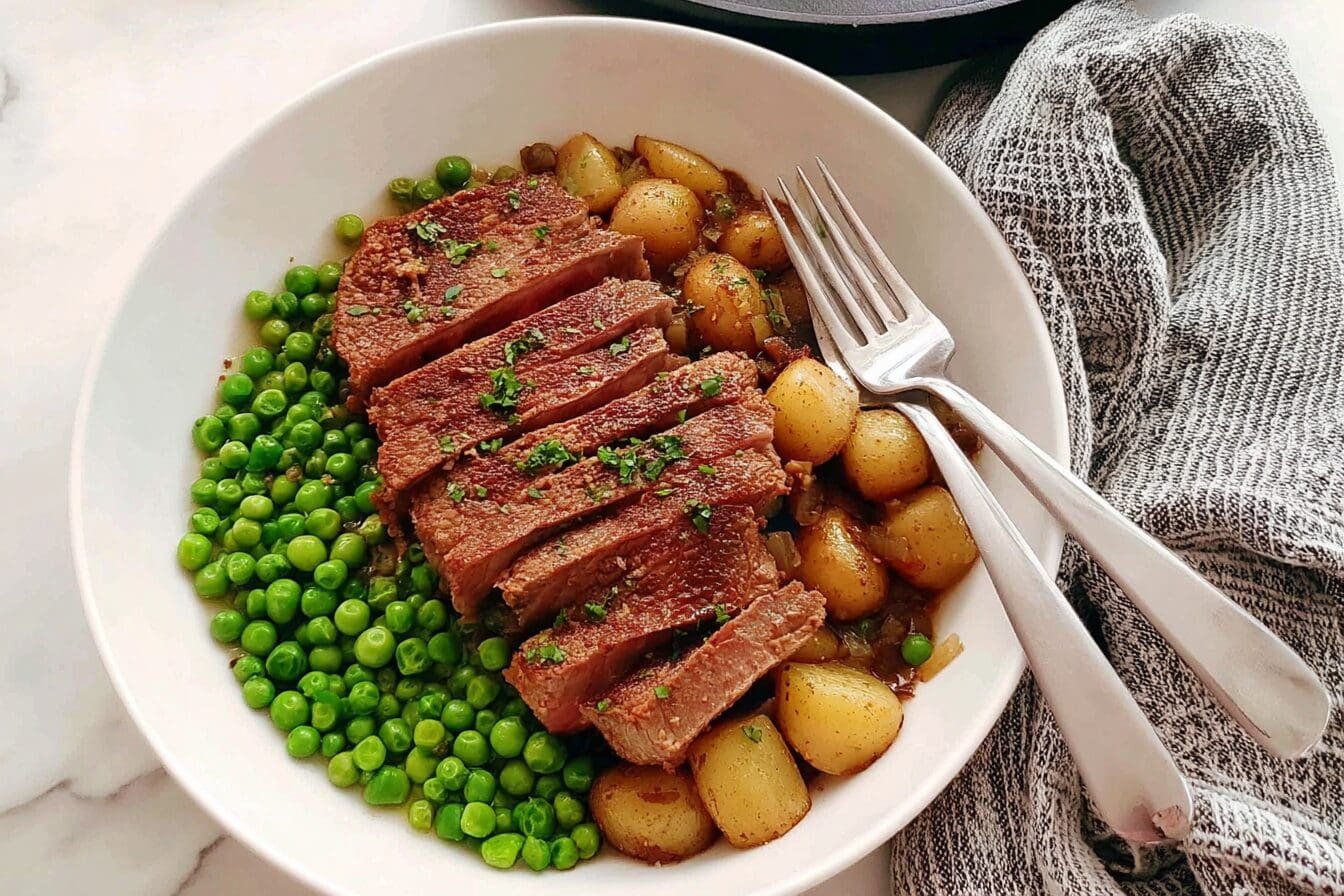
Why You’ll Love This Skillet Steak
This pan seared steak with garlic butter delivers restaurant-quality results right in your kitchen. Perfect for home cooks who want a quick meal without fuss, this skillet steak recipe stands out for its simplicity and bold taste. Busy parents, students, and working professionals appreciate how fast it comes together, often in under 20 minutes.
- Ease of preparation: This pan seared steak requires minimal ingredients and steps, making it ideal for beginners or rushed evenings. Heat your skillet, season the steak, and sear for a few minutes per side. No marinating or special equipment beyond a good cast iron skillet saves time and cleanup, letting you enjoy garlic butter steak without hours of work.
- Health benefits: Packed with high-quality protein from ribeye steak or filet mignon, this dish supports muscle health and satiety. The garlic adds antioxidants, while herbs like thyme provide vitamins. Opt for leaner cuts for diet-conscious eaters, keeping it low-carb and keto-friendly for balanced nutrition.
- Versatility: Adapt this cast iron steak for various needs, from gluten-free naturally to low-calorie versions with less butter. Pair it with veggies for seniors or travelers seeking familiar flavors abroad. Newlyweds can impress with custom seasonings, fitting food enthusiasts across diets.
- Distinctive flavor: The magic happens with garlic butter basting, creating a rich, crispy crust on your perfect pan seared ribeye. Juices lock in for tenderness, outshining grilled options. This garlic butter skillet steak offers savory depth that keeps everyone coming back.
Whether you’re a baking enthusiast branching into savory or just craving steak, this method shines.
Jump To
- 1. Why You’ll Love This Skillet Steak
- 2. Essential Ingredients for Skillet Steak
- 3. How to Prepare the Perfect Skillet Steak: Step-by-Step Guide
- 4. Dietary Substitutions to Customize Your Skillet Steak
- 5. Mastering Skillet Steak: Advanced Tips and Variations
- 6. How to Store Skillet Steak: Best Practices
- 7. FAQs: Frequently Asked Questions About Skillet Steak
- 8. Skillet Steak
Essential Ingredients for Skillet Steak
Gather these items for your skillet steak recipe. Each plays a key role in achieving that perfect sear and flavor.
Main Ingredients:
- 2 ribeye steaks, 1-inch thick (12-16 oz each) – Well-marbled for juicy pan seared steak with garlic butter.
- Kosher salt, to taste – Seasons the meat for enhanced natural flavors in this cast iron steak.
- Freshly ground black pepper, to taste – Adds a subtle kick to your garlic butter steak.
- 1 tablespoon avocado oil – High smoke point oil perfect for initial high-heat searing in how to cook steak in skillet.
- 2 tablespoons unsalted butter – Melts into a luxurious baste for garlic butter skillet steak.
- 3-4 garlic cloves, smashed – Infuses aromatic depth during the final basting step.
- 2-3 sprigs fresh thyme – Herbal notes that complement the perfect pan seared ribeye.
Special Dietary Options:
- Vegan: Swap ribeye steak for thick portobello mushroom caps or cauliflower steaks; use plant-based butter and oil.
- Gluten-free: All ingredients are naturally gluten-free; confirm tamari if subbing soy in variations.
- Low-calorie: Choose lean filet mignon, reduce butter to 1 tablespoon, and skip oil for air fryer adaptation.
This lineup keeps your pan seared steak with garlic butter simple yet customizable for any night.
How to Prepare the Perfect Skillet Steak: Step-by-Step Guide
Follow this detailed guide for a foolproof skillet steak recipe. It works for ribeye steak, filet mignon, or similar cuts, with tips for all skill levels.
First Step: Preparation and Mise en Place
Take your steaks out of the fridge 30-60 minutes ahead to reach room temperature. This ensures even cooking for medium-rare perfection. Pat dry with paper towels, then season generously on all sides with kosher salt and black pepper. Gather your 1 tablespoon avocado oil, 2 tablespoons butter, 3-4 smashed garlic cloves, and 2-3 thyme sprigs nearby.
Second Step: Heat the Skillet
Place a cast iron skillet over high heat for 5 minutes until smoking hot, around 450-500°F. Add the avocado oil; it should shimmer and smoke lightly. This high heat creates the Maillard reaction for a crispy crust on your pan seared steak.
Third Step: Sear the Steak
Lay the steaks in the skillet without overcrowding; cook one or two at a time. Sear undisturbed for 3-4 minutes per side for a 1-inch thick cut aiming for medium-rare. Use tongs to sear the edges briefly. Flip once, and check internal temperature: 130°F for medium-rare. For thicker cuts, consider oven finishing at 400°F.
Fourth Step: Baste with Garlic Butter
In the last minute, add the butter, garlic, and thyme. Tilt the pan and spoon the melted mixture over the steak repeatedly. This builds layers of flavor in your garlic butter steak. For dietary tweaks, use vegan butter here seamlessly.
Fifth Step: Rest and Serve
Transfer to a plate tented with foil; rest 5-10 minutes. Juices redistribute for maximum tenderness. Slice against the grain. Total time: 15-20 minutes. Serve with sides for busy families or solo meals.
These steps make how to cook steak in skillet accessible. Adapt by reducing time for rare or adding veggies for heartier plates.

Dietary Substitutions to Customize Your Skillet Steak
Protein and Main Component Alternatives
Switch ribeye steak for New York strip for beefier taste or filet mignon for tenderness. For poultry lovers, chicken breasts work with shorter sear times. Vegetarians can use thick tofu slabs or tempeh, pressing to remove water first. Seafood fans might try salmon fillets, adjusting to 120°F internal.
Vegetable, Sauce, and Seasoning Modifications
Add asparagus or mushrooms alongside for seasonal veggies. Swap thyme for rosemary in winter. For sauces, mix in lemon juice post-baste for brightness or balsamic reduction. Low-sodium diets benefit from herbs over extra salt. Spice it up with smoked paprika for cast iron steak variations fitting travelers’ palates.
These changes keep your pan seared steak with garlic butter versatile for seniors or diet-conscious eaters.
Mastering Skillet Steak: Advanced Tips and Variations
Take your garlic butter skillet steak to the next level with these pointers.
Pro cooking techniques: Reverse sear thicker cuts: oven at 250°F to 115°F internal, then quick skillet finish. Dry brine overnight for deeper seasoning.
Flavor variations: Try compound butter with chives or Cajun spices. For an Asian twist, add ginger. Pair with our garlic butter steak lightning noodles for a full meal.
Presentation tips: Plate sliced steak fanned out with herb sprigs and garlic on top. Drizzle pan juices.
Make-ahead options: Season steaks ahead; sear fresh. For busy schedules, check our slow cooker pepper steak alternative.
| Doneness Level | Internal Temperature (°F) | Resting Temp Rise |
|---|---|---|
| Rare | 125 | +5°F |
| Medium-Rare | 130-135 | +5-10°F |
| Medium | 140 | +5-10°F |
Master the temp table for consistent perfect pan seared ribeye every time.
How to Store Skillet Steak: Best Practices
Preserve your pan seared steak quality with proper storage.
Refrigeration: Cool completely, then wrap in foil or store in airtight container. Keeps 3-4 days at 40°F or below.
Freezing: Slice and portion in freezer bags with juices; lasts 2-3 months. Thaw overnight in fridge.
Reheating: Skillet over medium-low with butter; aim for 110°F start to hit 130°F final. Avoid microwave to prevent toughness.
Meal prep considerations: Cook extra for salads or bowls. Batch for working pros, reheating gently.

FAQs: Frequently Asked Questions About Skillet Steak
How do I cook steak in a skillet?
Start with a room-temperature steak, patted dry and seasoned with salt and pepper. Heat a cast-iron skillet over high heat until smoking hot, about 5 minutes. Add 1 tablespoon high-smoke-point oil like avocado oil. Place the steak in the skillet and sear undisturbed for 3-4 minutes per side for medium-rare (1-inch thick ribeye or sirloin). Use a tongs to sear edges. Check internal temperature: 130°F for medium-rare. In the last minute, add 2 tablespoons butter, garlic cloves, and thyme sprigs; tilt pan and baste steak. Remove from heat, rest on a plate tented with foil for 5-10 minutes. This method locks in juices for a crispy crust and tender center. Slice against the grain to serve. Total time: 15-20 minutes. (92 words)
What’s the best steak for cooking in a skillet?
Ribeye, New York strip, or filet mignon work best due to their fat marbling and thickness (at least 1 inch), which prevents overcooking and promotes even searing. Ribeye offers rich flavor from its fat cap; strip steak balances tenderness and beefiness; filet is ultra-tender but leaner, so add butter. Avoid thin cuts like flank, which dry out easily. Choose USDA Choice or Prime grade for better marbling. Let steaks sit out 30-60 minutes to reach room temp before cooking. For two people, a 12-16 oz ribeye suffices. Source high-quality butcher meat for superior results—fat equals flavor in skillet cooking. (98 words)
What temperature should my skillet be for steak?
Preheat your skillet to 450-500°F (smoking hot; water droplets sizzle and evaporate instantly). Use a cast-iron or stainless steel pan for heat retention. High heat creates the Maillard reaction for a flavorful crust without boiling juices. Insert steak only when oil shimmers and smokes lightly. If no thermometer, test by flicking water—it should dance off. Reduce to medium-high after flipping to finish cooking. Target steak internal temps: rare 125°F, medium-rare 130-135°F, medium 140°F. Over high heat first ensures sear; oven finish at 400°F for thicker cuts (1.5+ inches) avoids over-charring. (102 words)
How long to cook steak in a skillet for medium-rare?
For a 1-inch thick steak, sear 3 minutes per side over high heat for medium-rare (internal 130-135°F). Thicker 1.5-inch cuts need 4-5 minutes per side, or reverse sear: cook low (oven 250°F to 115°F internal), then 1-2 minutes per side in hot skillet. Flip every minute for even cooking. Use an instant-read thermometer—time varies by steak size, starting temp, and pan heat. Rest 5 minutes post-cook; temp rises 5-10°F. Example: 12 oz ribeye totals 8-10 minutes active searing. Avoid constant flipping or pressing to retain juices. Perfect results every time with temp checks. (108 words)
How do I get a juicy steak when cooking in a skillet?
Pat steak dry before seasoning to promote browning, not steaming. Use high heat for quick sear, minimizing time in pan. Don’t overcrowd—cook one or two at a time. Add butter, garlic, and herbs in final minute for basting, enriching flavor without drying. Rest steak 5-10 minutes on a wire rack; juices redistribute. Slice against grain for tenderness. Brine thin steaks 30 minutes in saltwater beforehand. Avoid low heat or flipping too often. Pro tip: 80% of juiciness comes from proper resting and not overcooking past 135°F internal. Pair with simple sides like roasted veggies for a full meal. (112 words)

Skillet Steak
- Total Time: 55 minutes
- Yield: 2 servings
- Diet: Gluten-Free
Description
🥩 Create a restaurant-quality steak at home with a perfect golden-brown crust and juicy, tender interior that rivals any high-end steakhouse
🧄 Master the art of pan-searing with this simple technique that delivers a flavorful garlic butter sauce that elevates your steak to gourmet status
Ingredients
– 2 ribeye steaks, 1-inch thick (12-16 oz each) Well-marbled for juicy pan seared steak with garlic butter
– Kosher salt, to taste Seasons the meat for enhanced natural flavors in this cast iron steak
– Freshly ground black pepper, to taste Adds a subtle kick to your garlic butter steak
– 1 tablespoon avocado oil High smoke point oil perfect for initial high-heat searing in how to cook steak in skillet
– 2 tablespoons unsalted butter Melts into a luxurious baste for garlic butter skillet steak
– 3-4 garlic cloves, smashed Infuses aromatic depth during the final basting step
– 2-3 sprigs fresh thyme Herbal notes that complement the perfect pan seared ribeye
Instructions
1-First Step: Preparation and Mise en Place
Take your steaks out of the fridge 30-60 minutes ahead to reach room temperature. This ensures even cooking for medium-rare perfection. Pat dry with paper towels, then season generously on all sides with kosher salt and black pepper. Gather your 1 tablespoon avocado oil, 2 tablespoons butter, 3-4 smashed garlic cloves, and 2-3 thyme sprigs nearby.
2-Second Step: Heat the Skillet
Place a cast iron skillet over high heat for 5 minutes until smoking hot, around 450-500°F. Add the avocado oil; it should shimmer and smoke lightly. This high heat creates the Maillard reaction for a crispy crust on your pan seared steak.
3-Third Step: Sear the Steak
Lay the steaks in the skillet without overcrowding; cook one or two at a time. Sear undisturbed for 3-4 minutes per side for a 1-inch thick cut aiming for medium-rare. Use tongs to sear the edges briefly. Flip once, and check internal temperature: 130°F for medium-rare. For thicker cuts, consider oven finishing at 400°F.
4-Fourth Step: Baste with Garlic Butter
In the last minute, add the butter, garlic, and thyme. Tilt the pan and spoon the melted mixture over the steak repeatedly. This builds layers of flavor in your garlic butter steak. For dietary tweaks, use vegan butter here seamlessly.
5-Fifth Step: Rest and Serve
Transfer to a plate tented with foil; rest 5-10 minutes. Juices redistribute for maximum tenderness. Slice against the grain. Total time: 15-20 minutes. Serve with sides for busy families or solo meals.
Notes
🌡️ Let the steak come to room temperature for 30 minutes before cooking – this ensures even cooking and a better sear
🔥 Use a cast-iron skillet and get it smoking hot before adding the steak – this creates the perfect crust
⏰ Let the steak rest for at least 5 minutes after cooking – this allows the juices to redistribute for maximum tenderness
- Prep Time: 35 minutes
- Resting time: 10 minutes
- Cook Time: 10 minutes
- Category: Main Course
- Method: Pan-Searing
- Cuisine: American
Nutrition
- Serving Size: 1 steak
- Calories: 520
- Sugar: 0g
- Sodium: 890mg
- Fat: 42g
- Saturated Fat: 18g
- Unsaturated Fat: 20g
- Trans Fat: 1g
- Carbohydrates: 1g
- Fiber: 0g
- Protein: 35g
- Cholesterol: 140mg
Keywords: undefined