
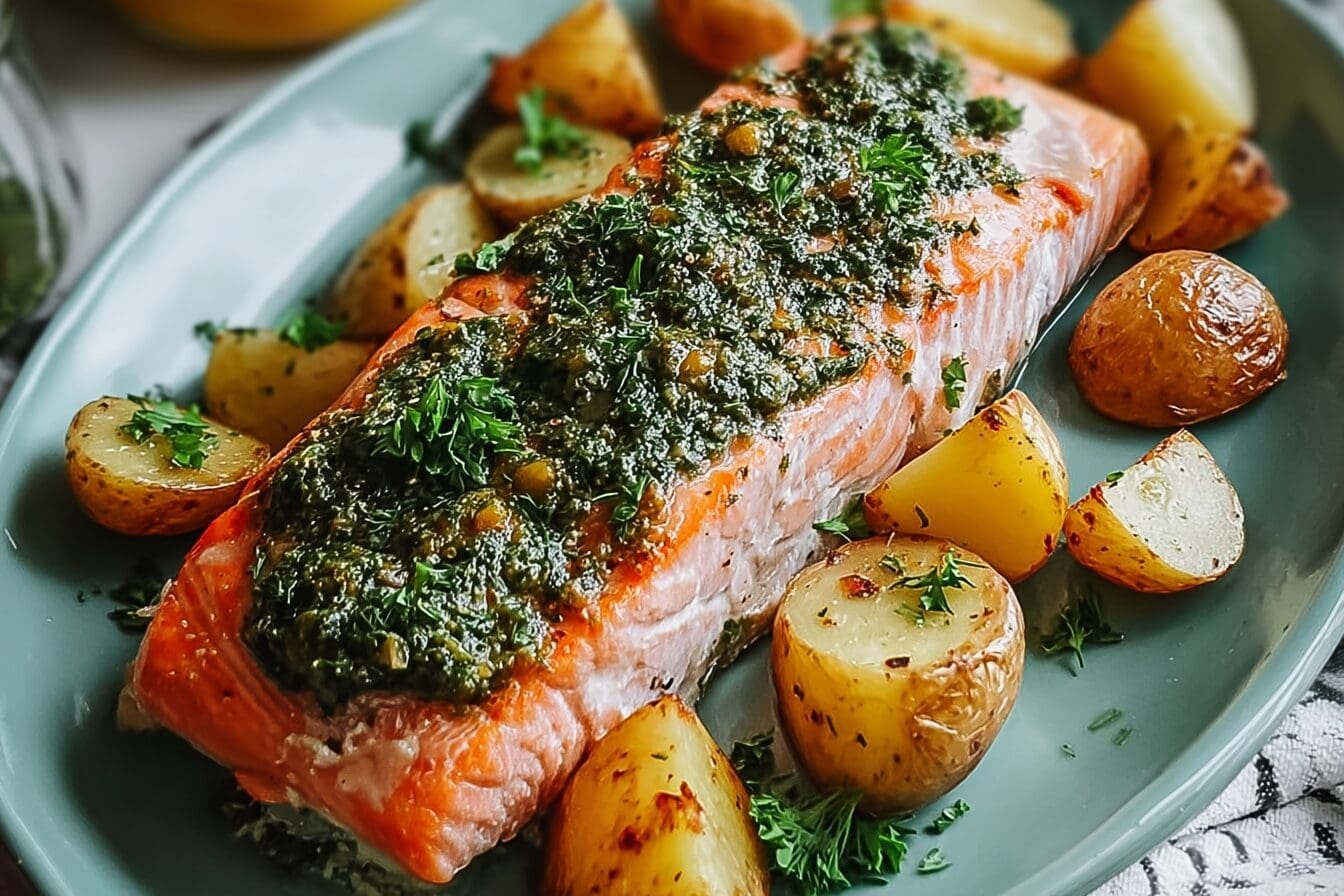
Why You’ll Love This Salmon
Salmon stands as a migratory fish native to the Northern Hemisphere, encompassing seven commercially important species divided into Atlantic salmon (Salmo salar) and Pacific salmon (Oncorhynchus species). This recipe highlights its straightforward preparation, requiring minimal ingredients and only about 15-20 minutes of cooking time, which makes it ideal for busy parents and working professionals seeking healthy meals on weeknights. Additionally, salmon delivers rich omega-3 fatty acids, high-quality protein, and essential vitamins that support heart health, brain function, and overall wellness, appealing to diet-conscious individuals and food enthusiasts alike.
Its versatility allows easy adaptation to various dietary needs, such as keto, paleo, gluten-free, and low-carb diets, by simply adjusting sides and seasonings. The natural, rich taste of salmon pairs wonderfully with herbs and spices that enhance its flavor without overwhelming it, creating a satisfying meal for seniors and newlyweds. Nutritionally, a 100-gram serving provides proteins, omega-3 fatty acids like EPA and DHA, vitamins D and B-complex, selenium, and carotenoid pigments such as astaxanthin, which imparts the fish’s distinctive pink to red color and benefits both farmed and wild varieties for heart and brain health.
Jump To
- 1. Why You’ll Love This Salmon
- 2. Essential Ingredients for Salmon
- 3. How to Prepare the Perfect Salmon: Step-by-Step Guide
- 4. Dietary Substitutions to Customize Your Salmon
- 5. Mastering Salmon: Advanced Tips and Variations
- 6. How to Store Salmon: Best Practices
- 7. FAQs: Frequently Asked Questions About Salmon
- 8. Salmon
Essential Ingredients for Salmon
Salmon recipes rely on fresh, high-quality ingredients to highlight the fish’s natural flavors and nutritional benefits. Below is a comprehensive structured list of all ingredients needed for this recipe, incorporating precise measurements from the provided details. Each item ensures the dish remains adaptable and delicious.
- About 200-250 grams of fresh salmon fillets or steaks per serving – Provides the main protein and healthy fats.
- 4 salmon fillets (6 oz each) – Equivalent to the above for multiple servings.
- 2 tablespoons olive oil – Used for cooking and adding healthy monounsaturated fats, or substitute with 1 tablespoon of butter for richness.
- 1 lemon (juiced) – Adds bright acidity and enhances flavor, which aligns with 1 teaspoon of fresh lemon or lime juice suggested.
- 2 garlic cloves (minced) – Adds aromatic depth and antioxidants.
- 1 teaspoon sea salt – Enhances overall taste, to taste as needed.
- 1/2 teaspoon black pepper – Adds subtle heat and flavor balance, to taste.
- 1 tablespoon of fresh herbs like dill, parsley, or thyme – For seasoning and flavor enhancement.
- 1 teaspoon soy sauce (optional) – For added depth, if desired.
- 1 teaspoon honey (optional) – To sweeten and balance flavors.
- 1 teaspoon mustard (optional) – For a tangy twist in marinades or glazes.
- Spices according to taste (optional) – Such as those for variations.
For special dietary options, consider these adaptations: Vegan diets can replace salmon with marinated tofu or grilled portobello mushrooms, while all listed ingredients remain naturally gluten-free for those needs. Low-calorie versions might use cooking spray instead of olive oil and pair with steamed vegetables to maintain nutritional value.
How to Prepare the Perfect Salmon: Step-by-Step Guide
Preparing salmon involves understanding its life cycle, which begins as eggs in freshwater streams where it hatches, migrates to the ocean to mature, and returns to spawn, though some populations stay in freshwater throughout their stages of alevin, parr, smolt, and adults. To start, preheat your oven to 400°F (200°C) and line a baking tray with parchment paper for easy cleanup, ensuring the cooking surface is lightly oiled with olive oil or butter to prevent sticking. Pat the salmon fillets dry with paper towels to promote better seasoning adherence and a crispier finish.
Next, drizzle olive oil over each fillet and rub it evenly on all sides, then season with sea salt, black pepper, minced garlic, and herbs like dill or thyme for enhanced flavor. Place the salmon on the prepared baking tray skin-side down, which helps retain moisture as advised in cooking tips. Bake for 12-15 minutes until the salmon flakes easily with a fork and reaches an internal temperature of 145°F (63°C), typically taking 10-15 minutes total with 5-10 minutes for preparation depending on the method.
After baking, let the salmon rest briefly to maintain its moisture and juices, then optionally squeeze fresh lemon juice over it before serving. For variations, consider marinating the fillets or adding glazes like honey and mustard beforehand, ensuring you use fresh or properly thawed salmon to avoid overcooking. Explore more salmon variations on our site for creative twists.

Dietary Substitutions to Customize Your Salmon
Salmon’s migratory nature and nutritional profile make it a flexible choice, with species like Atlantic salmon adapting to various environments. Protein and main component alternatives include replacing salmon with marinated tofu or tempeh for vegan diets, providing plant-based protein that mirrors salmon’s omega-3 benefits from sources like EPA and DHA. White fish such as cod or tilapia offer a milder flavor and lower fat content, while shellfish like shrimp or scallops suit pescatarians seeking similar healthy fats.
For vegetable, sauce, and seasoning modifications, swap asparagus and green beans for seasonal options like zucchini or bell peppers to align with low-carb needs. Use tamari or coconut aminos in place of soy sauce for gluten-free adaptations, and incorporate fresh ginger or smoked paprika into the seasoning blend for unique profiles that enhance the natural taste of salmon. Opt for dairy-free sauces such as avocado crema or tahini-based dressings to accommodate lactose intolerance, ensuring the dish remains rich in vitamins and antioxidants like astaxanthin.
| Dietary Need | Substitution | Benefit |
|---|---|---|
| Vegan | Marinated tofu | Maintains protein intake |
| Gluten-Free | Tamari sauce | Avoids gluten while adding flavor |
| Low-Calorie | Cooking spray | Reduces fat content |
Mastering Salmon: Advanced Tips and Variations
Understanding salmon’s life cycle from eggs and alevin in freshwater streams to adult stages in the ocean enhances advanced cooking techniques like searing skin-side down in a hot cast-iron skillet before oven-finishing for a crispier texture and tender interior. Flavor variations include experimenting with spice rubs such as blackened seasoning, maple glaze, or miso marinade to complement the fish’s natural richness and nutritional components like selenium and B-complex vitamins. Presentation tips involve plating salmon on a bed of vibrant vegetables, drizzling with citrus-infused oil, and garnishing with microgreens for an attractive, memorable finish.
Make-ahead options allow marinating salmon fillets overnight in the fridge, which aligns with tips for using fresh ingredients and letting flavors develop, then preparing side dishes in advance for quick assembly. To avoid overcooking and preserve moisture, use skin-on fillets and monitor cooking times of 3-5 minutes per side, typically totaling 10-15 minutes. Check out similar grilling techniques for more inspiration on seafood preparation.
How to Store Salmon: Best Practices
Salmon, whether wild or farmed, requires proper storage to maintain its beneficial healthy fats and omega-3 acids throughout its life stages. Store fresh salmon in an airtight container or tightly wrapped in plastic wrap in the coldest part of the fridge and use within 1-2 days to preserve quality. For longer preservation, wrap salmon tightly in plastic wrap and aluminum foil or vacuum seal it before freezing for up to 3 months, ensuring it retains its nutritional value like vitamins D and astaxanthin.
When reheating, gently bake at a low temperature or steam to keep moisture intact and prevent overcooking, which could diminish the fish’s natural flavors. Meal prep considerations involve portioning cooked salmon in airtight containers and pairing with prepped sides for quick, healthy meals during the week, aligning with tips for letting salmon rest briefly after cooking.
FAQs: Frequently Asked Questions About Salmon
Where do salmon lay their eggs and how do they choose the right place?
Salmon lay their eggs in freshwater gravel beds, usually in the same stream where they were born. Female salmon dig nests called redds into the gravel using their tails. They select spots with clean, oxygen-rich water and suitable flow to protect the eggs until they hatch. This site selection ensures the eggs are safe from predators and receive enough oxygen to develop properly.
How long do salmon live and what are the stages of their life cycle?
Salmon typically live between 3 to 7 years depending on the species. Their life cycle starts as eggs in freshwater, then hatching into alevin that remain in the gravel feeding on their yolk sac. They grow into parr with camouflage markings, then smolts, which adapt for saltwater life. After migrating to the ocean, they mature before returning upstream to spawn and usually die soon after.
What do salmon eat throughout their life and how does their diet change?
Young salmon feed on plankton and small aquatic insects in freshwater. As they grow into parr, their diet expands to include larger insects, crustaceans, and small fish. Adult salmon in the ocean mainly eat other fish, squid, shrimp, and krill. This shifting diet meets their changing nutritional needs as they develop and migrate.
Why are salmon important for the environment?
Salmon help transfer nutrients from the ocean to freshwater and terrestrial ecosystems when they migrate upstream to spawn. Their decomposing bodies enrich streams and nearby forests, supporting plants and animals such as bears, birds, and insects. This nutrient boost maintains healthy food webs and biodiversity in salmon habitats.
What are the biggest challenges threatening wild salmon populations today?
Wild salmon face habitat loss from dam construction and pollution, overfishing, and competition with farmed fish. Climate change affects water temperatures and stream flows, disrupting migration and spawning. Diseases and parasites from fish farms can spread to wild populations. Conservation efforts focus on habitat protection, responsible fishing, and reducing aquaculture impacts.
Salmon
- Total Time: 15-25 minutes
- Yield: 1 serving 1x
- Diet: Pescatarian
Description
🐟 Salmon is packed with omega-3 fatty acids and high-quality protein, making it an excellent choice for heart and brain health.
🍋 This recipe guide helps you achieve perfectly cooked salmon with fresh flavors and healthy ingredients for delicious meals every time.
Ingredients
About 200–250 grams fresh salmon fillets or steaks per serving for main protein and healthy fats
4 salmon fillets (6 oz each) equivalent to the above for multiple servings
2 tablespoons olive oil for cooking and adding healthy monounsaturated fats
1 tablespoon butter as alternative to olive oil for richness
1 lemon (juiced) adds bright acidity and enhances flavor
1 teaspoon fresh lemon or lime juice as suggested alternative for flavor
2 garlic cloves (minced) add aromatic depth and antioxidants
1 teaspoon sea salt enhances overall taste
1/2 teaspoon black pepper adds subtle heat and flavor balance
1 tablespoon fresh herbs like dill, parsley, or thyme for seasoning and flavor enhancement
1 teaspoon soy sauce (optional) for added depth
1 teaspoon honey (optional) to sweeten and balance flavors
1 teaspoon mustard (optional) for a tangy twist in marinades or glazes
Spices according to taste (optional) such as those for variations
Instructions
1-Prepare the Oven and Tray: Preheat your oven to 400°F (200°C) and line a baking tray with parchment paper for easy cleanup, ensuring the cooking surface is lightly oiled with olive oil or butter to prevent sticking. Pat the salmon fillets dry with paper towels to promote better seasoning adherence and a crispier finish.
2-Season the Salmon: Drizzle olive oil over each fillet and rub it evenly on all sides, then season with sea salt, black pepper, minced garlic, and herbs like dill or thyme for enhanced flavor. Place the salmon on the prepared baking tray skin-side down, which helps retain moisture as advised in cooking tips.
3-Bake the Salmon: Bake for 12-15 minutes until the salmon flakes easily with a fork and reaches an internal temperature of 145°F (63°C), typically taking 10-15 minutes total with 5-10 minutes for preparation depending on the method.
4-Rest and Serve: After baking, let the salmon rest briefly to maintain its moisture and juices, then optionally squeeze fresh lemon juice over it before serving.
Notes
🔥 Use fresh or properly thawed salmon to ensure the best texture and flavor.
⏲️ Avoid overcooking to maintain the salmon’s moisture and tenderness.
🌿 Cooking with skin-on fillets helps retain moisture, and adding citrus or fresh herbs enhances flavor.
- Prep Time: 5-10 minutes
- Cook Time: 10-15 minutes
- Category: Main Course
- Method: Grilling/Baking/Sautéing
- Cuisine: International
Nutrition
- Serving Size: 200-250 grams salmon fillet or steak
- Calories: 206
- Sugar: 0g
- Sodium: 50mg
- Fat: 12g
- Saturated Fat: 2g
- Unsaturated Fat: 8g
- Trans Fat: 0g
- Carbohydrates: 0g
- Fiber: 0g
- Protein: 22g
- Cholesterol: 63mg
Keywords: Salmon, Healthy Meals, Fresh Flavor, Cooking Tips