
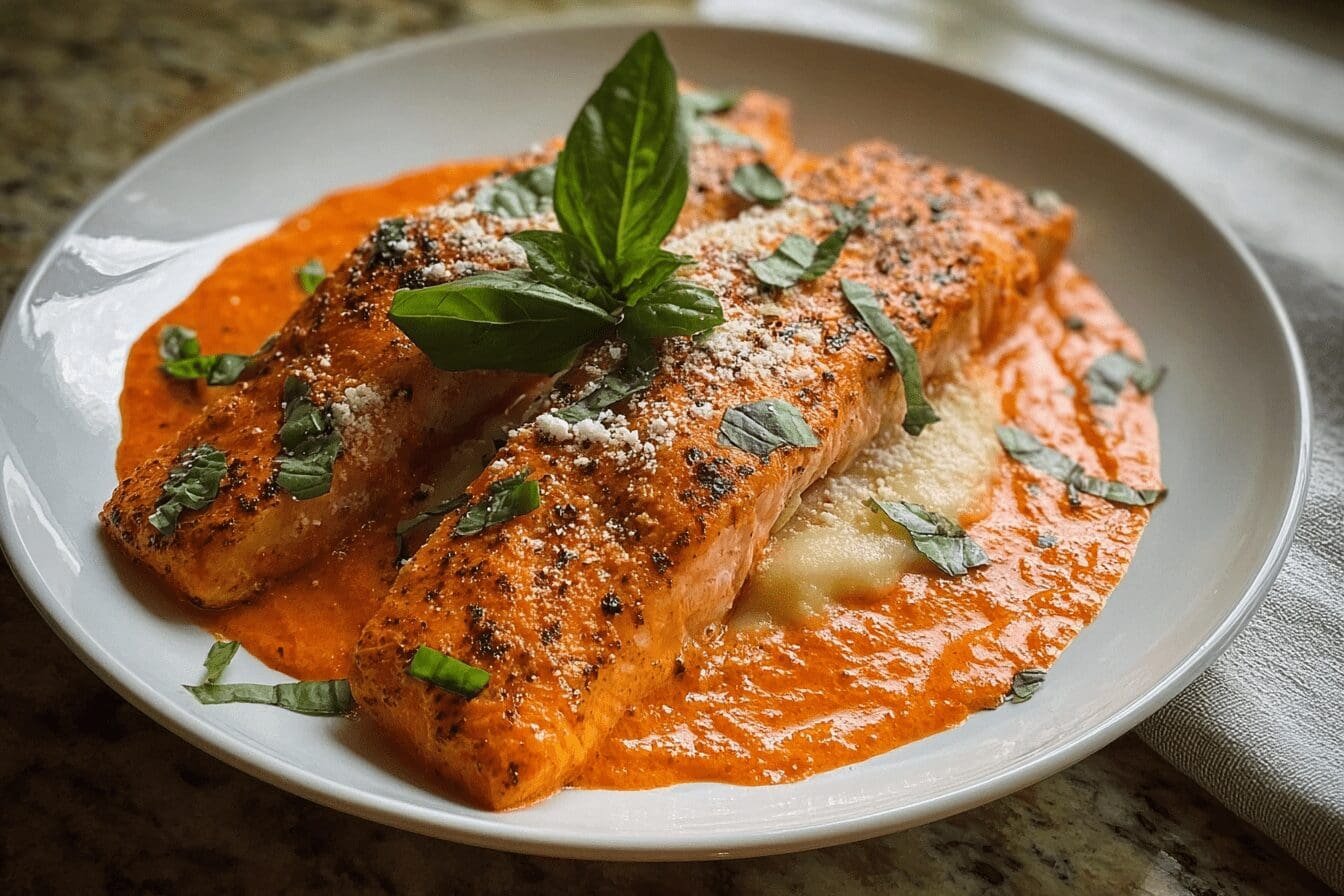
Why You’ll Love This Salmon
Salmon stands out as a nutritious and versatile fish that appeals to home cooks, busy parents, and health-conscious individuals alike. With its migratory life beginning in freshwater streams and maturing in the ocean, salmon offers not only rich flavors but also significant health benefits, such as high levels of omega-3 fatty acids that support heart health and brain function. This section explores why this fish, valued globally for commercial and recreational purposes, makes an excellent choice for easy, flavorful meals on Isabella Hayes’ blog at recipesisabella.com, where simple recipes inspire everyday cooking.
Health Benefits of Salmon
Salmon provides high protein, roughly 20-25 grams per 3-ounce cooked portion, and is packed with essential vitamins and minerals like vitamin D, B vitamins, selenium, and potassium. It is low in carbohydrates and features healthy fats that aid in inflammation control and overall wellness. Regularly including salmon in meals can enhance dietary balance, making it ideal for diet-conscious individuals seeking options that fit paleo, keto, or whole-food plans.
Ease and Versatility in Preparation
This salmon recipe focuses on simplicity with minimal prep and quick cooking times of 10-15 minutes, depending on thickness. The method adapts easily, whether baking, grilling, or searing, to suit busy schedules for students and working professionals. Plus, options like marinating with lemon juice and herbs enhance the fish’s natural red-orange flesh, colored by carotenoid pigments, for a memorable meal.
- Quick cooking preserves the fish’s moist texture and flakiness.
- Supports various diets without heavy creams or excess sodium.
- Allows for creative pairings with vegetables or grains.
Jump To
- 1. Why You’ll Love This Salmon
- 2. Essential Ingredients for Salmon
- 3. How to Prepare the Perfect Salmon: Step-by-Step Guide
- 4. Dietary Substitutions to Customize Your Salmon
- 5. Mastering Salmon: Advanced Tips and Variations
- 6. How to Store Salmon: Best Practices
- 7. FAQs: Frequently Asked Questions About Salmon
- 8. Salmon
Essential Ingredients for Salmon
In this section, we outline the key ingredients needed for preparing salmon, drawing from common items used in cooking. These elements highlight salmon’s role as a versatile ingredient, with its flesh ranging from orange to red due to dietary carotenoids.
Main Ingredients
- 1 lb (450 g) salmon fillets, skin on or off
- 1 tbsp olive oil
- 1 tsp kosher salt
- 1/2 tsp freshly ground black pepper
- 1 tbsp lemon juice
- 1 tsp honey or maple syrup (optional)
- 1 tsp Dijon mustard (optional)
- 1 tbsp finely chopped fresh dill or parsley
- 1 garlic clove, minced (optional)
Special Dietary Options
- For vegan diets: 14 oz (400 g) extra-firm tofu, pressed and seasoned similarly
- For gluten-free needs: Use tamari instead of soy sauce
- For low-calorie versions: Reduce oil to 1 tsp
Selecting wild-caught or responsibly farmed salmon ensures optimal taste and environmental benefits, as noted in tips for cooking this migratory fish.
How to Prepare the Perfect Salmon: Step-by-Step Guide
This guide covers the process of preparing salmon, a fish that begins life in freshwater and returns to spawn after ocean maturation. Follow these steps for baking, grilling, or searing to achieve the ideal internal temperature of 125 145°F (52 63°C), typically in 10-15 minutes.
First Steps: Preparation and Selection
Pat salmon fillets dry and check for pin bones, removing them with tweezers for even cooking. Let fillets sit at room temperature for 15 20 minutes and preheat your oven to 400°F (200°C) or heat a skillet over medium-high heat.
Seasoning and Marinade
Season with salt, pepper, and olive oil, then optionally add a marinade of lemon juice, Dijon, and honey for enhanced flavor.
Cooking Methods
For the best results, avoid overcooking to keep salmon moist and flaky, as recommended in general cooking tips.
| Method | Time | Tips |
|---|---|---|
| Pan-searing | 3 4 minutes per side | Use medium-high heat for a crisp exterior |
| Oven-roasting | 8 15 minutes | Roast at 400°F for even doneness |
| Grilling | 4 6 minutes per side | Oil grates to prevent sticking |
Final Steps: Checking Doneness and Serving
Use a thermometer to check internal temperature and let the salmon rest for 3 5 minutes. Serve with herbs and vegetables for a complete meal, incorporating salmon’s nutritional profile for added value. Here, consider trying a hoisin salmon noodle recipe for variety.

Dietary Substitutions to Customize Your Salmon
Salmon’s adaptability makes it suitable for various diets, given its status as a migratory fish rich in omega-3s. This section details options for protein swaps and flavor adjustments, aligning with the fish’s global farming and cultural importance.
- Protein alternatives: Tofu at 14 oz (400 g) or tempeh for vegan needs.
- Seasoning changes: Use oregano for Mediterranean flavors or ginger for Asian-inspired dishes.
- Low-sodium options: Rely on herbs and citrus to reduce salt.
Mastering Salmon: Advanced Tips and Variations
To elevate your salmon preparation, explore advanced techniques for this ocean-maturing fish. Sous vide at 115 125°F (46 52°C) ensures silky texture, while flavor variations like miso-maple glaze add depth.
Pro Techniques
- Reverse sear for thick fillets to avoid overcooking.
- Smoke infusion for subtle complexity.
Flavor and Presentation Ideas
Experiment with citrus-herb crusts or spiced blends, then present over purees for visual appeal.
How to Store Salmon: Best Practices
Proper storage maintains salmon’s quality, considering its role as a nutritious fish with carotenoids in its flesh. Refrigerate cooked salmon in an airtight container for up to 3 days and freeze raw portions for 3 4 months.
- Thaw in the fridge overnight to preserve texture.
- Reheat gently at low temperatures.
FAQs: Frequently Asked Questions About Salmon
What is the typical life cycle of a salmon?
Salmon begin their life in freshwater, hatching from eggs laid in riverbeds. After emerging as alevin, they develop into parr and live in the stream for several months to years. As smolts, they adapt to saltwater and migrate to the ocean for growth. Once mature, salmon return to their birth streams to spawn. Pacific salmon usually die after spawning, while Atlantic salmon can survive to spawn multiple times.
Where do wild salmon live and migrate?
Wild Atlantic salmon are found in rivers across the North Atlantic coasts, while Pacific salmon inhabit rivers and coastal waters from northern Asia to North America’s west coast. Many salmon migrate between freshwater birthplaces and the ocean to mature. Some populations live entirely in freshwater lakes or rivers, known as landlocked salmon.
What do salmon eat throughout their life stages?
Juvenile salmon feed on plankton, aquatic insects, and small crustaceans in freshwater. As they grow and migrate to the ocean, their diet shifts to include larger prey such as fish, squid, and krill. This diet is rich in protein and omega-3 fatty acids, supporting their rapid growth and energy needs during migration.
What are the main threats impacting salmon populations today?
Salmon face threats from habitat loss due to damming and pollution, overfishing, diseases, and parasites like sea lice. Climate change also alters water temperature and flow patterns, affecting survival rates. Additionally, interactions with salmon farms can spread disease to wild stocks, compounding decline risks.
How is salmon fishing regulated to protect populations?
Salmon fisheries management includes setting fishing quotas, seasonal restrictions, and gear limits to prevent overharvesting. Habitat restoration and hatchery programs support population recovery. Some regions focus on sustainable fishing practices backed by scientific monitoring to balance economic needs with conservation goals.
Salmon
- Total Time: 25 to 45 minutes
- Yield: 3–4 servings 1x
- Diet: Pescatarian, Gluten-Free, Low-Carb
Description
🐟 Enjoy the rich flavor and health benefits of salmon with easy cooking methods that fit any schedule.
🍋 This versatile fish is perfect for quick meals that are both nutritious and delicious, bringing the best of flavor and convenience together.
Ingredients
1 lb (450 g) salmon fillets, skin on or off
1 tbsp olive oil
1 tsp kosher salt
1/2 tsp freshly ground black pepper
1 tbsp lemon juice
1 tsp honey or maple syrup (optional)
1 tsp Dijon mustard (optional)
1 tbsp finely chopped fresh dill or parsley
1 garlic clove, minced (optional)
14 oz (400 g) extra-firm tofu for vegan diets, pressed and seasoned similarly
tamari instead of soy sauce for gluten-free needs
1 tsp olive oil for low-calorie versions
Instructions
1-First Steps: Pat salmon fillets dry and check for pin bones, removing them with tweezers for even cooking. Let fillets sit at room temperature for 15 20 minutes and preheat your oven to 400°F (200°C) or heat a skillet over medium-high heat.
2-Seasoning and Marinade: Season with salt, pepper, and olive oil, then optionally add a marinade of lemon juice, Dijon, and honey for enhanced flavor.
3-Cooking Methods: For the best results, avoid overcooking to keep salmon moist and flaky, as recommended in general cooking tips.
4-Final Steps: Use a thermometer to check internal temperature and let the salmon rest for 3 5 minutes. Serve with herbs and vegetables for a complete meal, incorporating salmon’s nutritional profile for added value. Here, consider trying a hoisin salmon noodle recipe for variety.
Notes
🐠 Choose wild-caught or responsibly farmed salmon for better flavor and sustainability.
⏳ Avoid overcooking to keep the salmon moist and tender with a slightly pink center.
🔥 Cooking with the skin on helps retain moisture and adds texture when crispy.
- Prep Time: 15 minutes (including optional marinating)
- Marinating Time: 15 to 30 minutes
- Cook Time: 10 to 15 minutes
- Category: Main Course
- Method: Baking, Grilling, Sautéing, Broiling
- Cuisine: Global
Nutrition
- Serving Size: 3 oz cooked salmon
- Calories: 200
- Carbohydrates: 0g
- Fiber: 0g
- Protein: 20-25g
Keywords: Salmon recipes,Easy salmon dishes,Healthy salmon,Quick salmon meals