
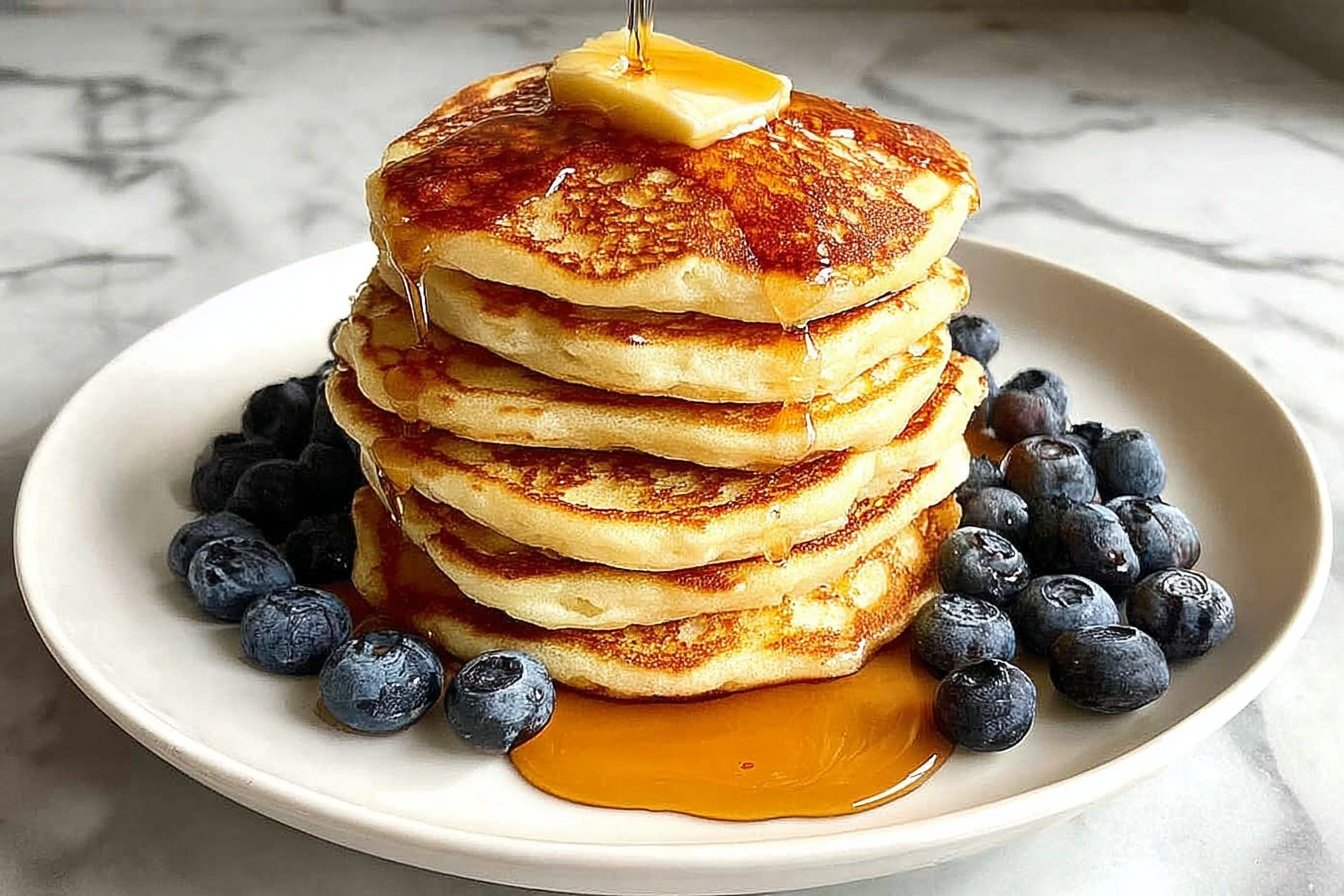
Why You’ll Love This Ricotta Pancakes
If you’ve never tried ricotta in pancakes before, prepare to be pleasantly surprised. These fluffy ricotta pancakes are soft, moist, and just begging to be smothered in maple syrup (and maybe a few berries if you’re feeling fancy). This recipe brings together simple ingredients and straightforward techniques to create a breakfast that feels special without requiring hours in the kitchen.
Here’s why this ricotta pancakes recipe deserves a permanent spot in your breakfast rotation:
- Ease of preparation: With just 15 minutes of prep time and 30 minutes on the stove, you can have a stack of golden, fluffy ricotta pancakes on the table in under an hour. The batter comes together in one bowl with no fancy equipment needed, just a whisk and a little elbow grease.
- Health benefits: Each pancake packs 6g of protein and 106mg of calcium thanks to the ricotta cheese and eggs. They’re more filling than regular pancakes, which means a smaller stack will keep you satisfied longer. At 148 calories per pancake (before toppings), they fit nicely into a balanced morning meal.
- Versatility: This easy fluffy ricotta pancakes recipe works with full-fat, low-fat, or even non-dairy milk. You can make them gluten-free with a simple flour swap, and the batter holds up beautifully to add-ins like blueberries or lemon zest.
- Distinctive flavor: The ricotta adds a subtle creaminess and richness that regular pancakes just don’t have. They’re tender and moist inside with a delicate golden crust outside, making them the best ricotta pancakes you’ll taste outside a brunch spot.
Jump To
- 1. Why You’ll Love This Ricotta Pancakes
- 2. Essential Ingredients for Ricotta Pancakes
- 3. How to Prepare the Perfect Ricotta Pancakes: Step-by-Step Guide
- 4. Dietary Substitutions to Customize Your Ricotta Pancakes
- 5. Mastering Ricotta Pancakes: Advanced Tips and Variations
- 6. How to Store Ricotta Pancakes: Best Practices
- 7. FAQs: Frequently Asked Questions About Ricotta Pancakes
- 8. Ricotta Pancakes
Essential Ingredients for Ricotta Pancakes
The secret to making fluffy ricotta pancakes lies in using the right ingredients in the right proportions. Here’s everything you’ll need to make about 10 pancakes:
Wet Ingredients
- 3/4 cup full fat ricotta cheese – Use standard ricotta, not whipped or spreadable varieties. Full-fat ricotta provides the creaminess and moisture that makes these pancakes so tender.
- 3 large eggs (55g/2oz each) – Fridge cold is perfectly fine. Eggs bind the batter and add richness.
- 3 tablespoons caster (superfine) sugar – Adds just enough sweetness without making the pancakes dessert-like.
- 3/4 cup milk – Full fat preferred for the richest flavor, but low fat or non-dairy alternatives work too.
- 1/2 teaspoon vanilla extract – Rounds out the flavor with a warm, aromatic note.
- 1 teaspoon white vinegar or clear vinegar (or lemon juice) – Activates the baking soda for extra lift without leaving any vinegary taste.
Dry Ingredients
- 1 1/3 cups plain/all-purpose flour – The foundation of the pancake structure.
- 2 teaspoons baking powder – Provides the steady rise that makes these fluffy ricotta pancakes so light.
- 1/4 teaspoon baking soda (bi-carb) – Works with the vinegar for an extra lift. Use 3/4 teaspoon extra baking powder if you don’t have baking soda.
- Pinch of salt – Balances the sweetness and enhances all the flavors.
For Cooking and Serving
- 1 tablespoon melted butter – For lightly greasing the pan and creating that beautiful golden crust.
- 8 oz (250g) strawberries, halved or quartered – For the macerated strawberry topping.
- 1 tablespoon caster sugar – For macerating the strawberries.
- Maple syrup – For serving (because what’s a pancake without maple syrup?).
Special Dietary Options
You can easily adapt this recipe for different dietary needs:
- Gluten-free: Swap the all-purpose flour for a 1:1 gluten-free flour blend. The texture remains fluffy and tender.
- Dairy-free: Use almond or oat milk, and substitute the ricotta with a plant-based alternative (though the texture may be slightly different).
- Lower calorie: Use low-fat milk and reduce the sugar to 2 tablespoons. You can also use a sugar substitute if preferred.
For more breakfast inspiration that uses cottage cheese (a close cousin to ricotta), check out this blueberry cottage cheese breakfast bake for another protein-packed morning option.
How to Prepare the Perfect Ricotta Pancakes: Step-by-Step Guide
Now for the fun part! Making these fluffy ricotta pancakes is straightforward, but a few key techniques make all the difference between good pancakes and great ones.
Step 1: Prepare the Wet Ingredients
Start by grabbing a large mixing bowl. Add your ricotta cheese, eggs, caster sugar, milk, vanilla extract, and vinegar (or lemon juice). Now here’s the important part: whisk vigorously. You want to break up the ricotta until there are no large clumps remaining. This usually takes about 30-45 seconds of enthusiastic whisking. The mixture won’t be completely smooth, and that’s okay, but you shouldn’t see any big chunks of ricotta floating around.
Pro tip: If your ricotta is particularly wet or watery, let it drain in a fine-mesh sieve for 10-15 minutes before using. This prevents soggy pancakes.
Step 2: Add the Dry Ingredients
Scatter the flour, baking powder, baking soda, and salt over the wet ingredients. Now, whisk gently until just combined. The batter will be thicker than regular pancake batter, and that’s exactly what you want. Don’t overmix! A few small lumps are perfectly fine. Overmixing develops gluten, which leads to tough, rubbery pancakes instead of tender, fluffy ones.
The batter should be thick enough to hold its shape when scooped but still spreadable. If it seems too thick, add a tablespoon of milk. Too thin? Add a tablespoon of flour. The ricotta makes this batter denser than your average pancake batter, so trust the process.
Step 3: Heat the Pan
Place a non-stick pan over medium heat and let it warm up for about 2 minutes. Lightly brush the surface with melted butter, then use a paper towel to wipe off the excess. This might seem counterintuitive, but too much butter causes uneven browning and those dreaded splotchy spots on your pancakes. You want just the thinnest film of fat on the pan.
Step 4: Cook the Pancakes
Use an ice cream scoop or measuring cup to pour 1/4 cup of batter per pancake onto the pan. The batter will be thick, so you might need to gently coax it to spread evenly with the back of your scoop. Keep them thick, though, that’s part of what makes these fluffy ricotta pancakes so wonderful.
Cook the first side for about 1.5 minutes until golden brown. You’ll know they’re ready to flip when you see bubbles forming on the surface and the edges look set. Flip carefully and cook the other side for another 1.5 minutes. If the pancakes are browning too fast, lower the heat slightly. You want a gentle golden color, not dark brown.
| Visual Cue | What It Means |
|---|---|
| Bubbles forming on surface | Ready to flip |
| Edges look dry and set | Ready to flip |
| Golden brown color | Perfectly cooked |
| Browning too quickly | Lower the heat |
Step 5: Keep Warm and Repeat
Stack cooked pancakes on a plate as you work. If you’re cooking in one pan and want to serve them all at once, keep them warm in a low oven (about 200°F) on a wire rack. This prevents the bottom pancakes from getting soggy from steam.
Step 6: Prepare the Macerated Strawberries
While your pancakes are cooking (or earlier, since they need time), toss the halved or quartered strawberries with 1 tablespoon of caster sugar. Let them sit for at least 20 minutes before serving. The sugar draws out the strawberries’ natural juices, creating a sweet, fruity syrup. This process also softens the berries and intensifies their flavor. It’s particularly helpful if you’re working with under-ripe strawberries.
Step 7: Serve
Stack those beautiful golden pancakes on plates, top generously with the macerated strawberries and their syrup, add a pat of softened butter, and drizzle with plenty of maple syrup. This best ricotta pancakes recipe deserves a proper breakfast spread, so don’t hold back on the toppings!
For a savory breakfast option that pairs beautifully with these sweet pancakes, you might enjoy these cabbage eggs as a side dish.

Dietary Substitutions to Customize Your Ricotta Pancakes
One of the best things about this ricotta pancakes recipe is how adaptable it is. Whether you’re cooking for someone with dietary restrictions or simply want to switch things up, here are some tried-and-true substitutions.
Protein and Main Component Alternatives
The ricotta cheese is the star of this recipe, but you do have options if you need them:
- Cottage cheese: Small-curd cottage cheese works as a substitute for ricotta, though the texture will be slightly different. Blend it briefly for a smoother consistency closer to ricotta.
- Gluten-free flour: Use a 1:1 gluten-free baking flour blend. The pancakes may need an extra minute of cooking time due to different moisture absorption.
- Egg substitutes: For each egg, you can use 3 tablespoons of aquafaba (chickpea liquid) or a commercial egg replacer. The texture will be slightly less rich.
According to Organic Valley, both ricotta and cottage cheese offer protein and calcium, but ricotta has a creamier texture that works beautifully in baked goods like pancakes.
Milk and Sweetener Modifications
The milk and sweeteners in this recipe can be adjusted based on your preferences:
- Non-dairy milk: Almond, oat, or soy milk all work well. Oat milk tends to produce the creamiest results closest to whole milk.
- Honey or maple syrup: Replace the caster sugar with an equal amount of honey or maple syrup for a different flavor profile. Reduce the milk by 1 tablespoon to account for the added liquid.
- Sugar alternatives: Stevia, erythritol, or monk fruit sweetener can replace the sugar for a lower-calorie version. Check the package for conversion ratios as they vary by brand.
Mastering Ricotta Pancakes: Advanced Tips and Variations
Ready to take your fluffy ricotta pancakes from great to extraordinary? These pro tips and creative variations will help you achieve pancake perfection every time.
Pro Cooking Techniques
- The butter trick: Melt your butter and wipe the excess for an even golden brown color. Too much butter creates uneven hot spots that burn the pancakes before they’re cooked through.
- The ice cream scoop method: Using a standard ice cream scoop (about 1/4 cup) ensures every pancake is the same size and cooks at the same rate. No more tiny burnt ones and giant undercooked ones!
- The 3-minute rule: Cook pancakes for at least 3 minutes total (1.5 minutes per side) to ensure they’re fully cooked inside. The moist ricotta interior needs time to set.
- Test batch: Always cook one test pancake first to check your heat level and batter consistency before committing to the whole batch.
Flavor Variations
Once you’ve mastered the basic recipe, try these delicious variations:
- Lemon ricotta pancakes: Add 1 tablespoon of lemon zest to the wet ingredients and reduce the vanilla to 1/4 teaspoon. Serve with fresh berries and a dusting of powdered sugar.
- Blueberry ricotta pancakes: Gently fold 1/2 cup of fresh or frozen blueberries into the batter just before cooking. The ricotta’s creaminess pairs beautifully with the tart berries.
- Chocolate chip ricotta pancakes: Sprinkle a few mini chocolate chips onto each pancake after pouring the batter into the pan. These are a hit with kids and chocolate lovers alike!
- Cinnamon spice: Add 1/2 teaspoon of ground cinnamon and a pinch of nutmeg to the dry ingredients for a warming spice flavor.
Presentation Tips
Make your easy fluffy ricotta pancakes look as good as they taste:
- Stack them high on a warm plate for an impressive presentation
- Top with macerated strawberries, their syrup pooling down the sides
- Add a pat of softened butter right on top so it melts into the stack
- Dust with powdered sugar for a restaurant-worthy finish
- Serve with warmed maple syrup in a small pitcher alongside
Make-Ahead Options
For busy mornings, ricotta pancakes are surprisingly meal-prep friendly:
- Batter: You can make the batter the night before and store it covered in the refrigerator. Give it a gentle stir before cooking.
- Cooked pancakes: Cook a double batch on Sunday and enjoy them throughout the week. They reheat beautifully.
- Dry mix: Combine all the dry ingredients in a jar labeled with the recipe name and the wet ingredients needed. This cuts your prep time in half!
If you love make-ahead breakfast options, you might also enjoy this ham and cheese hash brown casserole for a hearty breakfast that’s ready when you are.
How to Store Ricotta Pancakes: Best Practices
The beauty of ricotta pancakes is that they hold their moisture well and actually reheat better than regular pancakes. Here’s how to store them properly for maximum freshness.
Refrigeration
Leftover pancakes keep well in the refrigerator for 3-4 days when stored in an airtight container. Place a piece of parchment paper between layers if you’re stacking them to prevent sticking. Let them cool completely before storing to avoid condensation, which can make them soggy.
Freezing
For longer storage, these pancakes freeze beautifully for up to 3 months. Flash freeze them individually on a baking sheet for 1-2 hours until solid, then transfer to a freezer bag with the air pressed out. This prevents them from sticking together and makes it easy to grab just one or two at a time. Label the bag with the date so you know when they were made.
Reheating
There are several ways to reheat your fluffy ricotta pancakes without drying them out:
- Toaster: Pop them straight from the fridge or freezer into the toaster for a quick, crispy exterior.
- Microwave: Heat for 20-30 seconds, covered with a damp paper towel to retain moisture.
- Dry skillet: Warm over medium-low heat for 1-2 minutes per side for crisp edges.
- Oven: Wrap in foil and warm at 300°F for 10-15 minutes if reheating a large batch.
Avoid steaming methods as they can make the pancakes mushy. The goal is to warm them through while maintaining that lovely fluffy texture.
FAQs: Frequently Asked Questions About Ricotta Pancakes
What type of ricotta is best for ricotta pancakes?
For the fluffiest ricotta pancakes, choose full-fat, standard ricotta cheese from the deli counter or in vacuum-sealed basket packs. Avoid whipped, spreadable, or powdery varieties like Perfect Italiano, as they can make the batter too thin or dry. Fresh, creamy ricotta with a smooth texture blends seamlessly into the batter, adding moisture without excess whey. Drain it lightly in a sieve for 10-15 minutes if it’s very wet to prevent soggy pancakes. This simple swap ensures light, tender results every time. Test a small batch if switching brands to check consistency.
Why do ricotta pancakes use both baking powder and baking soda?
Ricotta cheese adds density and weight to the batter, which can lead to flat pancakes. Baking powder provides steady lift through heat and moisture, while baking soda reacts quickly with acids for an extra burst of rise, creating tall, fluffy textures. Together, they counteract the ricotta’s heaviness for restaurant-style height. Use 1 teaspoon baking powder and 1/2 teaspoon baking soda per cup of flour as a standard ratio. Skip one, and pancakes may stay dense—test by checking if bubbles form vigorously in the batter before cooking.
Why add vinegar or lemon juice to ricotta pancake batter?
A small amount of vinegar or lemon juice (1-2 teaspoons) activates the baking soda, producing carbon dioxide bubbles for maximum lift without a sour taste. The acid balances the batter’s pH, ensuring even rising and tender crumbs. It also tenderizes the flour proteins slightly for softer pancakes. Use white vinegar, apple cider vinegar, or fresh lemon juice—stir it in with the wet ingredients. The flavor mellows during cooking, leaving just a hint of brightness. This trick is key for ricotta’s natural density, mimicking buttermilk pancakes without extra dairy.
How long to cook ricotta pancakes on the stove for perfect results?
Cook ricotta pancakes over medium heat for 3 minutes total: 1.5 minutes per side until golden brown and cooked through. Use a non-stick pan with minimal butter—melt 1 teaspoon, wipe excess with a paper towel to avoid burning and splotches. Look for bubbles on the surface and dry edges before flipping. Keep heat medium-low if browning too fast; the moist ricotta interior needs time to set without drying out. An ice cream scoop (1/4 cup batter) ensures even portions. Stack on a wire rack in a 200°F oven to stay warm without sogginess.
Can I make ricotta pancakes ahead and how do I store them?
Yes, ricotta pancakes store well due to their moist texture. Refrigerate in an airtight container for 3-4 days or freeze stacked with parchment paper between them for up to 3 months. Reheat in a toaster, microwave (20-30 seconds covered), or dry skillet for crisp edges—avoid steaming methods to prevent mushiness. They’re better than regular pancakes post-freeze, retaining fluffiness. For best taste, portion batter fresh or cook extras plain before topping. Pair with maple syrup and macerated strawberries (slice berries, toss with 1 tbsp sugar, let sit 10 minutes) for a quick breakfast revival.
Ricotta Pancakes
- Total Time: 45 minutes
- Yield: 10 pancakes
- Diet: Vegetarian
Description
🥞 Discover the ultimate fluffiness in these ricotta pancakes, tender and moist with every bite thanks to creamy ricotta.
🍓 Pair with macerated strawberries and maple syrup for a breakfast that’s light yet indulgent and sure to impress.
Ingredients
– 3/4 cup full fat ricotta cheese
– 3 large eggs (55g/2oz each)
– 3 tablespoons caster (superfine) sugar
– 3/4 cup milk
– 1/2 teaspoon vanilla extract
– 1 teaspoon white vinegar or clear vinegar (or lemon juice)
– 1 1/3 cups plain/all-purpose flour
– 2 teaspoons baking powder
– 1/4 teaspoon baking soda (bi-carb)
– Pinch of salt
– 1 tablespoon melted butter
– 8 oz (250g) strawberries, halved or quartered
– 1 tablespoon caster sugar
– Maple syrup
Instructions
1-Step 1: Prepare the Wet Ingredients Start by grabbing a large mixing bowl. Add your ricotta cheese, eggs, caster sugar, milk, vanilla extract, and vinegar (or lemon juice). Now here’s the important part: whisk vigorously. You want to break up the ricotta until there are no large clumps remaining. This usually takes about 30-45 seconds of enthusiastic whisking. The mixture won’t be completely smooth, and that’s okay, but you shouldn’t see any big chunks of ricotta floating around.
2-Step 2: Add the Dry Ingredients Scatter the flour, baking powder, baking soda, and salt over the wet ingredients. Now, whisk gently until just combined. The batter will be thicker than regular pancake batter, and that’s exactly what you want. Don’t overmix! A few small lumps are perfectly fine. Overmixing develops gluten, which leads to tough, rubbery pancakes instead of tender, fluffy ones. The batter should be thick enough to hold its shape when scooped but still spreadable. If it seems too thick, add a tablespoon of milk. Too thin? Add a tablespoon of flour. The ricotta makes this batter denser than your average pancake batter, so trust the process.
3-Step 3: Heat the Pan Place a non-stick pan over medium heat and let it warm up for about 2 minutes. Lightly brush the surface with melted butter, then use a paper towel to wipe off the excess. This might seem counterintuitive, but too much butter causes uneven browning and those dreaded splotchy spots on your pancakes. You want just the thinnest film of fat on the pan.
4-Step 4: Cook the Pancakes Use an ice cream scoop or measuring cup to pour 1/4 cup of batter per pancake onto the pan. The batter will be thick, so you might need to gently coax it to spread evenly with the back of your scoop. Keep them thick, though, that’s part of what makes these fluffy ricotta pancakes so wonderful. Cook the first side for about 1.5 minutes until golden brown. You’ll know they’re ready to flip when you see bubbles forming on the surface and the edges look set. Flip carefully and cook the other side for another 1.5 minutes. If the pancakes are browning too fast, lower the heat slightly. You want a gentle golden color, not dark brown.
5-Step 5: Keep Warm and Repeat Stack cooked pancakes on a plate as you work. If you’re cooking in one pan and want to serve them all at once, keep them warm in a low oven (about 200°F) on a wire rack. This prevents the bottom pancakes from getting soggy from steam.
6-Step 6: Prepare the Macerated Strawberries While your pancakes are cooking (or earlier, since they need time), toss the halved or quartered strawberries with 1 tablespoon of caster sugar. Let them sit for at least 20 minutes before serving. The sugar draws out the strawberries’ natural juices, creating a sweet, fruity syrup. This process also softens the berries and intensifies their flavor. It’s particularly helpful if you’re working with under-ripe strawberries.
7-Step 7: Serve Stack those beautiful golden pancakes on plates, top generously with the macerated strawberries and their syrup, add a pat of softened butter, and drizzle with plenty of maple syrup. This best ricotta pancakes recipe deserves a proper breakfast spread, so don’t hold back on the toppings!
Notes
🥛 Use full-fat ricotta for the best flavor and creaminess; avoid whipped varieties.
🧪 The vinegar activates the baking soda for extra lift without any taste.
🍨 Use an ice cream scoop for perfectly portioned 1/4-cup pancakes.
- Prep Time: 15 minutes
- Macerating: 20 minutes
- Cook Time: 30 minutes
- Category: Breakfast
- Method: Pan-fried
- Cuisine: American
Nutrition
- Serving Size: 1 pancake
- Calories: 148 kcal
- Sugar: 5g
- Sodium: 51mg
- Fat: 6g
- Saturated Fat: 3g
- Unsaturated Fat: 2.5g
- Trans Fat: 0.1g
- Carbohydrates: 18g
- Fiber: 0.5g
- Protein: 6g
- Cholesterol: 64mg
Keywords: fluffy pancakes, ricotta pancakes, breakfast pancakes, strawberry pancakes