
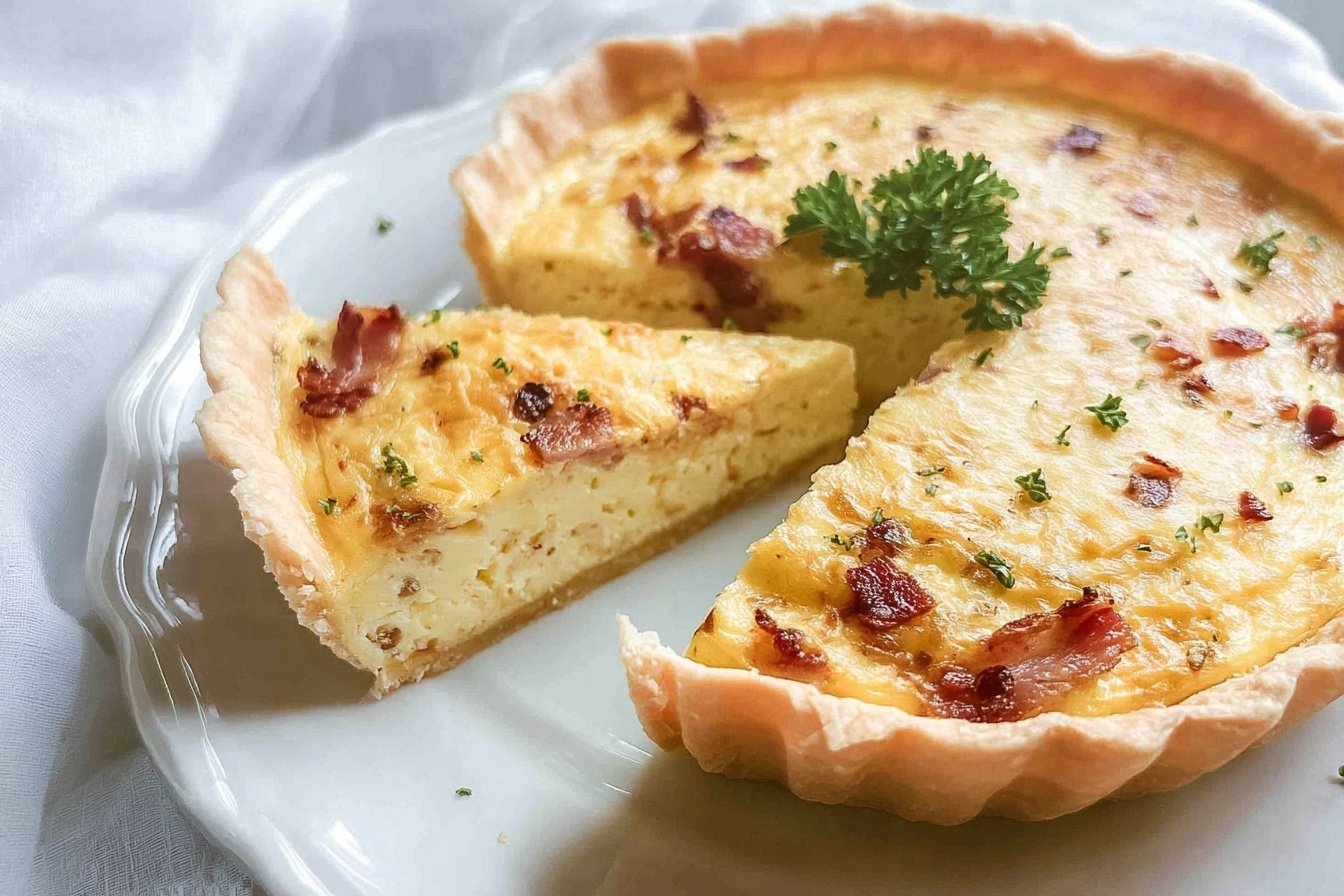
Why You’ll Love This Quiche Lorraine
If you are searching for a Quiche Lorraine that feels classic, cozy, and easy to make, this one checks every box. It has a buttery, sturdy crust, smoky bacon, silky custard, and nutty Gruyère, so every bite tastes rich without feeling complicated. It works well for brunch, lunch, or a simple dinner with salad, which makes it a smart recipe for busy home cooks.
- Easy to prepare: Using a 9-inch deep-dish frozen pie crust cuts down on prep time and keeps the recipe approachable, even on a weeknight.
- Good balance of protein and richness: Eggs, bacon, cream, and cheese give this quiche satisfying protein and staying power, making it a solid meal choice.
- Flexible for different schedules: You can bake it ahead, refrigerate it, and reheat slices later for breakfast, lunch, or dinner.
- Distinctive flavor: The mix of bacon, shallots, Gruyère, nutmeg, and cayenne gives this bacon quiche a deep, savory flavor that stands out from a basic cheese quiche.
For readers who enjoy brunch recipes, this quiche recipe fits right in beside other comfort food favorites like ham and cheese hash brown casserole or cheesy spinach artichoke bagels. It brings the same satisfying comfort, but with a more elegant French-inspired feel.
Quiche Lorraine is the kind of dish that looks special on the table, yet still feels manageable for real life cooking.
If you want a trusted outside reference for the classic method, you can also compare notes with this classic Quiche Lorraine recipe.
Jump To
- 1. Why You’ll Love This Quiche Lorraine
- 2. Essential Ingredients for Quiche Lorraine
- 3. How to Prepare the Perfect Quiche Lorraine: Step-by-Step Guide
- 4. Dietary Substitutions to Customize Your Quiche Lorraine
- 5. Mastering Quiche Lorraine: Advanced Tips and Variations
- 6. How to Store Quiche Lorraine: Best Practices
- 7. FAQs: Frequently Asked Questions About Quiche Lorraine
- 8. Quiche Lorraine
Essential Ingredients for Quiche Lorraine
Great Quiche Lorraine starts with a short list of simple ingredients that each play a clear role. The crust gives structure, the bacon brings smoky saltiness, the shallots add mild sweetness, and the custard ties everything together with creamy texture. Gruyère is the cheese that gives this classic quiche lorraine its signature nutty flavor.
Main Ingredients
- 1 9-inch deep-dish frozen pie crust – A ready-to-use crust saves time and bakes into a crisp, reliable base for the filling.
- 8 oz thick-cut bacon, about 6 slices, diced – Bacon adds smoke, salt, and savory depth, making this a true bacon cheese quiche.
- 1/2 cup chopped shallots, from 2 medium shallots – Shallots soften into a sweet, mellow layer that balances the bacon.
- 4 large eggs – Eggs form the custard and give the quiche its tender, sliceable texture.
- 1 1/4 cups heavy cream – Cream creates the silky filling that makes this quiche pie rich and smooth.
- 1/4 teaspoon salt – Salt sharpens the flavor of the eggs, cream, and cheese.
- 1/8 teaspoon cayenne pepper – A small amount adds warmth without making the dish spicy.
- Pinch ground nutmeg – Nutmeg adds a subtle old-fashioned note that works beautifully in egg-based dishes.
- 4 oz finely shredded Gruyère cheese, about 1 1/4 cups – Gruyère melts well and brings the nutty, classic flavor this dish is known for.
| Ingredient | What it does | Why it matters |
|---|---|---|
| Frozen deep-dish pie crust | Holds the filling | Keeps prep easy and gives structure |
| Bacon | Adds smoky flavor | Makes the quiche hearty and savory |
| Shallots | Adds mild sweetness | Balances the bacon and cheese |
| Eggs and cream | Create the custard | Gives the quiche its creamy texture |
| Gruyère | Melted cheese layer | Delivers classic French flavor |
Special Dietary Options
- Vegan: Use a plant-based pie crust, tofu custard, dairy-free cream, and vegan cheese, then replace bacon with smoked tempeh or mushrooms.
- Gluten-free: Choose a certified gluten-free deep-dish crust or make your own with gluten-free flour.
- Low-calorie: Use a lighter crust, reduced-fat dairy, and less cheese, though the texture will be less rich.
For more breakfast-style comfort food ideas, you might also like cabbage eggs, which offer a simple, budget-friendly meal with a similar home-cooked feel.
How to Prepare the Perfect Quiche Lorraine: Step-by-Step Guide
This traditional quiche lorraine is easiest when you work in clear steps. Set up your ingredients first, keep the heat moderate, and avoid rushing the custard. The goal is a crisp crust, cooked bacon, soft shallots, and a filling that bakes up set at the edges with a gentle wobble in the center.
First Step: Prepare the crust
Start by heating your oven to 375°F. Place the 1 9-inch deep-dish frozen pie crust on a baking sheet so it is easier to move in and out of the oven. If the crust is still very hard, let it sit at room temperature for a few minutes until it is pliable enough to prick with a fork.
Lightly prick the bottom of the crust all over with a fork to help prevent bubbles. Line it with parchment paper and fill it with pie weights or dried beans. Bake for 15 minutes, then remove the weights and parchment and bake for another 10 minutes until the crust looks lightly golden. This par-baking step is important because it keeps the bottom from turning soggy once the custard goes in.
Second Step: Cook the bacon
While the crust bakes, place the 8 oz thick-cut bacon in a skillet over medium heat. Cook until the pieces are browned and crisp, stirring now and then so they cook evenly. Thick-cut bacon gives this quiche recipe a meaty bite and a stronger savory flavor than thinner bacon.
Once the bacon is done, transfer it to a paper towel-lined plate to drain. Leave just a small amount of bacon fat in the pan, enough to cook the shallots. If there is too much grease, carefully pour it off so the filling does not feel heavy.
Third Step: Soften the shallots
Add the 1/2 cup chopped shallots to the skillet with the bacon drippings. Cook over medium-low heat for 3 to 4 minutes, stirring often, until they turn soft and translucent. Keep the heat gentle so they do not brown too fast.
This step adds sweetness and depth to the finished bacon cheese quiche. The shallots should taste mellow, not sharp. If they start to color too quickly, lower the heat right away and give them a little more time.
Fourth Step: Mix the custard
In a medium bowl, whisk together 4 large eggs, 1 1/4 cups heavy cream, 1/4 teaspoon salt, 1/8 teaspoon cayenne pepper, and a pinch of ground nutmeg. Whisk until the mixture is smooth and fully blended. You want the cream and eggs to look unified, with no visible streaks of egg white.
This custard is the heart of the classic bacon cheese pie. The cream gives it softness, while the eggs help it set. The seasonings are mild, but they matter because they round out the flavor of the bacon and cheese.
Fifth Step: Assemble the quiche
Lower the oven temperature to 325°F. Spread the bacon evenly over the par-baked crust, then add the cooked shallots. Sprinkle the 4 oz finely shredded Gruyère cheese over the top. You can mix a little cheese into the filling, but layering it evenly helps every slice hold together nicely.
Carefully pour the custard over the filling. Pour slowly so the liquid settles between the bacon and cheese instead of splashing around the crust. If needed, use a fork to gently move the filling into an even layer, but do not stir aggressively once the custard is in place.
Sixth Step: Bake until just set
Bake the quiche for 35 to 45 minutes at 325°F, or until the edges are set and the center still has a slight jiggle. The top should look lightly puffed and barely golden. If the crust edges start to brown too quickly, cover them loosely with foil.
Be patient during this part. A quiche baked too long can turn rubbery, while one pulled too early may collapse. The best sign is a center that wobbles slightly when nudged, but does not look wet.
Final Step: Cool, slice, and serve
Let the quiche rest on a wire rack for at least 20 to 30 minutes before slicing. This gives the custard time to finish setting, which makes cleaner slices and better texture. Serve warm, at room temperature, or even chilled if you like a firmer bite.
This dish pairs well with a simple green salad, roasted tomatoes, or fresh fruit. For a fuller brunch spread, it also sits nicely next to blueberry cottage cheese breakfast bake or a loaf of sweet bread for a mix of savory and sweet.
For the best texture, do not rush the cooling time. A rested quiche slices neatly and tastes even better.

Dietary Substitutions to Customize Your Quiche Lorraine
Protein and Main Component Alternatives
If you want to adjust the recipe, there are a few easy swaps that still work well in a quiche pie. If bacon is not your thing, use diced ham, turkey bacon, or sautéed mushrooms. Each one changes the flavor a little, but the custard base stays the same.
For the cheese, Gruyère is the classic choice, but Emmental, Comté, or sharp white cheddar can work when needed. If you want a lighter version, reduce the bacon slightly and add more shallots or soft vegetables. You can also use a homemade crust if you prefer, though the frozen deep-dish crust is the most convenient option.
Vegetable, Sauce, and Seasoning Modifications
Shallots can be replaced with finely chopped onions, leeks, or scallions if that is what you have on hand. For more flavor, add a little fresh thyme, parsley, or chives to the custard. A pinch of paprika can also replace the cayenne if you want a gentler finish.
If you need a dairy-light version, use half-and-half instead of heavy cream, but expect a softer set. For a lower-carb meal, skip the crust and bake the filling in a greased pie dish or tart pan. If you enjoy savory egg dishes, you may also like the flavor profile of sweet Alabama pecan bread as part of a mixed brunch table, though it brings a sweeter contrast.
Mastering Quiche Lorraine: Advanced Tips and Variations
Pro cooking techniques
A few small habits can make your classic quiche lorraine turn out better every time. First, keep the custard smooth by whisking gently instead of beating in too much air. Too much air can cause puffing and then sinking after baking. Second, always drain the bacon well so the filling stays creamy instead of greasy.
Another helpful trick is to place the crust on a preheated baking sheet. That helps the bottom brown more evenly. If your oven runs hot, check the quiche a few minutes early. A thermometer inserted into the center should read about 170°F to 175°F when the custard is set.
Flavor variations
For a sharper taste, mix in a little extra Gruyère with a touch of Parmesan. For a softer, more herb-forward version, add chopped chives or thyme. You can also swap the bacon for pancetta if you want a slightly richer, more delicate saltiness.
Try serving the quiche with fresh arugula, sliced tomatoes, or a light vinaigrette. If you want a brunch platter, pair it with fruit, coffee, and a simple baked side. The dish is flexible enough for formal gatherings, casual family meals, and even travel-friendly lunches.
Presentation tips
Let the quiche cool before cutting so the slices stay tidy. Use a sharp knife and wipe it clean between cuts. A sprinkle of herbs on top adds color without much effort, and a few thin shallot rings or a small handful of chives make it look polished.
Make-ahead options
You can bake the quiche the day before serving and warm it gently before mealtime. You can also cook the bacon and shallots ahead of time, then store them in the fridge until you are ready to assemble. That makes this cheese quiche a very useful recipe for holidays, busy weekends, and meal prep days.
How to Store Quiche Lorraine: Best Practices
Leftover Quiche Lorraine stores well, which is one reason so many home cooks love it. Let the quiche cool fully before covering it, then wrap it tightly or place slices in airtight containers.
Refrigeration
Keep leftovers in the refrigerator for up to 3 to 4 days. Store the quiche whole or cut it into portions for easier reheating. If possible, place parchment between slices so they do not stick together.
Freezing
For longer storage, wrap baked and cooled quiche tightly in plastic wrap, then foil, and freeze for up to 3 months. Freezing works best after baking rather than before. Thaw overnight in the refrigerator before reheating.
Reheating
Warm slices in a 300°F oven until heated through, usually 15 to 20 minutes for slices and a little longer for larger portions. Cover loosely with foil to keep the crust from overbrowning. A toaster oven also works well for individual slices.
Meal prep considerations
If you are cooking for a busy week, bake the quiche on Sunday and portion it out for breakfasts or lunches. It pairs well with fruit, salad, or soup, making it a useful make-ahead meal for students, working professionals, and families.

FAQs: Frequently Asked Questions About Quiche Lorraine
What kind of crust works best for Quiche Lorraine?
For Quiche Lorraine, a frozen deep-dish pie crust is the top choice over rolled refrigerated dough. It’s pre-formed, ready to use, and holds its shape during par-baking without shrinking or slumping. Start by thawing it slightly if needed, then prick the bottom with a fork to prevent air bubbles. Line it with parchment and pie weights or dried beans for 15 minutes at 375°F. Remove weights and bake another 10 minutes until lightly golden. This method gives a flaky, sturdy base that supports the creamy custard filling of eggs, cream, bacon, and Gruyère. If using homemade, roll it thin (about 1/8-inch) and fit it into a 9-inch tart pan for authenticity. Always chill the formed crust for 30 minutes before baking to maintain crispness. (98 words)
How do I fix cracks in a Quiche Lorraine pie crust?
Cracks in your Quiche Lorraine crust happen from overhandling or uneven baking, but they’re easy to patch. Mix 1 tablespoon flour with 1 tablespoon water into a smooth paste. Use your fingers to apply it over cracks, pressing gently to seal. If cracks appear during blind baking, patch after removing from the oven, then return to 375°F for 3-5 minutes to set the patch without overbaking. For prevention, keep dough cold, avoid stretching it into the pan, and use pie weights. After patching, proceed with the filling—eggs, heavy cream, crispy bacon bits, onions, and shredded Gruyère. This keeps the custard from leaking and ensures a perfect slice. Test the fix by gently pressing; it should feel solid before adding filling. (112 words)
How do I stop the eggs from scrambling in Quiche Lorraine?
To keep the eggs in Quiche Lorraine smooth and custardy instead of scrambled, bake at a low temperature of 325°F. High heat causes the proteins to seize up quickly. Whisk 4-6 eggs with 1-2 cups heavy cream (or half-and-half for lighter texture) until fully combined, adding a pinch of salt, nutmeg, and pepper. Pour into the par-baked crust with cooked bacon and cheese, then bake for 45-55 minutes until the center jiggles slightly but sets firm. Check doneness by inserting a knife near the edge—it should come out clean. Cool on a rack for 30 minutes to finish setting. This gentle heat mimics traditional French methods, yielding silky slices perfect for brunch. Avoid stirring once in the oven. (118 words)
Can you make Quiche Lorraine ahead of time or freeze it?
Yes, Quiche Lorraine stores and reheats beautifully for meal prep. Bake fully, cool completely, then refrigerate up to 24 hours covered in plastic wrap. Reheat covered with foil in a 300°F oven for 35-45 minutes until warm. For freezing, wrap baked and cooled quiche tightly in plastic wrap and foil; it lasts up to 3 months. Thaw overnight in the fridge, then reheat as above. Avoid freezing unbaked quiche, as the custard separates. Cut into portions for easy serving—feeds 6-8 as a main with salad. Pro tip: Add fresh herbs like chives post-thaw for brightness. This flexibility makes it ideal for parties or busy weeks without losing flavor or texture. (108 words)
Can I skip Gruyère cheese in Quiche Lorraine?
Traditional Quiche Lorraine relies on Gruyère for its nutty, melty richness that balances the bacon and custard, so skipping it alters the classic taste. Use 1-1.5 cups shredded for a 9-inch quiche. If unavailable, substitute Emmental or Comté for similar Swiss-style depth—sharp cheddar works in a pinch but adds a bolder tang. Avoid mild cheeses like mozzarella, which make it bland. Dairy-free? Skip cheese altogether but boost umami with extra bacon or Parmesan. Mix cheese into the custard or layer half in the crust bottom for even distribution. Always grate your own for better melt. This keeps the quiche authentic to its French roots while accommodating preferences. (104 words)

Quiche Lorraine
- Total Time: 1 hour 15 minutes
- Yield: 6 servings
Description
🥧 Savor the authentic flavors of France with this creamy, bacon-packed Quiche Lorraine – rich, comforting, and irresistibly delicious!
🍳 Perfect for brunch or light dinner, it’s easy to make ahead and always wows with its flaky crust and perfect custard.
Ingredients
– 1 9-inch deep-dish frozen pie crust
– 8 oz thick-cut bacon, about 6 slices, diced
– 1/2 cup chopped shallots, from 2 medium shallots
– 4 large eggs
– 1 1/4 cups heavy cream
– 1/4 teaspoon salt
– 1/8 teaspoon cayenne pepper
– Pinch ground nutmeg
– 4 oz finely shredded Gruyère cheese, about 1 1/4 cups
Instructions
1-First Step: Prepare the crust Start by heating your oven to 375°F. Place the 1 9-inch deep-dish frozen pie crust on a baking sheet so it is easier to move in and out of the oven. If the crust is still very hard, let it sit at room temperature for a few minutes until it is pliable enough to prick with a fork. Lightly prick the bottom of the crust all over with a fork to help prevent bubbles. Line it with parchment paper and fill it with pie weights or dried beans. Bake for 15 minutes, then remove the weights and parchment and bake for another 10 minutes until the crust looks lightly golden. This par-baking step is important because it keeps the bottom from turning soggy once the custard goes in.
2-Second Step: Cook the bacon While the crust bakes, place the 8 oz thick-cut bacon in a skillet over medium heat. Cook until the pieces are browned and crisp, stirring now and then so they cook evenly. Thick-cut bacon gives this quiche recipe a meaty bite and a stronger savory flavor than thinner bacon. Once the bacon is done, transfer it to a paper towel-lined plate to drain. Leave just a small amount of bacon fat in the pan, enough to cook the shallots. If there is too much grease, carefully pour it off so the filling does not feel heavy.
3-Third Step: Soften the shallots Add the 1/2 cup chopped shallots to the skillet with the bacon drippings. Cook over medium-low heat for 3 to 4 minutes, stirring often, until they turn soft and translucent. Keep the heat gentle so they do not brown too fast. This step adds sweetness and depth to the finished bacon cheese quiche. The shallots should taste mellow, not sharp. If they start to color too quickly, lower the heat right away and give them a little more time.
4-Fourth Step: Mix the custard In a medium bowl, whisk together 4 large eggs, 1 1/4 cups heavy cream, 1/4 teaspoon salt, 1/8 teaspoon cayenne pepper, and a pinch of ground nutmeg. Whisk until the mixture is smooth and fully blended. You want the cream and eggs to look unified, with no visible streaks of egg white. This custard is the heart of the classic bacon cheese pie. The cream gives it softness, while the eggs help it set. The seasonings are mild, but they matter because they round out the flavor of the bacon and cheese.
5-Fifth Step: Assemble the quiche Lower the oven temperature to 325°F. Spread the bacon evenly over the par-baked crust, then add the cooked shallots. Sprinkle the 4 oz finely shredded Gruyère cheese over the top. You can mix a little cheese into the filling, but layering it evenly helps every slice hold together nicely. Carefully pour the custard over the filling. Pour slowly so the liquid settles between the bacon and cheese instead of splashing around the crust. If needed, use a fork to gently move the filling into an even layer, but do not stir aggressively once the custard is in place.
6-Sixth Step: Bake until just set Bake the quiche for 35 to 45 minutes at 325°F, or until the edges are set and the center still has a slight jiggle. The top should look lightly puffed and barely golden. If the crust edges start to brown too quickly, cover them loosely with foil. Be patient during this part. A quiche baked too long can turn rubbery, while one pulled too early may collapse. The best sign is a center that wobbles slightly when nudged, but does not look wet.
7-Final Step: Cool, slice, and serve Let the quiche rest on a wire rack for at least 20 to 30 minutes before slicing. This gives the custard time to finish setting, which makes cleaner slices and better texture. Serve warm, at room temperature, or even chilled if you like a firmer bite. This dish pairs well with a simple green salad, roasted tomatoes, or fresh fruit. For a fuller brunch spread, it also sits nicely next to blueberry cottage cheese breakfast bake or a loaf of sweet bread for a mix of savory and sweet.
Notes
😊 Let the quiche cool for at least 30 minutes before slicing to ensure clean cuts and set custard.
🥓 Use thick-cut, high-quality bacon for the best crispy texture and smoky flavor.
🧀 Freshly grate the Gruyère cheese right before using for optimal melting and taste.
- Prep Time: 20 minutes
- Cooling: 30 minutes
- Cook Time: 55 minutes
- Category: Breakfast & Brunch
- Method: Baking
- Cuisine: French
Nutrition
- Serving Size: 1 slice
- Calories: 619 kcal
- Sugar: 1g
- Sodium: 1027mg
- Fat: 55g
- Saturated Fat: 28g
- Unsaturated Fat: 27g
- Trans Fat: 0g
- Carbohydrates: 15g
- Fiber: 0g
- Protein: 17g
- Cholesterol: 239mg
Keywords: Quiche Lorraine, Bacon Quiche, Gruyere Pie, French Quiche