
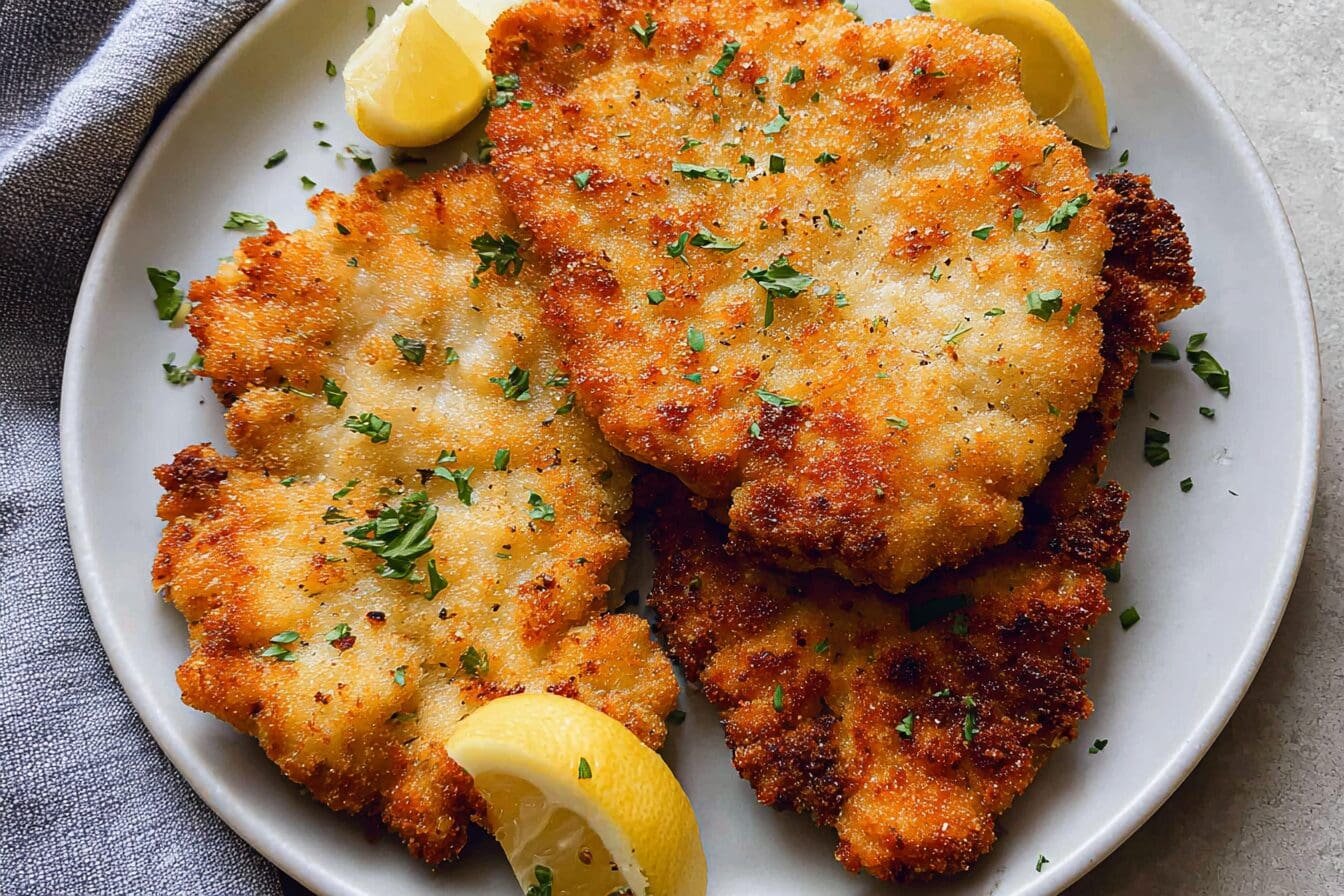
Why You’ll Love This Pork Schnitzel
Pork schnitzel is one of those dishes that hits the spot every time, especially if you’re craving something crispy and satisfying. Imagine biting into a perfectly golden cutlet that’s tender inside and crunchy outside it’s a meal that brings joy to your table. This recipe stands out for its crispy pork schnitzel appeal, making it a go-to for busy home cooks looking for quick wins in the kitchen.
- Ease of preparation: This how to make schnitzel recipe is super straightforward and takes less than 30 minutes from start to finish, letting you whip up a delicious dinner without fuss. You’ll love how simple the steps are, perfect for beginners or anyone with a packed schedule, so you can focus on enjoying the process. That means more time for family and less time stressing over complex meals, which makes traditional schnitzel a real winner for everyday cooking.
- Health benefits: Made from lean pork, this crispy pork schnitzel offers good protein to keep you full and energized, while allowing :for custom tweaks like using whole-grain breadcrumbs for added fiber. It’s a German schnitzel that can fit into a balanced diet, providing essential nutrients without overloading on calories if you watch the oil. Plus, pairing it with veggies boosts its nutritional punch, making it a smart choice for those watching their health.
- Versatility: You can adapt this pork schnitzel recipe to suit various tastes, like adding spices for a kick or serving it with different sides for a fresh twist. Whether you’re a student needing a fast meal or a busy parent juggling tasks, it’s easy to modify for dietary needs, such as gluten-free options. This flexibility ensures everyone at the table can fall in love with their version of the best pork schnitzel recipe.
- Distinctive flavor: The traditional German pork schnitzel delivers that irresistible crunch with a juicy center, flavored just right with simple seasonings that let the pork shine. It’s got a comforting taste that reminds you of classic comfort food, yet it feels fresh and exciting. What makes this how to make crispy pork schnitzel at home so special is how the breadcrumbs create a textural contrast that’ll have you coming back for more.
Overall, this easy pork schnitzel dinner ideas option combines fun and flavor in a way that’s hard to beat, turning even a weeknight meal into something memorable.
Jump To
- 1. Why You’ll Love This Pork Schnitzel
- 2. Essential Ingredients for Pork Schnitzel
- 3. How to Prepare the Perfect Pork Schnitzel: Step-by-Step Guide
- 4. Dietary Substitutions to Customize Your Pork Schnitzel
- 5. Mastering Pork Schnitzel: Advanced Tips and Variations
- 6. How to Store Pork Schnitzel: Best Practices
- 7. FAQs: Frequently Asked Questions About Pork Schnitzel
- 8. Pork Schnitzel
Essential Ingredients for Pork Schnitzel
Gathering the right ingredients is key to nailing that perfect pork schnitzel, and we’ll break it down so you can shop smart. Based on the details provided, let’s focus on the core components needed for this recipe. Remember, fresh ingredients make all the difference in creating that crispy, mouthwatering finish.
- 200 grams of flour – This forms the base for the coating, helping to create a crisp exterior when fried and ensuring the pork stays juicy inside.
- 2 cups of water – Used to mix with the flour if needed for a batter, it helps achieve the right consistency for an even coat on your cutlets.
- 1 teaspoon of salt – This seasons the mixture perfectly, enhancing the natural flavors of the pork and making every bite more delicious.
Special Dietary Options
For those with specific needs, here are ways to swap things out while keeping the pork schnitzel recipe intact.
- Vegan: Swap the pork for plant-based substitutes like seitan or tofu, using the 200 grams of flour to coat them for a similar crispy effect.
- Gluten-free: Use gluten-free flour in place of the 200 grams of flour to maintain the recipe’s structure without any issues.
- Low-calorie: Reduce oil for frying and opt for baking the coated cutlets, while still incorporating the 2 cups of water sparingly to lighten things up.
How to Prepare the Perfect Pork Schnitzel: Step-by-Step Guide
Getting pork schnitzel right is all about following simple steps that lead to a crispy, golden delight. This traditional German pork schnitzel guide will walk you through everything, from prep to plate, so you can master how to make crispy pork schnitzel at home. Let’s dive in and make this easy process fun for everyone.
First Step: Gather and Prep Your Ingredients
Start by pulling together all your items, like the flour, water, and salt from the list. Pound your pork cutlets to about 1/4 inch thick using a mallet for even cooking this ensures the best pork schnitzel recipe turns out juicy. Set up your breading station with three bowls: one for flour, one for beaten eggs (if adapting), and one for breadcrumbs, keeping in mind the measurements for a smooth workflow for traditional schnitzel lovers.
Second Step: Season and Coat the Pork
Season the pounded pork with salt, using that 1 teaspoon to enhance the flavors just right. Dip each cutlet first into the 200 grams of flour for a light dusting, then into a mixture that might involve the 2 cups of water if you’re making a batter variation. Press the breadcrumbs onto the pork firmly to get that signature crispy pork schnitzel texture, adapting for dietary needs like using gluten-free options if required. This step is where your German schnitzel really starts to shine, building layers of crunch.
Third Step: Heat the Oil and Fry
Heat oil in a large skillet over medium-high heat, aiming for about 350°F to achieve the perfect golden brown crispy baked alternative. Fry the coated pork for 2-3 minutes per side until it’s nicely browned, flipping carefully to avoid splatters. For those watching calories, consider baking instead at 400°F for 15-20 minutes, ensuring your how to make schnitzel stays versatile. This is a key moment for the pork schnitzel recipe to lock in that irresistible crispiness you love.
Fourth Step: Drain and Rest
Once fried, remove the schnitzel from the pan and let it drain on a wire rack to keep it from getting soggy, which is crucial for maintaining that easy pork schnitzel dinner ideas quality. Let it rest for a coupleLewis minutes to redistribute the juices, making each bite tender and flavorful. If you’re prepping ahead, cover loosely with foil, but for the best results with traditional German pork schnitzel, serve fresh. This step pairs well with other quick meals like casseroles for variety.
Final Step: Serve and Enjoy
Plate your pork schnitzel with lemon wedges and your favorite sides, and dig in while it’s hot for maximum enjoyment. Check out this traditional recipe for more tips. For health-conscious folks, balance it with veggies as noted in health benefits of pork, ensuring your crispy pork schnitzel fits various preferences and completes your meal perfectly.

Dietary Substitutions to Customize Your Pork Schnitzel
Protein and Main Component Alternatives
Swapping the main protein in your pork schnitzel recipe can make it fit different lifestyles. For instance, use chicken or turkey cutlets instead of pork for a lighter option, keeping the breading process the same for how to make crispy pork schnitzel at home. If meat isn’t your thing, tofu works great as a plant-based swap, pounded and coated just like the original for that traditional schnitzel feel. These changes help adapt the German schnitzel to what you have on hand or your dietary goals.
Vegetable, Sauce, and Seasoning Modifications
Switch up veggies by adding zucchini or eggplant slices for a fresh twist on your easy pork schnitzel dinner ideas. For sauces, try a mushroom gravy instead of lemon to pair with your pork schnitzel with mushroom sauce. Seasonings can vary with herbs like paprika for more depth, making your traditional German pork schnitzel uniquely yours while staying true to the best pork schnitzel recipe vibes.
| Original Ingredient | Substitution Option |
|---|---|
| Pork Cutlet | Chicken Breast |
| Breadcrumbs | Gluten-Free Crumbs |
Mastering Pork Schnitzel: Advanced Tips and Variations
Pro Cooking Techniques
To elevate your crispy pork schnitzel, try double-dipping in the breading for extra crunch, a trick that pros use. Monitor oil temperature closely to avoid greasy results, ensuring your how to make schnitzel comes out perfect every time. For even better flavor, marinate the pork beforehand with herbs and spices.
Flavor Variations
Experiment with seasonings like garlic powder in your German schnitzel for a new twist. Add cheese to the coating for a melted surprise, tying into pork schnitzel with mushroom sauce ideas. These tweaks keep your traditional pork schnitzel exciting and aligned with the best pork schnitzel recipe standards.
Presentation Tips
Plate your pork schnitzel with colorful sides to make it pop visually. Garnish with fresh herbs for that restaurant-quality look, enhancing your easy pork schnitzel dinner ideas appeal. A simple lemon slice adds a bright touch to your how to make crispy pork schnitzel at home efforts.
Make-Ahead Options
Prep the breading station ahead to save time, perfect for busy schedules. Freeze breaded cutlets for quick meals, ensuring your traditional German pork schnitzel is always ready, supporting pork schnitzel recipe versatility.
You’ll love how these tips turn your crispy pork schnitzel into a standout dish!
How to Store Pork Schnitzel: Best Practices
Proper storage keeps your pork schnitzel tasting fresh longer. Let’s cover the basics for maintaining that crispy texture.
- Refrigeration: Store leftovers in an airtight container for up to 3 days to keep things safe.
- Freezing: Wrap individual pieces tightly and freeze for up to 2 months for easy pork schnitzel dinner ideas later.
- Reheating: Use an oven at 350°F to restore crispiness without sogginess.
- Meal Prep Considerations: Plan for batch cooking to have German schnitzel ready for the week ahead.
FAQs: Frequently Asked Questions About Pork Schnitzel
What is Pork Schnitzel?
Pork Schnitzel is a traditional dish consisting of thin, boneless pork cutlets that are pounded to an even thickness, then coated in breadcrumbs and fried until golden and crispy. The dish originated in Germany and Austria but has become popular worldwide. Authentic Pork Schnitzel is made from tenderloin or loin cuts, seasoned with salt and pepper, dredged in flour, dipped in egg, and coated with breadcrumbs before being pan-fried in oil or butter. The result is a juicy, tender cutlet with a crunchy exterior that’s often served with lemon wedges.
How do you make Pork Schnitzel from scratch?
To make Pork Schnitzel, start with boneless pork loin or tenderloin cutlets about ¼ inch thick. Pound them to an even thickness using a meat mallet. Season both sides with salt and pepper. Set up a breading station with flour, beaten eggs, and breadcrumbs. Coat each cutlet first in flour, then egg, then breadcrumbs, pressing firmly. Heat oil in a large skillet over medium-high heat. Fry the schnitzel for 2-3 minutes per side until golden brown. Drain on paper towels and serve immediately with lemon wedges.
What’s the difference between Pork Schnitzel and Wiener Schnitzel?
The main difference between Pork Schnitzel and Wiener Schnitzel is the meat used. Wiener Schnitzel is a protected Austrian dish that must be made with veal. When the same preparation method is used with pork, it’s called Pork Schnitzel or Schweineschnitzel. Both dishes feature thin, pounded cutlets that are breaded and fried. The coating technique is identical—flour, egg, and breadcrumbs—but the flavor profile differs slightly due to the meat. Pork Schnitzel has a richer, more robust flavor compared to the milder taste of veal in traditional Wiener Schnitzel.
How do you keep Pork Schnitzel crispy?
To keep Pork Schnitzel crispy, ensure your oil is hot enough (around 350°F) before frying. Use a mixture of oil and butter for flavor and crispness. Don’t overcrowd the pan, as this lowers the oil temperature and makes the coating soggy. After frying, place the schnitzel on a wire rack set over a baking sheet rather than paper towels, which traps steam. If you need to keep schnitzel warm before serving, place it in a single layer on a baking sheet in a 200°F oven with the door slightly ajar to allow moisture to escape. Serve immediately for maximum crispness.
What are traditional side dishes for Pork Schnitzel?
Traditional German side dishes for Pork Schnitzel include potato salad (either warm with bacon or cold with vinegar), French fries, or spaetzle, a type of soft egg noodle. Common accompaniments also include cucumber salad, red cabbage, or roasted potatoes. For a complete meal, add a simple green salad with vinaigrette dressing. In Austria, Wiener Schnitzel is often served only with a wedge of lemon and parsley potatoes. For a lighter option, consider serving with steamed vegetables or a fresh garden salad to balance the richness of the fried meat.
Pork Schnitzel
- Total Time: 45 minutes
- Yield: 4 servings 1x
- Diet: Vegetarian
Description
🍝 Enjoy making fresh pasta at home for a fun, hands-on cooking experience that brings authentic flavors to your table.
🍝 Discover how this easy dough can be customized with herbs or fillings for delicious, homemade meals.
Ingredients
200 grams of flour for coating
2 cups of water for batter consistency
1 teaspoon of salt for seasoning
Instructions
1-First Step: Gather and Prep Your Ingredients Start by pulling together all your items, like the flour, water, and salt from the list. Pound your pork cutlets to about 1/4 inch thick using a mallet for even cooking this ensures the best pork schnitzel recipe turns out juicy. Set up your breading station with three bowls: one for flour, one for beaten eggs (if adapting), and one for breadcrumbs, keeping in mind the measurements for a smooth workflow for traditional schnitzel lovers.
2-Second Step: Season and Coat the Pork Season the pounded pork with salt, using that 1 teaspoon to enhance the flavors just right. Dip each cutlet first into the 200 grams of flour for a light dusting, then into a mixture that might involve the 2 cups of water if you’re making a batter variation. Press the breadcrumbs onto the pork firmly to get that signature crispy pork schnitzel texture, adapting for dietary needs like using gluten-free options if required. This step is where your German schnitzel really starts to shine, building layers of crunch.
3-Third Step: Heat the Oil and Fry Heat oil in a large skillet over medium-high heat, aiming for about 350°F to achieve the perfect golden brown crispy baked alternative. Fry the coated pork for 2-3 minutes per side until it’s nicely browned, flipping carefully to avoid splatters. For those watching calories, consider baking instead at 400°F for 15-20 minutes, ensuring your how to make schnitzel stays versatile. This is a key moment for the pork schnitzel recipe to lock in that irresistible crispiness you love.
4-Fourth Step: Drain and Rest Once fried, remove the schnitzel from the pan and let it drain on a wire rack to keep it from getting soggy, which is crucial for maintaining that easy pork schnitzel dinner ideas quality. Let it rest for a coupleLewis minutes to redistribute the juices, making each bite tender and flavorful. If you’re prepping ahead, cover loosely with foil, but for the best results with traditional German pork schnitzel, serve fresh. This step pairs well with other quick meals like casseroles for variety.
5-Final Step: Serve and Enjoy Plate your pork schnitzel with lemon wedges and your favorite sides, and dig in while it’s hot for maximum enjoyment. Check out this traditional recipe for more tips. For health-conscious folks, balance it with veggies as noted in health benefits of pork, ensuring your crispy pork schnitzel fits various preferences and completes your meal perfectly.
Notes
🥖 Try experimenting with different flours like whole wheat for added nutrition.
🥐 Always use room temperature water to help the dough come together more easily.
🍲 Fresh pasta cooks quickly, so boil it for just 2-3 minutes once you’re ready to serve.
- Prep Time: 15 minutes
- Resting: 30 minutes
- Cook Time: 2 minutes (for cooking the pasta after preparation)
- Category: Pasta
- Method: Kneading
- Cuisine: Italian
Nutrition
- Serving Size: 1 portion (about 100g)
- Calories: 250 per serving
- Sugar: 1g
- Sodium: 300mg
- Fat: 1g
- Saturated Fat: 0g
- Unsaturated Fat: 0.5g
- Trans Fat: 0g
- Carbohydrates: 50g
- Fiber: 2g
- Protein: 7g
- Cholesterol: 0mg
Keywords: pasta dough, homemade pasta, simple recipe, Italian pasta