
Why You’ll Love This Pie Crust Recipe
This pie crust recipe is a game-changer for anyone wanting to bake at home, whether you’re a busy parent or a baking enthusiast. It’s simple to whip up, using everyday ingredients that deliver that perfect flaky texture every time. You’ll appreciate how it saves time while let you create delicious pies that impress family and friends.
One of the best parts is the ease of preparation; it comes together quickly with few steps, making it ideal for beginners or those short on time. Plus, it offers health benefits with wholesome ingredients like flour and butter that provide essential nutrients without relying on processed additives. This recipe is versatile too, adapting to various needs while boasting a distinctive flavor and texture that sets it apart.
Benefits at a Glance
- Simple and quick to make with minimal ingredients.
- Made from wholesome items for better nutritional value.
- Easy to modify for diets like vegan or gluten-free.
- Delivers a flaky, tasty result that works for any pie.
Whether you’re a student cooking on a budget or a working professional, this pie crust recipe will become your go-to for creating memorable meals. It’s perfect for exploring new flavors and enjoying the joy of baking.
Jump To
- 1. Why You’ll Love This Pie Crust Recipe
- 2. Essential Ingredients for Pie Crust Recipe
- 3. How to Prepare the Perfect Pie Crust Recipe: Step-by-Step Guide
- 4. Dietary Substitutions to Customize Your Pie Crust Recipe
- 5. Mastering Pie Crust Recipe: Advanced Tips and Variations
- 6. How to Store Pie Crust Recipe: Best Practices
- 7. FAQs: Frequently Asked Questions About Pie Crust Recipe
- 8. Pie Crust Recipe
Essential Ingredients for Pie Crust Recipe
Gathering the right ingredients is key to a successful pie crust, and this recipe keeps things straightforward. Start with basic pantry staples that create that signature flaky texture. In this section, we cover the main components based on proven methods, ensuring your pie turns out just right every time.
Ingredients List
- 2 1/2 cups all-purpose flour, plus extra for dusting
- 1/2 tablespoon sugar
- 1/2 teaspoon salt
- 1/2 pound (2 sticks) cold unsalted butter, diced into 1/4 inch pieces
- 7 tablespoons ice water (can add up to 8 tablespoons if needed)
These ingredients combine to form a dough that’s easy to handle and full of flavor. Each one plays a role in achieving the perfect balance, from the flour’s structure to the butter’s rich taste.
For special dietary options, you can swap items to fit your needs. For example, replace butter with vegan alternatives for a plant-based version, or use gluten-free flour to make it suitable for everyone.
| Ingredient | Purpose |
|---|---|
| 2 1/2 cups all-purpose flour | Provides structure and gives the crust its chewiness |
| 1/2 tablespoon sugar | Adds a touch of sweetness and helps with browning |
| 1/2 teaspoon salt | Enhances the overall flavor |
| 1/2 pound cold unsalted butter | Creates flakiness and adds rich taste |
| 7 tablespoons ice water | Binds the dough while keeping it moist |
This setup makes it clear how much of each item you need, helping you prepare without any guesswork. Always measure precisely for the best results.
How to Prepare the Perfect Pie Crust Recipe: Step-by-Step Guide
Making pie crust at home is easier than you might think, and this guide walks you through each step with simple instructions. Begin by pulling together your ingredients, ensuring everything is cold to get that flaky result. Follow along for a smooth process that even new bakers can master.
Gathering and Mixing
First, combine the flour, sugar, and salt in a food processor or a bowl, mixing them well for an even blend. Next, add the cold diced butter and work it in until you see coarse crumbs with some pea-sized pieces forming. Gradually pour in the ice water, a little at a time, until the mixture starts to clump together without becoming too sticky.
- Combine the flour, sugar, and salt in a food processor and pulse to mix, or whisk them together in a bowl.
- Add the cold diced butter and pulse or cut in with a pastry cutter until the mixture forms coarse crumbs with some pea-sized pieces.
- Gradually add 7 tablespoons of ice water and pulse until moist clumps or small balls form. Add more water 1 teaspoon at a time if needed, but avoid overmixing.
- Transfer the dough to a clean surface and gather it without kneading; it should remain crumbly with visible butter pieces.
- Divide the dough in half and flatten each half into a disk. Wrap in plastic and refrigerate for at least 1 hour.
- When ready, dust the surface with flour and roll each disk into a 12-inch circle. Wrap the dough around the rolling pin and transfer it to a pie plate.
- Press the dough gently into the dish and tuck the edges underneath to form a thick double edge.
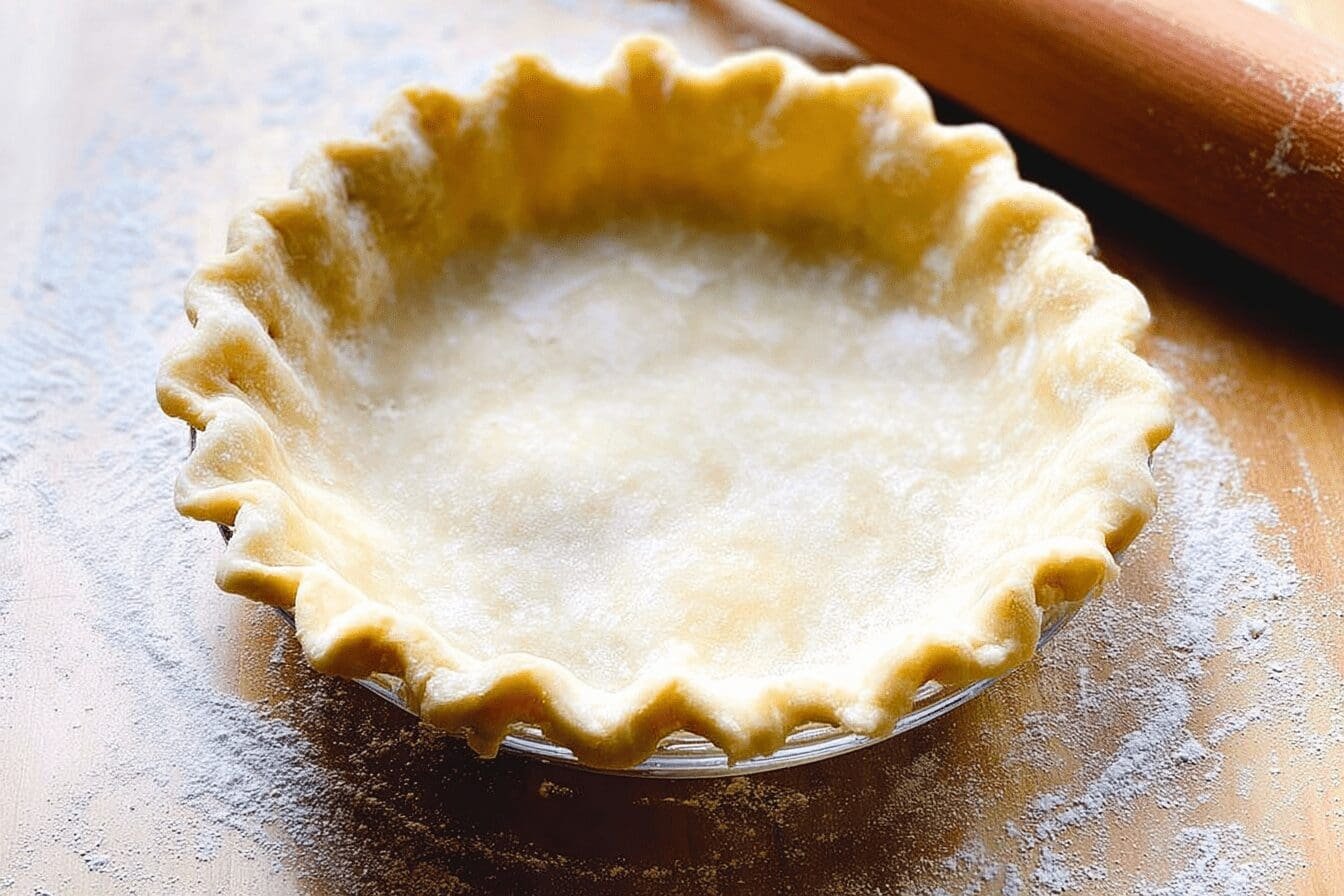
- Crimp and flute the edges by pinching the crust between thumb and index finger and pressing with the opposite hand’s index finger to create a decorative rim.
Once you’ve shaped the crust, it’s ready for your pie filling. The preparation time is about 10 minutes of active work, plus 1 hour to chill, totaling around 1 hour 10 minutes. For the best outcome, keep the butter cold and handle the dough minimally to avoid a tough texture.
Additional Tips for Success
If you’re blind baking, chill the crust for 30 minutes, line it with parchment, add pie weights, and bake at 425°F for 17 minutes. Then remove the weights, poke holes, and bake another 5 minutes until golden. This recipe yields enough for 2 single crusts or 1 double crust, perfect for sweet and savory pies.
For more ideas on using this crust, check out our strawberry cream cheese chill pie recipe, which pairs beautifully with this base.

Dietary Substitutions to Customize Your Pie Crust Recipe
Adapting this pie crust recipe to fit different diets is simple and fun, allowing everyone to enjoy their favorite pies. Whether you’re avoiding gluten or going vegan, these swaps keep the crust tasty and reliable. Let’s look at ways to modify the ingredients for your needs.
Protein and Main Component Alternatives
- Use plant-based butters or oils for vegan adaptations, such as coconut oil or vegan margarine as a butter substitute.
- Opt for gluten-free flour blends formulated with rice, almond, or tapioca flour to accommodate gluten intolerance.
Vegetable, Sauce, and Seasoning Modifications
- Adjust seasoning by incorporating herbs like rosemary or thyme for added flavor without extra calories.
- Substitute traditional dairy-based ingredients with non-dairy alternatives like almond or soy milk in the dough mix.
- Rotate vegetable fillings to match seasonal availability and dietary preferences, ensuring a fresh and customizable experience.
These changes make the recipe accessible for diet-conscious individuals, like seniors or those with specific preferences. Always test a small batch first to ensure the texture holds up.
Mastering Pie Crust Recipe: Advanced Tips and Variations
Once you’re comfortable with the basics, try these advanced tips to take your pie crust to the next level. Keeping things cold and handling the dough gently is key to that perfect flake. Experiment with flavors and techniques for exciting results.
- Pro cooking techniques: Use ice-cold ingredients and minimal handling to prevent gluten development, ensuring a tender, flaky crust.
- Flavor variations: Experiment with adding spices such as cinnamon or nutmeg into the dough for a unique twist.
- Presentation tips: Use decorative crimping, lattice tops, or egg washes for an appealing golden finish.
- Make-ahead options: Prepare dough in advance and freeze wrapped for up to one month to save time on busy days.
For inspiration, explore our peach cobbler recipe, which uses a similar crust for a delicious twist. These methods work well for food enthusiasts looking to impress at gatherings.
How to Store Pie Crust Recipe: Best Practices
Proper storage keeps your pie crust fresh and ready for use, whether you’re prepping ahead or saving leftovers. Follow these steps to maintain that flaky texture without much effort. It’s a great way to make baking more convenient for busy schedules.
- Refrigeration: Store unbaked dough wrapped tightly in plastic wrap for up to 3 days to maintain freshness.
- Freezing: Freeze shaped or unbaked dough in airtight containers or freezer bags for up to 3 months; thaw overnight in the refrigerator before use.
- Reheating: Reheat baked pie crusts in a preheated oven at 350°F (175°C) to restore crispness.
- Meal prep considerations: Batch make multiple doughs, portion individually, and freeze to streamline future baking sessions.
Dough can be refrigerated up to 3 days or frozen up to 3 months, so plan accordingly. As noted in the nutritional info per serving, this recipe is balanced, with 232 calories and 15g of fat, making it a smart choice for travelers or newlyweds.
FAQs: Frequently Asked Questions About Pie Crust Recipe
How do I make a pie crust flaky and tender?
To achieve a flaky and tender pie crust, use cold butter and work quickly to prevent it from melting while mixing. Cut the butter into the flour until pea-sized bits remain, creating layers that bake into flakiness. Use ice-cold water, adding it gradually just until the dough holds together. Avoid overmixing, as this develops gluten and makes the crust tough. Chill the dough for at least an hour before rolling out to help it relax and maintain its texture during baking.
What can I do if my pie crust cracks while rolling it out?
If your pie crust cracks when rolling, it usually means the dough is too dry or cold. Let it sit at room temperature for 5-10 minutes to soften slightly. You can also sprinkle a few drops of ice water on the edges and gently knead to add moisture. Roll from the center outward evenly and avoid pressing too hard. Wrapping the dough in plastic wrap and chilling it again for 15 minutes before rolling can help reduce cracking.
Can I use alternatives to butter in pie crust recipes?
Yes, alternatives like shortening, lard, or vegetable oil can be used in pie crusts. Butter adds flavor and contributes to flakiness, but shortening or lard can create a tender, crumbly texture with a slightly different taste. When substituting, keep the amount the same but note that you may lose some buttery flavor. For a healthier option, some recipes combine butter and oil or incorporate whole wheat flour for added nutrients.
How do I prevent my pie crust from shrinking during baking?
To prevent shrinking, avoid overworking the dough, which develops gluten and causes contraction. Chill the dough for at least an hour before baking to relax gluten strands. When placing the crust in the pan, gently press it without stretching. Use pie weights or dried beans to blind bake the crust, which holds its shape and prevents bubbling. Also, bake the crust in a preheated oven for best results.
What are good substitutes for pie weights during blind baking?
If you don’t have pie weights, use dry raw beans, dried rice, or clean, uncooked pasta as a substitute. Line the crust with parchment paper or foil, then fill with these weights to keep the dough flat and prevent air bubbles. After blind baking, you can store and reuse the beans or rice for the next pie, but avoid cooking the beans afterward as they may be unsafe to eat. This method helps achieve a crisp, even crust.

Pie Crust Recipe
- Total Time: 1 hour 10 minutes
- Yield: 2 single crusts or 1 double crust
- Diet: Vegetarian
Description
🥧 Enjoy flaky and tender pies with this easy homemade pie crust recipe perfect for any filling.
👩🍳 Simple ingredients and straightforward steps make pie-making accessible for all skill levels.
Ingredients
– 2 1/2 cups all-purpose flour Provides structure and gives the crust its chewiness
– 1/2 tablespoon sugar Adds a touch of sweetness and helps with browning
– 1/2 teaspoon salt Enhances the overall flavor
– 1/2 pound cold unsalted butter Creates flakiness and adds rich taste
– 7 tablespoons ice water Binds the dough while keeping it moist
Instructions
1-Combine the flour, sugar, and salt in a food processor and pulse to mix, or whisk them together in a bowl.
2-Add the cold diced butter and pulse or cut in with a pastry cutter until the mixture forms coarse crumbs with some pea-sized pieces.
3-Gradually add 7 tablespoons of ice water and pulse until moist clumps or small balls form. Add more water 1 teaspoon at a time if needed, but avoid overmixing.
4-Transfer the dough to a clean surface and gather it without kneading; it should remain crumbly with visible butter pieces.
5-Divide the dough in half and flatten each half into a disk. Wrap in plastic and refrigerate for at least 1 hour.
6-When ready, dust the surface with flour and roll each disk into a 12-inch circle. Wrap the dough around the rolling pin and transfer it to a pie plate.
7-Press the dough gently into the dish and tuck the edges underneath to form a thick double edge.
8-Crimp and flute the edges by pinching the crust between thumb and index finger and pressing with the opposite hand’s index finger to create a decorative rim.
Notes
❄️ Keep butter cold and handle dough as little as possible to ensure flakiness.
🚫 Avoid overmixing to prevent tough crust.
⏳ Let firm dough rest at room temperature for 10 to 20 minutes before rolling if too stiff after chilling.
- Prep Time: 10 minutes
- Chill Time: 1 hour
- Category: Baking, Dessert, Savory
- Method: Mixing, Rolling, Baking
- Cuisine: American
Nutrition
- Serving Size: 1 serving (1/8 crust)
- Calories: 232
- Sugar: 1 g
- Sodium: 99 mg
- Fat: 15 g
- Saturated Fat: 9 g
- Carbohydrates: 20 g
- Fiber: 1 g
- Protein: 2 g
- Cholesterol: 40 mg
Keywords: Easy Pie Crust,Flaky,Simple,Homemade Pies