
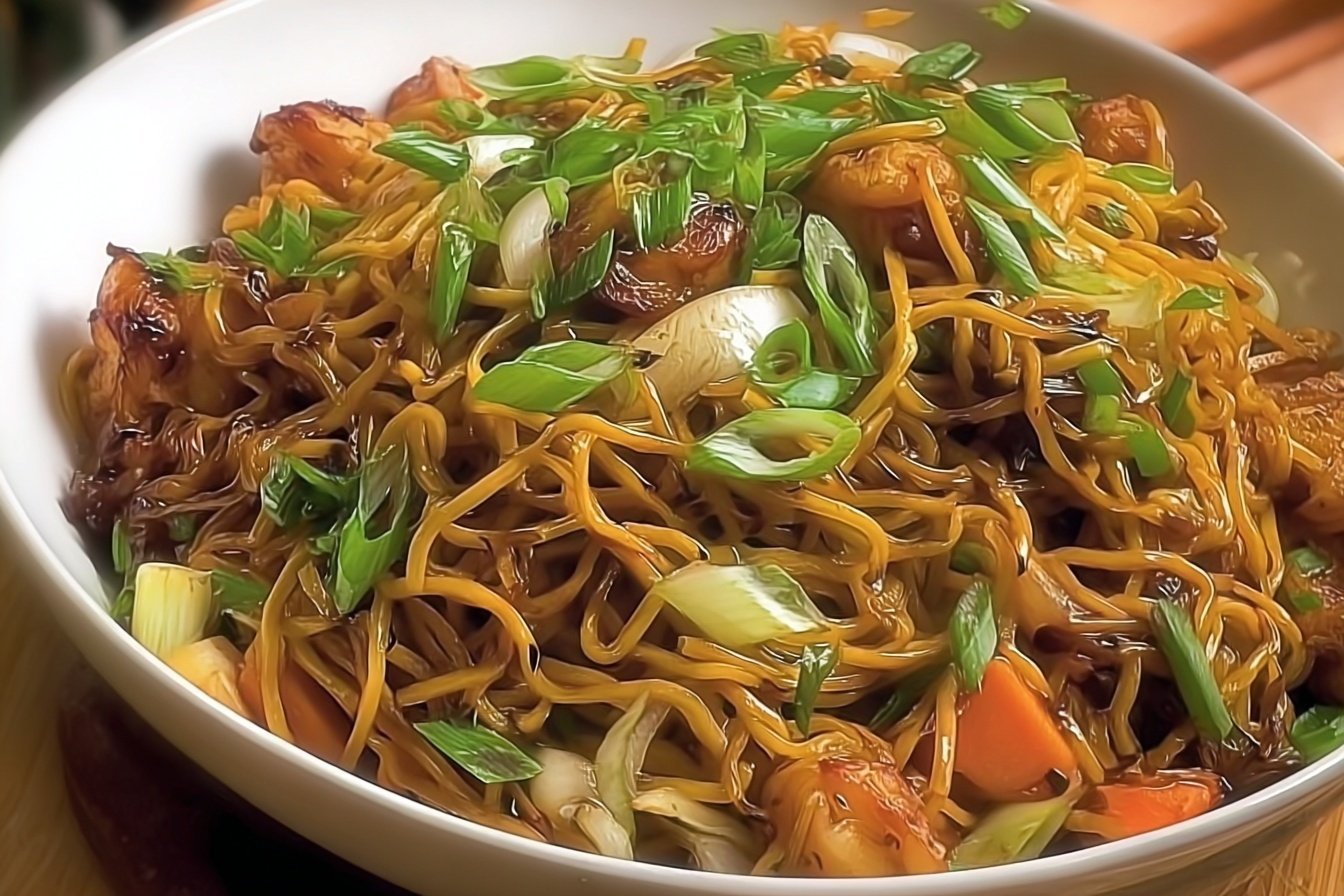
Why You’ll Love This Pan Fried Noodles
There’s something truly satisfying about a bowl of perfectly crispy, golden noodles tossed in a savory soy-based sauce. These soy sauce pan fried noodles deliver restaurant-quality results right in your home kitchen, and they come together in just 15 minutes. Whether you’re a busy parent needing dinner on the table fast or a student craving something comforting after a long day of classes, this recipe has you covered.
Here’s why this recipe deserves a permanent spot in your weekly rotation:
- Ease of preparation: This pan fried noodles recipe requires just 5 minutes of prep and 10 minutes of cooking time. The ingredients are simple pantry staples, and the technique is straightforward enough for beginner cooks. You don’t need any special equipment beyond a large wok or skillet.
- Health benefits: At just 33 calories per serving with only 0.1g of fat, this dish is incredibly light. It provides 2g of protein and 1g of fiber per serving. You can easily add more vegetables or lean proteins to make it a complete, nutritious meal. Noodles can be part of a healthy diet when prepared with the right ingredients and portion sizes.
- Versatility: This recipe adapts beautifully to different dietary needs. Vegetarians can swap oyster sauce for mushroom sauce, and gluten-free eaters can use tamari instead of soy sauce. Add your favorite proteins like chicken, shrimp, or tofu, or load up on extra vegetables for a plant-forward meal.
- Distinctive flavor: The combination of light and dark soy sauce creates a perfect balance of saltiness and umami, while the sugar adds a subtle sweetness that caramelizes during stir-frying. The charred scallion whites and onions bring a smoky depth that makes this dish truly memorable.
Jump To
- 1. Why You’ll Love This Pan Fried Noodles
- 2. Essential Ingredients for Pan Fried Noodles
- 3. How to Prepare the Perfect Pan Fried Noodles: Step-by-Step Guide
- 4. Dietary Substitutions to Customize Your Pan Fried Noodles
- 5. Mastering Pan Fried Noodles: Advanced Tips and Variations
- 6. How to Store Pan Fried Noodles: Best Practices
- 7. FAQs: Frequently Asked Questions About Pan Fried Noodles
- 8. Pan Fried Noodles
Essential Ingredients for Pan Fried Noodles
Success in making pan fried noodles starts with having the right ingredients on hand. Each component plays a vital role in creating the perfect texture and flavor profile. Here’s everything you’ll need to make this recipe:
Stir-Fry Sauce Ingredients
- 2 tablespoons light soy sauce – provides saltiness and the foundational savory flavor for the sauce
- 1 tablespoon dark soy sauce – adds rich color and a touch of sweetness to the finished dish
- 1 tablespoon oyster sauce – brings deep umami flavor and helps the sauce coat the noodles evenly
- 1 tablespoon sugar – balances the saltiness and helps achieve that beautiful caramelized char
- 1/4 teaspoon MSG (optional) – boosts the savory umami flavor; skip if you prefer
- 1 tablespoon chicken stock or water – thins the sauce slightly for better distribution
Noodles and Vegetables
- 1 pound fresh chow mein noodles (steamed egg noodles recommended) – the star of the dish; fresh noodles yield the best crispy-chewy texture
- 4 tablespoons oil (avocado oil suggested) – needed for proper stir-frying and achieving crispy noodle edges
- 8 stalks scallions (whites and greens separated and cut lengthwise into 2-inch pieces) – whites add aromatic base, greens bring fresh onion flavor and color
- 1 small onion (sliced) – provides sweetness and depth when caramelized
- 1 cup bean sprouts – adds refreshing crunch and texture contrast
Special Dietary Options
- Vegan: Replace oyster sauce with vegetarian mushroom oyster sauce and use vegetable stock instead of chicken stock.
- Gluten-free: Use gluten-free tamari instead of both soy sauces, gluten-free oyster sauce, and rice noodles or gluten-free pasta.
- Low-calorie: Reduce the oil to 2 tablespoons total and use a sugar substitute like stevia to cut calories further.
How to Prepare the Perfect Pan Fried Noodles: Step-by-Step Guide
Making restaurant-quality soy sauce pan fried noodles at home is easier than you might think. The secret lies in proper preparation and high-heat cooking. Follow these detailed steps to achieve noodles with crispy edges and chewy centers every single time.
Step 1: Make the Stir-Fry Sauce
Start by preparing your sauce so it’s ready to go when you need it. In a small bowl, whisk together 2 tablespoons light soy sauce, 1 tablespoon dark soy sauce, 1 tablespoon oyster sauce, 1 tablespoon sugar, 1/4 teaspoon MSG if using, and 1 tablespoon chicken stock or water until completely smooth. The sugar should dissolve completely into the mixture.
Set this sauce mixture aside while you prepare the noodles. Having everything ready before you start cooking is essential for stir-fry success since the actual cooking moves very quickly.
Step 2: Prepare and Blanch the Noodles
Bring a large pot of water to a rolling boil. If you’re using fresh chow mein noodles that are uncooked, blanch them for just 10 seconds. This brief dip in boiling water softens them without overcooking. Immediately drain the noodles in a colander.
Rinse the noodles under cold running water to wash away excess starch. This step is crucial because starch causes noodles to stick together and turn gummy during stir-frying. Shake off excess water, then pat the noodles dry with clean kitchen towels or paper towels. Spread them out flat if needed and let them air dry for a few minutes.
Important: If your noodles are pre-cooked or par-cooked steamed egg noodles, skip the blanching step entirely. Simply separate them and they’re ready for the wok.
Step 3: Sauté the Aromatics
Heat a large wok or heavy-bottomed pan over high heat. You want the pan to be properly hot before adding any ingredients. Add 2 tablespoons of oil and let it heat until shimmering. The oil should coat the bottom of the pan evenly.
Add the scallion whites and the sliced onion to the hot pan. Sauté these aromatics for about 1 minute, stirring constantly, until the onions are slightly softened and the scallion whites have some light char marks. The vegetables should smell fragrant and look slightly wilted but still have texture.
Step 4: Stir-Fry the Noodles
Add the prepared noodles to the wok. Use your spatula or wok tools to quickly separate the noodles and toss them with the sautéed vegetables. Work quickly to prevent sticking. Add the remaining 2 tablespoons of oil around the perimeter of the wok so it heats instantly on contact with the hot surface.
Continue stir-frying the noodles for 2 to 3 minutes over high heat. Keep the noodles moving constantly, but every 30 seconds or so, let them sit undisturbed for a few moments to develop some golden-brown char marks. This charring is what gives pan fried noodles their signature flavor and appealing texture.
You’ll know the noodles are ready for the sauce when you see crispy edges forming and the noodles smell slightly toasted.
Step 5: Add the Sauce and Finish
Pour the prepared stir-fry sauce over the noodles. Toss everything together vigorously to ensure every strand gets coated with the flavorful sauce. The sauce should bubble and sizzle immediately on contact with the hot wok.
Continue stir-frying for 3 to 4 minutes until the sauce is fully absorbed by the noodles. You’ll notice the noodles taking on a rich, glossy brown color from the dark soy sauce. The noodles should no longer look wet, but they shouldn’t be dry either.
Final Step: Add Finishing Touches and Serve
Add the scallion greens and 1 cup of bean sprouts to the wok. Stir-fry for just one more minute. The scallion greens should be slightly wilted but still bright green, and the bean sprouts should be warmed through but still crunchy.
Remove from heat immediately and serve your soy sauce pan fried noodles hot. The dish is best enjoyed right away while the noodles maintain their crispy-chewy texture contrast.

Dietary Substitutions to Customize Your Pan Fried Noodles
Protein and Main Component Alternatives
While this recipe is delicious on its own, you might want to add protein to make it a complete meal. Here are some excellent options that pair beautifully with pan fried noodles:
For meat lovers: Thinly sliced chicken breast or thigh cooks in just 2-3 minutes when stir-fried. Add it after the aromatics and cook through before adding noodles. Sliced beef, pork, or even leftover rotisserie chicken all work wonderfully.
Seafood options: Medium shrimp need only 2 minutes of cooking time. Add them with the noodles for perfect timing. If you enjoy Asian-inspired seafood dishes, try our hoisin salmon noodles for another flavorful option.
Vegetarian proteins: Firm tofu, pressed and cubed, can be pan-fried separately until golden before adding to the noodles. Tempeh slices or edamame also provide excellent plant-based protein.
Vegetable, Sauce, and Seasoning Modifications
The beauty of pan fried noodles lies in their adaptability to whatever vegetables you have on hand. Here are delicious ways to switch things up:
Vegetable additions: Sliced bell peppers, julienned carrots, shredded cabbage, bok choy, snap peas, or sliced mushrooms all integrate seamlessly. Add firmer vegetables like carrots with the aromatics, and delicate ones like bok choy with the bean sprouts.
Sauce variations: Add 1 teaspoon of chili paste or sriracha for a spicy kick. A tablespoon of Chinese black vinegar adds tangy depth. Sesame oil drizzled at the end brings nutty aroma. For garlicky notes similar to our garlic butter steak lightning noodles, mince 2-3 garlic cloves and sauté with the onions.
Seasoning adjustments: Fresh grated ginger adds warmth and complexity. White pepper brings mild heat. A splash of rice wine or dry sherry brightens the overall flavor profile.
Mastering Pan Fried Noodles: Advanced Tips and Variations
Once you’ve mastered the basic technique, these expert tips will help you achieve consistently perfect results and inspire creative variations.
Pro Cooking Techniques
Wok hei mastery: That smoky, slightly charred flavor you taste at restaurants comes from “wok hei” or breath of the wok. Achieve this at home by ensuring your wok is extremely hot before adding ingredients. Cook in batches if necessary to avoid overcrowding, which causes steaming instead of frying.
Oil temperature matters: Let the oil heat until it shimmers and a drop of water sizzles immediately on contact. Cold oil results in greasy, soggy noodles.
Noodle drying technique: After blanching, spread noodles on a clean kitchen towel and pat thoroughly dry. Excess moisture is the enemy of crispy noodles. Some cooks even let noodles air dry for 15-20 minutes before stir-frying.
Flavor Variations
| Variation | Key Additions | Best Pairing |
|---|---|---|
| Spicy Szechuan | Chili oil, Szechuan peppercorns | Minced pork or beef |
| Cantonese Style | More bean sprouts, yellow chives | BBQ pork (char siu) |
| Malaysian | Curry powder, chili paste | Shrimp or chicken |
| Thai-Inspired | Fish sauce, lime juice, basil | Tofu or chicken |
Presentation Tips
Serve your pan fried noodles on a warm plate to maintain temperature. Garnish with extra sliced scallion greens, toasted sesame seeds, or fresh cilantro for color. For an elegant presentation, fold the noodles neatly rather than piling them haphazardly.
Make-Ahead Options
Prep the sauce up to a week in advance and store in the refrigerator. Blanch and dry the noodles up to 4 hours ahead, keeping them covered with a slightly damp towel to prevent drying out. Slice all vegetables in the morning for quick dinner assembly.
How to Store Pan Fried Noodles: Best Practices
Proper storage ensures your leftovers maintain as much of their original texture and flavor as possible. Here’s everything you need to know about storing and reheating pan fried noodles.
Refrigeration Guidelines
Allow the cooked noodles to cool completely to room temperature before storing. Transfer them to an airtight container and refrigerate within two hours of cooking. Properly stored, leftover pan fried noodles keep for up to 3 days in the refrigerator.
For best results, store any additional toppings or garnishes separately from the main dish to preserve their texture.
Freezing Options
Freezing cooked noodles is generally not recommended as the texture becomes mushy upon thawing. The noodles lose their characteristic chewiness and the vegetables become limp. If you must freeze them, use within one month and understand that the quality will be diminished.
Reheating for Best Quality
Wok or skillet method (recommended): Heat a wok or skillet over high heat with 1 teaspoon of oil. Add the cold noodles and stir-fry for 2-3 minutes until heated through and slightly crispy again. This method restores the most texture.
Microwave method: Place noodles in a microwave-safe dish and cover with a damp paper towel. Heat on high for 1-2 minutes, stirring halfway through. The texture will be softer than freshly made.
Meal Prep Considerations
For efficient meal prep, portion noodles into single-serving containers. The sauce can be made ahead and stored separately. When ready to eat, freshly cook aromatics and vegetables, add pre-cooked noodles, then finish with sauce for the best results.
FAQs: Frequently Asked Questions About Pan Fried Noodles
What kind of noodles work best for pan fried noodles?
Fresh chow mein noodles (egg noodles) are ideal for pan fried noodles because they crisp up nicely and hold the sauce well. You can also use Shanghai noodles, yakisoba, udon, ramen, or even spaghetti as substitutes. Fresh options give the best texture, but dried noodles work if prepared correctly. Aim for about 1 pound of noodles for 4 servings. Blanch fresh noodles briefly in boiling water for 10 seconds, drain, rinse off starch, and pat dry completely. This prevents sticking and sogginess. For dried noodles like spaghetti, cook to al dente (2 minutes under package time), rinse cold, drain, and dry flat. Proper noodle choice and prep lead to crispy edges and chewy centers in your dish. (92 words)
How do you prepare fresh noodles for pan fried noodles?
Start by blanching fresh uncooked noodles, like chow mein or egg noodles, in boiling water for just 10 seconds. Immediately drain them and rinse under cold water to remove excess starch, which causes sticking. Pat them dry thoroughly with a clean towel or paper towels—spread them out flat if needed. This step is crucial for achieving crispy pan fried noodles without sogginess. Avoid overcooking during blanching, as they’ll finish cooking in the hot wok. Once dry, they’re ready for high-heat stir-frying with soy sauce and veggies. This method takes about 5 minutes total prep and ensures restaurant-quality results at home. (98 words)
Can you use dried noodles for pan fried noodles?
Yes, dried noodles like spaghetti, ramen, or chow mein work great for pan fried noodles. Cook them al dente—about 2 minutes less than package instructions—to keep them firm. Rinse immediately with cold water to stop cooking and wash away starch. Drain well, then spread on a towel or tray to air dry for 30-60 minutes until no moisture remains. This mimics fresh noodles and prevents mushiness during frying. Toss with a bit of oil if storing briefly. In a hot wok, they’ll crisp up just like fresh ones. This swap is perfect if fresh aren’t available, saving a trip to the store. (96 words)
What type of pan is best for making pan fried noodles?
Use a large wok or non-stick skillet that holds high heat evenly for pan fried noodles. A 12-14 inch wok is ideal for tossing 1 pound of noodles without crowding, promoting crispiness and char. Carbon steel or cast iron woks excel at high temps (450-500°F), but preheat slowly to avoid smoking. Non-stick pans work for beginners to prevent sticking. Add 2-3 tablespoons neutral oil like vegetable or canola, heat until shimmering, then add noodles in a single layer. Cook undisturbed 2-3 minutes per side for golden edges. Avoid small pans to prevent steaming. Clean-up tip: soak in hot soapy water. (102 words)
How do you store and reheat leftover pan fried noodles?
Store leftover pan fried noodles in an airtight container in the fridge for up to 3 days. Let them cool completely first to avoid condensation. For reheating, the best way is a hot wok or skillet with 1 teaspoon oil over high heat—stir-fry 2-3 minutes to restore crispiness. Microwave as a quick option: cover with a damp paper towel, heat 1-2 minutes on high, stirring halfway, but expect softer texture. Do not freeze, as noodles get mushy upon thawing. Portion into single servings for easy meals. This keeps your soy sauce pan fried noodles tasty for quick lunches. (94 words)
Pan Fried Noodles
- Total Time: 15 minutes
- Yield: 4 servings
- Diet: Vegan
Description
🍜 Crispy-edged soy sauce pan-fried noodles with scallions and crunchy bean sprouts – umami-packed vegan delight in minutes!
⏱️ Ready in just 15 minutes, healthier takeout alternative for busy nights bursting with savory flavor.
Ingredients
– 2 tablespoons light soy sauce for saltiness and the foundational savory flavor for the sauce
– 1 tablespoon dark soy sauce for rich color and a touch of sweetness to the finished dish
– 1 tablespoon oyster sauce for deep umami flavor and to coat the noodles evenly
– 1 tablespoon sugar for balancing the saltiness and to achieve caramelized char
– 1/4 teaspoon MSG (optional) for boosting the savory umami flavor
– 1 tablespoon chicken stock or water for thinning the sauce slightly for better distribution
– 1 pound fresh chow mein noodles (steamed egg noodles recommended) for the best crispy-chewy texture
– 4 tablespoons oil (avocado oil suggested) for proper stir-frying and achieving crispy noodle edges
– 8 stalks scallions (whites and greens separated and cut lengthwise into 2-inch pieces) for aromatic base and fresh onion flavor and color
– 1 small onion (sliced) for sweetness and depth when caramelized
– 1 cup bean sprouts for refreshing crunch and texture contrast
Instructions
1-Step 1: Make the Stir-Fry Sauce Start by preparing your sauce so it’s ready to go when you need it. In a small bowl, whisk together 2 tablespoons light soy sauce, 1 tablespoon dark soy sauce, 1 tablespoon oyster sauce, 1 tablespoon sugar, 1/4 teaspoon MSG if using, and 1 tablespoon chicken stock or water until completely smooth. The sugar should dissolve completely into the mixture. Set this sauce mixture aside while you prepare the noodles. Having everything ready before you start cooking is essential for stir-fry success since the actual cooking moves very quickly.
2-Step 2: Prepare and Blanch the Noodles Bring a large pot of water to a rolling boil. If you’re using fresh chow mein noodles that are uncooked, blanch them for just 10 seconds. This brief dip in boiling water softens them without overcooking. Immediately drain the noodles in a colander. Rinse the noodles under cold running water to wash away excess starch. This step is crucial because starch causes noodles to stick together and turn gummy during stir-frying. Shake off excess water, then pat the noodles dry with clean kitchen towels or paper towels. Spread them out flat if needed and let them air dry for a few minutes. Important: If your noodles are pre-cooked or par-cooked steamed egg noodles, skip the blanching step entirely. Simply separate them and they’re ready for the wok.
3-Step 3: Sauté the Aromatics Heat a large wok or heavy-bottomed pan over high heat. You want the pan to be properly hot before adding any ingredients. Add 2 tablespoons of oil and let it heat until shimmering. The oil should coat the bottom of the pan evenly. Add the scallion whites and the sliced onion to the hot pan. Sauté these aromatics for about 1 minute, stirring constantly, until the onions are slightly softened and the scallion whites have some light char marks. The vegetables should smell fragrant and look slightly wilted but still have texture.
4-Step 4: Stir-Fry the Noodles Add the prepared noodles to the wok. Use your spatula or wok tools to quickly separate the noodles and toss them with the sautéed vegetables. Work quickly to prevent sticking. Add the remaining 2 tablespoons of oil around the perimeter of the wok so it heats instantly on contact with the hot surface. Continue stir-frying the noodles for 2 to 3 minutes over high heat. Keep the noodles moving constantly, but every 30 seconds or so, let them sit undisturbed for a few moments to develop some golden-brown char marks. This charring is what gives pan fried noodles their signature flavor and appealing texture. You’ll know the noodles are ready for the sauce when you see crispy edges forming and the noodles smell slightly toasted.
5-Step 5: Add the Sauce and Finish Pour the prepared stir-fry sauce over the noodles. Toss everything together vigorously to ensure every strand gets coated with the flavorful sauce. The sauce should bubble and sizzle immediately on contact with the hot wok. Continue stir-frying for 3 to 4 minutes until the sauce is fully absorbed by the noodles. You’ll notice the noodles taking on a rich, glossy brown color from the dark soy sauce. The noodles should no longer look wet, but they shouldn’t be dry either.
6-Final Step: Add Finishing Touches and Serve Add the scallion greens and 1 cup of bean sprouts to the wok. Stir-fry for just one more minute. The scallion greens should be slightly wilted but still bright green, and the bean sprouts should be warmed through but still crunchy. Remove from heat immediately and serve your soy sauce pan fried noodles hot. The dish is best enjoyed right away while the noodles maintain their crispy-chewy texture contrast.
Notes
🍜 Dry blanched noodles thoroughly or toss with sesame oil to prevent sticking and boost crispiness.
🔥 High-heat large non-stick pan ensures char without sogginess – no wok needed.
🌱 Use mushroom oyster sauce for fully vegan version.
- Prep Time: 5 minutes
- Cook Time: 10 minutes
- Category: Main Course
- Method: Stovetop
- Cuisine: Chinese
Nutrition
- Serving Size: 1.5 cups
- Calories: 450 kcal
- Sugar: 5g
- Sodium: 628mg
- Fat: 18g
- Saturated Fat: 2g
- Unsaturated Fat: 15g
- Trans Fat: 0g
- Carbohydrates: 65g
- Fiber: 3g
- Protein: 12g
- Cholesterol: 0mg
Keywords: Soy Sauce Pan Fried Noodles, 15 Minute Fried Noodles, Quick Chow Mein, Soy Noodles Recipe