
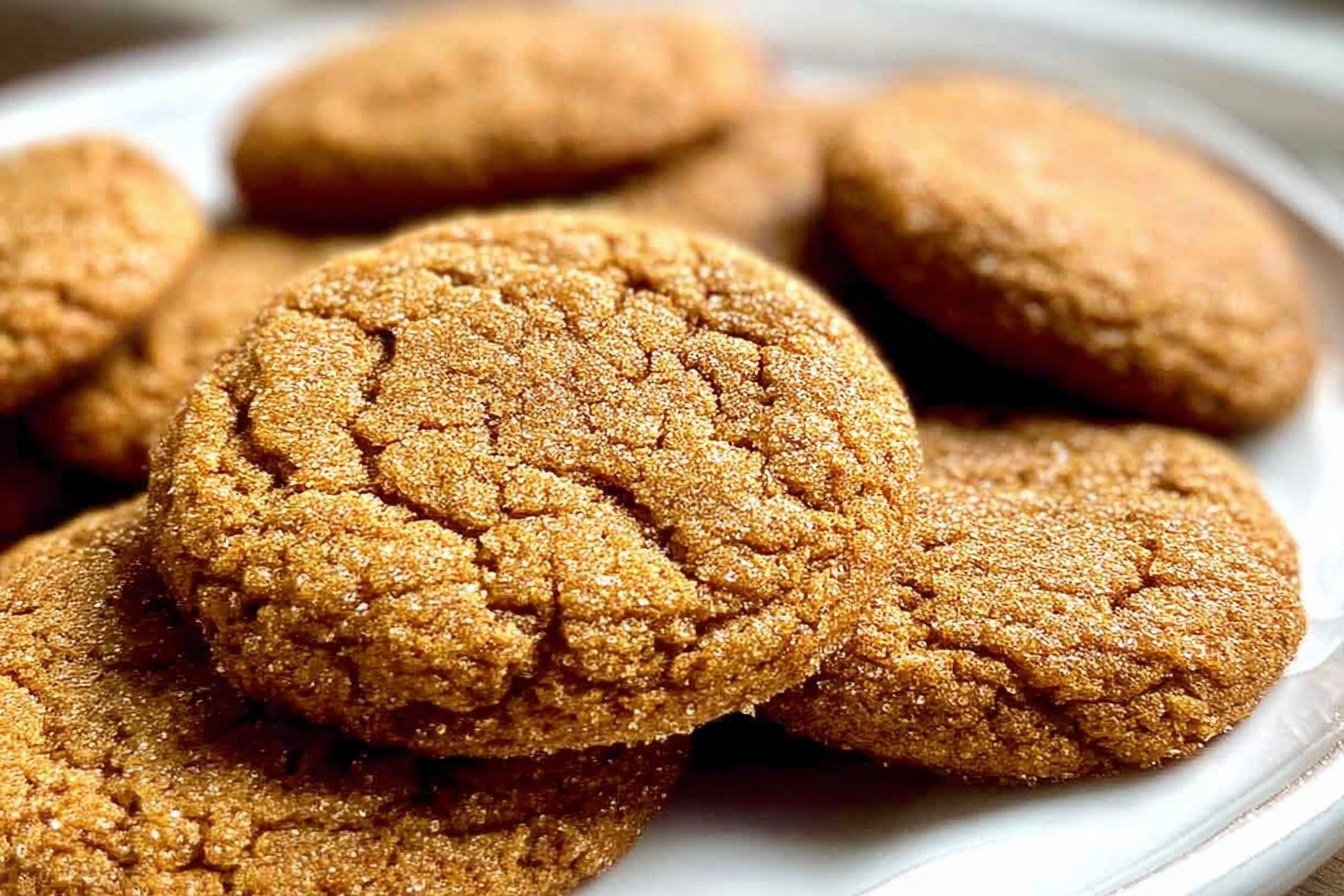
Why You’ll Love This Molasses Cookies
There’s something truly magical about molasses cookies that brings warmth to any kitchen. These soft, chewy treats combine the deep, rich flavors of ginger, cinnamon, and cloves with that unmistakable molasses sweetness that keeps you coming back for more. Whether you’re a seasoned baker or just starting out, this recipe delivers bakery-quality results right from your home oven.
Baking these cookies fills your home with an incredible aroma that instantly makes everything feel cozier. The combination of warming spices creates that perfect holiday feeling any time of year, making them ideal for family gatherings, cookie exchanges, or simply treating yourself after a long day.
Key Benefits of This Recipe
- Ease of preparation: This molasses cookies recipe requires no fancy equipment or complicated techniques. With simple ingredients you likely already have in your pantry, you can have fresh-baked cookies in under two hours. The straightforward mixing method means even beginner bakers can achieve perfect results every single time.
- Health benefits: Unlike heavily processed sweets, molasses contains essential minerals like iron, calcium, and potassium. The warming spices in these cookies, particularly ginger, offer natural anti-inflammatory properties that make this treat slightly more wholesome than your average cookie.
- Versatility: These soft molasses cookies adapt beautifully to various dietary preferences and ingredient substitutions. You can easily modify the recipe for gluten-free needs, add mix-ins like white chocolate chips or pistachios, or adjust the spice levels to suit your family’s preferences.
- Distinctive flavor: The deep, robust taste of molasses paired with aromatic spices creates a cookie unlike any other. That signature crackled top and soft, chewy interior make these cookies stand out at any dessert table or cookie jar.
Jump To
- 1. Why You’ll Love This Molasses Cookies
- 2. Essential Ingredients for Molasses Cookies
- 3. How to Prepare the Perfect Molasses Cookies: Step-by-Step Guide
- 4. Dietary Substitutions to Customize Your Molasses Cookies
- 5. Mastering Molasses Cookies: Advanced Tips and Variations
- 6. How to Store Molasses Cookies: Best Practices
- 7. FAQs: Frequently Asked Questions About Molasses Cookies
- 8. Molasses Cookies
Essential Ingredients for Molasses Cookies
Creating the perfect molasses cookies starts with understanding each ingredient’s role in the final product. Quality ingredients make a noticeable difference, so let’s break down exactly what you’ll need and why each component matters.
Main Ingredients
- 2 and 1/4 cups all-purpose flour – Forms the structural foundation of your cookies. Measure by spooning flour into the measuring cup rather than scooping directly, which can pack too much flour and result in dense cookies.
- 1 and 1/2 teaspoons baking soda – Creates lift and helps develop those beautiful crackled tops. Fresh baking soda is crucial for proper spreading and texture.
- 2 teaspoons ground ginger – Provides that signature warm, slightly spicy flavor that defines molasses cookies. Freshness matters here; older spices lose potency quickly.
- 1 and 1/2 teaspoons ground cinnamon – Adds sweetness and warmth without additional sugar. This familiar spice complements the molasses beautifully.
- 1/4 teaspoon ground cloves – A little goes a long way with this potent spice. It adds depth and complexity to the overall flavor profile.
- 1/4 teaspoon ground nutmeg – Brings a subtle nutty sweetness that rounds out the spice blend. Freshly grated nutmeg offers the best flavor.
- 1/4 teaspoon salt – Balances sweetness and enhances all the spice flavors. Never skip this seemingly small ingredient.
- 3/4 cup unsalted butter – Creates tenderness and richness. Use butter that’s softened but not overly soft or melted to prevent flat cookies.
- 1/2 cup packed light or dark brown sugar – Brown sugar contains molasses, which adds moisture and chewiness while deepening the flavor.
- 1/4 cup granulated sugar – Balances the brown sugar and creates those slightly crisp edges everyone loves.
- 1/3 cup unsulphured or dark molasses – The star ingredient! This thick syrup provides the signature color, flavor, and chewy texture. Avoid blackstrap molasses, which is too bitter and intense.
- 1 large egg at room temperature – Binds ingredients together and adds structure. Room temperature eggs incorporate more evenly into the batter.
- 2 teaspoons pure vanilla extract – Adds subtle sweetness and rounds out the spice flavors. Pure extract offers superior flavor compared to imitation varieties.
For Rolling
- 1/3 cup granulated or coarse sugar – Creates a sparkling, crunchy exterior that contrasts beautifully with the soft interior. Coarse sugar provides extra crunch and visual appeal.
Special Dietary Options
For those with dietary restrictions, these molasses cookies can be adapted. For a vegan version, substitute the butter with equal parts vegan butter or coconut oil, and replace the egg with a flax egg (1 tablespoon ground flaxseed mixed with 3 tablespoons water). Gluten-free bakers can use a 1:1 gluten-free flour blend, though the texture may vary slightly. Those watching calories can reduce the sugars by up to 25% without dramatically affecting texture.
How to Prepare the Perfect Molasses Cookies: Step-by-Step Guide
Making molasses cookies at home is a rewarding process that fills your kitchen with incredible aromas. Follow these detailed steps for cookies that turn out soft, chewy, and perfectly spiced every single time.
First Step: Prepare Your Dry Ingredients
Start by gathering all your ingredients and measuring them precisely. In a medium bowl, whisk together the 2 and 1/4 cups all-purpose flour, 1 and 1/2 teaspoons baking soda, 2 teaspoons ground ginger, 1 and 1/2 teaspoons ground cinnamon, 1/4 teaspoon ground cloves, 1/4 teaspoon ground nutmeg, and 1/4 teaspoon salt. Whisking these dry ingredients together ensures the spices and leavening agents distribute evenly throughout the flour.
This step is crucial for consistent flavor in every bite. Take your time here; any clumps of baking soda or spices will create unpleasant pockets in your finished cookies. Set this bowl aside while you prepare the wet ingredients.
Second Step: Cream Butter and Sugars
In a large mixing bowl, combine 3/4 cup unsalted butter (softened but not melted) with 1/2 cup packed light or dark brown sugar and 1/4 cup granulated sugar. Beat these ingredients together until the mixture becomes creamy and fluffy. This creaming process incorporates air into the butter, which helps create that tender texture we all want.
Pro tip: Your butter should be soft enough to press with your finger but not so warm that it looks greasy. If your butter is too soft, your cookies may spread too much during baking.
The mixture should appear pale and fluffy, usually taking about 2-3 minutes with an electric mixer on medium speed. Don’t rush this step; properly creamed butter and sugar creates the foundation for soft, chewy cookies.
Third Step: Add Molasses, Egg, and Vanilla
Add the 1/3 cup unsulphured or dark molasses to your butter-sugar mixture and beat until fully incorporated. The mixture will turn a beautiful deep brown color. Next, add 1 large egg at room temperature and beat again until smooth. Finally, mix in 2 teaspoons pure vanilla extract.
Adding these wet ingredients one at a time allows each to incorporate properly before adding the next. The molasses adds moisture and that signature deep flavor, while the egg provides structure and binding power.
Fourth Step: Combine Wet and Dry Ingredients
Gradually add the dry ingredient mixture to your wet ingredients, mixing on low speed just until combined. Be careful not to overmix at this stage, as overworking the flour can develop gluten and result in tough cookies.
The dough should come together into a cohesive ball that pulls away from the sides of the bowl. If the dough seems too sticky, resist the urge to add more flour; chilling will help firm it up.
Fifth Step: Chill the Dough
Cover your bowl with plastic wrap or transfer the dough to an airtight container and refrigerate for at least 1 hour. You can chill the dough for up to 2-3 days if you want to bake the cookies later. This chilling time is essential for several reasons: it allows the flavors to meld together, firms up the butter to prevent excessive spreading, and makes the dough easier to handle.
Sixth Step: Shape and Bake
When you’re ready to bake, preheat your oven to 350°F and line baking sheets with parchment paper or silicone mats. Remove the dough from the refrigerator and let it warm slightly for easier handling. Roll the dough into 1-tablespoon sized balls, then roll each ball in the 1/3 cup granulated or coarse sugar reserved for coating.
Arrange the coated dough balls on your prepared baking sheets, spacing them about 3 inches apart to allow for spreading. Bake for 11-12 minutes until the edges are set but the centers still look slightly soft.
Seventh Step: Create Crackled Tops
For those signature crackled tops that make molasses cookies so visually appealing, remove the baking sheet from the oven and gently bang it on the counter 2-3 times. This action helps deflate the cookies and encourages cracking. Return to the oven for 1 more minute if needed.
Final Step: Cool and Serve
Allow the cookies to cool on the baking sheet for 5 minutes before transferring them to a wire rack to cool completely. This cooling time allows the cookies to set properly while maintaining their soft, chewy centers. The total preparation time comes to about 1 hour 45 minutes for prep plus 12 minutes for baking, totaling approximately 2 hours.
If you enjoy baking cookies, you might also love these lemon oatmeal cookies for a bright, citrusy twist on classic cookie recipes.

Dietary Substitutions to Customize Your Molasses Cookies
While the classic molasses cookies recipe is delicious as written, you may need to adapt it for dietary restrictions or personal preferences. Here are some thoughtful substitutions that maintain the integrity of these beloved cookies.
Protein and Main Component Alternatives
For bakers with egg allergies or following vegan diets, replacing the egg requires careful consideration. A flax egg works wonderfully: simply mix 1 tablespoon ground flaxseed with 3 tablespoons water and let it sit for 5 minutes until it develops a gel-like consistency. This substitution maintains moisture and helps bind the dough. Alternatively, commercial egg replacers designed for baking can be used according to package directions.
Butter substitutions have come a long way in recent years. Vegan butter sticks (not tub spread) can replace dairy butter at a 1:1 ratio. Coconut oil works as well, though it may impart a slight coconut flavor. For a lower-fat option, unsweetened applesauce can replace up to half the butter, though expect a slightly cakier texture.
Gluten-free bakers should use a quality 1:1 gluten-free flour blend designed for cookies and baked goods. These blends typically contain xanthan gum, which helps replicate the binding properties of gluten. The texture may be slightly different, but the flavor will remain intact.
Vegetable, Sauce, and Seasoning Modifications
The spice blend in molasses cookies is highly customizable. If you prefer less spice, reduce the ginger to 1 teaspoon and omit the cloves. For spice lovers, increase the ginger to 2 and 1/2 teaspoons or add a pinch of cardamom for complexity. During fall, try adding a pinch of allspice for extra warmth.
Sweetness can be adjusted based on preference. Reducing the brown sugar by 2 tablespoons creates a less sweet cookie that lets the molasses flavor shine. Conversely, adding 2 tablespoons of molasses creates a deeper, more intense flavor. Just remember that molasses is less sweet than sugar, so additional molasses will intensify flavor without dramatically increasing sweetness.
For those who enjoy added textures, fold in 1/2 cup chopped candied ginger, 1/2 cup pistachios, or 1/2 cup white chocolate chips after mixing in the dry ingredients. Each addition brings a new dimension to these classic cookies while maintaining that soft, chewy center.
Looking for more cookie inspiration? These hearty cowboy cookies offer another delicious option packed with oats, chocolate chips, and coconut for a satisfyingly chewy treat.
Mastering Molasses Cookies: Advanced Tips and Variations
Taking your molasses cookies from good to exceptional requires understanding a few key techniques and creative possibilities. These tips come from years of baking experience and will help you achieve consistent, bakery-quality results.
Pro Cooking Techniques
Temperature control is paramount for perfect cookies. Always start with butter that’s softened but not overly soft. If you can press your finger into the butter and leave a slight indentation without it feeling mushy, you’ve got the right consistency. Room temperature eggs incorporate more evenly than cold ones, so take your egg out of the refrigerator about 30 minutes before baking.
Measuring flour correctly makes a significant difference in cookie texture. The spoon-and-level method gives the most accurate results: spoon flour into your measuring cup until it overflows, then level it off with a straight edge. Never pack flour into the cup or scoop directly, as this can add up to 25% more flour than intended.
For consistently round cookies, roll your dough balls quickly between your palms, then roll them in sugar and place on the baking sheet. If the dough becomes too warm while handling, pop it back in the refrigerator for 10-15 minutes.
Flavor Variations
While classic molasses cookies are perfection on their own, consider these delicious variations to keep things interesting. Adding 1/2 cup chopped candied ginger creates spicy little bursts throughout each cookie. 1/2 cup chopped pistachios adds a lovely crunch and subtle nuttiness that pairs beautifully with the spices.
White chocolate chips offer a sweet contrast to the deep molasses flavor. Simply fold in 1/2 cup white chocolate chips after mixing in the dry ingredients. The creamy sweetness balances the robust spice blend perfectly.
Presentation Tips
Visual appeal matters, especially if you’re baking for gifts or gatherings. Rolling cookies in coarse sugar rather than regular granulated sugar creates a sparkling, professional appearance. The larger crystals catch light beautifully and add a satisfying crunch to each bite.
For perfectly uniform cookies, use a cookie scoop to portion the dough. A 1-tablespoon scoop ensures consistent size, which means even baking across the entire batch. Uniform cookies also look more polished when arranged on a platter or packaged as gifts.
Make-Ahead Options
Life gets busy, and molasses cookies are wonderfully accommodating for advance preparation. The dough can be refrigerated for 2-3 days before baking, allowing you to prep ahead for holidays or events. The flavors actually improve with time as the spices meld together.
For longer storage, portion the dough into balls, roll in sugar, and freeze on a baking sheet until solid. Transfer frozen dough balls to a freezer bag and store for up to 3 months. When ready to bake, thaw at room temperature for 30 minutes, then bake as directed.
How to Store Molasses Cookies: Best Practices
Proper storage ensures your molasses cookies remain soft and delicious for days. Thanks to the moisture-retaining properties of molasses and brown sugar, these cookies stay fresh longer than many other varieties.
Room Temperature Storage
Store completely cooled cookies in an airtight container or zip-top bag at room temperature for up to one week. Adding a slice of bread or a small apple wedge to the container helps maintain moisture and softness. Replace the bread or apple daily to prevent mold. Avoid stacking warm cookies directly, as they’ll stick together and lose their shape.
Freezing Options
For longer storage, freeze baked cookies in a single layer on a baking sheet until solid, then transfer to an airtight container or freezer bag. Frozen cookies maintain quality for up to 3 months. Thaw at room temperature for about 30 minutes before serving, or warm briefly in the microwave for that fresh-baked taste.
Reheating Recommendations
If your cookies have hardened slightly, a quick warm-up brings back that soft, fresh texture. Microwave individual cookies for 5-10 seconds or place them in a 300°F oven for 2-3 minutes. Watch carefully to avoid overheating, which can make cookies hard rather than soft.
Meal Prep Considerations
For busy households, consider baking these molasses cookies as part of your weekly meal prep routine. Portion the dough into balls and refrigerate for baking throughout the week. Fresh-baked cookies take only 12 minutes to bake, making them an easy weeknight treat.
Those who enjoy meal prepping desserts might also appreciate these churro cheesecake cookies for another make-ahead treat option.

FAQs: Frequently Asked Questions About Molasses Cookies
What type of molasses is best for molasses cookies?
For the best flavor and texture in molasses cookies, use unsulphured or dark molasses, often labeled as “robust.” This type offers a balanced sweetness and rich taste without bitterness. Avoid blackstrap molasses, as its intense, slightly salty flavor can overpower the spices and make cookies too strong. Unsulphured molasses retains natural color and smoother notes from sugarcane, leading to chewier, softer cookies. If substituting, full-flavored options work similarly. Check labels at the store—most baking aisles carry Grandma’s or Brer Rabbit brands. This choice ensures cookies spread nicely and develop those signature crackled tops during baking.
How do you get crackly tops on molasses cookies?
Crackly tops form as molasses cookies puff up in the oven, then settle and split while baking. Use room-temperature butter, chill dough 1-2 hours, and roll balls in granulated sugar before baking at 350°F for 10-12 minutes. If tops don’t crack, gently bang the baking sheet 2-3 times on the counter midway through baking to deflate them, then bake 1 more minute. Cool on the sheet for 5 minutes to set the cracks. Fresh baking soda (1.5 tsp per batch) boosts lift for better spreading. This technique yields 30-32 cookies with glossy, crinkled surfaces that look bakery-fresh.
How long do molasses cookies stay soft?
Molasses cookies stay soft for up to one week at room temperature thanks to brown sugar and molasses, which draw in moisture. Store in an airtight container or zip-top bag with a slice of bread or apple to maintain tenderness—replace daily. Avoid stacking warm cookies directly to prevent sticking. For longer storage, freeze baked cookies in a single layer first, then transfer to a bag for up to 3 months; thaw at room temp. This method keeps their chewy centers and crisp edges intact. If they harden, microwave for 5-10 seconds or place in a warm oven briefly.
Can you freeze molasses cookie dough?
Yes, molasses cookie dough freezes well for up to 3 months. Portion into 1-tablespoon balls, flash-freeze on a sheet for 1 hour, then store in a freezer bag. Thaw at room temperature for 30 minutes before rolling in sugar and baking—no adjustments needed. You can also chill dough in the fridge for 2-3 days ahead. For baked cookies, freeze similarly after cooling completely. Label bags with dates for easy use. This makes fresh-baked cookies convenient anytime, yielding about 30 per batch. Pro tip: Bake from frozen by adding 1-2 extra minutes to time.
Why are my molasses cookies flat and how do I fix it?
Flat molasses cookies often result from warm butter, overactive oven, old baking soda, or warm sheets. Start with cool butter (not melted), chill dough 2+ hours, and use fresh baking soda. Preheat oven accurately—try 325-335°F if yours runs hot—and use room-temp parchment-lined sheets swapped halfway. Measure flour by spooning into cup, not scooping, to avoid dense packs. For larger 1.5-tablespoon cookies, add 1-2 minutes bake time. Test one sheet first. These steps produce taller, chewier results with proper spread, fixing common pitfalls for perfect cookies every time.

Molasses Cookies
- Total Time: 2 hours
- Yield: 30 cookies
- Diet: Vegetarian
Description
🍪 Ultra-chewy soft molasses cookies – bold ginger-cinnamon spice, perfect tender centers that stay fresh for days!
🥄 Chill-ahead easy bake: holiday crowd-pleaser with cracked tops and cozy flavor in every irresistible bite.
Ingredients
– 2 and 1/4 cups all-purpose flour
– 1 and 1/2 teaspoons baking soda
– 2 teaspoons ground ginger
– 1 and 1/2 teaspoons ground cinnamon
– 1/4 teaspoon ground cloves
– 1/4 teaspoon ground nutmeg
– 1/4 teaspoon salt
– 3/4 cup unsalted butter
– 1/2 cup packed light or dark brown sugar
– 1/4 cup granulated sugar
– 1/3 cup unsulphured or dark molasses
– 1 large egg at room temperature
– 2 teaspoons pure vanilla extract
– 1/3 cup granulated or coarse sugar
Instructions
1-First Step: Prepare Your Dry Ingredients. Start by gathering all your ingredients and measuring them precisely. In a medium bowl, whisk together the 2 and 1/4 cups all-purpose flour, 1 and 1/2 teaspoons baking soda, 2 teaspoons ground ginger, 1 and 1/2 teaspoons ground cinnamon, 1/4 teaspoon ground cloves, 1/4 teaspoon ground nutmeg, and 1/4 teaspoon salt. Whisking these dry ingredients together ensures the spices and leavening agents distribute evenly throughout the flour. This step is crucial for consistent flavor in every bite. Take your time here; any clumps of baking soda or spices will create unpleasant pockets in your finished cookies. Set this bowl aside while you prepare the wet ingredients.
2-Second Step: Cream Butter and Sugars. In a large mixing bowl, combine 3/4 cup unsalted butter (softened but not melted) with 1/2 cup packed light or dark brown sugar and 1/4 cup granulated sugar. Beat these ingredients together until the mixture becomes creamy and fluffy. This creaming process incorporates air into the butter, which helps create that tender texture we all want. The mixture should appear pale and fluffy, usually taking about 2-3 minutes with an electric mixer on medium speed. Don’t rush this step; properly creamed butter and sugar creates the foundation for soft, chewy cookies.
3-Third Step: Add Molasses, Egg, and Vanilla. Add the 1/3 cup unsulphured or dark molasses to your butter-sugar mixture and beat until fully incorporated. The mixture will turn a beautiful deep brown color. Next, add 1 large egg at room temperature and beat again until smooth. Finally, mix in 2 teaspoons pure vanilla extract. Adding these wet ingredients one at a time allows each to incorporate properly before adding the next. The molasses adds moisture and that signature deep flavor, while the egg provides structure and binding power.
4-Fourth Step: Combine Wet and Dry Ingredients. Gradually add the dry ingredient mixture to your wet ingredients, mixing on low speed just until combined. Be careful not to overmix at this stage, as overworking the flour can develop gluten and result in tough cookies. The dough should come together into a cohesive ball that pulls away from the sides of the bowl. If the dough seems too sticky, resist the urge to add more flour; chilling will help firm it up.
5-Fifth Step: Chill the Dough. Cover your bowl with plastic wrap or transfer the dough to an airtight container and refrigerate for at least 1 hour. You can chill the dough for up to 2-3 days if you want to bake the cookies later. This chilling time is essential for several reasons: it allows the flavors to meld together, firms up the butter to prevent excessive spreading, and makes the dough easier to handle.
6-Sixth Step: Shape and Bake. When you’re ready to bake, preheat your oven to 350°F and line baking sheets with parchment paper or silicone mats. Remove the dough from the refrigerator and let it warm slightly for easier handling. Roll the dough into 1-tablespoon sized balls, then roll each ball in the 1/3 cup granulated or coarse sugar reserved for coating. Arrange the coated dough balls on your prepared baking sheets, spacing them about 3 inches apart to allow for spreading. Bake for 11-12 minutes until the edges are set but the centers still look slightly soft.
7-Seventh Step: Create Crackled Tops. For those signature crackled tops that make molasses cookies so visually appealing, remove the baking sheet from the oven and gently bang it on the counter 2-3 times. This action helps deflate the cookies and encourages cracking. Return to the oven for 1 more minute if needed.
8-Final Step: Cool and Serve. Allow the cookies to cool on the baking sheet for 5 minutes before transferring them to a wire rack to cool completely. This cooling time allows the cookies to set properly while maintaining their soft, chewy centers. The total preparation time comes to about 1 hour 45 minutes for prep plus 12 minutes for baking, totaling approximately 2 hours.
Notes
🌿 Use unsulphured molasses (not blackstrap) for best soft chew and flavor.
❄️ Chill dough at least 1 hour to prevent spreading and enhance chewiness.
🔨 Bang tray post-bake for signature cracked tops – magic texture trick!
- Prep Time: 20 minutes
- Chill: 1 hour
- Cook Time: 12 minutes
- Category: Desserts
- Method: Baking
- Cuisine: American
Nutrition
- Serving Size: 1 cookie
- Calories: 180 kcal
- Sugar: 15 g
- Sodium: 200 mg
- Fat: 8 g
- Saturated Fat: 5 g
- Unsaturated Fat: 3 g
- Trans Fat: 0 g
- Carbohydrates: 25 g
- Fiber: 1 g
- Protein: 2 g
- Cholesterol: 20 mg
Keywords: soft molasses cookies, chewy molasses cookies, perfect chew cookies, molasses cookies recipe