
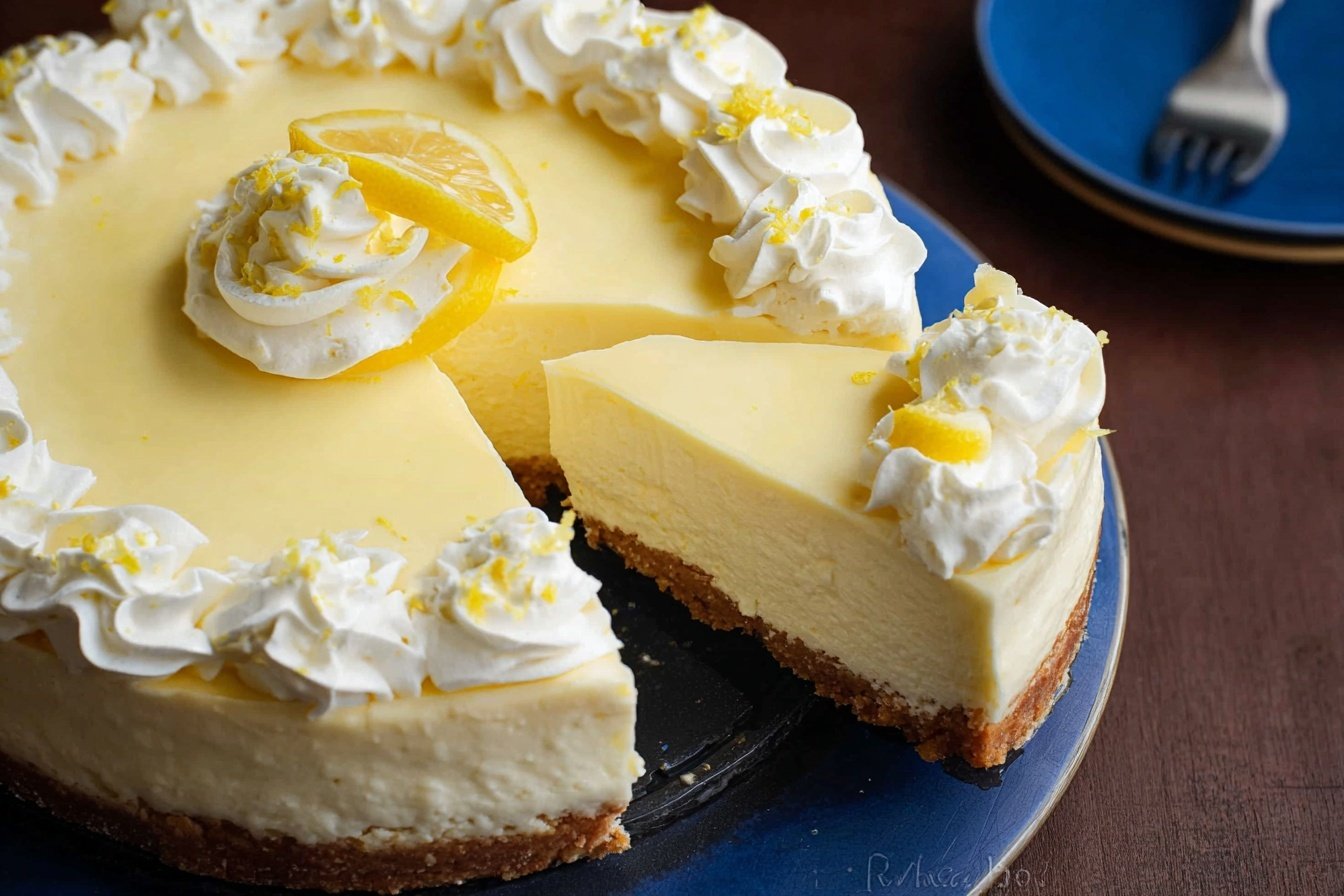
Why You’ll Love This Lemon Cheesecake Recipe
This Lemon Cheesecake Recipe is the kind of dessert that feels special without being fussy. It brings together a buttery graham cracker crust, a smooth lemon cheesecake filling, and a bright lemon curd topping for a dessert that tastes fresh, creamy, and rich all at once. If you love classic cheesecake but want something a little lighter in flavor, this one is a real treat.
- Easy to follow: The steps are clear and beginner-friendly, so home bakers can feel confident from the crust all the way to the final chill time.
- Bright, balanced flavor: Fresh lemon juice and zest cut through the richness of the cream cheese, giving each bite a tangy finish that keeps you coming back for more.
- Great for make-ahead planning: Since this cheesecake needs time to chill, it is perfect for busy parents, working professionals, and hosts who want dessert ready ahead of time.
- Flexible for different occasions: Serve it plain, dress it up with whipped cream and berries, or pair it with other sweet treats like soft lemon cookies or a slice of a lighter dessert such as cinnamon roll honeybun cheesecake.
Tip: This cheesecake tastes even better after a full overnight chill, when the citrus flavor settles in and the texture turns extra smooth.
The lemon flavor stands out in a way that feels fresh but still comforting. It is a dessert that works well for spring gatherings, family dinners, holidays, or any time you want a sweet finish that does not feel too heavy.
Jump To
- 1. Why You’ll Love This Lemon Cheesecake Recipe
- 2. Essential Ingredients for Lemon Cheesecake Recipe
- 3. How to Prepare the Perfect Lemon Cheesecake Recipe: Step-by-Step Guide
- 4. Dietary Substitutions to Customize Your Lemon Cheesecake Recipe
- 5. Mastering Lemon Cheesecake Recipe: Advanced Tips and Variations
- 6. How to Store Lemon Cheesecake Recipe: Best Practices
- 7. FAQs: Frequently Asked Questions About Lemon Cheesecake Recipe
- 8. Lemon Cheesecake Recipe
Essential Ingredients for Lemon Cheesecake Recipe
Before you begin, gather everything and let the dairy ingredients come to room temperature. That small step makes the batter smoother and helps the cheesecake bake more evenly.
Structured Ingredient List
- 1 and 3/4 cups graham cracker crumbs or about 14 full-sheet graham crackers, finely crushed, for the crust base
- 5 tablespoons unsalted butter, melted, to bind the crust and give it a rich flavor
- 1/4 cup granulated sugar for the graham cracker crust
- 1 and 1/4 cups granulated sugar for the filling, lightly sweetening the cheesecake and helping the lemon flavor shine
- 1 tablespoon packed lemon zest, from about 1 lemon, for strong citrus aroma
- 32 ounces full-fat brick cream cheese, softened to room temperature, for the creamy main filling
- 1/2 cup fresh lemon juice, from about 3 to 4 lemons and at room temperature, for bright tang
- 1/3 cup sour cream or plain yogurt, at room temperature, for extra creaminess and a slight tang
- 1 teaspoon pure vanilla extract, to round out the citrus flavor
- 3 large eggs, at room temperature, to help the cheesecake set properly
- About 3/4 cup lemon curd, recommended for the topping
- Whipped cream, for serving
- Lemon slices and/or fresh berries, optional garnish for a pretty finish
Ingredient Notes That Matter
| Ingredient | Why It Matters | Helpful Note |
|---|---|---|
| Cream cheese | Creates the rich, silky filling | Use full-fat brick cream cheese, not whipped or spreadable types |
| Lemon zest and juice | Brings the citrus flavor | Zest the lemon before juicing it |
| Sour cream or plain yogurt | Softens the texture | Either one works well if it is at room temperature |
| Eggs | Help the cheesecake set | Add one at a time for the smoothest batter |
| Lemon curd | Adds a glossy topping | Cool it before spreading on top |
Special Dietary Options
- Vegan: Use vegan cream cheese, plant-based butter, dairy-free yogurt, and an egg replacer designed for baking. The texture will be a bit different, but the lemon flavor still comes through nicely.
- Gluten-free: Swap the graham crackers for certified gluten-free graham-style crumbs or crushed gluten-free cookies. Keep the rest of the recipe the same.
- Low-calorie: Choose reduced-fat cream cheese and a lighter yogurt, then use a smaller amount of lemon curd or top with fresh berries instead.
How to Prepare the Perfect Lemon Cheesecake Recipe: Step-by-Step Guide
First Step: Preheat and prepare the pan
Start by preheating your oven to 350°F (175°C) and position the rack in the lower-middle part of the oven. This gives the cheesecake steady heat from below without overbrowning the top too quickly. Use an ungreased 9-inch springform pan for best results.
Before mixing anything, set up your roasting pan for the water bath and wrap the bottom of the springform pan in foil after the crust is baked. Having everything ready now makes the process smoother later.
Second Step: Make the crust
In a bowl, mix the 1 and 3/4 cups graham cracker crumbs with 1/4 cup granulated sugar. Stir in the 5 tablespoons melted unsalted butter until the mixture looks sandy and holds together when pressed.
Press the crumbs firmly into the bottom of the pan in an even layer. Bake the crust for 10 minutes. This short bake helps it stay crisp under the filling. After it comes out of the oven, wrap the outside bottom of the pan tightly in foil so the water bath does not leak into the cheesecake.
Third Step: Build the lemon sugar
Place the 1 tablespoon lemon zest and 1 and 1/4 cups granulated sugar in a food processor or blender. Pulse a few times so the lemon oils soak into the sugar. This is one of the best tricks in the whole recipe because it makes the lemon taste stronger and more fragrant.
Small step, big payoff: pulsing zest with sugar spreads the citrus flavor through every bite.
Fourth Step: Make the filling
In a large mixing bowl, beat the 32 ounces softened cream cheese with the lemon sugar until smooth. Scrape the bowl as needed so no lumps remain. Then add the 1/2 cup lemon juice, 1/3 cup sour cream or plain yogurt, and 1 teaspoon vanilla extract. Mix until combined.
Next, add the 3 large eggs one at a time, mixing gently after each addition. Stop as soon as the batter comes together. Overmixing after the eggs go in can add too much air, which may lead to cracks later.
Fifth Step: Fill the crust and set up the water bath
Pour the cheesecake batter over the warm crust and smooth the top with a spatula. Place the springform pan inside a larger roasting pan. Carefully pour in enough boiling water to come about 1 inch up the sides of the springform pan.
This water bath helps the cheesecake bake gently and evenly. If you prefer, you can place a separate pan of hot water on the rack below the cheesecake to create steam instead. That method is useful if you want to avoid direct water contact, but the traditional bath gives the steadiest result.
Sixth Step: Bake until just set
Bake the cheesecake for 55 to 70 minutes. The edges should look set, while the center should still jiggle slightly when you gently move the pan. If the top starts browning too quickly, loosely cover it with foil.
Do not wait until the center is completely firm in the oven. A slight wobble is exactly what you want, because the cheesecake finishes setting as it cools.
Seventh Step: Cool slowly
Once the bake time is done, turn off the oven and crack the door open. Leave the cheesecake in the water bath for 1 hour. This gradual cooling helps prevent sinking and cracking.
After that, remove the pan from the water bath and let it cool on the counter until it reaches room temperature. Patience matters here. A slow cooldown gives you a smoother finish and a cleaner slice later.
Eighth Step: Add the lemon curd topping
Spread about 3/4 cup cooled lemon curd over the top, staying away from the edges so it does not drip down the sides. The curd adds a glossy layer and a punch of lemon flavor that makes this dessert taste bakery-worthy.
If you are making the lemon curd from scratch, it is a good idea to prepare it ahead so it has time to cool fully before you use it.
Ninth Step: Chill until fully set
Cover the cheesecake loosely and chill it for at least 4 hours, though overnight is even better. This is the step that gives the cheesecake its firm, sliceable texture. The flavor also improves as the cheesecake rests in the fridge.
If you are planning for guests, make it the day before. That way, all you need to do on serving day is garnish and slice.
Final Step: Finish and serve
Remove the rim from the springform pan. Garnish with whipped cream, lemon slices, or fresh berries if you want a bright, pretty finish. For clean slices, dip a knife in warm water and wipe it dry between cuts.
Store leftovers in the refrigerator for up to 5 days. For another fresh citrus dessert idea, try this lemon cream cheese dump cake when you want something sweet with less effort.

Dietary Substitutions to Customize Your Lemon Cheesecake Recipe
Protein and Main Component Alternatives
If you need to adjust the recipe for availability or dietary needs, there are a few smart swaps that still give you a satisfying dessert. The cream cheese is the main body of the cheesecake, so any replacement should be thick and rich.
- Reduced-fat cream cheese: Use if you want a lighter result, but expect a slightly softer texture.
- Dairy-free cream cheese: Works for a vegan-style version when paired with plant-based butter and a suitable egg substitute.
- Plain Greek yogurt: Can replace the sour cream if you prefer a tangier note and a little extra protein.
- Digestive biscuits or vanilla wafers: A good crust swap when graham crackers are not available. If you need a similar dessert idea with a different texture, you might also enjoy browsing mini strawberry crunch cheesecake bites.
Vegetable, Sauce, and Seasoning Modifications
There are not any vegetables in this recipe, but you can still adjust the flavor profile through the topping and citrus notes. If fresh lemons are not available, bottled juice can work in a pinch, though the flavor will be a little less bright.
- Berry topping: Fresh strawberries, blueberries, or raspberries make a colorful finish if you want a fruitier version.
- No curd topping: Serve the cheesecake with only whipped cream and lemon zest for a simpler look.
- Vanilla boost: Add a little extra vanilla if you want the lemon to taste softer and rounder.
- Extra citrus: Mix in a small amount of orange zest with the lemon for a different citrus twist.
Mastering Lemon Cheesecake Recipe: Advanced Tips and Variations
Pro cooking techniques
A few small habits can make a big difference in the final texture. First, always use room temperature ingredients. Cold cream cheese tends to stay lumpy, and cold eggs can make the batter mix unevenly. Second, mix gently after the eggs go in. The less air you whip into the batter, the less chance there is of cracks.
Another useful trick is to cool the cheesecake slowly in stages. Rapid temperature changes are one of the biggest reasons cheesecake sinks. If you want an even safer backup, place a pan of hot water on a lower oven rack to add moisture while baking.
Flavor variations
You can play with the flavor without changing the base recipe too much. Add a touch more lemon zest for a sharper citrus taste, or swap some of the lemon curd topping for berries if you want a sweeter finish. A spoonful of raspberry sauce on the plate also pairs nicely with the tangy filling.
For a fun variation, bake the batter in mini springform pans or muffin tins lined with paper cups. Minis bake faster, which is handy when you want individual desserts for parties or lunchbox treats.
Presentation tips
A plain cheesecake is already beautiful, but a thoughtful garnish makes it feel even more special. Pipe whipped cream around the edge, scatter fresh berries in the center, and add a few thin lemon slices for color. A light dusting of lemon zest right before serving also looks lovely.
For the cleanest slices, use a warm knife and wipe it after every cut. It makes the cheesecake look neat and polished.
Make-ahead options
This dessert is a great choice for planning ahead. You can bake the cheesecake up to a day in advance and add the lemon curd after it has cooled. It also works well if you want to prepare the crust and curd earlier in the day, then assemble everything before the final chill. If you like creamy desserts with a simple prep style, you may also want to save this no-bake lemon cheesecake recipe for another day.
How to Store Lemon Cheesecake Recipe: Best Practices
Refrigeration
Store leftover cheesecake in the refrigerator, covered tightly or kept in an airtight container. It stays fresh for up to 5 days. If possible, keep the cheesecake whole until you are ready to serve it, since slices can dry out faster.
Freezing
Freeze the cheesecake without the lemon curd topping for the best texture. Wrap it well in plastic wrap and then foil, or place individual slices in airtight containers. It can stay frozen for up to 3 months. Thaw overnight in the refrigerator before serving, then add fresh topping if desired.
Reheating
This dessert is best served cold, so reheating is usually not needed. If the cheesecake has been frozen, let it thaw in the fridge rather than on the counter. That keeps the texture creamy and helps prevent condensation from softening the crust.
Meal prep considerations
If you are making dessert for a gathering or holiday meal, this cheesecake fits meal prep nicely. Bake it ahead, chill overnight, and finish with toppings the next day. You can also freeze it in advance for special occasions when you want dessert ready with minimal effort.
FAQs: Frequently Asked Questions About Lemon Cheesecake Recipe
Can I bake lemon cheesecake without a water bath?
While a water bath is ideal for preventing cracks and ensuring even baking, you can skip the traditional method with some adjustments. Place a pan of hot water on the rack below the cheesecake in the oven to create steam—this mimics humidity without direct submersion. Bake at a low temperature, around 325°F (165°C), for the full time specified in your recipe. Cool gradually by turning off the oven and cracking the door for 1 hour. Room temperature ingredients and gentle mixing also help. This approach works for most home bakers but may slightly affect texture. For best results, especially with the lemon curd topping, stick to the water bath if possible. Test in a smaller batch first.
How do I prevent cracks on lemon cheesecake?
Cracks happen from rapid temperature changes, overmixing, or dryness—here’s how to avoid them. Use room temperature cream cheese, eggs, and other ingredients for smooth blending; cold items cause lumps and excess air. Add eggs one at a time, mixing just until combined. Bake in a water bath or with a steam pan below for humidity. Cool the cheesecake slowly: leave it in the turned-off oven with the door ajar for 1 hour, then room temperature for another hour before chilling. Don’t overbake— the center should jiggle slightly when done. Run a knife around the edge post-baking to prevent pulling. These steps yield a smooth, crack-free top perfect for lemon curd.
Can I freeze lemon cheesecake?
Yes, lemon cheesecake freezes well for up to 3 months, making it great for make-ahead desserts. Prepare and bake as directed, but freeze without the lemon curd topping—add it fresh after thawing for best flavor and texture. Cool completely, wrap tightly in plastic wrap, then foil, or place in an airtight container. For slices, freeze individually on a tray first. Thaw overnight in the refrigerator, not at room temperature, to avoid condensation. Serve chilled. This method preserves the creamy filling and crumbly crust. Note: Freezing may slightly soften the texture, but it’s barely noticeable. Label with dates for easy tracking.
What can I use instead of graham crackers for lemon cheesecake crust?
If graham crackers aren’t available, substitute 200 grams (about 2 cups) ground digestive biscuits, Biscoff cookies, or vanilla wafers. Mix with 1/3 cup granulated sugar and 6 tablespoons melted butter until it resembles wet sand. Press firmly into your pan and pre-bake at 350°F (175°C) for 12-14 minutes—longer than graham crackers due to density. Cool before adding filling. Digestives give a similar buttery crunch; Biscoff adds caramel notes that pair nicely with lemon. Avoid loose crumbs by grinding finely in a food processor. This swap keeps the crust sturdy for the tangy filling and curd topping without recipe changes.
How long should lemon cheesecake chill before serving?
Chill your lemon cheesecake for at least 4 hours, or ideally overnight (8-12 hours), to set properly. This firms up the filling and lets the lemon curd topping stabilize and infuse flavors. After baking and initial cooling, cover loosely with plastic wrap (once room temp) and refrigerate. The full chill prevents slicing issues and enhances taste as citrus brightens. For best results, make it a day ahead. If topping with curd, spread it on while the cheesecake is still slightly warm, then chill together. Serves 10-12; cut with a hot knife for clean slices. Patience here delivers restaurant-quality texture.

Lemon Cheesecake Recipe
- Total Time: 8 hours
- Yield: 12 servings
- Diet: Vegetarian
Description
🍋 Discover the ultimate easy creamy lemon cheesecake: tangy, refreshing, and irresistibly smooth – perfect for impressing guests with minimal effort!
🥧 This no-fuss dessert delivers bright lemon flavor in every creamy bite, ideal for summer parties or any sweet craving.
Ingredients
– 1 and 3/4 cups graham cracker crumbs for the crust base
– 5 tablespoons unsalted butter, melted to bind the crust and give it a rich flavor
– 1/4 cup granulated sugar for the graham cracker crust
– 1 and 1/4 cups granulated sugar for the filling, lightly sweetening the cheesecake and helping the lemon flavor shine
– 1 tablespoon packed lemon zest for strong citrus aroma
– 32 ounces full-fat brick cream cheese, softened to room temperature for the creamy main filling
– 1/2 cup fresh lemon juice, from about 3 to 4 lemons and at room temperature for bright tang
– 1/3 cup sour cream or plain yogurt, at room temperature for extra creaminess and a slight tang
– 1 teaspoon pure vanilla extract to round out the citrus flavor
– 3 large eggs, at room temperature to help the cheesecake set properly
– About 3/4 cup lemon curd recommended for the topping
– Whipped cream for serving
– Lemon slices and/or fresh berries optional garnish for a pretty finish
Instructions
1-First Step: Preheat and prepare the pan Start by preheating your oven to 350°F (175°C) and position the rack in the lower-middle part of the oven. This gives the cheesecake steady heat from below without overbrowning the top too quickly. Use an ungreased 9-inch springform pan for best results. Before mixing anything, set up your roasting pan for the water bath and wrap the bottom of the springform pan in foil after the crust is baked. Having everything ready now makes the process smoother later.
2-Second Step: Make the crust In a bowl, mix the 1 and 3/4 cups graham cracker crumbs with 1/4 cup granulated sugar. Stir in the 5 tablespoons melted unsalted butter until the mixture looks sandy and holds together when pressed. Press the crumbs firmly into the bottom of the pan in an even layer. Bake the crust for 10 minutes. This short bake helps it stay crisp under the filling. After it comes out of the oven, wrap the outside bottom of the pan tightly in foil so the water bath does not leak into the cheesecake.
3-Third Step: Build the lemon sugar Place the 1 tablespoon lemon zest and 1 and 1/4 cups granulated sugar in a food processor or blender. Pulse a few times so the lemon oils soak into the sugar. This is one of the best tricks in the whole recipe because it makes the lemon taste stronger and more fragrant. Small step, big payoff: pulsing zest with sugar spreads the citrus flavor through every bite.
4-Fourth Step: Make the filling In a large mixing bowl, beat the 32 ounces softened cream cheese with the lemon sugar until smooth. Scrape the bowl as needed so no lumps remain. Then add the 1/2 cup lemon juice, 1/3 cup sour cream or plain yogurt, and 1 teaspoon vanilla extract. Mix until combined. Next, add the 3 large eggs one at a time, mixing gently after each addition. Stop as soon as the batter comes together. Overmixing after the eggs go in can add too much air, which may lead to cracks later.
5-Fifth Step: Fill the crust and set up the water bath Pour the cheesecake batter over the warm crust and smooth the top with a spatula. Place the springform pan inside a larger roasting pan. Carefully pour in enough boiling water to come about 1 inch up the sides of the springform pan. This water bath helps the cheesecake bake gently and evenly. If you prefer, you can place a separate pan of hot water on the rack below the cheesecake to create steam instead. That method is useful if you want to avoid direct water contact, but the traditional bath gives the steadiest result.
6-Sixth Step: Bake until just set Bake the cheesecake for 55 to 70 minutes. The edges should look set, while the center should still jiggle slightly when you gently move the pan. If the top starts browning too quickly, loosely cover it with foil. Do not wait until the center is completely firm in the oven. A slight wobble is exactly what you want, because the cheesecake finishes setting as it cools.
7-Seventh Step: Cool slowly Once the bake time is done, turn off the oven and crack the door open. Leave the cheesecake in the water bath for 1 hour. This gradual cooling helps prevent sinking and cracking. After that, remove the pan from the water bath and let it cool on the counter until it reaches room temperature. Patience matters here. A slow cooldown gives you a smoother finish and a cleaner slice later.
8-Eighth Step: Add the lemon curd topping Spread about 3/4 cup cooled lemon curd over the top, staying away from the edges so it does not drip down the sides. The curd adds a glossy layer and a punch of lemon flavor that makes this dessert taste bakery-worthy. If you are making the lemon curd from scratch, it is a good idea to prepare it ahead so it has time to cool fully before you use it.
9-Ninth Step: Chill until fully set Cover the cheesecake loosely and chill it for at least 4 hours, though overnight is even better. This is the step that gives the cheesecake its firm, sliceable texture. The flavor also improves as the cheesecake rests in the fridge. If you are planning for guests, make it the day before. That way, all you need to do on serving day is garnish and slice.
10-Final Step: Finish and serve Remove the rim from the springform pan. Garnish with whipped cream, lemon slices, or fresh berries if you want a bright, pretty finish. For clean slices, dip a knife in warm water and wipe it dry between cuts. Store leftovers in the refrigerator for up to 5 days. For another fresh citrus dessert idea, try this lemon cream cheese dump cake when you want something sweet with less effort.
Notes
🥚 Use all ingredients at room temperature to prevent lumps and ensure a smooth batter.
🍋 Pulse lemon zest with sugar to maximize bright lemon flavor throughout the cheesecake.
🚿 Employ a water bath and gradual cooling to achieve a crack-free, perfectly baked cheesecake.
- Prep Time: 1 hour
- Chilling: 6 hours
- Cook Time: 1 hour
- Category: Dessert
- Method: Baked
- Cuisine: American
Nutrition
- Serving Size: 1 slice (1/12)
- Calories: 468 kcal
- Sugar: 29 g
- Sodium: 329 mg
- Fat: 32 g
- Saturated Fat: 18 g
- Unsaturated Fat: N/A
- Trans Fat: 1 g
- Carbohydrates: 39 g
- Fiber: 1 g
- Protein: 7 g
- Cholesterol: 126 mg
Keywords: lemon cheesecake,easy recipe,creamy dessert,lemon dessert