
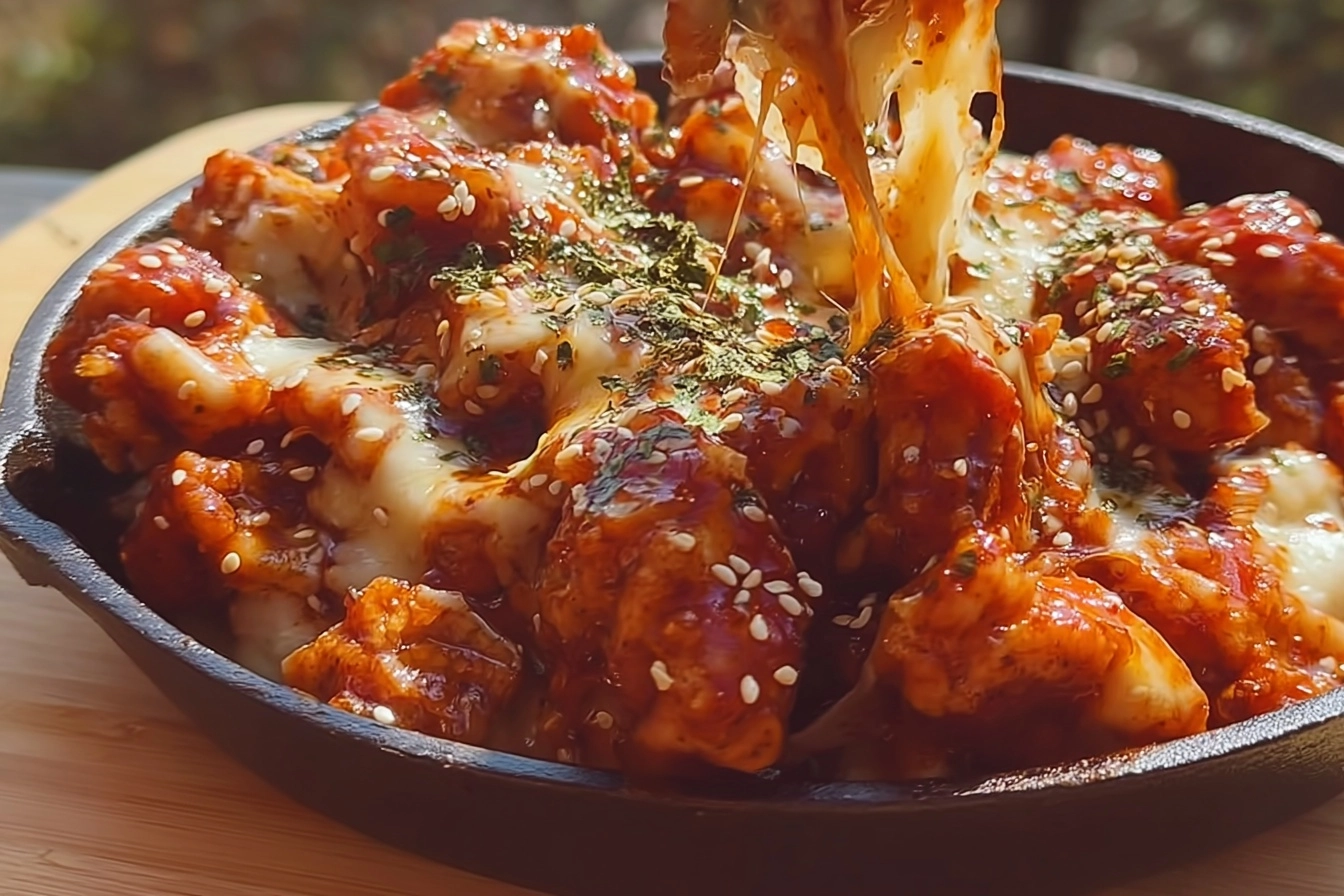
Why You’ll Love This Korean Fire Chicken
When I first tried making this spicy chicken dish, I couldn’t believe how the bold flavors and tender meat came together so easily in one pan it quickly became a favorite for weekday dinners at my house. Korean Fire Chicken, also known as Cheese Buldak or 치즈불닭, brings the exciting flavors of Korean street food right into your kitchen without requiring any special equipment or hard-to-find ingredients.
This dish has gained tremendous popularity worldwide, and for good reason. The combination of fiery heat, sweet undertones, and gooey melted cheese creates an unforgettable taste experience that keeps people coming back for more. Whether you’re a spice enthusiast or just looking to try something new, this recipe delivers restaurant-quality results at home.
Here are the main reasons this Korean Fire Chicken recipe will become a staple in your cooking rotation:
- Ease of preparation: With just 20 minutes of active prep time and simple stovetop cooking, this recipe fits perfectly into busy schedules. The marinating process requires minimal effort, and everything cooks in a single pan, meaning less cleanup afterward.
- Health benefits: Chicken provides high-quality protein essential for muscle maintenance and overall wellness. The dish also contains beneficial garlic and ginger, which offer immune-boosting properties and anti-inflammatory effects.
- Versatility: This recipe adapts beautifully to different dietary preferences and ingredient availability. You can adjust the spice level, swap proteins, add vegetables, or skip the cheese for a dairy-free version the possibilities are endless.
- Distinctive flavor: The signature sweet-spicy balance from gochugaru (Korean red pepper flakes) and gochujang creates a depth of flavor that’s impossible to resist. When paired with melted mozzarella and chewy rice cakes, every bite offers multiple textures and taste dimensions.
Cooking Tip: The name “buldak” literally translates to “fire chicken” because of its intense heat level. Don’t worry you can easily adjust the spice to suit your preference!
Jump To
- 1. Why You’ll Love This Korean Fire Chicken
- 2. Essential Ingredients for Korean Fire Chicken
- 3. How to Prepare the Perfect Korean Fire Chicken: Step-by-Step Guide
- 4. Dietary Substitutions to Customize Your Korean Fire Chicken
- 5. Mastering Korean Fire Chicken: Advanced Tips and Variations
- 6. How to Store Korean Fire Chicken: Best Practices
- 7. FAQs: Frequently Asked Questions About Korean Fire Chicken
- 8. Korean Fire Chicken
Essential Ingredients for Korean Fire Chicken
Gathering the right ingredients is key to achieving authentic Korean Fire Chicken flavor at home. This recipe serves 4 people and uses ingredients that are readily available at most grocery stores or Asian markets. Below is a complete list with precise measurements to ensure your dish turns out perfectly every time.
Main Ingredients:
- 2 pounds chicken breast, cut into cubes The star protein that absorbs the marinade beautifully. You can also use chicken thighs for juicier results.
- ½ cup hot pepper flakes (gochugaru) Korean red pepper flakes provide the signature heat and vibrant color. Adjust amount based on your spice tolerance.
- 2 to 3 tablespoons hot pepper paste (gochujang) This fermented chili paste adds depth, umami, and complexity to the sauce.
- 1 tablespoon soy sauce Provides saltiness and enhances the savory notes in the marinade.
- 3 tablespoons vegetable or corn oil Used for marinating and cooking the chicken. Divided between the marinade and pan-frying.
- ½ teaspoon ground black pepper Adds a subtle warmth and enhances the overall flavor profile.
- ⅓ cup rice syrup Creates the essential sweet balance against the heat. You can substitute with corn syrup, sugar, or honey.
- 6 large garlic cloves, minced Fresh garlic is essential for authentic Korean flavor and aromatic depth.
- 2 teaspoons minced ginger Adds brightness and helps cut through the richness of the dish.
- ¼ cup water Helps create steam for cooking the chicken evenly and prevents burning.
Optional Additions:
- 1 pound mozzarella cheese, cut into small pieces Creates the famous “cheese buldak” version with gooey, stretchy melted cheese on top.
- 1 cup sliced rice cakes (tteok) Chewy rice cakes add texture and help soak up the delicious sauce.
- 1 green onion, chopped Fresh garnish that adds color and a mild onion flavor to finish the dish.
Special Dietary Options:
- Vegan: Replace chicken with firm tofu cubes or king oyster mushrooms. Use a vegan honey substitute and skip the cheese or use dairy-free alternatives.
- Gluten-free: Use gluten-free soy sauce (tamari) and ensure your gochujang is certified gluten-free.
- Low-calorie: Reduce the rice syrup, skip the cheese, and use less oil. Serve with steamed vegetables instead of rice cakes.
How to Prepare the Perfect Korean Fire Chicken: Step-by-Step Guide
Creating delicious Korean Fire Chicken at home is simpler than you might think. Follow these detailed instructions to achieve restaurant-quality results in your own kitchen. The entire process takes about 40 minutes, including prep and cooking time.
First Step: Prepare the Sweet-Spicy Marinade
In a large mixing bowl, combine the marinade ingredients that will transform ordinary chicken into a flavor-packed Korean delight. Add ½ cup hot pepper flakes, 2 to 3 tablespoons hot pepper paste, 1 tablespoon soy sauce, 2 tablespoons vegetable oil, ½ teaspoon black pepper, ⅓ cup rice syrup, 6 minced garlic cloves, and 2 teaspoons minced ginger. Mix everything thoroughly until you have a smooth, consistent paste with no lumps. The color should be a deep, vibrant red.
Second Step: Marinate the Chicken
Add your 2 pounds of cubed chicken breast to the marinade bowl. Using clean hands or tongs, toss the chicken pieces until every cube is thoroughly coated with the spicy mixture. For best results, let the chicken marinate for at least 30 minutes at room temperature, or cover and refrigerate for up to 24 hours for more intense flavor penetration. While marinating, you can prepare your optional ingredients slice the rice cakes and cut the mozzarella into small cubes.
Third Step: Prepare the Rice Cakes (Optional)
If you’re adding rice cakes for that authentic chewy texture, heat 1 tablespoon vegetable oil in a separate small pan over medium heat. Add 1 cup sliced rice cakes and fry them for about 3-4 minutes until they develop a crispy, golden exterior. Remove from the pan and set aside. This step adds wonderful texture contrast to the finished dish.
Fourth Step: Cook the Marinated Chicken
Heat a heavy-bottomed pan or cast iron skillet over medium-high heat. A cast iron pan works best for achieving that slight caramelization on the chicken. Add the remaining 1 tablespoon of oil if needed, then transfer the marinated chicken along with ¼ cup water to the pan. Cover with a lid and cook for 10 minutes without stirring. This allows the chicken to cook through while the steam helps distribute the flavors evenly.
Fifth Step: Add Rice Cakes and Finish Cooking
After the initial 10 minutes, remove the lid and add your prepared rice cakes on top of the chicken. Reduce the heat to medium-low, cover again, and cook for another 10 minutes. The chicken should reach an internal temperature of 165°F (74°C) and be fully cooked through with no pink remaining. The sauce will thicken and coat everything beautifully.
| Ingredient | Amount | Purpose |
|---|---|---|
| Chicken Breast | 2 pounds | Main protein, absorbs marinade |
| Hot Pepper Flakes | ½ cup | Primary heat source |
| Hot Pepper Paste | 2-3 tablespoons | Umami depth and binding |
| Mozzarella Cheese | 1 pound | Creamy, cooling topping |
| Rice Cakes | 1 cup | Chewy texture addition |
Sixth Step: Add Cheese (Optional)
For the famous Cheese Buldak experience, preheat your oven broiler. Transfer the pan contents to an oven-safe dish if your pan isn’t broiler-safe. Sprinkle 1 pound of cubed mozzarella cheese evenly over the cooked chicken and rice cakes. Place under the broiler for 2-3 minutes until the cheese is completely melted and bubbling with golden spots on top. Watch carefully during this step as the cheese can go from perfectly melted to burnt very quickly.
Final Step: Garnish and Serve
Remove from the oven and immediately sprinkle with 1 chopped green onion for fresh color and flavor. Serve your Korean Fire Chicken hot, directly from the pan for a dramatic presentation. This dish pairs wonderfully with steamed white rice to help balance the heat, or enjoy it on its own as a low-carb option. For more delicious chicken recipes, check out my chicken breast recipes collection for inspiration.
Serving Suggestion: Korean Fire Chicken is best enjoyed immediately while the cheese is still melty and the sauce is hot. Serve with a side of cold milk or yogurt-based drink to help manage the heat level!

Dietary Substitutions to Customize Your Korean Fire Chicken
One of the best things about Korean Fire Chicken is how adaptable it is to different dietary needs and preferences. Whether you’re cooking for someone with specific restrictions or simply want to try something different, these substitutions will help you create a version that works for everyone at your table.
Protein and Main Component Alternatives
The original recipe calls for chicken breast, but several alternatives work beautifully with the same marinade and cooking method. Each option brings its own unique characteristics to the dish while maintaining that signature Korean Fire Chicken flavor profile.
Chicken Thighs: Perhaps the best substitute for chicken breast, thighs contain more fat which keeps them juicy during high-heat cooking. Use boneless, skinless thighs cut into bite-sized pieces about 1.5 pounds to match the original recipe. They absorb the marinade exceptionally well and rarely dry out. Many cooks actually prefer thighs for their richer flavor and more forgiving cooking nature. For similar protein-packed dishes, try my crispy baked parmesan chicken recipe.
Tofu: For a vegetarian or vegan version, use firm or extra-firm tofu. Press the tofu block for at least 30 minutes to remove excess moisture, then cut into 1-inch cubes. Marinate briefly about 15-20 minutes is enough since tofu absorbs flavors quickly. Pan-fry or bake until golden and crispy before adding the sauce. According to research on protein sources, tofu provides complete protein with all essential amino acids.
Other Protein Options: Cubed pork belly creates an incredibly rich version, while shrimp cooks faster and pairs wonderfully with the spicy-sweet sauce. For a unique twist, try chunks of firm white fish like cod or halibut, adjusting cooking time to prevent overcooking.
Vegetable, Sauce, and Seasoning Modifications
Vegetables add nutrition, texture, and color to your Korean Fire Chicken while helping to stretch the meal for larger groups. Consider adding any of the following during the cooking process:
Vegetable Additions: Mushrooms (especially shiitake or king oyster) provide meaty texture and absorb the spicy sauce beautifully. Zucchini adds mild flavor and pleasant crunch. Broccoli florets contribute color and nutrients while soaking up the sauce. Onions become sweet and tender during cooking, complementing the heat perfectly. Add these vegetables along with the chicken or during the last 5-10 minutes of cooking depending on their firmness.
Sauce Modifications: If you need to reduce the heat without losing flavor, cut the hot pepper flakes to ¼ cup and use only 1 tablespoon of gochujang. Add an extra tablespoon of rice syrup to maintain the sweet balance. For those avoiding gluten, substitute regular soy sauce with tamari and verify your gochujang is gluten-free some brands contain wheat. To make it lower in sugar, reduce the rice syrup to 2 tablespoons and add a splash of water to maintain sauce consistency.
Cheese Alternatives: While mozzarella is traditional for Cheese Buldak, other melting cheeses work well too. Try provolone for a sharper flavor, Monterey Jack for mild creaminess, or a blend of cheeses for complexity. For dairy-free versions, vegan mozzarella shreds melt adequately, though the texture differs slightly from traditional cheese.
Mastering Korean Fire Chicken: Advanced Tips and Variations
Once you’ve mastered the basic Korean Fire Chicken recipe, there are countless ways to adjust and improve your technique. These advanced tips will help you achieve perfect results every time and inspire creative variations to keep this dish exciting.
Pro Cooking Techniques:
- Use a cast iron pan: Cast iron retains heat beautifully and creates a slight char on the chicken that mimics traditional fire cooking. If you don’t have cast iron, a heavy stainless steel pan works well too.
- Don’t skip the resting time: Let the cooked chicken rest for 2-3 minutes before adding cheese. This allows the juices to redistribute and prevents watery sauce.
- Marinate overnight: For the most flavorful results, marinate the chicken for 24 hours in the refrigerator. The flavors penetrate deeper and the chicken becomes incredibly tender.
- Double the sauce: Make extra sauce to serve on the side for those who love extra flavor. Simply double the marinade ingredients and reserve half before adding the chicken.
Flavor Variations:
- Garlic Butter Buldak: Add 2 tablespoons of butter during the final cooking stage for a richer, creamier sauce that mellows the heat slightly.
- Honey Soy Buldak: Replace rice syrup with honey for a different sweet profile that pairs beautifully with the soy sauce base.
- Extra Spicy Version: Add 1 teaspoon of Korean red pepper powder (cheongyang) or diced fresh Thai chilies for serious heat seekers.
- Sesame Buldak: Finish with a drizzle of sesame oil and toasted sesame seeds for nutty depth.
Presentation Tips:
Korean Fire Chicken makes an impressive presentation when served properly. Use a cast iron skillet that can go from stovetop to table for a rustic, authentic look. The bubbling cheese and vibrant red sauce create a stunning visual. Garnish with green onion and a sprinkle of sesame seeds for color contrast. Serve with small individual plates and plenty of napkins this is a hands-on, sauce-covered dish that’s meant to be enjoyed enthusiastically!
Make-Ahead Options:
This recipe is perfect for meal prep and entertaining. The marinade can be made up to 3 days in advance and stored in the refrigerator. Marinate the chicken the night before for easy weeknight cooking. The cooked chicken (without cheese) keeps well for 3-4 days refrigerated simply reheat and add fresh cheese when serving. For parties, prepare everything up to the cheese step, then broil just before guests arrive for a hot, impressive appetizer.
How to Store Korean Fire Chicken: Best Practices
Proper storage ensures you can enjoy leftover Korean Fire Chicken safely while maintaining its flavor and texture. Follow these guidelines to make the most of your leftovers and reduce food waste.
Refrigeration: Allow the cooked Korean Fire Chicken to cool to room temperature before storing this typically takes about 30 minutes. Transfer to an airtight container and refrigerate within 2 hours of cooking. Properly stored, leftover Korean Fire Chicken will keep for 3-4 days in the refrigerator. For best results, store the chicken and cheese separately if possible, as the cheese can become rubbery when reheated multiple times.
Freezing: Korean Fire Chicken freezes surprisingly well for longer storage. Place cooled chicken in a freezer-safe container or heavy-duty freezer bag, removing as much air as possible to prevent freezer burn. Label with the date and freeze for up to 2-3 months. Note that the texture of rice cakes may change slightly after freezing and thawing, becoming softer. For best results, freeze the chicken without rice cakes and add fresh ones when reheating.
Reheating: The best method for reheating Korean Fire Chicken depends on whether it contains cheese. For cheese-free leftovers, reheat in a skillet over medium heat with a splash of water to refresh the sauce about 5-7 minutes until heated through. For cheesy versions, reheat in the microwave in 30-second intervals, or better yet, in a 350°F oven for 10-15 minutes. Add fresh cheese during reheating for the best texture, even if some cheese was already included.
Meal Prep Considerations: Korean Fire Chicken works wonderfully for weekly meal prep. Portion the cooked chicken into individual containers with rice or vegetables for grab-and-go lunches. The flavors often improve after a day as they meld together. Keep cheese separate and add fresh when reheating for the best experience.
FAQs: Frequently Asked Questions About Korean Fire Chicken
What is buldak Korean fire chicken?
Buldak, known as Korean fire chicken, is a popular ultra-spicy stir-fried chicken dish that originated from street food vendors in Korea. “Buldak” translates to “fire chicken,” with “bul” meaning fire and “dak” meaning chicken, reflecting its intense heat from gochugaru (Korean red pepper flakes) and gochujang paste. It’s typically made by marinating bite-sized chicken pieces in a thick, sweet-spicy sauce with soy sauce, garlic, ginger, and rice syrup, then cooking it until caramelized. Often topped with melted mozzarella cheese and served with rice cakes for texture, it gained global fame through YouTube eating challenges starting around 2012. This dish balances fiery heat with sweet notes, making it addictive for spice lovers. Prep time is about 20 minutes plus marinating, and it serves 2-4 people easily at home. (98 words)
How do I make buldak less spicy?
To tone down the heat in buldak without losing flavor, start by cutting the gochugaru (Korean hot pepper flakes) by half or using milder chili flakes like regular red pepper flakes. Swap half the gochujang (spicy paste) for regular miso paste or tomato paste. Increase sweeteners like rice syrup, honey, or sugar to balance the spice—aim for 2-3 tablespoons. Add more garlic, ginger, and soy sauce for depth. If it’s still too hot after cooking, serve with cooling sides like cucumber salad, yogurt, or milk. Test a small batch first: marinate 1 pound of chicken with adjusted sauce for 30 minutes, then stir-fry as usual. This keeps the signature sweet-spicy profile milder for beginners. (112 words)
Can I substitute chicken thighs for breast in buldak?
Yes, chicken thighs work great as a substitute for breast in buldak and often taste better due to higher fat content, which keeps them juicy during high-heat cooking. Use boneless, skinless thighs cut into bite-sized pieces—about 1.5 pounds for a standard recipe. Marinate them the same way in the spicy paste for 30 minutes to overnight. Thighs take slightly longer to cook (12-15 minutes total), so check for an internal temperature of 165°F (74°C). They absorb the sauce well and become tender without drying out. For variety, mix thighs and breast, or try tofu cubes as a vegetarian swap—just press and cube firm tofu, marinate briefly, and cook for 8-10 minutes. This flexibility makes buldak adaptable for preferences. (118 words)
How do you cook buldak at home step by step?
To cook buldak at home: 1) Marinate 1 pound bite-sized chicken in a paste of 3 tbsp gochujang, 2 tbsp gochugaru, 2 tbsp soy sauce, 2 tbsp rice syrup, 4 minced garlic cloves, 1 tsp grated ginger, and 1 tbsp oil for 30 minutes. 2) Heat 1 tbsp vegetable or corn oil in a skillet over medium-high. Add chicken, cover, and cook 10 minutes undisturbed. 3) Stir in 8-10 sliced rice cakes (tteok), cover, and simmer on low for 10 more minutes until sauce thickens and chicken is cooked (165°F). 4) Optional: Top with 1 cup shredded mozzarella and broil 2-3 minutes until bubbly. Serve hot with rice. Traditionally grilled over fire, this stovetop method mimics it perfectly in 25 minutes total. (126 words)
Should I add cheese or rice cakes to buldak?
Both cheese and rice cakes are popular additions that elevate buldak’s texture and appeal, but they’re optional. Rice cakes (cylindrical tteok) soak up the sauce, adding chewiness—use 8-10 pieces, soaked in water first if dried. Stir them in during the last 10 minutes of cooking for softness. Cheese, like mozzarella, creates a creamy, stretchy topping: after cooking chicken, sprinkle 1 cup shredded cheese over it and broil 2-3 minutes until golden. This “cheese buldak” variation went viral on social media, cutting perceived spiciness. Skip rice cakes for a quicker version or cheese for dairy-free. Pair with iced milk or soju to cool the heat. These tweaks make the dish more indulgent and shareable. (114 words)
Korean Fire Chicken
- Total Time: 1 hour 10 minutes
- Yield: 4 servings
- Diet: Omnivore
Description
🔥🍗 Ignite your taste buds with ultra-spicy, juicy chicken in a fiery sauce topped with gooey melted cheese, delivering bold Korean flavors and protein punch.
🔥🧀 Quick to make with optional rice cakes for crunch, it’s a thrilling, customizable heat challenge perfect for spice lovers and group meals.
Ingredients
– 2 pounds chicken breast, cut into cubes
– ½ cup hot pepper flakes (gochugaru)
– 2 to 3 tablespoons hot pepper paste (gochujang)
– 1 tablespoon soy sauce
– 3 tablespoons vegetable or corn oil
– ½ teaspoon ground black pepper
– ⅓ cup rice syrup
– 6 large garlic cloves, minced
– 2 teaspoons minced ginger
– ¼ cup water
– 1 pound mozzarella cheese, cut into small pieces
– 1 cup sliced rice cakes (tteok)
– 1 green onion, chopped
Instructions
1-First Step: Prepare the Sweet-Spicy Marinade In a large mixing bowl, combine the marinade ingredients that will transform ordinary chicken into a flavor-packed Korean delight. Add ½ cup hot pepper flakes, 2 to 3 tablespoons hot pepper paste, 1 tablespoon soy sauce, 2 tablespoons vegetable oil, ½ teaspoon black pepper, ⅓ cup rice syrup, 6 minced garlic cloves, and 2 teaspoons minced ginger. Mix everything thoroughly until you have a smooth, consistent paste with no lumps. The color should be a deep, vibrant red.
2-Second Step: Marinate the Chicken Add your 2 pounds of cubed chicken breast to the marinade bowl. Using clean hands or tongs, toss the chicken pieces until every cube is thoroughly coated with the spicy mixture. For best results, let the chicken marinate for at least 30 minutes at room temperature, or cover and refrigerate for up to 24 hours for more intense flavor penetration. While marinating, you can prepare your optional ingredients slice the rice cakes and cut the mozzarella into small cubes.
3-Third Step: Prepare the Rice Cakes (Optional) If you’re adding rice cakes for that authentic chewy texture, heat 1 tablespoon vegetable oil in a separate small pan over medium heat. Add 1 cup sliced rice cakes and fry them for about 3-4 minutes until they develop a crispy, golden exterior. Remove from the pan and set aside. This step adds wonderful texture contrast to the finished dish.
4-Fourth Step: Cook the Marinated Chicken Heat a heavy-bottomed pan or cast iron skillet over medium-high heat. A cast iron pan works best for achieving that slight caramelization on the chicken. Add the remaining 1 tablespoon of oil if needed, then transfer the marinated chicken along with ¼ cup water to the pan. Cover with a lid and cook for 10 minutes without stirring. This allows the chicken to cook through while the steam helps distribute the flavors evenly.
5-Fifth Step: Add Rice Cakes and Finish Cooking After the initial 10 minutes, remove the lid and add your prepared rice cakes on top of the chicken. Reduce the heat to medium-low, cover again, and cook for another 10 minutes. The chicken should reach an internal temperature of 165°F (74°C) and be fully cooked through with no pink remaining. The sauce will thicken and coat everything beautifully.
6-Sixth Step: Add Cheese (Optional) For the famous Cheese Buldak experience, preheat your oven broiler. Transfer the pan contents to an oven-safe dish if your pan isn’t broiler-safe. Sprinkle 1 pound of cubed mozzarella cheese evenly over the cooked chicken and rice cakes. Place under the broiler for 2-3 minutes until the cheese is completely melted and bubbling with golden spots on top. Watch carefully during this step as the cheese can go from perfectly melted to burnt very quickly.
7-Final Step: Garnish and Serve Remove from the oven and immediately sprinkle with 1 chopped green onion for fresh color and flavor. Serve your Korean Fire Chicken hot, directly from the pan for a dramatic presentation. This dish pairs wonderfully with steamed white rice to help balance the heat, or enjoy it on its own as a low-carb option. For more delicious chicken recipes, check out my chicken breast recipes collection for inspiration.
Notes
🌶️ Reduce hot pepper flakes to ¼ cup for milder spice or add dairy like milk to tone down heat.
🍗 Use chicken thighs for juicier results instead of breast.
🥘 Cast iron pan gives the best sear; add veggies like onions or broccoli for variety.
- Prep Time: 20 minutes
- Marinating: 30 minutes
- Cook Time: 20 minutes
- Category: Main Dishes
- Method: Stovetop/Broiler
- Cuisine: Korean
Nutrition
- Serving Size: 1 serving
- Calories: 550 kcal
- Sugar: 10 g
- Sodium: 800 mg
- Fat: 28 g
- Saturated Fat: 10 g
- Unsaturated Fat: 18 g
- Trans Fat: 0 g
- Carbohydrates: 25 g
- Fiber: 2 g
- Protein: 45 g
- Cholesterol: 150 mg
Keywords: fire chicken cheese, spicy cheese buldak, korean fire chicken, cheese buldak recipe