
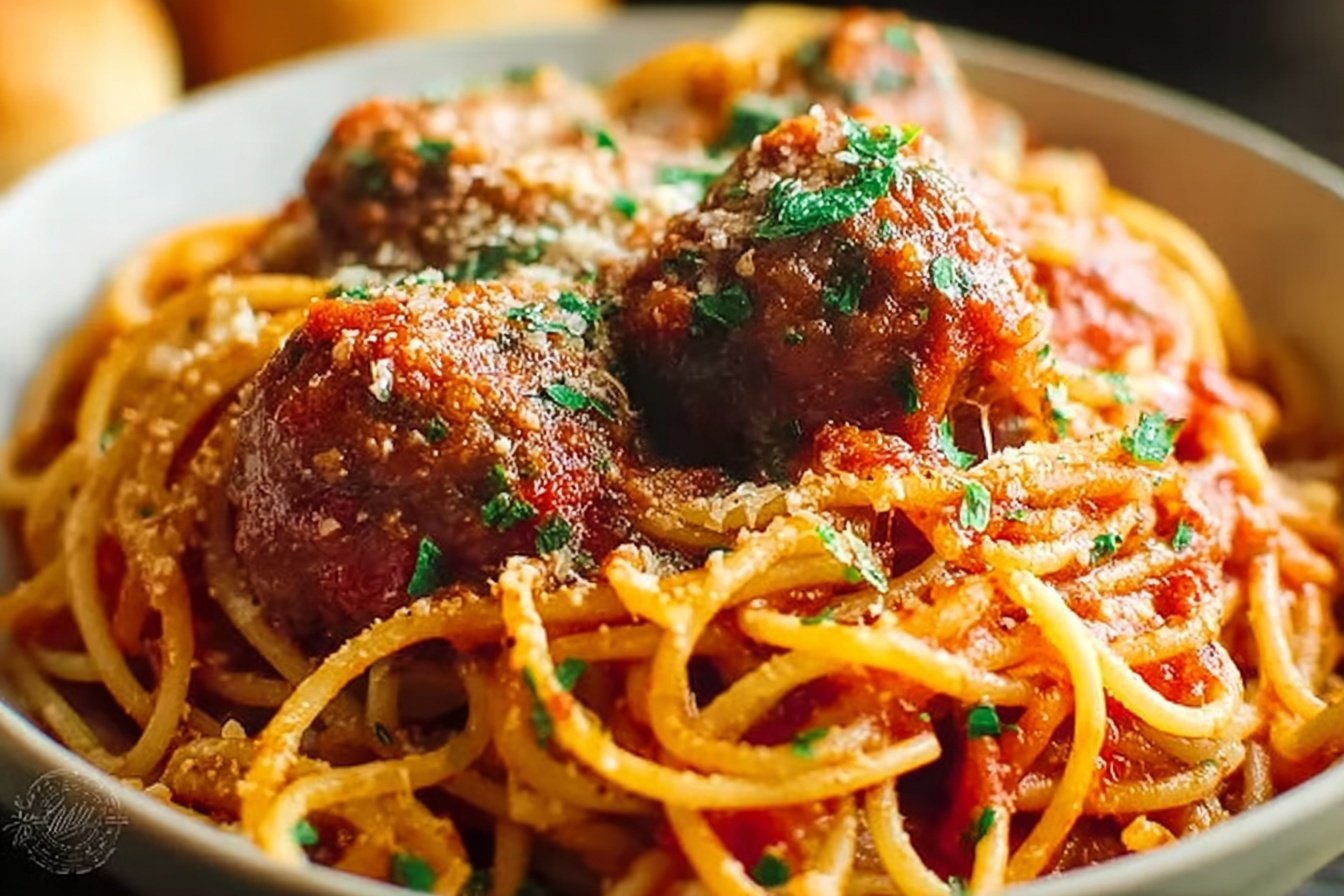
Why You’ll Love This Italian Spaghetti Sauce
If you are looking for a rich, old-school Italian Spaghetti Sauce that tastes like it simmered all afternoon, this is the one. It starts with pantry staples, uses simple steps, and gives you a big batch that works for family dinners, meal prep, or freezing for later. The flavor gets even better after resting, which makes it a smart choice for busy cooks who like make-ahead meals.
- Easy to make: You only need a stockpot, a little chopping, and a long simmer. Once the pot is going, the stove does most of the work.
- Hearty and filling: This sauce makes enough for 12 to 14 servings, so it is a great pick for pasta night, potlucks, or Sunday dinner.
- Flexible for many diets: You can adjust the sugar, swap the wine, or skip certain add-ins to match your taste and needs.
- Deep, classic flavor: Tomato paste, crushed tomatoes, tomato sauce, garlic, onion, basil, oregano, Parmesan, and red wine build a bold sauce with a true old-world feel.
The best part of this sauce is that the flavor keeps getting better. If it tastes a little thin on day one, give it time. By day two, it settles into a thicker, richer sauce that clings to pasta beautifully.
For a little background on the nutrition side of tomatoes, you can read this helpful tomato nutrition guide. Garlic also brings a lot to the table, and you can learn more from this guide to the health benefits of garlic.
Jump To
- 1. Why You’ll Love This Italian Spaghetti Sauce
- 2. Essential Ingredients for Italian Spaghetti Sauce
- 3. How to Prepare the Perfect Italian Spaghetti Sauce: Step-by-Step Guide
- 4. Protein and Main Component Alternatives
- 5. Vegetable, Sauce, and Seasoning Modifications
- 6. Mastering Italian Spaghetti Sauce: Advanced Tips and Variations
- 7. How to Store Italian Spaghetti Sauce: Best Practices
- 8. FAQs: Frequently Asked Questions About Italian Spaghetti Sauce
- 9. Italian Spaghetti Sauce
Essential Ingredients for Italian Spaghetti Sauce
Here is the full ingredient list for this Italian Spaghetti Sauce, with every measurement included so you can get started without guessing.
- 2 (6 ounce) cans tomato paste – Adds body, deep tomato flavor, and helps the sauce thicken as it simmers.
- 1 (28 ounce) can crushed tomatoes – Brings texture and a more rustic tomato base.
- 2 (28 ounce) cans tomato sauce – Gives the sauce volume and helps create that smooth, classic consistency.
- 4 cloves crushed garlic – Adds strong savory flavor and that familiar Italian aroma.
- 1/2 cup chopped onions – Softens into the sauce and gives a sweet, mellow base note.
- 3 1/2 tablespoons olive oil – Used for sautéing the onions and garlic while adding richness.
- 2 1/2 tablespoons sugar – Balances acidity in the tomatoes, though you can reduce or skip it if you prefer a more traditional flavor.
- 1 teaspoon salt – Brings out all the other flavors.
- 1 teaspoon pepper – Adds a little warmth and sharpness.
- 1 tablespoon dried basil – Gives the sauce a sweet herbal Italian note.
- 1 teaspoon dried oregano – Adds earthy depth and a classic spaghetti sauce flavor.
- 1/2 teaspoon dried parsley – Adds a light herbal finish.
- 1/2 teaspoon crushed red pepper flakes – Brings gentle heat without overpowering the sauce.
- 1/4 cup grated Parmesan cheese – Adds salty, savory richness and helps round out the flavor.
- 1/2 cup water – Helps loosen the tomato paste and blend everything smoothly. Some cooks leave it out for a thicker sauce.
- 2 1/2 cups red wine – Adds depth, acidity, and a slow-cooked richness.
Special Dietary Options
If you want to tweak this sauce for your kitchen, here are a few easy ideas:
- Vegan: Skip the Parmesan cheese or replace it with a vegan Parmesan-style topping. The sauce is still rich and flavorful without dairy.
- Gluten-free: The sauce itself is naturally gluten-free, but always check your canned tomatoes, wine, and Parmesan labels to be safe.
- Low-calorie: Use a little less olive oil, reduce the sugar, and serve it with zucchini noodles or whole-grain pasta for a lighter meal.
How to Prepare the Perfect Italian Spaghetti Sauce: Step-by-Step Guide
This sauce takes time, but most of that time is hands-off simmering. Plan for a total cooking time of about 3 hours and 25 minutes, including the long simmer that builds the flavor.
First Step: Get your ingredients ready
Before you start cooking, chop the onions, crush the garlic, and measure out everything else. This makes the process smoother, especially once the pot is hot. Since the sauce simmers for hours, having everything lined up first saves you from rushing later.
Second Step: Sauté the onions
Set a large stockpot over low to medium heat and add the olive oil. Once the oil warms up, add the chopped onions and sauté them for about 4 minutes. You want them soft and fragrant, not browned. Stir now and then so they cook evenly.
Third Step: Add the garlic
Stir in the crushed garlic and cook for 2 more minutes. Keep the heat gentle so the garlic does not burn. Burnt garlic can turn bitter fast, and this sauce needs a smooth, mellow base.
Fourth Step: Add the tomato base
Pour in the water, tomato paste, crushed tomatoes, and tomato sauce. Mix thoroughly until the tomato paste is fully blended into the liquids. This step helps avoid lumps and gives the sauce a smooth start.
If you prefer a thicker sauce right away, you can reduce or skip the water. Some cooks like that approach because it keeps the sauce from getting too thin while it simmers.
Fifth Step: Season the sauce
Add the sugar, salt, pepper, dried basil, dried oregano, dried parsley, crushed red pepper flakes, and grated Parmesan cheese. Stir everything together well. The Parmesan melts into the tomatoes and helps create a rich, savory taste.
This is also the point where you can begin adjusting the sauce to your own taste. If you like a sharper onion flavor, add more onions. If you want more depth, a little extra garlic or a bay leaf can be a nice touch.
Sixth Step: Cover and simmer low and slow
Cover the pot and cook the sauce for 2 and a half hours over low heat. Stir it every so often to keep it from sticking to the bottom. Long simmering is what gives this sauce its old-world flavor, so do not rush this step.
During this time, the tomatoes cook down, the herbs bloom, and the sauce begins to thicken. The flavor becomes deeper and more balanced the longer it simmers.
Seventh Step: Add the red wine
After the 2 and a half hours are up, stir in the 2 1/2 cups of red wine. Let the sauce cook for another 30 minutes. This final simmer adds a deeper, richer taste and gives the sauce a more rounded finish.
If you need a quicker batch, dry cooking wine can work too. Just keep in mind that the better the wine tastes on its own, the better it will taste in the sauce.
Eighth Step: Check the texture and adjust
When the sauce is done, give it a taste. If it seems too thin, let it simmer uncovered a little longer. If it feels too thick, add a splash of water or a little extra wine. The texture will also improve after resting, so do not worry if it looks a bit loose on the first day.
This sauce is one of those recipes that gets better after it sits. The next day, the flavors settle, the texture thickens, and the whole pot tastes more complete.
Ninth Step: Serve it your favorite way
Spoon the sauce over spaghetti, serve it with meatballs, or use it with Italian sausage. If you add meat to the pot, stir often so nothing sticks. The sauce also works well with baked pasta dishes, stuffed shells, and layered casseroles.
For another comfort-food pasta idea, you may also like this creamy beef and bowtie pasta recipe or this million dollar lasagna for a richer family-style dinner.
| Step | What to Do | Time |
|---|---|---|
| 1 | Sauté onions in olive oil | About 4 minutes |
| 2 | Add garlic and cook gently | 2 minutes |
| 3 | Add tomatoes, water, spices, and Parmesan | A few minutes |
| 4 | Cover and simmer | 2 and a half hours |
| 5 | Add red wine and finish cooking | 30 minutes |
Protein and Main Component Alternatives
This Italian Spaghetti Sauce is flexible, which is part of what makes it so useful for home cooks. You can keep it meatless, or you can turn it into a heartier sauce for a bigger meal.
Meat options
If you want to add protein, Italian sausage is a classic choice because it brings extra seasoning right into the pot. Meatballs also work well and make the sauce feel more like a full Sunday dinner. Ground beef can be used too if you want something simple and budget-friendly.
When adding meat, stir often so it does not stick to the bottom. The sauce may also need a little more simmering time if you add a large amount of meat, since the extra ingredients can change the thickness.
Plant-based options
If you want a meatless bowl, this sauce is already a strong base for pasta. You can serve it over spaghetti, penne, or linguine, or spoon it over roasted vegetables. For a hearty vegetarian meal, add mushrooms, zucchini, or roasted peppers.
If you like easy dinner ideas with a similar cozy feel, you might also enjoy browsing sticky honey garlic sausage pasta skillet for a fast weeknight meal or creamy chicken and broccoli pasta for another filling pasta dish.
Vegetable, Sauce, and Seasoning Modifications
One of the best things about homemade sauce is that you can shape it to fit your taste. Whether you want more vegetables, more spice, or a different flavor profile, there are plenty of simple changes you can make.
Vegetable add-ins
Some cooks like to add more onions for sweetness or toss in chopped green peppers for a little freshness. Bay leaves are another common choice if you want a deeper simmered flavor. Mushrooms can add a meaty bite, while carrots can soften the acidity and bring a gentle sweetness.
These additions work best early in the cooking process so they have time to soften and blend into the sauce.
Sauce changes
If you want a thicker sauce, leave out the water and let the pot simmer a little longer with the lid off near the end. If you want a lighter sauce, keep the water and use a bit less tomato paste. Dry cooking wine can stand in for regular red wine if that is what you have on hand.
You can also change the wine amount slightly based on how strong you want the flavor to be. Just remember that the sauce tastes better after it rests, so do not judge the final result too early.
Seasoning changes
Want more heat? Add a little more crushed red pepper flakes. Want a more herbal sauce? Increase the basil or parsley a bit. If you are after a more traditional Italian flavor, you may want to reduce or skip the sugar since some cooks prefer their tomato sauce with no added sweetness.
Taste as you go, but also trust the simmer. The long cooking time softens sharp flavors and brings everything together in a way that quick sauces simply cannot match.
Mastering Italian Spaghetti Sauce: Advanced Tips and Variations
Once you have made this sauce once, a few small tricks can help you get even better results the next time around. These ideas are especially handy if you like batch cooking or want to make the sauce fit different meals.
Pro cooking techniques
Use a heavy stockpot if you can. It helps the sauce heat evenly and lowers the chance of sticking. Stir now and then during the long simmer, especially around the bottom edges of the pot. If you notice the sauce reducing too fast, lower the heat a bit.
Another helpful trick is to let the sauce cool before you store it. That gives the flavor time to settle and makes the texture feel smoother once reheated.
Flavor variations
If you want a bolder sauce, add more garlic or a bay leaf. If you like a sweeter tomato flavor, keep the sugar in place. For a more classic Italian taste, reduce the sugar and let the wine, tomatoes, and herbs do the work. A little extra Parmesan at the end can also add a savory finish.
You can use this sauce for baked pasta dishes too. It works especially well in dishes like baked cream cheese spaghetti when you want a cozy, family-style meal.
Presentation tips
Serve the sauce over hot pasta, then finish with extra Parmesan and a pinch of dried parsley if you want a simple garnish. A small drizzle of olive oil on top can add shine. If you are serving meatballs, tuck them into the center of the bowl so the dish looks full and inviting.
Make-ahead options
This is a great sauce to make a day ahead. In fact, that is often when it tastes best. You can also make a double batch and freeze part of it in meal-size containers, which is a big help for busy parents, working professionals, and students who want easy dinners later in the week.
How to Store Italian Spaghetti Sauce: Best Practices
Because this recipe makes a large batch, storage is a big part of getting the most out of it. The good news is that it keeps well and reheats nicely.
Refrigeration
Let the sauce cool, then store it in airtight containers in the refrigerator for up to 4 days. The sauce will thicken as it chills, which is normal and actually helps the texture.
Freezing
For longer storage, freeze the sauce in freezer-safe containers or resealable bags. Leave a little space at the top so it can expand. It is smart to freeze it in portions that match your usual pasta night servings.
Reheating
Reheat the sauce gently on the stovetop over low heat or in the microwave in short bursts. Stir often so it warms evenly. If it is too thick after chilling, add a splash of water or broth while reheating.
Meal prep considerations
This sauce is great for batch cooking because the flavor gets better after resting. Make it on a weekend, then use it through the week for pasta, meatball subs, baked dishes, or even as a base for another dinner. For a hearty leftover idea, pair it with a comfort dish like goulash recipe on nights when you want something filling and simple.

FAQs: Frequently Asked Questions About Italian Spaghetti Sauce
What red wine should I use in Italian spaghetti sauce?
For authentic Italian spaghetti sauce, choose a dry red wine like Chianti, Sangiovese, or Chianti Classico. These medium-bodied wines from Italy add balanced acidity and subtle fruit notes without overpowering the tomatoes and herbs. Avoid sweet reds like Merlot or heavy ones like Cabernet Sauvignon, as they can make the sauce taste off. Use about 1-2 cups per large batch. If the recipe doesn’t specify, start with Chianti—it’s traditional for ragù-style sauces. Pour it in after browning the meat to deglaze the pan, simmering until reduced by half. This step builds deep flavor layers. Always cook with wine you’d drink yourself. (78 words)
Can I substitute prosecco or white wine for red wine in spaghetti sauce?
Prosecco, a sparkling white wine, isn’t ideal for Italian spaghetti sauce—its sweetness and bubbles clash with rich tomato and meat flavors, resulting in a lighter, less authentic taste. White wine like Pinot Grigio can work in a pinch for seafood sauces but dilutes the bold profile of classic red-based ragù. Stick to dry reds for best results. If substituting white, use Sauvignon Blanc and reduce it more to concentrate flavors. Test a small batch first. For the closest match without alcohol, see non-alcoholic options below. This keeps your sauce hearty and true to Italian roots. (92 words)
What’s a good alcohol-free substitute for red wine in spaghetti sauce?
Replace red wine with unsalted beef broth, vegetable broth, or pomegranate juice for an alcohol-free option in Italian spaghetti sauce. Beef broth mimics the savory depth (1:1 ratio), while pomegranate juice adds acidity and subtle fruit like wine (reduce by half). Grape juice diluted with water (3:1) works too. Avoid balsamic vinegar alone—it’s too sharp. After browning meat, pour in 1-2 cups of substitute, scrape pan bits, and simmer 5-10 minutes. Taste and adjust salt. This maintains umami without booze, perfect for families or non-drinkers. Your sauce stays thick and flavorful. (96 words)
How do I scale down a spaghetti sauce recipe that serves 12-14 people?
To halve a large Italian spaghetti sauce recipe serving 12-14, cut all ingredients by half: use 2-3 lbs meat instead of 5-6, 3-4 cans tomatoes (28 oz each), 1 cup wine/broth, and so on. Quarter it for 3-4 servings by dividing everything by four. Keep cooking times similar but watch for faster evaporation in smaller pots—stir often. Use a 4-6 quart pot for halved batches. Freeze extras in portions. Pro tip: spices like oregano and basil hold up well when scaled; taste midway and add a pinch more if needed. Yields perfect sauce without waste. (98 words)
Why add water to Italian spaghetti sauce and how much?
Water is added to Italian spaghetti sauce to thin concentrated tomato paste or puree, helping it blend smoothly with meats and veggies without clumping. It also aids deglazing after browning, releasing flavorful bits from the pan. For a batch serving 12-14, start with 2-4 cups, added gradually after tomatoes. Simmer uncovered to reduce and thicken naturally—no need for extra cornstarch. This prevents a pasty texture, yielding a rich, velvety sauce. If it seems watery, cook longer (1-2 hours total). Adjust based on tomato brands—canned San Marzano need less. Results in restaurant-quality consistency. (94 words)
Italian Spaghetti Sauce
- Total Time: 3 hours 15 minutes
- Yield: 12-14 servings
- Diet: Vegetarian
Description
🍝 Slow-simmered old world Italian spaghetti sauce delivers authentic, rich tomato flavor infused with garlic, herbs, and wine for pasta perfection.
🍷 Hours of cooking develop deep layers of taste that elevate any meal, far superior to store-bought – family tradition in every bite.
Ingredients
– 2 (6 ounce) cans tomato paste for adding body, deep tomato flavor, and thickening
– 1 (28 ounce) can crushed tomatoes for texture and rustic tomato base
– 2 (28 ounce) cans tomato sauce for volume and smooth consistency
– 4 cloves crushed garlic for savory flavor and Italian aroma
– 1/2 cup chopped onions for sweet, mellow base note
– 3 1/2 tablespoons olive oil for sautéing onions and garlic and adding richness
– 2 1/2 tablespoons sugar for balancing acidity
– 1 teaspoon salt for bringing out flavors
– 1 teaspoon pepper for warmth and sharpness
– 1 tablespoon dried basil for sweet herbal Italian note
– 1 teaspoon dried oregano for earthy depth and classic spaghetti sauce flavor
– 1/2 teaspoon dried parsley for light herbal finish
– 1/2 teaspoon crushed red pepper flakes for gentle heat
– 1/4 cup grated Parmesan cheese for salty, savory richness
– 1/2 cup water for loosening tomato paste and blending
– 2 1/2 cups red wine for depth, acidity, and slow-cooked richness
Instructions
1-First Step: Get your ingredients ready Before you start cooking, chop the onions, crush the garlic, and measure out everything else. This makes the process smoother, especially once the pot is hot. Since the sauce simmers for hours, having everything lined up first saves you from rushing later.
2-Second Step: Sauté the onions Set a large stockpot over low to medium heat and add the olive oil. Once the oil warms up, add the chopped onions and sauté them for about 4 minutes. You want them soft and fragrant, not browned. Stir now and then so they cook evenly.
3-Third Step: Add the garlic Stir in the crushed garlic and cook for 2 more minutes. Keep the heat gentle so the garlic does not burn. Burnt garlic can turn bitter fast, and this sauce needs a smooth, mellow base.
4-Fourth Step: Add the tomato base Pour in the water, tomato paste, crushed tomatoes, and tomato sauce. Mix thoroughly until the tomato paste is fully blended into the liquids. This step helps avoid lumps and gives the sauce a smooth start. If you prefer a thicker sauce right away, you can reduce or skip the water. Some cooks like that approach because it keeps the sauce from getting too thin while it simmers.
5-Fifth Step: Season the sauce Add the sugar, salt, pepper, dried basil, dried oregano, dried parsley, crushed red pepper flakes, and grated Parmesan cheese. Stir everything together well. The Parmesan melts into the tomatoes and helps create a rich, savory taste. This is also the point where you can begin adjusting the sauce to your own taste. If you like a sharper onion flavor, add more onions. If you want more depth, a little extra garlic or a bay leaf can be a nice touch.
6-Sixth Step: Cover and simmer low and slow Cover the pot and cook the sauce for 2 and a half hours over low heat. Stir it every so often to keep it from sticking to the bottom. Long simmering is what gives this sauce its old-world flavor, so do not rush this step. During this time, the tomatoes cook down, the herbs bloom, and the sauce begins to thicken. The flavor becomes deeper and more balanced the longer it simmers.
7-Seventh Step: Add the red wine After the 2 and a half hours are up, stir in the 2 1/2 cups of red wine. Let the sauce cook for another 30 minutes. This final simmer adds a deeper, richer taste and gives the sauce a more rounded finish. If you need a quicker batch, dry cooking wine can work too. Just keep in mind that the better the wine tastes on its own, the better it will taste in the sauce.
8-Eighth Step: Check the texture and adjust When the sauce is done, give it a taste. If it seems too thin, let it simmer uncovered a little longer. If it feels too thick, add a splash of water or a little extra wine. The texture will also improve after resting, so do not worry if it looks a bit loose on the first day. This sauce is one of those recipes that gets better after it sits. The next day, the flavors settle, the texture thickens, and the whole pot tastes more complete.
9-Ninth Step: Serve it your favorite way Spoon the sauce over spaghetti, serve it with meatballs, or use it with Italian sausage. If you add meat to the pot, stir often so nothing sticks. The sauce also works well with baked pasta dishes, stuffed shells, and layered casseroles. For another comfort-food pasta idea, you may also like this creamy beef and bowtie pasta recipe or this million dollar lasagna for a richer family-style dinner.
Notes
💧 Skip the water for a thicker sauce right away if preferred.
🌶️ Customize with extra garlic, onions, green peppers, or bay leaves to taste.
🛌 Sauce improves dramatically in flavor and texture after resting overnight.
- Prep Time: 15 minutes
- Cook Time: 3 hours
- Category: Sauces
- Method: Stovetop
- Cuisine: Italian
Nutrition
- Serving Size: 1 cup
- Calories: 180
- Sugar: 15g
- Sodium: 800mg
- Fat: 6g
- Saturated Fat: 1g
- Unsaturated Fat: 5g
- Trans Fat: 0g
- Carbohydrates: 25g
- Fiber: 4g
- Protein: 4g
- Cholesterol: 5mg
Keywords: old world italian sauce, spaghetti sauce recipe, homemade marinara sauce, authentic italian pasta sauce