
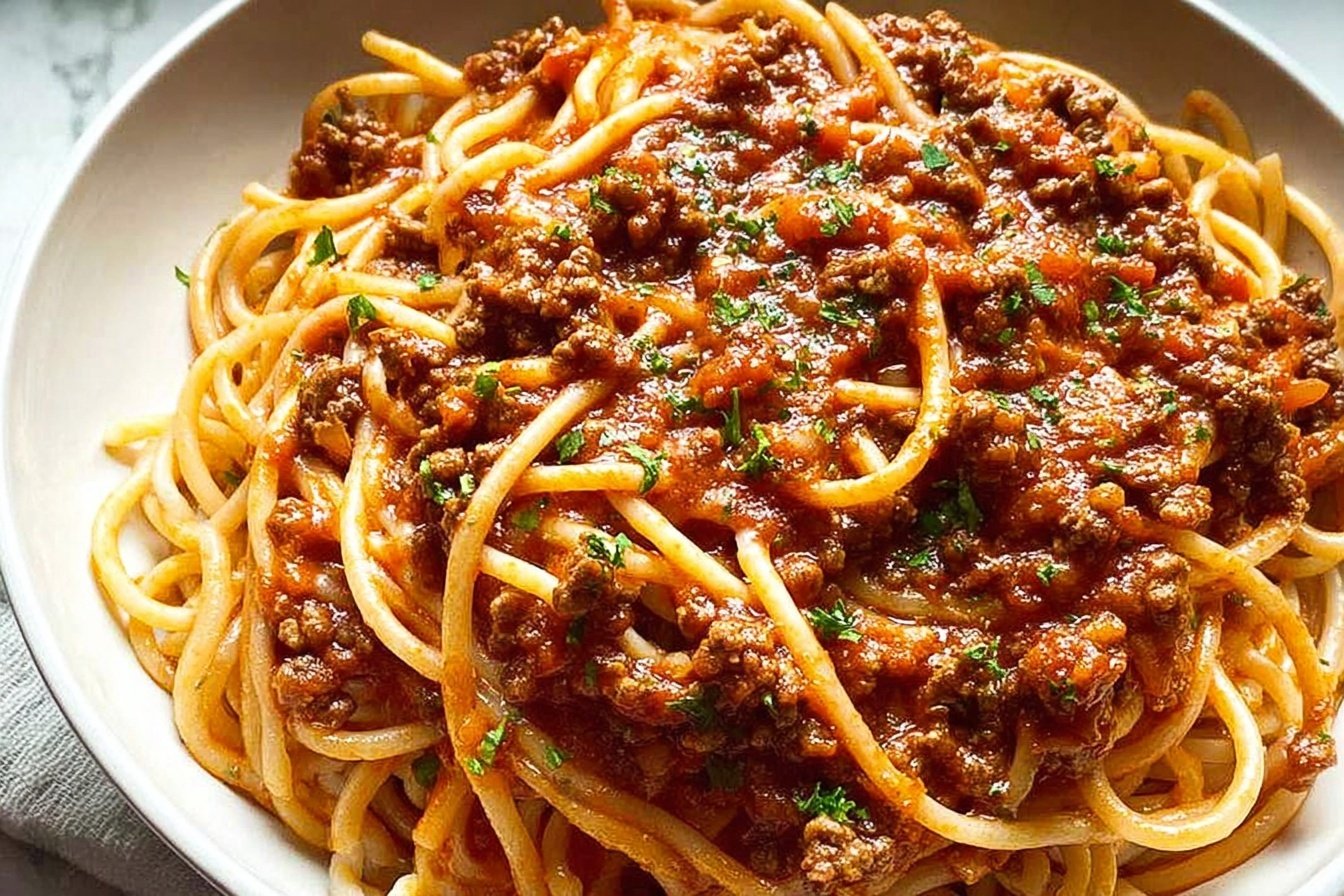
Why You’ll Love This Homemade Spaghetti Sauce
There’s something truly special about a homemade spaghetti sauce that brings the whole family running to the dinner table. When I first started making this recipe years ago, I was amazed at how simple ingredients could transform into such a rich, flavorful sauce that rivals anything from a jar. This easy spaghetti sauce recipe has become a weekly staple in my kitchen, and I’m excited to share why it deserves a permanent spot in your meal rotation too.
This homemade spaghetti sauce from scratch offers benefits that go beyond just great taste. Here’s why this recipe stands out:
- Ease of preparation: With just 10 minutes of prep time and 30 minutes of simmering, you can have a hearty sauce on the table in under an hour. The straightforward steps make this recipe perfect for busy weeknights when you need something satisfying without spending hours in the kitchen.
- Health benefits: Each serving packs 18 grams of protein and only 303 calories, making it a nutritious choice for families. The tomato base provides essential vitamins like Vitamin A and C, plus potassium and fiber, all while keeping carbohydrates at a reasonable 16 grams per serving.
- Versatility: This easy homemade spaghetti sauce works beautifully beyond just spaghetti. Use it in lasagna, baked ziti, or as a dipping sauce for garlic bread. It adapts easily to different dietary needs, including gluten-free options.
- Distinctive flavor: The combination of Worcestershire sauce, Italian seasoning, and a touch of sugar creates a depth of flavor that store-bought sauces simply cannot match. The optional fresh basil at the end adds a bright, aromatic finish that makes every bite memorable.
Jump To
- 1. Why You’ll Love This Homemade Spaghetti Sauce
- 2. Essential Ingredients for Homemade Spaghetti Sauce
- 3. How to Prepare the Perfect Homemade Spaghetti Sauce: Step-by-Step Guide
- 4. Dietary Substitutions to Customize Your Homemade Spaghetti Sauce
- 5. Mastering Homemade Spaghetti Sauce: Advanced Tips and Variations
- 6. How to Store Homemade Spaghetti Sauce: Best Practices
- 7. FAQs: Frequently Asked Questions About Homemade Spaghetti Sauce
- 8. Homemade Spaghetti Sauce
Essential Ingredients for Homemade Spaghetti Sauce
Creating the perfect homemade spaghetti sauce starts with gathering quality ingredients that work together to build layers of flavor. Each component plays a crucial role in achieving that rich, authentic taste your family will love.
Main Ingredients
- 1 pound ground beef or a mix of ½ lb ground Italian sausage and ½ lb ground beef – Provides the hearty, meaty base that makes this sauce so satisfying. The Italian sausage option adds extra depth with its built-in seasonings and slight fennel flavor.
- Salt and pepper to taste – Essential seasonings that enhance all the other flavors in the sauce. Start with a small amount and adjust as needed.
- 1 medium chopped onion – Adds sweetness and aromatic depth when sautéed with the beef. The onion becomes tender and melds seamlessly into the sauce.
- 15 ounces tomato sauce – Forms the liquid base of the sauce, providing a smooth consistency and tangy tomato flavor that coats the pasta perfectly.
- 6 ounces tomato paste – Concentrates the tomato flavor and helps thicken the sauce. This ingredient is key to achieving that restaurant-quality richness.
- ½ teaspoon Italian seasoning – A blend of dried herbs including oregano, basil, and thyme that delivers authentic Italian flavor in one convenient addition.
- 1 tablespoon parsley – Adds fresh, herbal notes and a pop of color. Dried parsley works well, but fresh can be used for a brighter taste.
- 1 teaspoon garlic powder – Provides consistent garlic flavor throughout the sauce without the risk of burning that fresh garlic sometimes presents.
- Crushed red pepper to taste – Offers a gentle heat that can be adjusted based on your family’s spice preference. A pinch adds warmth without overwhelming the dish.
- 1 tablespoon Worcestershire sauce – The secret ingredient that adds umami depth and complexity, making the sauce taste like it simmered all day.
- 1 tablespoon sugar – Balances the acidity of the tomatoes and rounds out the flavors. This small amount makes a noticeable difference in the final taste.
- 1 cup water – Adjusts the consistency of the sauce and helps all the flavors meld together during the simmering process.
- ¼ cup chopped fresh basil (optional, for serving) – Adds a burst of fresh, aromatic flavor right before serving. This finishing touch makes the sauce taste like it came from an Italian restaurant.
Special Dietary Options
This homemade spaghetti sauce recipe easily adapts to various dietary needs with simple substitutions:
- Gluten-free: Use gluten-free Worcestershire sauce to make this recipe completely gluten-free. Most other ingredients are naturally gluten-free.
- Lower calorie: Substitute ground turkey or lean ground beef (90% or higher) to reduce fat content while maintaining protein levels.
- Dairy-free: This recipe contains no dairy by default, making it suitable for those avoiding milk products.
How to Prepare the Perfect Homemade Spaghetti Sauce: Step-by-Step Guide
Making homemade spaghetti sauce from scratch is easier than you might think. Follow these detailed steps to create a rich, flavorful sauce that will have everyone asking for seconds. The entire process takes just 40 minutes from start to finish.
Step 1: Prepare and Season the Meat
Begin by seasoning your ground beef with salt and pepper. I like to add these seasonings directly to the meat before cooking because it ensures the flavors penetrate throughout rather than just sitting on the surface. Use about ½ teaspoon of salt and ¼ teaspoon of black pepper per pound of meat as a starting point. You can always adjust the seasoning later after tasting the finished sauce.
If you’re using the Italian sausage and beef combination, mix them together gently before adding the seasonings. The sausage brings additional spices and a slightly different texture that creates a more complex flavor profile. Some families prefer this combination for a more robust meat sauce for spaghetti.
Step 2: Brown the Meat and Onion
Heat a large skillet over medium-high heat. Add the seasoned ground beef and chopped onion together in the pan. Breaking up the meat with a wooden spoon or spatula as it cooks helps it brown evenly and creates the ideal texture for your sauce. Cook until the beef is no longer pink and the onions have softened and become translucent, which typically takes about 5-7 minutes.
Pro Tip: For a smoother sauce consistency, you can pulse the browned beef in a food processor after cooking. This creates a finer texture that some families prefer, especially with younger children. However, if you enjoy chunkier meat in your sauce, simply leave it as is.
Once the meat is fully browned, drain any excess grease from the skillet. This step is important because too much fat can make your sauce greasy and mask the other flavors. Simply tilt the pan and use a spoon to remove the excess, or transfer the meat to a paper towel briefly before returning it to the pan.
Step 3: Add the Sauce Ingredients
With the meat still in the skillet, add all the remaining sauce ingredients: tomato sauce, tomato paste, Italian seasoning, parsley, garlic powder, crushed red pepper, Worcestershire sauce, and sugar. Stir everything together thoroughly to combine. The tomato paste might take a moment to dissolve completely, so keep stirring until the mixture is smooth and uniform.
At this stage, your kitchen will start filling with an incredible aroma. The combination of herbs, tomato, and seasoned meat creates the foundation of your best homemade spaghetti sauce. Bring this mixture to a boil over medium-high heat, which should take about 2-3 minutes.
Step 4: Simmer and Develop Flavors
Once the sauce reaches a boil, add the cup of water and stir again. Then reduce the heat to low and let the sauce simmer uncovered for 30 minutes. This simmering time is crucial because it allows all the flavors to meld together and develop that deep, rich taste that makes homemade spaghetti sauce so special.
During simmering, stir the sauce occasionally to prevent sticking and ensure even heating. You’ll notice the sauce thickening slightly and the color deepening as it cooks. If you have extra time, extending the simmer to 45-60 minutes will only improve the flavor. The sauce can be enjoyed after the minimum 30 minutes, but patient cooks are rewarded with even more developed flavors.
While the sauce simmers, this is the perfect time to cook your pasta according to package directions. Having everything ready at the same time makes serving easier and keeps the pasta from getting cold while waiting for the sauce.
Step 5: Final Touches and Serving
After simmering, taste your sauce and adjust the seasonings if needed. Add more salt, pepper, or crushed red pepper to suit your family’s preferences. Just before serving, stir in the fresh chopped basil if using. This addition at the very end preserves the bright, fresh flavor of the herb and adds a beautiful pop of color to your finished dish.
Serve your homemade spaghetti sauce immediately over hot cooked spaghetti noodles. Top with grated Parmesan or Romano cheese if desired. A side of garlic bread and a simple green salad completes this comforting meal that’s perfect for any night of the week.
| Prep Time | Cook Time | Total Time | Servings |
|---|---|---|---|
| 10 minutes | 30 minutes | 40 minutes | 6-8 servings |

Dietary Substitutions to Customize Your Homemade Spaghetti Sauce
One of the best things about this homemade spaghetti sauce recipe is how easily it adapts to different dietary preferences and ingredient availability. Whether you’re cooking for picky eaters, health-conscious family members, or those with specific dietary restrictions, these substitutions will help you create a sauce everyone can enjoy.
Protein and Main Component Alternatives
The protein in this recipe provides heartiness and substance, but you have several options depending on your needs and preferences:
- Ground turkey: Substitute 1 pound of ground turkey for a leaner option. Turkey has less fat than beef, so you may need to add a tablespoon of olive oil when browning to prevent sticking.
- Ground chicken: A lighter alternative that works well with Italian seasonings. Ground chicken is very lean, so similar to turkey, add a bit of oil during cooking.
- Plant-based meat crumbles: For a vegetarian or vegan version, use your favorite plant-based ground meat substitute. These products have improved significantly in recent years and provide similar texture to ground beef.
- Lentils: Brown or green lentils make an excellent meat-free alternative. Use 1 cup of dried lentils, cooked and drained. They add fiber and protein while absorbing the sauce flavors beautifully.
- Italian sausage only: For a more intense flavor, use all Italian sausage instead of beef. Choose mild or hot sausage depending on your spice preference.
Vegetable, Sauce, and Seasoning Modifications
Variations in vegetables and seasonings can transform this sauce while keeping its essential character:
For added nutrition and flavor, consider incorporating vegetables into your easy homemade spaghetti sauce. Diced bell peppers, grated carrots, or chopped mushrooms can be sautéed along with the onions. These additions increase the vitamin content and add subtle sweetness without changing the sauce’s fundamental taste profile.
Seasoning adjustments allow you to customize the flavor intensity. If you prefer a more robust herb taste, increase the Italian seasoning to 1 teaspoon or add individual dried herbs like oregano and thyme. For families who enjoy heat, increase the crushed red pepper or add a pinch of cayenne. Those sensitive to spice can omit the red pepper entirely.
The sugar in this recipe balances acidity, but honey or maple syrup can work as alternatives. For a lower-sugar option, finely grated carrots naturally sweeten the sauce during simmering. If you’re watching sodium intake, use low-sodium tomato products and add salt gradually, tasting as you go.
Mastering Homemade Spaghetti Sauce: Advanced Tips and Variations
Once you’ve mastered the basic homemade spaghetti sauce recipe, you can take your cooking to the next level with these expert techniques and creative variations. These tips will help you achieve consistent, delicious results every single time.
Pro Cooking Techniques
The browning technique you use for the meat significantly affects the final sauce. For the best flavor development, avoid stirring the meat constantly during the first few minutes of browning. Letting it develop a slight crust adds depth through the Maillard reaction. Then break it up and continue cooking until no pink remains.
Another technique for exceptional flavor is deglazing the pan after browning. If there are browned bits stuck to the bottom of your skillet, the liquid from the tomato sauce will help release them. Use a wooden spoon to scrape these flavorful bits into the sauce, as they contain concentrated taste compounds.
For the smoothest sauce texture, consider using an immersion blender briefly after simmering. This breaks down any remaining chunks and creates a restaurant-style consistency. Alternatively, remove a portion of the sauce, blend it smooth, and return it to the pot for a mixed texture that appeals to everyone.
Flavor Variations
- Mushroom variation: Add 8 ounces of sliced mushrooms when sautéing the onions. Mushrooms add umami and create a more complex, earthier sauce.
- Garlic lover’s version: Add 3-4 cloves of fresh minced garlic along with the tomato products for a more pronounced garlic flavor.
- Wine-enhanced sauce: Deglaze the pan after browning with ¼ cup of red wine before adding tomatoes. The alcohol cooks off but leaves rich, complex flavor notes.
- Creamy variation: Stir in ½ cup of heavy cream or mascarpone cheese at the end of cooking for a luxurious rose-style sauce.
Presentation Tips
How you serve your homemade spaghetti sauce matters almost as much as how it tastes. Twirl the cooked spaghetti into nests using a carving fork and spoon for an elegant presentation. Ladle the sauce over the pasta, then top with fresh basil and grated cheese. Serve with warm garlic bread and a sprinkle of parsley for a pop of color.
Make-Ahead Options
This sauce is perfect for meal prep. Double or triple the batch on weekends, then portion it into containers for busy weeknight dinners. The sauce actually improves after sitting, as flavors continue to develop. Many families find that leftover sauce tastes even better the next day. For more great make-ahead meal ideas, check out this delicious lasagna recipe that also uses a similar meat sauce base.
How to Store Homemade Spaghetti Sauce: Best Practices
Proper storage ensures your homemade spaghetti sauce stays fresh and safe to eat. Whether you’re saving leftovers or meal prepping for the week, these guidelines will help you maximize your sauce’s shelf life.
Refrigeration
For short-term storage, cool the sauce to room temperature, then transfer it to an airtight container. Glass containers with tight-fitting lids work best because they don’t absorb odors or stains. Properly stored, your sauce will keep in the refrigerator for 3-4 days. Always use clean utensils when serving to prevent contamination that could shorten storage life.
Freezing
Freezing homemade spaghetti sauce extends its life significantly. After cooking, cool the sauce completely to room temperature, which typically takes about 2 hours. Portion into freezer-safe bags or containers, leaving some space for expansion. Remove as much air as possible before sealing to prevent freezer burn. Label with the date and contents, then lay flat in the freezer for space-efficient storage.
Frozen sauce maintains its best quality for 4-6 months, though it remains safe beyond that time. For portion control, freeze in 2-cup amounts, which is perfect for serving with one pound of pasta. Speaking of pasta dishes, you might also enjoy this hearty goulash recipe for another comforting meal option.
Reheating
Thaw frozen sauce overnight in the refrigerator for best results. Reheat gently on the stovetop over medium-low heat, stirring occasionally until it reaches 165°F internally. If the sauce seems too thick after thawing, add a splash of water or broth to reach your desired consistency. Avoid microwaving large batches as this can cause uneven heating and hot spots.
FAQs: Frequently Asked Questions About Homemade Spaghetti Sauce
What’s the difference between spaghetti sauce, marinara sauce, and pizza sauce?
Spaghetti sauce is a broad term for any sauce paired with spaghetti, often a richer version of marinara with added meat like ground beef or Italian sausage, vegetables such as onions and bell peppers, and sometimes cheese for creaminess. Marinara sauce is typically a quick-cooking, meatless tomato-based sauce simmered with garlic, herbs like basil and oregano, and olive oil—ideal for pasta in Italian tradition. Pizza sauce differs as it’s uncooked or lightly simmered, thinner in consistency, and seasoned simply with tomatoes, garlic, and herbs to bake directly on dough without overpowering toppings. For homemade spaghetti sauce, start with canned crushed tomatoes, simmer 30-45 minutes, and customize with proteins or veggies. This distinction helps choose the right base: marinara for light pasta, spaghetti sauce for hearty meals, pizza sauce for pies. (98 words)
Can I freeze homemade spaghetti sauce?
Yes, homemade spaghetti sauce freezes well for up to 4-6 months, making meal prep easy. After cooking, cool it completely to room temperature (about 2 hours) to prevent condensation and freezer burn. Portion into freezer-safe zip-top bags or containers, squeeze out air, label with date, and lay flat in the freezer for stackable storage. Thaw overnight in the fridge or under cold water, then reheat on the stovetop over medium heat, stirring until bubbling hot (165°F internal temp). Avoid microwaving large batches to prevent uneven heating. Freezing preserves flavor better than canning for beginners, and one batch yields 8-10 servings—perfect for busy weeks. Pro tip: add a splash of water if it thickens too much post-thaw. (112 words)
Do I need to change the recipe for San Marzano tomatoes in homemade spaghetti sauce?
No major changes needed when using San Marzano tomatoes, prized for their sweet flavor and low acidity from volcanic soil in Italy. If swapping for canned tomato sauce or crushed tomatoes, drain excess liquid first, then blend smooth or crush by hand for texture. Their thicker consistency may require 1/4-1/2 cup extra water or broth during simmering to reach desired sauce consistency. Taste at the end and adjust salt (they’re naturally less acidic, so less sugar needed) and seasonings. Simmer 20-30 minutes minimum for flavors to meld. A 28-oz can serves 4-6 people. This premium choice cuts acidity issues common with other tomatoes, yielding restaurant-quality results without extra steps. (104 words)
How long does homemade spaghetti sauce last in the fridge?
Homemade spaghetti sauce stays fresh in the fridge for 4-5 days when stored properly in an airtight glass or plastic container. Cool it quickly after cooking (within 2 hours) to below 40°F to inhibit bacteria growth, then cover tightly. Check for spoilage signs like mold, off odors, or sliminess before reheating—discard if unsure. Reheat only what you need to boiling (165°F) on the stove or microwave. For safety, follow USDA guidelines: acidic tomato sauces like this have a slight edge over meat-heavy versions, which last 3-4 days max. Extend life by freezing portions. A typical batch (2 quarts) covers 8 servings, reducing waste. Track dates with labels for best quality. (108 words)
How do I thicken homemade spaghetti sauce if it’s too watery?
Thicken watery homemade spaghetti sauce without altering flavor using simple methods. Simmer uncovered 10-20 extra minutes to reduce liquid naturally—stir occasionally to prevent sticking. Mash or blend in 1-2 tablespoons tomato paste per quart, then simmer 5 minutes. For veggie boost, stir in grated carrots, pureed butternut squash, or cooked lentils (1/2 cup per quart) during initial cook. A cornstarch slurry (1 tsp cornstarch + 1 tbsp cold water per cup sauce) thickens instantly but use sparingly to avoid glossiness. Avoid flour alone as it can taste raw. Bread crumbs or grated cheese work in pinches for last-minute fixes. Aim for coating-the-spoon consistency. These tricks fix common issues from high-water tomatoes, yielding 20-30% thicker sauce in under 15 minutes. (114 words)
Homemade Spaghetti Sauce
- Total Time: 40 minutes
- Yield: 6 servings
- Diet: Low-Carb
Description
🍝 Whip up rich, flavorful homemade spaghetti sauce that’s healthier and tastier than store-bought, using simple pantry staples for family dinners.
👨👩👧👦 Simmered to perfection in 40 minutes, it’s versatile for pasta, lasagna, or meatballs – a easy weeknight favorite!
Ingredients
– 1 pound ground beef or a mix of ½ lb ground Italian sausage and ½ lb ground beef
– Salt and pepper to taste
– 1 medium chopped onion
– 15 ounces tomato sauce
– 6 ounces tomato paste
– ½ teaspoon Italian seasoning
– 1 tablespoon parsley
– 1 teaspoon garlic powder
– Crushed red pepper to taste
– 1 tablespoon Worcestershire sauce
– 1 tablespoon sugar
– 1 cup water
– ¼ cup chopped fresh basil (optional, for serving)
Instructions
1-Step 1: Prepare and Season the Meat Begin by seasoning your ground beef with salt and pepper. I like to add these seasonings directly to the meat before cooking because it ensures the flavors penetrate throughout rather than just sitting on the surface. Use about ½ teaspoon of salt and ¼ teaspoon of black pepper per pound of meat as a starting point. You can always adjust the seasoning later after tasting the finished sauce. If you’re using the Italian sausage and beef combination, mix them together gently before adding the seasonings. The sausage brings additional spices and a slightly different texture that creates a more complex flavor profile. Some families prefer this combination for a more robust meat sauce for spaghetti.
2-Step 2: Brown the Meat and Onion Heat a large skillet over medium-high heat. Add the seasoned ground beef and chopped onion together in the pan. Breaking up the meat with a wooden spoon or spatula as it cooks helps it brown evenly and creates the ideal texture for your sauce. Cook until the beef is no longer pink and the onions have softened and become translucent, which typically takes about 5-7 minutes. Once the meat is fully browned, drain any excess grease from the skillet. This step is important because too much fat can make your sauce greasy and mask the other flavors. Simply tilt the pan and use a spoon to remove the excess, or transfer the meat to a paper towel briefly before returning it to the pan.
3-Step 3: Add the Sauce Ingredients With the meat still in the skillet, add all the remaining sauce ingredients: tomato sauce, tomato paste, Italian seasoning, parsley, garlic powder, crushed red pepper, Worcestershire sauce, and sugar. Stir everything together thoroughly to combine. The tomato paste might take a moment to dissolve completely, so keep stirring until the mixture is smooth and uniform. At this stage, your kitchen will start filling with an incredible aroma. The combination of herbs, tomato, and seasoned meat creates the foundation of your best homemade spaghetti sauce. Bring this mixture to a boil over medium-high heat, which should take about 2-3 minutes.
4-Step 4: Simmer and Develop Flavors Once the sauce reaches a boil, add the cup of water and stir again. Then reduce the heat to low and let the sauce simmer uncovered for 30 minutes. This simmering time is crucial because it allows all the flavors to meld together and develop that deep, rich taste that makes homemade spaghetti sauce so special. During simmering, stir the sauce occasionally to prevent sticking and ensure even heating. You’ll notice the sauce thickening slightly and the color deepening as it cooks. If you have extra time, extending the simmer to 45-60 minutes will only improve the flavor. The sauce can be enjoyed after the minimum 30 minutes, but patient cooks are rewarded with even more developed flavors. While the sauce simmers, this is the perfect time to cook your pasta according to package directions. Having everything ready at the same time makes serving easier and keeps the pasta from getting cold while waiting for the sauce.
5-Step 5: Final Touches and Serving After simmering, taste your sauce and adjust the seasonings if needed. Add more salt, pepper, or crushed red pepper to suit your family’s preferences. Just before serving, stir in the fresh chopped basil if using. This addition at the very end preserves the bright, fresh flavor of the herb and adds a beautiful pop of color to your finished dish. Serve your homemade spaghetti sauce immediately over hot cooked spaghetti noodles. Top with grated Parmesan or Romano cheese if desired. A side of garlic bread and a simple green salad completes this comforting meal that’s perfect for any night of the week.
Notes
🔥 Brown the meat finely and pulse in a food processor for smoother sauce texture.
⏱️ Simmer longer for deeper flavors; make ahead and fridge for 3-4 days or freeze 4-6 months.
🆓 Use gluten-free Worcestershire for a GF version.
- Prep Time: 10 minutes
- Cook Time: 30 minutes
- Category: Sauce
- Method: Stovetop
- Cuisine: Italian-American
Nutrition
- Serving Size: 1 cup
- Calories: 303
- Sugar: 11g
- Sodium: 814mg
- Fat: 18g
- Saturated Fat: 7g
- Unsaturated Fat: 11g
- Trans Fat: 0g
- Carbohydrates: 16g
- Fiber: 3g
- Protein: 18g
- Cholesterol: 64mg
Keywords: homemade spaghetti sauce, easy spaghetti sauce, family favorite sauce, spaghetti sauce recipe