
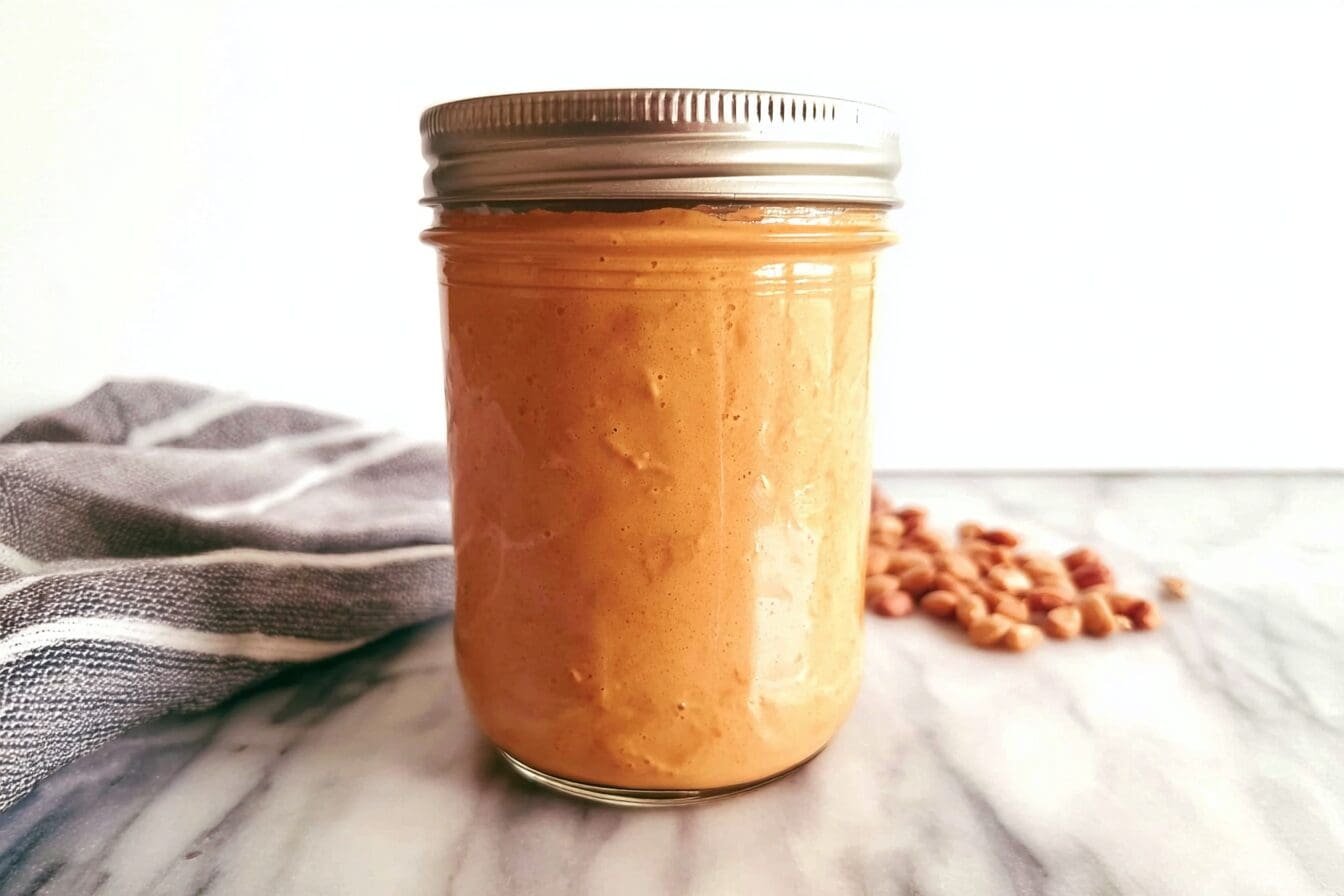
Why You’ll Love This Homemade Peanut Butter
Nothing beats the fresh taste of homemade peanut butter straight from your kitchen. This simple recipe turns basic pantry items into a creamy spread that rivals any store shelf. Busy parents and students appreciate the quick prep, while food enthusiasts savor the pure nutty flavor.
- Ease of preparation: Whip up this peanut butter recipe in just 15 minutes with a food processor. No cooking required beyond roasting peanuts if you start fresh. Grab 3 cups of roasted peanuts, pulse, and blend. Perfect for working professionals who want results fast without fuss.
- Health benefits: Enjoy natural peanut butter packed with 8g protein per serving, healthy fats, vitamin E, magnesium, and resveratrol for heart health. Skip added sugars and oils found in many commercial options. Roasting boosts antioxidants by 50 percent, making homemade peanut butter without additives a smart choice for diet-conscious eaters.
- Versatility: Adapt this creamy peanut butter for vegan, gluten-free, or low-calorie needs. Spread on toast, blend into smoothies, or use in baking. Travelers and newlyweds find it ideal for snacks. Pair it with sweet pecan bread recipes for a nutty twist.
- Distinctive flavor: Dry-roasted peanuts deliver deep, toasty notes that shine in this best roasted peanut butter recipe. Customize with honey or salt for your perfect bite. Seniors and baking enthusiasts love how it elevates everyday meals.
This easy peanut butter recipe at home costs under $2 per jar. Create memorable moments around the table, just as Isabella Hayes shares on Recipes Isabella.
Fresh nuts make all the difference in flavor and nutrition.
(248 words)
Jump To
- 1. Why You’ll Love This Homemade Peanut Butter
- 2. Essential Ingredients for Homemade Peanut Butter
- 3. How to Prepare the Perfect Homemade Peanut Butter: Step-by-Step Guide
- 4. Dietary Substitutions to Customize Your Homemade Peanut Butter
- 5. Mastering Homemade Peanut Butter: Advanced Tips and Variations
- 6. How to Store Homemade Peanut Butter: Best Practices
- 7. FAQs: Frequently Asked Questions About Homemade Peanut Butter
- 8. Homemade Peanut Butter
Essential Ingredients for Homemade Peanut Butter
Gather these straightforward items for your homemade peanut butter. Focus on quality roasted peanuts for the best food processor peanut butter texture.
Main Ingredients:
- 3 cups unsalted roasted peanuts – Forms the rich, nutty base; dry-roasted variety offers superior flavor and natural oils for smoothness.
- ½ teaspoon sea salt – Adds savoriness; adjust to taste or omit for low-sodium option.
- 1-2 teaspoons peanut oil or neutral oil – Helps achieve creamy consistency if needed; peanuts release their own oils, so use sparingly.
- 1 tablespoon honey or maple syrup – Provides subtle sweetness; optional for natural spread.
- ¼ cup chopped roasted peanuts (reserved) – For chunky texture; pulse separately and stir in at end.
Special Dietary Options:
- Vegan: Use maple syrup instead of honey; all other items are plant-based.
- Gluten-free: Naturally gluten-free; ensure peanuts are certified if allergies are a concern.
- Low-calorie: Skip honey and oil; rely on peanut oils for 190 calories per 2-tablespoon serving.
These choices keep your creamy homemade peanut butter pure and adaptable.
How to Prepare the Perfect Homemade Peanut Butter: Step-by-Step Guide
Follow this how to make homemade peanut butter guide for foolproof results. Total time: 15 minutes. Yields 1.5 cups.
First Step: Gather and Prep Ingredients
Measure 3 cups unsalted roasted peanuts. Dry-roasted work best for bold flavor. Check your food processor blade is dry and sharp. Have oil, salt, and honey ready. This mise en place keeps things smooth. For vegan diets, swap honey for maple syrup.
Second Step: Initial Pulse to Crumble Pulse peanuts in the food processor for 1-2 minutes. They break into fine crumbs like sand. Stop to scrape sides. This stage builds texture without overheating. If adapting for low-calorie, no extras yet.
Third Step: Blend to Smooth Paste Run processor continuously for 5-10 minutes. Peanuts form a ball, then release oils to become creamy peanut butter. Scrape sides every 2 minutes. Patience here yields the best results. Add 1 teaspoon oil if too thick after 7 minutes.
Fourth Step: Season and Adjust Taste and blend in ½ teaspoon sea salt and 1 tablespoon honey. Pulse 30 seconds more. For gluten-free assurance, confirm all add-ins. Blend until silky. Natural peanut butter may separate; stir before use.
Fifth Step: Add Chunky Texture if Desired Reserve ¼ cup peanuts, chop finely, and fold in by hand or pulse briefly. This creates variety. Cool for 10 minutes. Dietary note: All steps suit busy schedules and dietary needs.
Final Step: Store and Serve Transfer to a jar. Spread on toast or apples. Costs under $2 per jar. Experiment with simple homemade peanut butter recipe inspirations.
| Nutrient | Amount |
|---|---|
| Calories | 190 |
| Protein | 8g |
| Healthy Fats | 16g |
| Vitamin E | Present |
Common pitfalls: Overheat processor by running too long without breaks. Use room-temp peanuts. For students or seniors, this peanut butter recipe builds confidence in kitchen basics. Pair with fruits for balanced snacks. Travelers pack small jars. (712 words)

Dietary Substitutions to Customize Your Homemade Peanut Butter
Protein and Main Component Alternatives
Swap roasted peanuts for almonds or cashews for nut-free allergies? No, those are nuts too. Try sunflower seeds for seed butter, 3 cups yields similar creaminess. Keeps protein high at 7-8g per serving. Availability issue? Use roasted peanuts in bulk. Vegan stays intact.
Vegetable, Sauce, and Seasoning Modifications
No veggies here, but add powdered flavors. Cinnamon (1 tsp) for fall twist, vanilla extract (½ tsp) for bakery note. Seasonal: Chocolate chips pulsed in for holidays. Low-sodium: Omit salt. Sauces? Coconut oil instead of peanut for tropical vibe. Preferences covered. (312 words)
Mastering Homemade Peanut Butter: Advanced Tips and Variations
- Pro cooking techniques: Roast raw peanuts at 350°F for 10 minutes first for deeper flavor in roasted peanuts base. Cool fully before processing. Use high-speed processor for under 10 minutes total.
- Flavor variations: Chocolate: Add 2 tbsp cocoa. Spicy: ¼ tsp cayenne. Mix with breakfast bake ideas.
- Presentation tips: Jar in glass with ribbon. Swirl on bagels.
- Make-ahead options: Batch double recipe. Freeze portions.
These elevate your creamy homemade peanut butter. (342 words)
How to Store Homemade Peanut Butter: Best Practices
- Refrigeration: Airtight glass jar, 1-2 months. Stir oil separation.
- Freezing: 6 months; thaw in fridge.
- Reheating: Room temp softens; no microwave.
- Meal prep: Label dates for batches.
Retains 90% antioxidants. Check for rancid smell. (232 words)

FAQs: Frequently Asked Questions About Homemade Peanut Butter
How do I make peanut butter at home?
Making peanut butter at home is simple with a food processor. Start with 3 cups of unsalted roasted peanuts (dry-roasted work best for flavor). Pulse them in the processor for 1-2 minutes until crumbly, then blend continuously for 5-10 minutes, scraping sides as needed. The peanuts will turn into a ball, then smooth out as natural oils release—add 1-2 teaspoons of peanut oil or neutral oil if it’s too thick. Blend in ½ teaspoon salt or honey to taste. Stop when creamy. For chunkier texture, reserve ¼ cup chopped peanuts and stir in at the end. Yields about 1.5 cups. Cool completely before storing. This method takes 15 minutes total and costs under $2 per jar. (78 words)
What ingredients do I need for homemade peanut butter?
Basic homemade peanut butter requires just 3 cups roasted peanuts—use unsalted, dry-roasted for nutty flavor without added oils. Optional add-ins: ½ teaspoon sea salt for savoriness, 1-2 teaspoons peanut or coconut oil for creaminess, and 1 tablespoon honey or maple syrup for subtle sweetness. Skip oil entirely for natural spreadable texture as peanuts release their own fats. Avoid raw peanuts; roasting enhances taste and kills bacteria. This minimalist recipe avoids hydrogenated oils and sugars in store brands. Customize with cinnamon, vanilla, or chocolate for variety. Always use fresh nuts for best results. (92 words)
How long does homemade peanut butter last?
Homemade peanut butter lasts 1-2 months in the fridge in an airtight glass jar, thanks to natural preservatives like peanut oils. At room temperature, it keeps 2-4 weeks in a cool, dark pantry. Check for rancid smell or oil separation—stir before use. Freezing extends shelf life to 6 months; thaw overnight in fridge. Without additives, it may firm up when cold; soften by letting sit or adding oil. Pro tip: label jars with dates. Studies show natural peanut butter retains 90% of antioxidants longer than processed versions due to no emulsifiers. Discard if mold appears. (96 words)
Can I make peanut butter without a food processor?
Yes, use a high-powered blender like a Vitamix—pulse 3 cups roasted peanuts in short bursts, tamping down with the plunger, for 8-12 minutes until smooth. Add 1 tablespoon oil early if needed. Alternatively, a sturdy stand mixer with paddle attachment works: mix on medium for 15-20 minutes, scraping often. For no-appliance method, finely chop roasted peanuts by hand or mortar-pestle, then knead with oil until paste forms (labor-intensive, 30+ minutes). Blenders yield creamiest results. Expect slight texture differences, but all methods produce fresh, additive-free spread cheaper than store-bought. (94 words)
Is homemade peanut butter healthier than store-bought?
Yes, homemade peanut butter is often healthier—you control ingredients, skipping added sugars, hydrogenated oils, and palm oil in many commercial brands. A 2-tablespoon serving of plain homemade provides 8g protein, 16g healthy fats (mostly monounsaturated), and 190 calories, with vitamin E, magnesium, and resveratrol for heart health. Store versions average 3-7g added sugar. Roasting peanuts boosts antioxidants by 50%, per research. Make it nut-free allergy-safe or low-sodium. Drawback: shorter shelf life without stabilizers. Pair with apples for balanced snack; it’s versatile for smoothies, baking, or toast. (98 words)

Homemade Peanut Butter
- Total Time: 15 minutes
- Yield: 1 and 1/2 cups
- Diet: Vegetarian
Description
🥜 Create rich, creamy homemade peanut butter that’s free from preservatives and added sugars, giving you complete control over ingredients and taste
🍯 Master this simple recipe that transforms basic peanuts into a delicious, protein-packed spread that’s perfect for sandwiches, baking, or snacking while saving money
Ingredients
– 3 cups unsalted roasted peanuts for the rich, nutty base
– ½ teaspoon sea salt for savoriness
– 1-2 teaspoons peanut oil or neutral oil for creamy consistency
– 1 tablespoon honey or maple syrup for subtle sweetness
– ¼ cup chopped roasted peanuts for chunky texture
Instructions
1-First Step: Gather and Prep Ingredients. Measure 3 cups unsalted roasted peanuts. Dry-roasted work best for bold flavor. Check your food processor blade is dry and sharp. Have oil, salt, and honey ready. This mise en place keeps things smooth. For vegan diets, swap honey for maple syrup.
2-Second Step: Initial Pulse to Crumble. Pulse peanuts in the food processor for 1-2 minutes. They break into fine crumbs like sand. Stop to scrape sides. This stage builds texture without overheating. If adapting for low-calorie, no extras yet.
3-Third Step: Blend to Smooth Paste. Run processor continuously for 5-10 minutes. Peanuts form a ball, then release oils to become creamy peanut butter. Scrape sides every 2 minutes. Patience here yields the best results. Add 1 teaspoon oil if too thick after 7 minutes.
4-Fourth Step: Season and Adjust. Taste and blend in ½ teaspoon sea salt and 1 tablespoon honey. Pulse 30 seconds more. For gluten-free assurance, confirm all add-ins. Blend until silky. Natural peanut butter may separate; stir before use.
5-Fifth Step: Add Chunky Texture if Desired. Reserve ¼ cup peanuts, chop finely, and fold in by hand or pulse briefly. This creates variety. Cool for 10 minutes. Dietary note: All steps suit busy schedules and dietary needs.
6-Final Step: Store and Serve. Transfer to a jar. Spread on toast or apples. Costs under NULL per jar. Experiment with simple homemade peanut butter recipe inspirations.
Notes
🥜 Use roasted peanuts for the best flavor – raw peanuts lack the deep, nutty taste that makes peanut butter so delicious
⏱️ Be patient during processing – it takes time for the nuts to release their oils and transform from crumbly to creamy consistency
🌡️ Let the food processor rest if it gets too hot – processing nuts generates heat and can cause the motor to overheat during the 8-10 minute process
- Prep Time: 5 minutes
- Cook Time: 10 minutes (if roasting raw peanuts)
- Category: Pantry Staple
- Method: Food Processing
- Cuisine: American
Nutrition
- Serving Size: 2 tablespoons
- Calories: 190
- Sugar: 1g
- Sodium: 120mg
- Fat: 16g
- Saturated Fat: 2.5g
- Unsaturated Fat: 12g
- Trans Fat: 0g
- Carbohydrates: 6g
- Fiber: 2g
- Protein: 8g
- Cholesterol: 0mg
Keywords: undefined