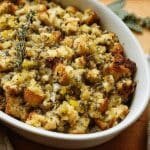
Description
🧈 This Buttery Herb Stuffing recipe combines savory flavors and fresh herbs for a classic, comforting side dish.
🌿 Perfect for holiday meals, it’s easy to prepare and packed with aromatic herbs that enhance any celebration spread.
Ingredients
18 to 24 ounces bread cubes (about 1.5 loaves or 12 to 14 cups) These form the base, providing the perfect absorbent texture when toasted or stale to soak up all the flavors without getting soggy.
1 cup celery Adds a nice crunch and freshness, helping to balance the dish with its subtle earthy notes.
3 cups diced sweet onion (roughly 2 large onions) Brings a sweet, aromatic base that enhances the overall savoriness and depth of the herb stuffing.
2 cups celery Boosts the vegetable content for extra moisture and a hearty feel in every bite.
6 cloves minced garlic Infuses a pungent, warm flavor that ties all the herbs and veggies together beautifully.
Kosher salt and pepper to taste Seasons the mixture to perfection, ensuring every part of the herb stuffing pops with just the right amount of savoriness.
3 tablespoons chopped fresh sage Offers a classic, earthy herb taste that defines the fresh essence of herb stuffing.
3 tablespoons chopped fresh parsley Provides a bright, fresh lift that keeps the dish lively and aromatic.
3 tablespoons chopped fresh rosemary Adds a piney, robust flavor that makes this herb stuffing memorable and full of character.
2 1/2 cups chicken or vegetable stock Supplies the liquid needed to bind everything, creating moist and flavorful results.
2 eggs Help hold the mixture together for a better texture, though they can be swapped for other options if needed.
Butter for cooking and brushing Gives a rich, creamy finish that enhances the overall taste and helps with browning.
A mixture of fresh herbs for sprinkling Adds an extra layer of flavor and visual appeal right before serving.
Olive oil or nonstick spray for baking dish Keeps the dish from sticking and adds a subtle hint of healthy fat for easy cleanup.
Instructions
1-First Step: Prepare the Bread Cubes Start by getting your bread ready for the best texture in this herb stuffing it’s the foundation! Let 18 to 24 ounces of bread cubes sit out overnight to stale, or toast them at 350 degrees F for about 15 minutes until they’re dry and slightly crispy. This helps them absorb the flavors without turning mushy, and for a gluten-free twist, use gluten-free bread to keep things inclusive. Remember, mixing stale and fresh bread types adds variety, making your herb stuffing even more delightful for all eaters.
2-Second Step: Preheat and Prep the Baking Dish Once your bread is set, preheat your oven to 350 degrees F and prepare a 9×13 baking dish by buttering it or using olive oil or nonstick spray. This step takes just a couple of minutes and ensures your herb stuffing doesn’t stick, which is key for even baking. If you’re aiming for a vegan version, stick with olive oil here to keep it plant-based, helping maintain that moist texture everyone loves in herb stuffing.
3-Third Step: Cook the Vegetables and Herbs Now, in a skillet over medium heat, melt some butter and add 3 cups diced sweet onion, 1 cup celery, 2 cups celery, and 6 cloves minced garlic, along with kosher salt and pepper to taste. Cook this mixture for 8-10 minutes until it’s softened and fragrant, stirring occasionally for even heat. For low-calorie adaptations, use less butter or swap it for a lighter oil, and if you’re vegan, ensure your butter substitute is ready this step infuses the core flavors into your herb stuffing perfectly.
4-Fourth Step: Add Herbs and Stock Stir in 3 tablespoons each of chopped fresh sage, parsley, and rosemary, cooking for another minute to release their aromas. Then, pour in 1 cup of the chicken or vegetable stock and mix well, which should take about 2 minutes. For dietary needs, use vegetable stock if going vegan, and adjust seasonings to taste this is where your herb stuffing really starts to shine with its savory profile.
5-Fifth Step: Combine with Bread Pour the veggie and herb mixture over your prepared bread cubes and toss everything together in a large bowl to coat evenly, which might take 3-5 minutes. To adapt, if you’re making a low-calorie version, monitor the stock amount to avoid excess moisture, ensuring your herb stuffing stays light and flavorful without overloading.
6-Sixth Step: Mix in Eggs and Remaining Stock In a separate bowl, whisk the remaining 1 1/2 cups of stock with 2 eggs, then fold this into the bread mixture until fully combined. This step helps bind everything, taking just a minute or two, but for vegan or egg-free preferences, omit the eggs and add extra broth to keep it moist it’s a simple tweak that maintains the essence of herb stuffing.
7-Final Step: Bake and Serve Transfer the mixture to your prepared baking dish and bake at 350 degrees F for 45 to 50 minutes, or until it reaches an internal temperature of 160 degrees F. If the top browns too fast, cover with foil to prevent burning, and let it rest for 5 minutes before serving. For gluten-free eaters, double-check your bread cubes, and this final touch makes your herb stuffing ready to enjoy as a versatile side that pairs with anything from roasted chicken to veggies.
Notes
🍞 Use a mix of bread types and stale bread for better texture.
🍽 Leftovers can be repurposed in sandwiches, casseroles, or waffles.
🌿 Fresh herbs offer best flavor; adjust if using dried herbs.
- Prep Time: 45 minutes
- Cook time: 50 minutes
- Cook Time: 50 minutes
- Category: Side Dish
- Method: Baking and sautéing
- Cuisine: American
Nutrition
- Serving Size: 1 serving
Keywords: buttery herb stuffing, savory stuffing, fresh herbs stuffing, holiday stuffing