
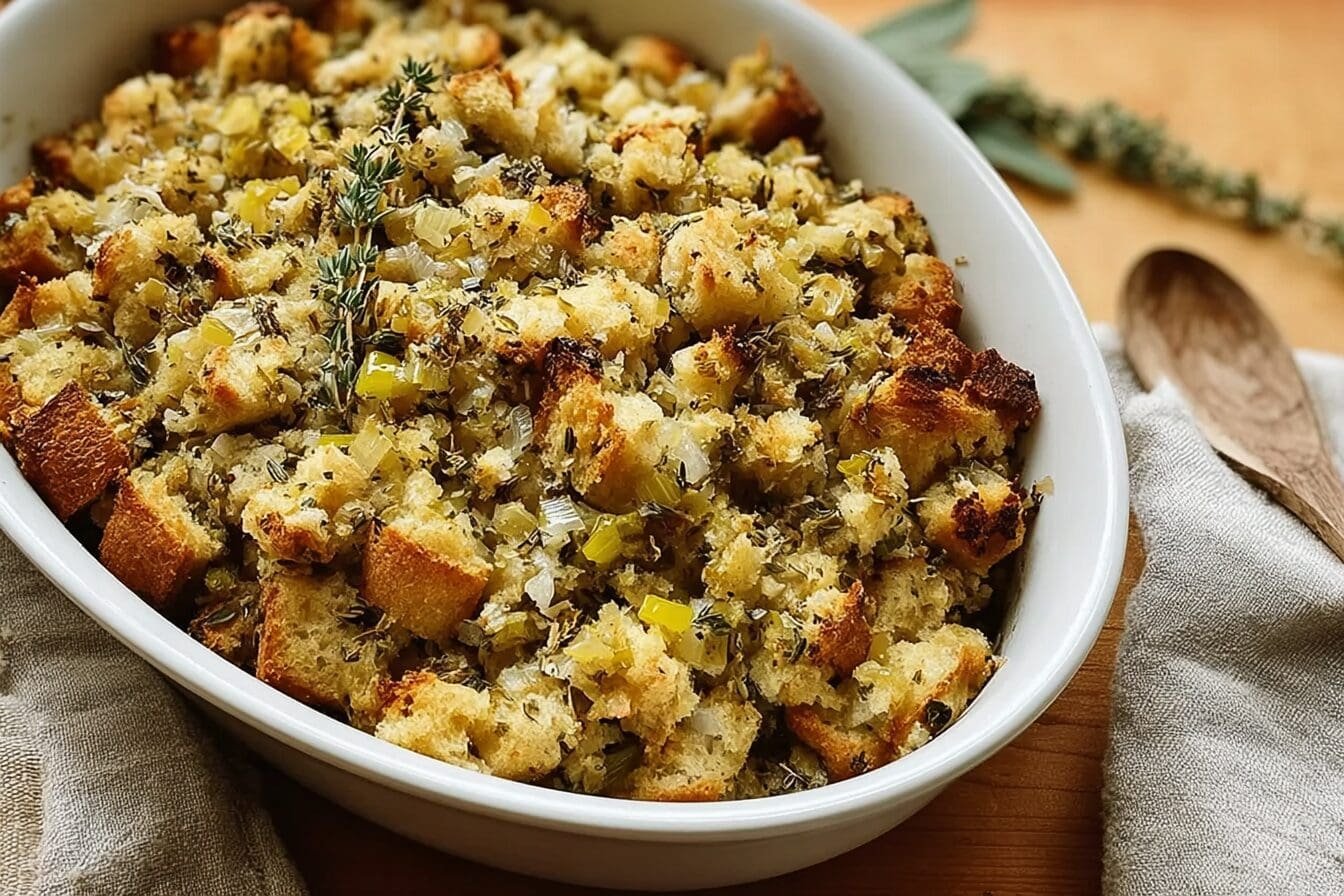
Why You’ll Love This Herb Stuffing
Honestly, this herb stuffing is one of those recipes that brings back all the cozy vibes of family gatherings, and it’s perfect for anyone looking to whip up something delicious without much hassle. Think about how it combines simple ingredients like bread cubes and fresh herbs to create a side dish that’s both comforting and full of flavor it’s like a hug in a baking dish. You’ll find it hits the spot for holiday meals or even a casual weeknight dinner, making it a go-to for home cooks everywhere.
- Ease of preparation: This herb stuffing comes together in just about 45 minutes of prep time, which means you can get it ready without spending hours in the kitchen. The straightforward steps, like chopping veggies and mixing everything, make it simple for busy parents or students to handle. Plus, with a total cook time of around 50 minutes, you’ll have a flavorful dish on the table in under 1 hour and 35 minutes, leaving you more time to enjoy with loved ones.
- Health benefits: Packed with fresh veggies and herbs like sage, parsley, and rosemary, this herb stuffing offers a nutritious boost while keeping things tasty. It’s loaded with vitamins from ingredients such as celery and onions, which can support your immune system and add fiber for better digestion. Whether you’re a diet-conscious individual or just wanting a balanced side, this recipe aligns with wellness goals by using wholesome elements that make herb stuffing a smarter choice for everyday meals.
- Versatility: You can tweak this herb stuffing to fit all sorts of needs, from vegan swaps to gluten-free options, so it’s great for families with mixed preferences. For instance, it’s easy to adapt for busy professionals or newlyweds experimenting in the kitchen, and it scales up or down to serve 8 to 12 people without any fuss. This flexibility means you can pair it with various mains or even use it as a base for creative twists, making herb stuffing a reliable favorite.
- Distinctive flavor: What sets this herb stuffing apart is the fresh, savory blend of herbs and veggies that create a mouthwatering aroma and taste everyone craves. The mix of toasted bread cubes soaked in stock gives it that perfect crisp-yet-tender texture, while the garlic and herbs add a burst of flavor that’s hard to beat. Trust me, once you try this recipe, you’ll keep coming back for that unique, homemade charm that makes herb stuffing stand out at any table.
To tie it all together, this herb stuffing not only satisfies your taste buds but also fits into a busy lifestyle with its quick prep and adaptable nature, proving why it’s a must-try for food enthusiasts and home cooks alike.
Jump To
- 1. Why You’ll Love This Herb Stuffing
- 2. Essential Ingredients for Herb Stuffing
- 3. How to Prepare the Perfect Herb Stuffing: Step-by-Step Guide
- 4. Dietary Substitutions to Customize Your Herb Stuffing
- 5. Mastering Herb Stuffing: Advanced Tips and Variations
- 6. How to Store Herb Stuffing: Best Practices
- 7. FAQs: Frequently Asked Questions About Herb Stuffing
- 8. Herb Stuffing
Essential Ingredients for Herb Stuffing
In this section, we’re diving into what makes this herb stuffing so special the ingredients! Each one plays a key role in building that comforting, flavorful dish you love. I’ll break it down with precise measurements and a quick note on why they’re important, so you can gather everything easily.
- 18 to 24 ounces bread cubes (about 1.5 loaves or 12 to 14 cups) – These form the base, providing the perfect absorbent texture when toasted or stale to soak up all the flavors without getting soggy.
- 1 cup celery – Adds a nice crunch and freshness, helping to balance the dish with its subtle earthy notes.
- 3 cups diced sweet onion (roughly 2 large onions) – Brings a sweet, aromatic base that enhances the overall savoriness and depth of the herb stuffing.
- 2 cups celery – Boosts the vegetable content for extra moisture and a hearty feel in every bite.
- 6 cloves minced garlic – Infuses a pungent, warm flavor that ties all the herbs and veggies together beautifully.
- Kosher salt and pepper to taste – Seasons the mixture to perfection, ensuring every part of the herb stuffing pops with just the right amount of savoriness.
- 3 tablespoons chopped fresh sage – Offers a classic, earthy herb taste that defines the fresh essence of herb stuffing.
- 3 tablespoons chopped fresh parsley – Provides a bright, fresh lift that keeps the dish lively and aromatic.
- 3 tablespoons chopped fresh rosemary – Adds a piney, robust flavor that makes this herb stuffing memorable and full of character.
- 2 1/2 cups chicken or vegetable stock – Supplies the liquid needed to bind everything, creating moist and flavorful results.
- 2 eggs – Help hold the mixture together for a better texture, though they can be swapped for other options if needed.
- Butter (for cooking and brushing) – Gives a rich, creamy finish that enhances the overall taste and helps with browning.
- A mixture of fresh herbs for sprinkling – Adds an extra layer of flavor and visual appeal right before serving.
- Olive oil or nonstick spray for baking dish – Keeps the dish from sticking and adds a subtle hint of healthy fat for easy cleanup.
Special Dietary Options
Don’t worry if you have specific needs this herb stuffing can be adjusted with ease. For vegan versions, swap out the butter for olive oil and use vegetable stock instead, while replacing eggs with a plant-based binder like flaxseed meal mixed with water. If you’re going gluten-free, opt for gluten-free bread cubes to maintain that classic texture without any issues. For low-calorie tweaks, reduce the butter amount and choose low-sodium stock to keep things light yet delicious, all while preserving the heart of herb stuffing.
How to Prepare the Perfect Herb Stuffing: Step-by-Step Guide
Getting this herb stuffing just right is all about following simple, clear steps that anyone can manage, even if you’re new to cooking. We’ll go through each part with timings and tips to make it foolproof, while noting how to adapt for different diets like vegan or gluten-free. Let’s jump in and create that savory side dish that’ll have everyone asking for more.
First Step: Prepare the Bread Cubes
Start by getting your bread ready for the best texture in this herb stuffing it’s the foundation! Let 18 to 24 ounces of bread cubes sit out overnight to stale, or toast them at 350 degrees F for about 15 minutes until they’re dry and slightly crispy. This helps them absorb the flavors without turning mushy, and for a gluten-free twist, use gluten-free bread to keep things inclusive. Remember, mixing stale and fresh bread types adds variety, making your herb stuffing even more delightful for all eaters.
Second Step: Preheat and Prep the Baking Dish
Once your bread is set, preheat your oven to 350 degrees F and prepare a 9×13 baking dish by buttering it or using olive oil or nonstick spray. This step takes just a couple of minutes and ensures your herb stuffing doesn’t stick, which is key for even baking. If you’re aiming for a vegan version, stick with olive oil here to keep it plant-based, helping maintain that moist texture everyone loves in herb stuffing.
Third Step: Cook the Vegetables and Herbs
Now, in a skillet over medium heat, melt some butter and add 3 cups diced sweet onion, 1 cup celery, 2 cups celery, and 6 cloves minced garlic, along with kosher salt and pepper to taste. Cook this mixture for 8-10 minutes until it’s softened and fragrant, stirring occasionally for even heat. For low-calorie adaptations, use less butter or swap it for a lighter oil, and if you’re vegan, ensure your butter substitute is ready this step infuses the core flavors into your herb stuffing perfectly.
Fourth Step: Add Herbs and Stock
Stir in 3 tablespoons each of chopped fresh sage, parsley, and rosemary, cooking for another minute to release their aromas. Then, pour in 1 cup of the chicken or vegetable stock and mix well, which should take about 2 minutes. For dietary needs, use vegetable stock if going vegan, and adjust seasonings to taste this is where your herb stuffing really starts to shine with its savory profile.
Fifth Step: Combine with Bread
Pour the veggie and herb mixture over your prepared bread cubes and toss everything together in a large bowl to coat evenly, which might take 3-5 minutes. To adapt, if you’re making a low-calorie version, monitor the stock amount to avoid excess moisture, ensuring your herb stuffing stays light and flavorful without overloading.
Sixth Step: Mix in Eggs and Remaining Stock
In a separate bowl, whisk the remaining 1 1/2 cups of stock with 2 eggs, then fold this into the bread mixture until fully combined. This step helps bind everything, taking just a minute or two, but for vegan or egg-free preferences, omit the eggs and add extra broth to keep it moist it’s a simple tweak that maintains the essence of herb stuffing.
Final Step: Bake and Serve
Transfer the mixture to your prepared baking dish and bake at 350 degrees F for 45 to 50 minutes, or until it reaches an internal temperature of 160 degrees F. If the top browns too fast, cover with foil to prevent burning, and let it rest for 5 minutes before serving. For gluten-free eaters, double-check your bread cubes, and this final touch makes your herb stuffing ready to enjoy as a versatile side that pairs with anything from roasted chicken to veggies.
| Step | Time/Temp | Dietary Adaptation |
|---|---|---|
| Prepare Bread | 15 minutes at 350°F | Use gluten-free bread |
| Cook Veggies | 8-10 minutes on medium heat | Swap butter for oil (vegan) |
| Bake | 45-50 minutes at 350°F | Add extra broth if egg-free |
As you can see, this guide makes preparing herb stuffing a breeze, with built-in tips for everyone.

Dietary Substitutions to Customize Your Herb Stuffing
This section dives into how you can tweak your herb stuffing for different tastes and needs, with two key areas covered below. We’ll look at protein and main component swaps, as well as changes to veggies, sauces, and seasonings, all while keeping the focus on making herb stuffing adaptable and delicious.
Protein and Main Component Alternatives
When it comes to swapping proteins in your herb stuffing, think about options that keep the dish hearty. For instance, try plant-based choices like tofu or tempeh to replace eggs for a vegan twist these add protein while maintaining moisture, but you’ll need to season them well and cook a bit longer for the right texture. If you’re into animal-based alternatives, diced poultry works great as a main component, adjusting for extra cooking time to ensure it’s fully done. These changes help preserve the core of herb stuffing while catering to various diets.
Another tip is using legumes like beans for added bulk; they absorb flavors nicely and might require less liquid, making your herb stuffing even more versatile. For best results, prepare any substitute by chopping finely and mixing in early, so the flavors blend seamlessly it’s all about getting that perfect balance. Explore similar dressing recipes for more ideas on these swaps, enhancing your herb stuffing game.
Vegetable, Sauce, and Seasoning Modifications
Swapping veggies in your herb stuffing can freshen things up based on what’s in season, like using carrots instead of celery for a sweeter note these changes might need slight adjustments to cooking time for even softening. For sauces, opt for dairy-free broths if you’re going vegan, which helps with binding without altering the moisture too much, and for low-sodium versions, cut back on salt while boosting herbs. Seasoning tweaks, such as different herb blends, can create new flavor profiles, like adding thyme for a Mediterranean vibe, always tasting as you go to keep it balanced.
Remember, these modifications ensure your herb stuffing stays adaptable for gluten-free or low-calorie needs, perhaps by reducing oil in the sauce. Check out stuffed chicken ideas for inspiration on how these changes pair with other dishes, making your herb stuffing a customizable favorite.
Mastering Herb Stuffing: Advanced Tips and Variations
Taking your herb stuffing to the next level is fun with these pro tips that make it even better. From toasting bread for extra crunch to controlling moisture for the ideal texture, you’ll nail that perfect side every time. Let’s explore some creative ways to amp it up.
Pro Cooking Techniques
One key technique is toasting your bread cubes at 350 degrees F for 15 minutes to enhance absorption resting the mixture before baking also helps flavors meld. For deglazing the pan after cooking veggies, add a splash of stock to capture all the goodness, improving overall taste in your herb stuffing.
Flavor Variations
Experiment with seasonal herbs or add nuts for a twist, turning your herb stuffing into a regional delight like a Southern version with cornbread.
Presentation Tips
Garnish with fresh herbs for color and serve in individual portions to make it visually appealing at the table.
Make-Ahead Options
Prep ahead by assembling and refrigerating, then bake fresh it’s great for busy schedules and keeps your herb stuffing tasting amazing. For external insights, check out the Best Stuffing Recipe guide.
How to Store Herb Stuffing: Best Practices
Keeping your herb stuffing fresh is simple with the right storage methods. Let’s cover the basics to maintain its flavor and texture. For refrigeration, store leftovers in an airtight container for up to 3-4 days, making sure to cool it first. Freezing works well for longer storage; portion it into bags and freeze for up to 3 months, thawing in the fridge overnight. When reheating, use the oven at 350 degrees F until it reaches 165 degrees F internally avoid the microwave for better results. For meal prep, batch cook and portion for easy weeknights, preserving that savory herb stuffing quality.
FAQs: Frequently Asked Questions About Herb Stuffing
Can I use the herb stuffing recipe to stuff a turkey or chicken?
Yes, you can safely use this herb stuffing recipe to stuff poultry like turkey or chicken. Make sure to stuff the bird just before roasting and cook it immediately to the proper internal temperature of 165°F to prevent any food safety issues. This recipe provides a moist and flavorful filling that complements poultry well.
How do I prepare the bread for making herb stuffing?
For the best texture, use stale bread left out overnight or toast fresh bread cubes in a 350°F oven until dry and slightly crispy. This helps the bread absorb the broth and herbs without becoming mushy. Alternatively, you can buy pre-toasted bread cubes, but avoid fresh, soft bread as it may result in soggy stuffing.
Can I substitute dried herbs for fresh herbs in the stuffing recipe?
Yes, dried herbs can be used if fresh are unavailable, but reduce the quantity to about one-third since dried herbs are more concentrated. For example, if the recipe calls for 1 tablespoon of fresh herbs, use 1 teaspoon of dried herbs. Adjust seasoning to taste, as dried herbs have a different flavor intensity.
Is it possible to prepare herb stuffing ahead of time and reheat it?
Absolutely, you can make the herb stuffing a day before serving. Store it covered in the refrigerator and take it out about an hour before reheating. Reheat in a preheated oven at 350°F until heated through, which usually takes 20–30 minutes. Adding a little extra broth before reheating helps maintain moisture.
Can I omit eggs in the herb stuffing recipe, and how will it affect the result?
Eggs can be omitted if preferred or due to allergies. Without eggs, the stuffing may be less firm and hold together differently. To keep it moist when baking, add extra broth before cooking. This adjustment helps maintain the stuffing’s texture and flavor without compromising moisture.
Herb Stuffing
- Total Time: 1 hour 35 minutes
- Yield: 8 to 12 servings 1x
Description
🧈 This Buttery Herb Stuffing recipe combines savory flavors and fresh herbs for a classic, comforting side dish.
🌿 Perfect for holiday meals, it’s easy to prepare and packed with aromatic herbs that enhance any celebration spread.
Ingredients
18 to 24 ounces bread cubes (about 1.5 loaves or 12 to 14 cups) These form the base, providing the perfect absorbent texture when toasted or stale to soak up all the flavors without getting soggy.
1 cup celery Adds a nice crunch and freshness, helping to balance the dish with its subtle earthy notes.
3 cups diced sweet onion (roughly 2 large onions) Brings a sweet, aromatic base that enhances the overall savoriness and depth of the herb stuffing.
2 cups celery Boosts the vegetable content for extra moisture and a hearty feel in every bite.
6 cloves minced garlic Infuses a pungent, warm flavor that ties all the herbs and veggies together beautifully.
Kosher salt and pepper to taste Seasons the mixture to perfection, ensuring every part of the herb stuffing pops with just the right amount of savoriness.
3 tablespoons chopped fresh sage Offers a classic, earthy herb taste that defines the fresh essence of herb stuffing.
3 tablespoons chopped fresh parsley Provides a bright, fresh lift that keeps the dish lively and aromatic.
3 tablespoons chopped fresh rosemary Adds a piney, robust flavor that makes this herb stuffing memorable and full of character.
2 1/2 cups chicken or vegetable stock Supplies the liquid needed to bind everything, creating moist and flavorful results.
2 eggs Help hold the mixture together for a better texture, though they can be swapped for other options if needed.
Butter for cooking and brushing Gives a rich, creamy finish that enhances the overall taste and helps with browning.
A mixture of fresh herbs for sprinkling Adds an extra layer of flavor and visual appeal right before serving.
Olive oil or nonstick spray for baking dish Keeps the dish from sticking and adds a subtle hint of healthy fat for easy cleanup.
Instructions
1-First Step: Prepare the Bread Cubes Start by getting your bread ready for the best texture in this herb stuffing it’s the foundation! Let 18 to 24 ounces of bread cubes sit out overnight to stale, or toast them at 350 degrees F for about 15 minutes until they’re dry and slightly crispy. This helps them absorb the flavors without turning mushy, and for a gluten-free twist, use gluten-free bread to keep things inclusive. Remember, mixing stale and fresh bread types adds variety, making your herb stuffing even more delightful for all eaters.
2-Second Step: Preheat and Prep the Baking Dish Once your bread is set, preheat your oven to 350 degrees F and prepare a 9×13 baking dish by buttering it or using olive oil or nonstick spray. This step takes just a couple of minutes and ensures your herb stuffing doesn’t stick, which is key for even baking. If you’re aiming for a vegan version, stick with olive oil here to keep it plant-based, helping maintain that moist texture everyone loves in herb stuffing.
3-Third Step: Cook the Vegetables and Herbs Now, in a skillet over medium heat, melt some butter and add 3 cups diced sweet onion, 1 cup celery, 2 cups celery, and 6 cloves minced garlic, along with kosher salt and pepper to taste. Cook this mixture for 8-10 minutes until it’s softened and fragrant, stirring occasionally for even heat. For low-calorie adaptations, use less butter or swap it for a lighter oil, and if you’re vegan, ensure your butter substitute is ready this step infuses the core flavors into your herb stuffing perfectly.
4-Fourth Step: Add Herbs and Stock Stir in 3 tablespoons each of chopped fresh sage, parsley, and rosemary, cooking for another minute to release their aromas. Then, pour in 1 cup of the chicken or vegetable stock and mix well, which should take about 2 minutes. For dietary needs, use vegetable stock if going vegan, and adjust seasonings to taste this is where your herb stuffing really starts to shine with its savory profile.
5-Fifth Step: Combine with Bread Pour the veggie and herb mixture over your prepared bread cubes and toss everything together in a large bowl to coat evenly, which might take 3-5 minutes. To adapt, if you’re making a low-calorie version, monitor the stock amount to avoid excess moisture, ensuring your herb stuffing stays light and flavorful without overloading.
6-Sixth Step: Mix in Eggs and Remaining Stock In a separate bowl, whisk the remaining 1 1/2 cups of stock with 2 eggs, then fold this into the bread mixture until fully combined. This step helps bind everything, taking just a minute or two, but for vegan or egg-free preferences, omit the eggs and add extra broth to keep it moist it’s a simple tweak that maintains the essence of herb stuffing.
7-Final Step: Bake and Serve Transfer the mixture to your prepared baking dish and bake at 350 degrees F for 45 to 50 minutes, or until it reaches an internal temperature of 160 degrees F. If the top browns too fast, cover with foil to prevent burning, and let it rest for 5 minutes before serving. For gluten-free eaters, double-check your bread cubes, and this final touch makes your herb stuffing ready to enjoy as a versatile side that pairs with anything from roasted chicken to veggies.
Notes
🍞 Use a mix of bread types and stale bread for better texture.
🍽 Leftovers can be repurposed in sandwiches, casseroles, or waffles.
🌿 Fresh herbs offer best flavor; adjust if using dried herbs.
- Prep Time: 45 minutes
- Cook time: 50 minutes
- Cook Time: 50 minutes
- Category: Side Dish
- Method: Baking and sautéing
- Cuisine: American
Nutrition
- Serving Size: 1 serving
Keywords: buttery herb stuffing, savory stuffing, fresh herbs stuffing, holiday stuffing