
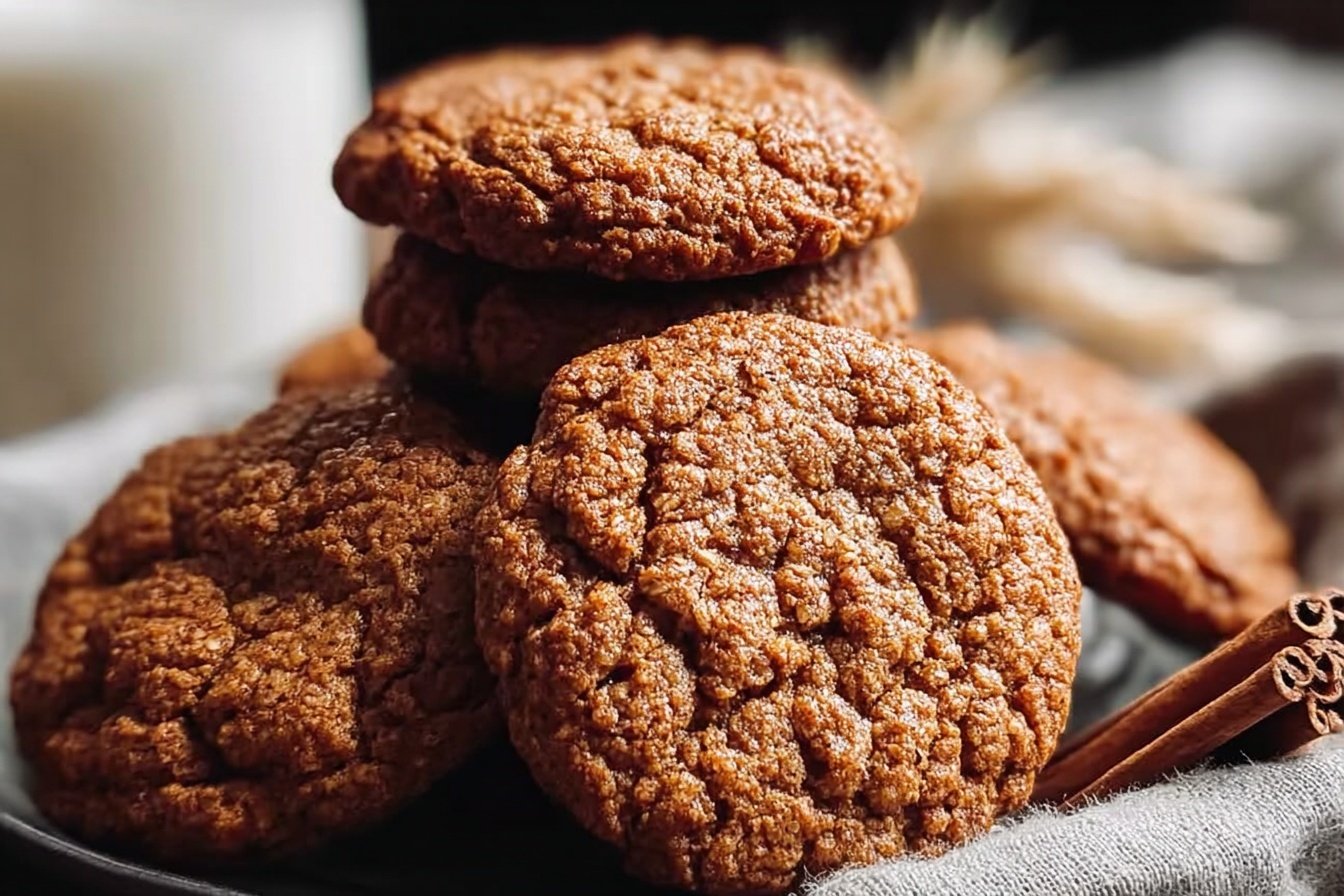
Why You’ll Love These Healthy Gingerbread Oatmeal Cookies
Healthy Gingerbread Oatmeal Cookies are the kind of cozy treat that feels right at home on a busy weekday morning, during holiday brunch, or tucked into a lunchbox for a sweet little surprise. They are chewy, warmly spiced, and full of festive gingerbread flavor, but they keep things lighter than many traditional cookie recipes. Best of all, the dough comes together in about 20 minutes, so you do not need a full afternoon in the kitchen to make them happen.
These cookies are a lovely fit for home cooks of all levels because they are simple, flexible, and friendly to real life. Whether you are baking for your family, a roommate, or just yourself with a mug of coffee, this recipe keeps the steps easy and the ingredients familiar. The oats add hearty texture, the molasses brings that classic gingerbread taste, and the spice blend makes your kitchen smell like the holidays in the best possible way.
- Easy to make: The batter comes together quickly with basic pantry ingredients, and the shaping step is simple because the dough is chilled before baking.
- Better-for-you ingredients: These cookies are lower in fat, lower in sugar, and lighter in calories than many classic holiday cookies, with a little protein from the egg white.
- Flexible for different diets: You can make them gluten-free, dairy-free, or even swap in different flour options depending on what you have on hand.
- Warm, cozy flavor: Ginger, cinnamon, nutmeg, cloves, and molasses give each bite a classic gingerbread taste that feels festive without being overly sweet.
When you want a cookie that feels a little special but still works for breakfast, these Healthy Gingerbread Oatmeal Cookies hit that sweet spot nicely.
If you enjoy cozy baking, you may also like my healthy cookies gluten free recipe and these lemon oatmeal cookies for another oat-based treat with a different flavor twist.
Jump To
- 1. Why You’ll Love These Healthy Gingerbread Oatmeal Cookies
- 2. Essential Ingredients for Healthy Gingerbread Oatmeal Cookies
- 3. How to Prepare the Perfect Healthy Gingerbread Oatmeal Cookies: Step-by-Step Guide
- 4. Dietary Substitutions to Customize Your Healthy Gingerbread Oatmeal Cookies
- 5. Mastering Healthy Gingerbread Oatmeal Cookies: Advanced Tips and Variations
- 6. How to Store Healthy Gingerbread Oatmeal Cookies: Best Practices
- 7. FAQs: Frequently Asked Questions About Healthy Gingerbread Oatmeal Cookies
- 8. Healthy Gingerbread Oatmeal Cookies
Essential Ingredients for Healthy Gingerbread Oatmeal Cookies
This recipe makes 15 cookies, and each ingredient plays a small but important role in the final texture and flavor. For the best results, use proper measuring tools. Dry ingredients should be measured with cups and spoons, while wet ingredients should be measured in a liquid measuring cup. That little habit helps prevent dry cookies and keeps the dough soft enough to shape after chilling.
Main Ingredients
- 1 cup instant oats or quick cooking, one-minute oats – Gives the cookies their hearty oatmeal texture and helps them stay chewy.
- 3/4 cup whole wheat flour or gluten-free, almond, oat, or all-purpose flour – Provides structure while keeping the cookies tender.
- 1 1/2 teaspoons baking powder – Helps the cookies rise just enough so they bake up soft and slightly puffy.
- 1 teaspoon ground ginger – Adds the signature gingerbread warmth.
- 1/4 teaspoon ground cinnamon – Brings a sweet, cozy spice note.
- 1/8 teaspoon ground nutmeg – Adds depth and that classic holiday aroma.
- 1/8 teaspoon ground cloves – Gives the cookies their unmistakable gingerbread character.
- 1/4 teaspoon salt – Balances the sweetness and makes the spices taste fuller.
- 1 1/2 tablespoons unsalted butter or coconut oil, melted and cooled slightly, or vegan butter for dairy-free baking – Adds richness without making the cookies heavy.
- 1 large egg white – Helps bind the dough and adds protein while keeping the cookies light.
- 1 teaspoon vanilla extract – Softens the spice flavors and adds a warm bakery-style note.
- 1/4 cup unsulphured molasses, not blackstrap – Gives the cookies their deep gingerbread flavor and helps keep them moist.
- 5 tablespoons nonfat milk – Brings the dough together and keeps the texture soft.
Special Dietary Options
- Vegan: Use coconut oil or vegan butter and swap the egg white for a plant-based egg substitute if needed. For best texture, choose a substitute that works well in baking.
- Gluten-free: Use certified gluten-free oats and certified gluten-free flour. Oat flour works well, and almond flour can also be used, though the texture will be a bit softer.
- Low-calorie: Stick with nonfat milk, the egg white, and the measured amount of molasses. This helps keep the cookies light while still tasting rich and festive.
| Ingredient | Amount | Why It Matters |
|---|---|---|
| Instant oats | 1 cup | Create chewy texture and a breakfast-friendly feel |
| Whole wheat flour | 3/4 cup | Adds structure and a wholesome bite |
| Molasses | 1/4 cup | Delivers classic gingerbread flavor and moisture |
| Egg white | 1 large | Adds protein and helps bind the dough |
| Nonfat milk | 5 tablespoons | Keeps the dough soft without adding extra richness |
How to Prepare the Perfect Healthy Gingerbread Oatmeal Cookies: Step-by-Step Guide
These cookies are easy to make, but the small details matter. The dough should be mixed just until combined, then chilled for 30 minutes so it is easy to scoop and stays chewy after baking. Since these cookies do not spread much, flattening them before baking is important if you want that classic cookie shape.
First Step: Mix the dry ingredients
Grab a medium bowl and whisk together the oats, flour, baking powder, ginger, cinnamon, nutmeg, cloves, and salt. This step helps distribute the spices evenly, so every bite tastes balanced. If you are using old-fashioned oats instead of instant oats, pulse them in a food processor or blender first until they look more like quick oats. That gives the cookies a softer texture and helps them bake more evenly.
It is worth taking a second here to check your measuring. Too much flour or too many oats can make the dough dry, which is not what we want in a chewy breakfast cookie.
Second Step: Combine the wet ingredients
In another bowl, mix the melted butter or coconut oil with the egg white and vanilla extract. Stir until the mixture looks smooth and well blended. Then add the unsulphured molasses and mix again. The molasses may seem thick at first, but it will blend in nicely once you keep stirring.
Next, pour in the nonfat milk and stir until the wet mixture looks even. This is the point where the dough starts to smell like the holidays, which is always a nice bonus when baking in a busy kitchen.
Third Step: Bring the dough together
Add the dry ingredients into the wet ingredients. Stir gently until everything is just incorporated. Do not overmix. Once the flour disappears, stop stirring. Overmixing can make the cookies tougher, and these should stay soft and chewy.
The dough may look a little sticky, and that is normal. Chilling it will help it firm up, making the shaping step much easier. If the dough feels too dry, double-check your measuring first. If needed, a tiny splash of milk can help, but use a light hand so the texture stays right.
Fourth Step: Chill the dough
Cover the bowl and chill the dough for 30 minutes. This step is important for two reasons. First, it helps the flavors settle together. Second, it makes the dough easier to handle, which means cleaner scoops and prettier cookies. Chilling also helps the cookies bake up chewy instead of flat and crumbly.
If you are tempted to skip the chill time, take a deep breath and wait. The dough really does behave better after a rest.
Fifth Step: Prep the oven and baking sheet
While the dough chills, preheat your oven to 325°F. Line a baking sheet with parchment paper so the cookies release easily after baking. Parchment also helps the bottoms bake more evenly and keeps cleanup simple, which is always appreciated.
This recipe is designed for soft cookies, so a lower oven temperature helps them bake through without drying out. If your oven runs hot, it may be helpful to check the cookies a minute early.
Sixth Step: Shape the cookies
Use a spoon or cookie scoop to portion the dough into 15 rounded cookies. Place them on the prepared baking sheet with a little room between each one. Then flatten each mound to about 3/8-inch thick. These cookies do not spread much, so shaping them now gives you a better final look.
If you want them extra uniform, lightly dampen your fingers or the back of a spoon before flattening. That keeps the dough from sticking and helps smooth the tops.
Seventh Step: Bake until just set
Bake the cookies for 7 to 10 minutes. The centers should still look slightly soft when you remove them from the oven. That is exactly what you want. They will continue to set as they cool, and that is what keeps the texture chewy rather than dry.
Do not wait for them to brown too much. Gingerbread cookies can go from perfectly soft to too crisp faster than you would think, especially if your oven runs on the stronger side.
Eighth Step: Cool and finish
Let the cookies cool on the baking sheet for 10 minutes before moving them to a wire rack. This resting time helps them firm up without breaking. If any cookies look a little misshapen, gently reshape them right after baking while they are still warm and soft.
Once cooled, they are ready to eat. They are lovely on their own, but they are also great with tea, coffee, or a glass of milk. Since the recipe is lower in fat and sugar than many holiday cookies, it works well for a lighter breakfast or snack.
Timing and yield at a glance
- Prep time: About 20 minutes
- Chill time: 30 minutes
- Bake time: 7 to 10 minutes
- Total time: About 1 hour
- Yield: 15 cookies

Dietary Substitutions to Customize Your Healthy Gingerbread Oatmeal Cookies
One of the best things about Healthy Gingerbread Oatmeal Cookies is how easy they are to adapt. If you need to work around allergies, swap ingredients based on what is in your pantry, or simply prefer a different flavor, there is plenty of room to make this recipe your own.
Protein and Main Component Alternatives
If you do not have an egg white, a baking-friendly egg substitute can work in its place. The cookie will be a little less airy, but it will still hold together nicely. If you prefer a richer bite, you can use unsalted butter instead of coconut oil, or choose vegan butter for a dairy-free version.
For the flour, whole wheat flour gives a slightly hearty texture, but all-purpose flour will make the cookies softer. Oat flour keeps the cookie flavor extra cozy, while almond flour gives a more tender, delicate crumb. If you are making the gluten-free version, be sure to use certified gluten-free oats and flour so there is no cross-contact issue.
Vegetable, Sauce, and Seasoning Modifications
There are not vegetables or sauce components in the base recipe, but you can still play with the flavor profile. Maple syrup can replace molasses in a pinch, though the taste will be milder and a little sweeter. Honey also works, but it gives a different finish and is not the same deep gingerbread flavor.
If you want a more spiced cookie, add a tiny pinch more cinnamon or ginger. If you prefer a softer holiday flavor, reduce the cloves slightly. You can also fold in a handful of mini dark chocolate chips or chopped walnuts for extra texture, though that shifts the cookies away from the classic breakfast-cookie feel.
For the most consistent texture, change just one ingredient at a time so you can see what works best for your kitchen.
Mastering Healthy Gingerbread Oatmeal Cookies: Advanced Tips and Variations
Once you have made these cookies once, you may find yourself reaching for the recipe again and again. They are simple enough for everyday baking, but a few small tricks can make them even better. The goal is soft, chewy cookies with warm spice flavor and a tidy shape that looks as good as it tastes.
Pro cooking techniques
Use level measuring cups and spoons, not heaping ones. That matters more than people think. A little extra flour can dry out the dough, while too many oats can make the cookies dense. If you are measuring by weight, even better, since the results tend to be more consistent.
Another helpful trick is to flatten the dough before baking. Because these cookies do not spread much, shaping them beforehand gives you a more bakery-style cookie. If the edges crack a little as you flatten them, that is fine. The dough should still hold together once it bakes.
Flavor variations
If you want to change things up, try a pinch of cardamom for a more fragrant spice note. A few chopped pecans would add a little crunch and make the cookies feel even more festive. You can also stir in raisins or dried cranberries for a breakfast-cookie vibe that works nicely with the molasses and ginger.
For a more dessert-style version, add a few mini chocolate chips. For a softer holiday cookie, brush the tops with a tiny bit of melted butter right after baking. That gives them a pretty finish and a little extra richness.
Presentation tips
Serve the cookies on a simple platter with a dusting of cinnamon for a cozy holiday look. If you are packing them for school, work, or travel, tuck a piece of parchment between layers so they stay neat. These cookies also make a lovely edible gift when wrapped in a small tin or bag tied with twine.
Make-ahead options
The dough can be chilled ahead of time, so it is a smart choice for busy weeks. You can mix it in the evening, chill it overnight, and bake the next day. That is especially handy around the holidays when the kitchen tends to get crowded with too many dishes and too little counter space.
If you want more cozy bakes for your holiday routine, you might also enjoy the sweet spice notes in my cowboy cookies, which are another hearty cookie option with lots of texture.
How to Store Healthy Gingerbread Oatmeal Cookies: Best Practices
These cookies store well, which makes them great for meal prep, lunchboxes, or keeping a few treats on hand without baking again every day. The key is to protect their moisture, since that soft chewiness is part of what makes them so satisfying.
Refrigeration
Keep the cookies in an airtight container at room temperature for a few days. If you want them to last longer, store them in the fridge for up to 1 week. Refrigeration is especially helpful in humid climates, where baked goods can lose texture more quickly.
Freezing
These cookies freeze very well. Place them in a single layer or separate layers with parchment paper, then store them in a freezer-safe bag or container. They can stay frozen for up to 2 months. Label the bag with the date so you can keep track of freshness without playing guessing games later.
Reheating
To enjoy them warm again, let them thaw at room temperature or microwave them for about 10 seconds. That brings back some of the soft, cozy texture without overcooking them. If you prefer them straight from the fridge, let them sit out for a few minutes first so the spice flavor opens up again.

FAQs: Frequently Asked Questions About Healthy Gingerbread Oatmeal Cookies
Are healthy gingerbread oatmeal cookies gluten-free and low calorie?
Yes, these healthy gingerbread oatmeal cookies can be made gluten-free using certified gluten-free oats and oat flour. They are low calorie at around 80-100 calories per cookie, low fat with under 2g fat per serving, and low sugar thanks to natural sweeteners like molasses and minimal added sugar. Compared to traditional gingerbread cookies (often 150+ calories with more butter and sugar), these use oats, applesauce, and milk for moisture. Check the recipe notes for dairy-free and nut-free options to fit clean eating diets. Each batch yields about 20 cookies, perfect for breakfast or snacks. Always verify ingredients for allergies.
Can I substitute old-fashioned oats in healthy gingerbread oatmeal cookies?
Yes, you can use old-fashioned rolled oats. Measure the same amount as quick oats called for, then pulse them in a food processor or blender until they’re about 1/8 to 1/4 their original size. This creates a finer texture like instant oats, ensuring soft, chewy cookies instead of chunky ones. Avoid using them whole, as they may make cookies drier or less uniform. For best results, weigh ingredients: 2 cups (about 180g) pulsed oats. This swap keeps the recipe healthy and gluten-free if using certified GF oats.
What can I use instead of molasses in healthy gingerbread oatmeal cookies?
Molasses gives the signature gingerbread flavor, but if unavailable, substitute an equal amount with maple syrup, honey, or dark corn syrup. These maintain the soft, chewy texture but alter the taste slightly—maple adds a milder sweetness. For example, replace 1/4 cup molasses with 1/4 cup maple syrup and reduce milk by 1 tablespoon to balance liquids. To make sweeter overall, swap 2 tablespoons milk for pure maple syrup. Stick to unsulfured molasses for the best authentic spice notes from ginger, cinnamon, and cloves.
Why are my healthy gingerbread oatmeal cookies dry or cakey?
Dry or cakey cookies often result from too many oats, excess flour, insufficient molasses or milk, or overbaking. Measure precisely with a kitchen scale—use leveled cups or grams (e.g., 1 cup flour = 120g). Ensure oats are finely processed if substituting. Add wet ingredients like milk or applesauce if dough seems dry before baking. Bake at 350°F for 10-12 minutes; remove when centers are soft and slightly underdone—they firm up as they cool. This prevents dryness. Store immediately in an airtight container to retain moisture.
How do I store healthy gingerbread oatmeal cookies and how long do they last?
Store in an airtight container at room temperature for up to 3-4 days. For longer freshness (up to a week), refrigerate them—they stay soft and chewy. These cookies freeze excellently: layer between parchment in a freezer bag for up to 2 months. Thaw at room temp or microwave 10 seconds. Makes 20 cookies, ideal for meal prep. Label with dates for easy tracking. Refrigeration works best in humid climates to avoid staleness.

Healthy Gingerbread Oatmeal Cookies
- Total Time: 1 hour
- Yield: 15 cookies
- Diet: Vegetarian
Description
🎄 Chewy healthy gingerbread oatmeal cookies burst with warm spices, oats for fiber-packed breakfast – low-cal guilt-free holiday treat.
🍪 20-min prep, no refined sugar; protein boost from egg white, perfect grab-and-go mornings.
Ingredients
– 1 cup instant oats
– 3/4 cup whole wheat flour
– 1 1/2 teaspoons baking powder
– 1 teaspoon ground ginger
– 1/4 teaspoon ground cinnamon
– 1/8 teaspoon ground nutmeg
– 1/8 teaspoon ground cloves
– 1/4 teaspoon salt
– 1 1/2 tablespoons unsalted butter
– 1 large egg white
– 1 teaspoon vanilla extract
– 1/4 cup unsulphured molasses
– 5 tablespoons nonfat milk
Instructions
1-First Step: Mix the dry ingredientsGrab a medium bowl and whisk together the oats, flour, baking powder, ginger, cinnamon, nutmeg, cloves, and salt. This step helps distribute the spices evenly, so every bite tastes balanced. If you are using old-fashioned oats instead of instant oats, pulse them in a food processor or blender first until they look more like quick oats. That gives the cookies a softer texture and helps them bake more evenly.It is worth taking a second here to check your measuring. Too much flour or too many oats can make the dough dry, which is not what we want in a chewy breakfast cookie.
2-Second Step: Combine the wet ingredientsIn another bowl, mix the melted butter or coconut oil with the egg white and vanilla extract. Stir until the mixture looks smooth and well blended. Then add the unsulphured molasses and mix again. The molasses may seem thick at first, but it will blend in nicely once you keep stirring.Next, pour in the nonfat milk and stir until the wet mixture looks even. This is the point where the dough starts to smell like the holidays, which is always a nice bonus when baking in a busy kitchen.
3-Third Step: Bring the dough togetherAdd the dry ingredients into the wet ingredients. Stir gently until everything is just incorporated. Do not overmix. Once the flour disappears, stop stirring. Overmixing can make the cookies tougher, and these should stay soft and chewy.The dough may look a little sticky, and that is normal. Chilling it will help it firm up, making the shaping step much easier. If the dough feels too dry, double-check your measuring first. If needed, a tiny splash of milk can help, but use a light hand so the texture stays right.
4-Fourth Step: Chill the doughCover the bowl and chill the dough for 30 minutes. This step is important for two reasons. First, it helps the flavors settle together. Second, it makes the dough easier to handle, which means cleaner scoops and prettier cookies. Chilling also helps the cookies bake up chewy instead of flat and crumbly.If you are tempted to skip the chill time, take a deep breath and wait. The dough really does behave better after a rest.
5-Fifth Step: Prep the oven and baking sheetWhile the dough chills, preheat your oven to 325°F. Line a baking sheet with parchment paper so the cookies release easily after baking. Parchment also helps the bottoms bake more evenly and keeps cleanup simple, which is always appreciated.This recipe is designed for soft cookies, so a lower oven temperature helps them bake through without drying out. If your oven runs hot, it may be helpful to check the cookies a minute early.
6-Sixth Step: Shape the cookiesUse a spoon or cookie scoop to portion the dough into 15 rounded cookies. Place them on the prepared baking sheet with a little room between each one. Then flatten each mound to about 3/8-inch thick. These cookies do not spread much, so shaping them now gives you a better final look.If you want them extra uniform, lightly dampen your fingers or the back of a spoon before flattening. That keeps the dough from sticking and helps smooth the tops.
7-Seventh Step: Bake until just setBake the cookies for 7 to 10 minutes. The centers should still look slightly soft when you remove them from the oven. That is exactly what you want. They will continue to set as they cool, and that is what keeps the texture chewy rather than dry.Do not wait for them to brown too much. Gingerbread cookies can go from perfectly soft to too crisp faster than you would think, especially if your oven runs on the stronger side.
8-Eighth Step: Cool and finishLet the cookies cool on the baking sheet for 10 minutes before moving them to a wire rack. This resting time helps them firm up without breaking. If any cookies look a little misshapen, gently reshape them right after baking while they are still warm and soft.Once cooled, they are ready to eat. They are lovely on their own, but they are also great with tea, coffee, or a glass of milk. Since the recipe is lower in fat and sugar than many holiday cookies, it works well for a lighter breakfast or snack.
Notes
❄️ Chill dough 30 minutes for easier handling and better chewiness.
📏 Spoon and level dry ingredients accurately to avoid dry cookies.
🧊 Freeze baked cookies up to 3 months; thaw at room temp.
- Prep Time: 20 minutes
- Chill: 30 minutes
- Cook Time: 10 minutes
- Category: Breakfast
- Method: Baking
- Cuisine: American
Nutrition
- Serving Size: 1 cookie
- Calories: 90
- Sugar: 5g
- Sodium: 80mg
- Fat: 2g
- Saturated Fat: 1g
- Unsaturated Fat: 1g
- Trans Fat: 0g
- Carbohydrates: 15g
- Fiber: 2g
- Protein: 2g
- Cholesterol: 5mg
Keywords: healthy gingerbread oatmeal cookies, breakfast oatmeal cookies, low calorie gingerbread cookies, spiced oat breakfast treats