
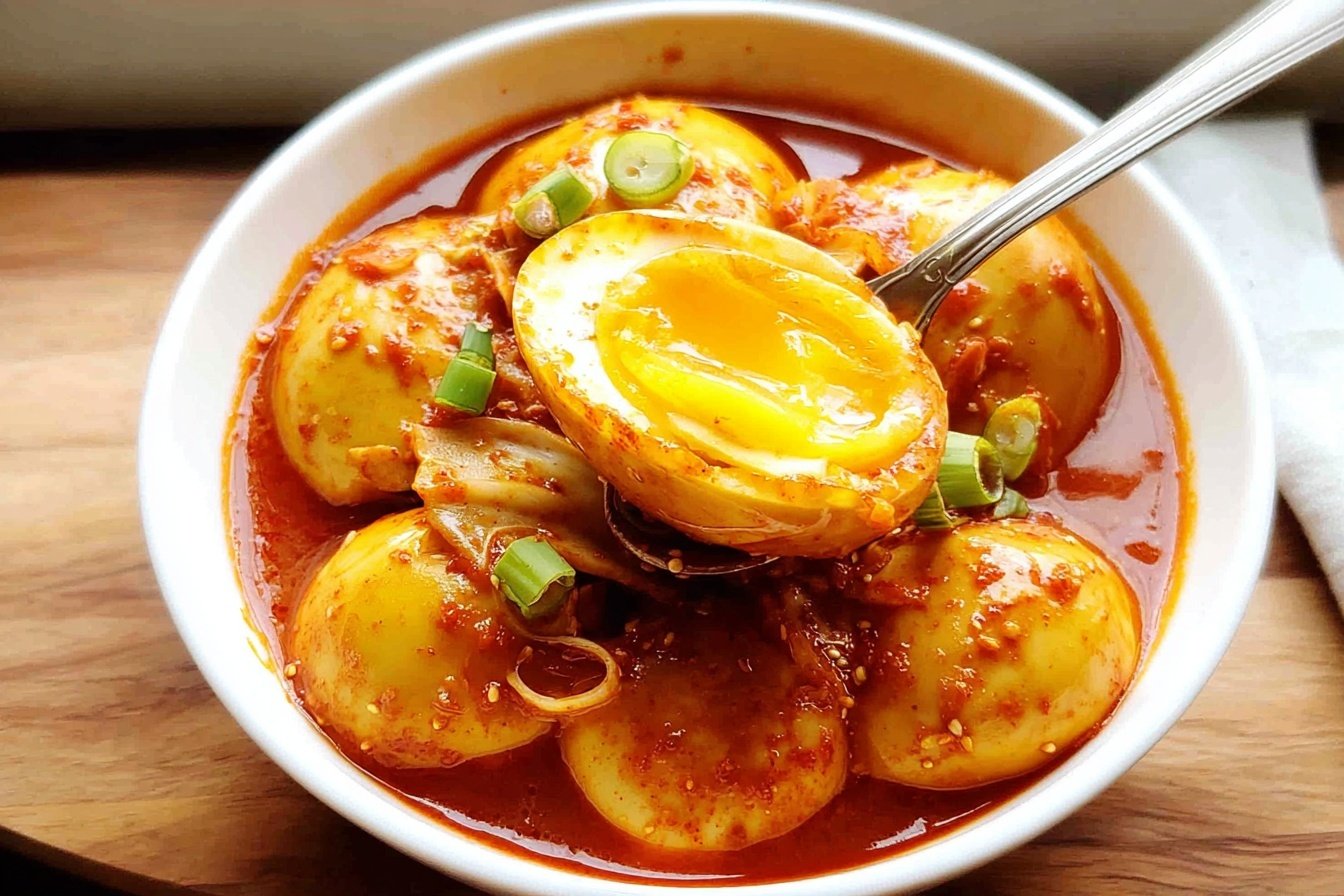
Why You’ll Love This Gochujang Eggs
If you’re looking for a breakfast or dinner option that delivers bold flavor with minimal effort, this spicy Korean-inspired egg salad is about to become your new favorite. Gochujang eggs combine creamy mashed eggs with a savory, spicy sauce that wakes up your taste buds and satisfies cravings for something different from the usual scrambled eggs.
- Ease of preparation: This recipe comes together in just 15 minutes from start to finish. With only five main ingredients and simple steps, even beginner cooks can master this dish on their first try. The short cooking time makes it perfect for busy mornings when you need something delicious without the fuss.
- Health benefits: Each serving packs 23 grams of protein from the eggs, making it a filling option that keeps you satisfied longer. Eggs provide essential nutrients like vitamin A (985 IU per serving), calcium, and iron. The gochujang paste contains fermented ingredients that may support gut health, while sesame oil adds healthy fats.
- Versatility: Serve gochujang eggs on toasted sourdough with kimchi for breakfast, over steamed rice with vegetables for dinner, or as a protein-packed filling for sandwiches and wraps. The recipe adapts easily to different dietary preferences and can be scaled up for meal prep.
- Distinctive flavor: The fermented Korean red pepper paste brings a complex umami taste with sweet, spicy, and savory notes all at once. Combined with creamy mayonnaise and nutty sesame oil, the sauce creates a flavor profile that’s both familiar and excitingly new.
Jump To
- 1. Why You’ll Love This Gochujang Eggs
- 2. Essential Ingredients for Gochujang Eggs
- 3. How to Prepare the Perfect Gochujang Eggs: Step-by-Step Guide
- 4. Dietary Substitutions to Customize Your Gochujang Eggs
- 5. Mastering Gochujang Eggs: Advanced Tips and Variations
- 6. How to Store Gochujang Eggs: Best Practices
- 7. FAQs: Frequently Asked Questions About Gochujang Eggs
- 8. Gochujang Eggs
Essential Ingredients for Gochujang Eggs
Creating the perfect gochujang eggs starts with gathering the right ingredients. Each component plays a specific role in building layers of flavor, from the protein-rich base to the spicy-sweet sauce that ties everything together.
Main Ingredients
- 4 large eggs The foundation of this recipe, eggs provide protein, richness, and a neutral canvas that absorbs the bold flavors of the sauce beautifully.
- ½ tablespoon gochujang paste This fermented Korean red pepper paste delivers the signature spicy, sweet, and umami flavors. Adjust the amount based on your heat tolerance.
- 2 tablespoons mayonnaise Creates the creamy texture that makes this egg salad so satisfying and helps distribute the gochujang flavor evenly throughout.
- ½ teaspoon toasted sesame oil Adds a nutty, aromatic quality that deepens the overall flavor profile and gives the dish an authentic Korean touch.
- ¼ teaspoon brown sugar (optional) Balances the heat from the gochujang with a subtle sweetness; can be substituted with honey or maple syrup.
- Salt and freshly ground black pepper Essential seasonings that enhance all the other flavors and bring everything into focus.
Optional Serving Ingredients
- 2 thick slices of sourdough bread The tangy flavor and sturdy texture of sourdough make it the ideal base for this creamy egg mixture.
- Butter Spreading butter on warm toast adds richness and creates a barrier that prevents the bread from getting soggy.
- 4 tablespoons kimchi (roughly chopped) Adds tangy, fermented crunch that complements the spicy egg mixture perfectly.
- 1 teaspoon toasted sesame seeds Provides a subtle crunch and visual appeal as a finishing garnish.
- 1 teaspoon thinly sliced chives or green onion tops Fresh herbs that add color and a mild onion flavor to brighten each bite.
Special Dietary Options
For those with specific dietary needs, this recipe offers flexibility. Vegans can substitute eggs with mashed tofu or chickpeas and use vegan mayonnaise. For a gluten-free version, confirm that your gochujang paste is certified gluten-free, as some brands contain wheat. Those watching calories can reduce the mayonnaise by half or use Greek yogurt for a lighter version that still maintains creaminess.
How to Prepare the Perfect Gochujang Eggs: Step-by-Step Guide
Making gochujang eggs is straightforward, but a few key techniques will help you achieve the best results every time. Follow these detailed steps to create a creamy, spicy egg dish that’s bursting with Korean-inspired flavor.
Step 1: Boil the Eggs to Perfection
Place four large eggs in a pot and cover them with cold water by about an inch. Bring the water to a rolling boil over medium-high heat. Once boiling, set a timer for exactly 7½ minutes. This precise timing creates eggs with creamy, jam-like yolks that mash beautifully into the sauce.
When the timer goes off, immediately transfer the eggs to an ice bath using a slotted spoon. Let them cool for at least 5 minutes in the ice water. This sudden temperature change stops the cooking process and makes peeling much easier. The cold shock also helps prevent that unappealing gray ring around the yolk.
For those who prefer firmer yolks, extend the boiling time to 9 or 10 minutes. However, the 7½-minute timing is ideal for this recipe because the slightly softer yolk creates a creamier texture when mixed with the sauce.
Step 2: Prepare the Gochujang Mayo Sauce
While the eggs cool, whisk together the flavor foundation. In a small bowl, combine ½ tablespoon of gochujang paste with 2 tablespoons of mayonnaise. Add ½ teaspoon of toasted sesame oil and ¼ teaspoon of brown sugar if you want a hint of sweetness to balance the heat.
Mix thoroughly until the sauce is smooth and uniform in color. The gochujang should be fully incorporated into the mayonnaise, creating a pale orange mixture. Taste the sauce at this point and adjust as needed. If you love spicy food, add another ¼ to ½ tablespoon of gochujang. For a milder version, stick with the original amount or add a touch more mayonnaise.
This versatile sauce also works wonderfully with other egg preparations. Try it with scrambled eggs, drizzled over poached eggs, or as a dipping sauce for fried eggs. If you want to learn more about Korean chili paste and its uses, check out this helpful guide on gochujang Korean chili paste for additional cooking inspiration.
Step 3: Peel and Mash the Eggs
Once the eggs have cooled completely, gently tap them on a hard surface to crack the shells. Start peeling from the wider end where the air pocket is located. The ice bath should have made the shells release easily, but if any bits stick, rinse the peeled eggs under cool running water to remove any remaining shell fragments.
Place the peeled eggs in a medium bowl. Using a fork, mash them to your desired consistency. Some people prefer a chunky texture with visible pieces of egg white, while others like a smoother, more uniform mixture. Either way works well for gochujang eggs, so mash according to your personal preference.
The fork creates small crevices in the egg that help the sauce penetrate deeper, ensuring every bite is full of flavor. Don’t over-mash if you enjoy texture some small chunks of egg white add pleasant contrast to the creamy sauce.
Step 4: Combine and Season
Pour the gochujang mayo sauce over the mashed eggs. Using the same fork, fold the sauce into the eggs until everything is evenly coated. The mixture should take on a uniform orange-pink color with no white patches remaining.
Season generously with salt and freshly ground black pepper to taste. Start with a small pinch of each, mix well, and taste before adding more. Remember that gochujang already contains salt, so you may need less added salt than you expect.
Give the final mixture one more stir to ensure all the seasonings are distributed throughout. The consistency should be creamy and spreadable, similar to traditional egg salad but with a vibrant color and bolder flavor profile.
Step 5: Serve Your Gochujang Eggs
For the classic presentation, toast two thick slices of sourdough bread until golden and crisp. Spread a thin layer of butter on each slice while the bread is still warm. Top with roughly chopped kimchi, then spoon the gochujang egg mixture generously over the top.
Finish with a sprinkle of toasted sesame seeds and thin slices of chives or green onion tops for freshness and color. Serve immediately while the toast is still warm and the contrast between temperatures creates an even more satisfying experience.
This dish also pairs beautifully with other breakfast favorites. Check out our cabbage eggs recipe for another simple egg dish that brings vegetables into your morning routine.

Dietary Substitutions to Customize Your Gochujang Eggs
One of the best things about this gochujang eggs recipe is how easily it adapts to different dietary needs and ingredient availability. Whether you’re looking to reduce calories, avoid certain foods, or simply work with what you have on hand, these substitutions will help you enjoy this dish your way.
Protein and Main Component Alternatives
For a vegan version, replace the eggs with mashed chickpeas or crumbled firm tofu. Chickpeas provide a similar texture and protein content, while tofu absorbs the gochujang sauce beautifully. Use vegan mayonnaise to keep the creamy consistency without any animal products.
If you want to boost the protein even further, consider mixing in a tablespoon of plain Greek yogurt. This adds extra protein while creating an even creamier texture. Some people also like to add diced avocado for healthy fats and a richer mouthfeel.
Those following a low-cholesterol diet can use liquid egg whites or a combination of whole eggs and whites. This reduces the cholesterol content while maintaining the protein benefits. Two whole eggs plus two egg whites work well as a substitute for four whole eggs.
Vegetable, Sauce, and Seasoning Modifications
The serving options for gochujang eggs extend far beyond toast. Try serving the mixture over steamed rice for a hearty grain bowl, or wrap it in large lettuce leaves for a low-carb option. Sliced cucumber makes an excellent refreshing base during hot weather.
If gochujang paste isn’t available in your area, you can substitute with sriracha mixed with a small amount of miso paste. This combination approximates the fermented, umami-rich flavor of gochujang, though it won’t be identical. Homemade chili paste with a touch of soy sauce can also work in a pinch.
For those sensitive to spice, reduce the gochujang to ¼ tablespoon and increase the mayonnaise slightly. You can also add more brown sugar or a drizzle of honey to further tame the heat. Conversely, spice lovers can increase the gochujang or add Korean red pepper flakes (gochugaru) for an extra kick.
Explore other Korean-inspired egg dishes on this helpful resource about Korean egg dishes to discover new flavors and techniques.
Mastering Gochujang Eggs: Advanced Tips and Variations
Once you’ve mastered the basic gochujang eggs recipe, you can experiment with various techniques and flavor combinations to keep things interesting. These expert tips will help you take your dish from good to exceptional while saving time in the kitchen.
Pro Cooking Techniques
The key to perfect gochujang eggs lies in the yolk consistency. For the creamiest results, use eggs at room temperature before boiling. Cold eggs straight from the refrigerator are more likely to crack during cooking and may have unevenly cooked yolks.
When mashing the eggs, use a gentle pressing motion rather than aggressive smashing. This preserves some texture in the egg whites while breaking down the yolks into the creamy sauce. The result is a more interesting mouthfeel with every bite.
Let the finished mixture rest for 5 minutes before serving. This allows the flavors to meld together more completely, resulting in a more cohesive taste. The gochujang continues to penetrate the eggs during this brief resting period.
Flavor Variations
Try adding minced garlic (about ½ teaspoon) to the sauce for a more pungent kick. A splash of rice vinegar or a squeeze of lime juice brightens the flavors and adds a subtle tang that cuts through the richness.
For a smoky variation, add a dash of smoked paprika or a drop of liquid smoke to the gochujang mayo. This creates an entirely different flavor profile while maintaining the Korean-inspired base.
Fresh herbs can transform the dish as well. Finely chopped cilantro, Thai basil, or even regular basil add freshness and complexity. Add these just before serving to maintain their bright color and flavor.
Presentation Tips
For an impressive brunch presentation, serve gochujang eggs in avocado halves. Simply halve and pit ripe avocados, remove a small amount of flesh to create a larger well, and fill with the egg mixture. Top with sesame seeds and microgreens for a restaurant-quality look.
Layer flavors by spreading a thin layer of mashed avocado on toast before adding the kimchi and gochujang eggs. This creates additional richness and helps the egg mixture stay in place. Our blueberry cottage cheese breakfast bake offers another creative breakfast idea if you enjoy starting your day with something different.
Make-Ahead Options
The gochujang mayo sauce can be prepared up to three days in advance and stored in an airtight container in the refrigerator. This makes quick breakfasts even faster simply boil eggs, mash, and stir in the pre-made sauce.
For meal prep, make a double batch of the complete mixture. Store in individual portions for grab-and-go breakfasts throughout the week. The flavors actually improve after the first day as the ingredients continue to meld together.
How to Store Gochujang Eggs: Best Practices
Proper storage ensures your gochujang eggs stay fresh and delicious for as long as possible. Whether you’re meal prepping for the week or saving leftovers, these guidelines will help maintain quality and safety.
Refrigeration Guidelines
Store prepared gochujang eggs in an airtight container in the refrigerator for up to three days. Glass containers work best as they don’t absorb odors and allow you to see the contents easily. Press a piece of plastic wrap directly onto the surface before sealing to prevent air exposure, which can cause the eggs to develop off flavors.
If you’ve already assembled the full dish on toast, it’s best eaten immediately. The bread will become soggy if stored with the egg mixture. Instead, store components separately and assemble just before eating.
Freezing Considerations
Freezing gochujang eggs is not recommended. The mayonnaise base can separate when thawed, and the texture of the eggs becomes watery and unpleasant. For best results, enjoy the dish fresh or refrigerated within the three-day window.
However, you can freeze hard-boiled eggs separately if you remove the yolks first. The whites freeze reasonably well for up to three months, though they may become slightly rubbery. The mashed egg mixture with sauce should always be prepared fresh.
Reheating Suggestions
Gochujang eggs are typically served cold or at room temperature, but if you prefer them warm, reheat gently. Place the mixture in a microwave-safe dish and heat in 10-second intervals, stirring between each. Stop once the eggs are just warm overheating will cause the sauce to separate and the eggs to become rubbery.
For a warm toast topping, heat the prepared egg mixture in a small skillet over low heat for about 2 minutes, stirring constantly. Remove from heat as soon as the mixture is warm throughout.
Meal Prep Strategies
For efficient meal prep, boil a dozen eggs on Sunday and store them peeled in the refrigerator. Make a larger batch of gochujang mayo sauce separately. Each morning, simply mash the desired number of eggs with sauce for a breakfast that comes together in under two minutes.
Label containers with the preparation date so you know exactly when your gochujang eggs were made. This prevents any confusion about freshness and ensures you enjoy them at their best quality.
FAQs: Frequently Asked Questions About Gochujang Eggs
What are gochujang eggs?
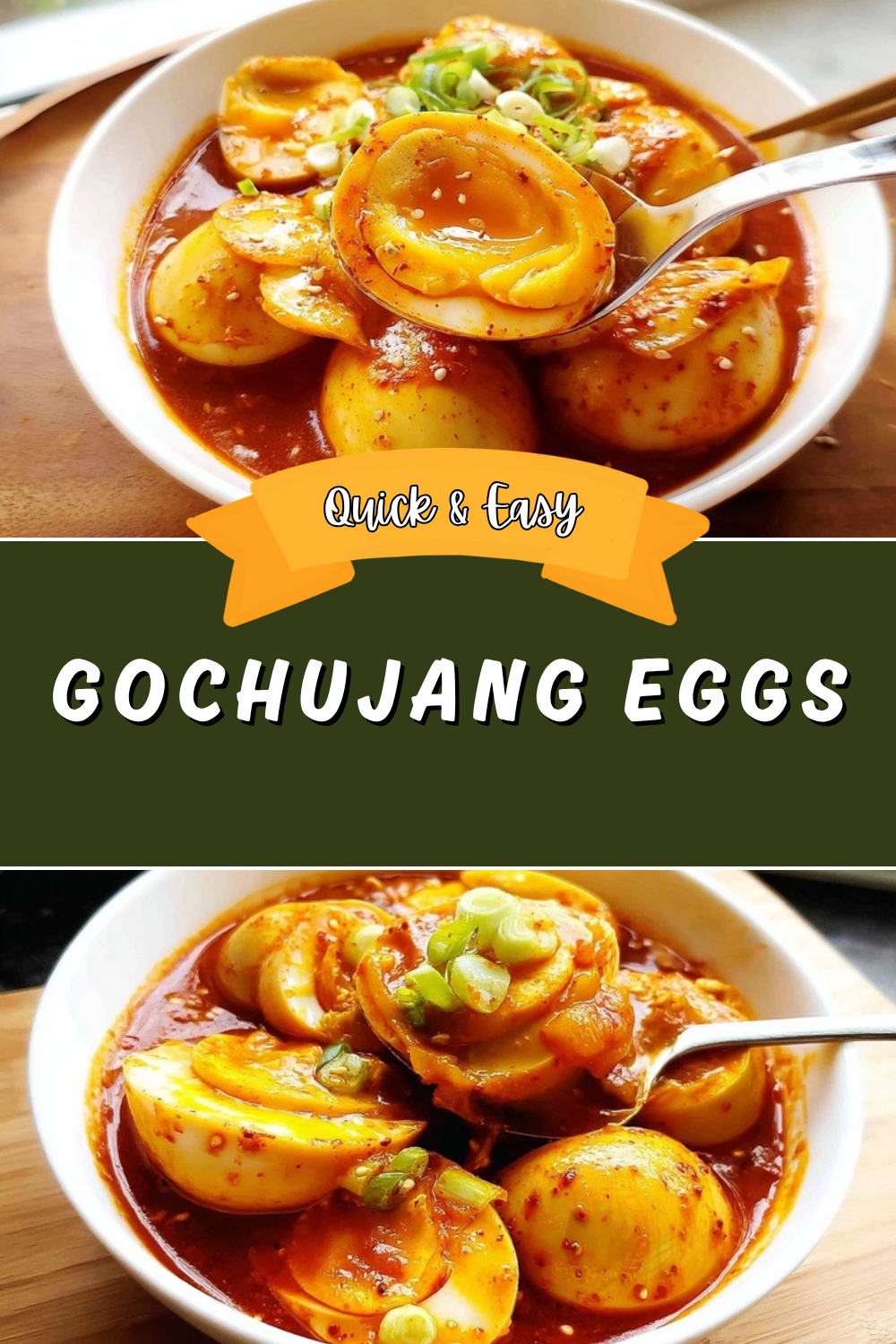
Gochujang eggs are soft-boiled or jammy eggs coated in a savory sauce made from gochujang paste, a fermented Korean red chili paste. The eggs get peeled after boiling, then tossed in a mixture of gochujang, soy sauce, sesame oil, honey, and garlic for a spicy, umami-packed flavor. They’re popular as a quick breakfast on toast or a versatile side dish. To make them, boil eggs for 7-8 minutes for creamy yolks, shock in ice water, peel, and marinate in the sauce for at least 30 minutes. This simple recipe takes under 20 minutes active time and stores well in the fridge. Serve with rice, avocado, or kimchi for a balanced meal with about 200 calories per serving, including protein from the eggs and probiotics from the paste. (98 words)
How long do you boil eggs for gochujang eggs?
For gochujang eggs, boil medium to large eggs for exactly 7.5 minutes to get jammy yolks that are creamy but not runny—perfect for sauce absorption. Start with room-temperature eggs in boiling water, then immediately transfer to an ice bath for 5 minutes to stop cooking and ease peeling. This timing works best at sea level; add 30 seconds for higher altitudes. After peeling, marinate in gochujang sauce (2 tbsp gochujang, 1 tbsp soy sauce, 1 tsp sesame oil, 1 tsp honey, minced garlic) for 30 minutes to overnight. Test one egg first to adjust for your stove. This method yields tender whites and rich yolks every time. (112 words)
What are the best ways to serve gochujang eggs?
Gochujang eggs shine on buttered sourdough toast topped with avocado and kimchi for breakfast. For dinner, pair with steamed rice and stir-fried veggies or as banchan (Korean side) with grilled meat. Try them in sandwiches with cucumber and greens, or as appetizers sliced over crackers with sesame seeds. Beyond toast, they’re great in ramen bowls or grain salads. Each serving offers a spicy-sweet contrast—adjust sauce thickness with a splash of water. A batch of 6 eggs serves 2-3 people and pairs well with cooling yogurt or fresh herbs to balance heat. Experiment with toppings like scallions or nori for variety. (104 words)
Can you meal prep gochujang eggs and how long do they last?
Yes, meal prep gochujang eggs by doubling or tripling the recipe: boil, peel, and marinate up to 12 eggs in sauce stored in an airtight jar. They keep in the fridge for up to 3 days—flavors deepen on day 2. Portion into grab-and-go containers with rice or toast fixings for easy breakfasts. Reheat gently in microwave (10-15 seconds) or eat cold. Avoid freezing as textures change. Label with dates for freshness. This prep saves time during busy weeks, providing 15-20g protein per 2-egg serving. If sauce separates, stir before serving. Perfect for work lunches or post-workout snacks. (102 words)
How do you adjust the spice level in gochujang eggs?
Adjust spice in gochujang eggs by starting with 1-2 tablespoons of paste per 6 eggs—mild pastes like regular gochujang give medium heat (around 1,000-2,000 Scoville units). For less spice, dilute with more honey, soy sauce, or rice vinegar. Amp it up by adding ½ tsp gochugaru (Korean chili flakes) or a dash of sriracha to the marinade. Taste the sauce before coating eggs and let marinate longer for bolder flavor. Substitutes like sriracha work if gochujang is unavailable, but mix with miso for umami. This flexibility suits all palates—kids might prefer half portions. Always have milk or rice ready to tame heat. (108 words)
Gochujang Eggs
- Total Time: 15 minutes
- Yield: 2 servings
- Diet: Low-Carb
Description
🥚 Savor the creamy, spicy fusion of Gochujang Eggs – a Korean-inspired egg salad perfect for toast or rice anytime!
🔥 Quick 15-minute recipe with bold heat and sesame flavor to spice up breakfast or dinner.
Ingredients
– 4 large eggs
– ½ tablespoon gochujang paste
– 2 tablespoons mayonnaise
– ½ teaspoon toasted sesame oil
– ¼ teaspoon brown sugar (optional)
– Salt and freshly ground black pepper
– 2 thick slices of sourdough bread
– Butter
– 4 tablespoons kimchi (roughly chopped)
– 1 teaspoon toasted sesame seeds
– 1 teaspoon thinly sliced chives or green onion tops
Instructions
1-Step 1: Boil the Eggs to Perfection Place four large eggs in a pot and cover them with cold water by about an inch. Bring the water to a rolling boil over medium-high heat. Once boiling, set a timer for exactly 7½ minutes. This precise timing creates eggs with creamy, jam-like yolks that mash beautifully into the sauce. When the timer goes off, immediately transfer the eggs to an ice bath using a slotted spoon. Let them cool for at least 5 minutes in the ice water. This sudden temperature change stops the cooking process and makes peeling much easier. The cold shock also helps prevent that unappealing gray ring around the yolk.
2-Step 2: Prepare the Gochujang Mayo Sauce While the eggs cool, whisk together the flavor foundation. In a small bowl, combine ½ tablespoon of gochujang paste with 2 tablespoons of mayonnaise. Add ½ teaspoon of toasted sesame oil and ¼ teaspoon of brown sugar if you want a hint of sweetness to balance the heat. Mix thoroughly until the sauce is smooth and uniform in color. The gochujang should be fully incorporated into the mayonnaise, creating a pale orange mixture. Taste the sauce at this point and adjust as needed. If you love spicy food, add another ¼ to ½ tablespoon of gochujang. For a milder version, stick with the original amount or add a touch more mayonnaise.
3-Step 3: Peel and Mash the Eggs Once the eggs have cooled completely, gently tap them on a hard surface to crack the shells. Start peeling from the wider end where the air pocket is located. The ice bath should have made the shells release easily, but if any bits stick, rinse the peeled eggs under cool running water to remove any remaining shell fragments. Place the peeled eggs in a medium bowl. Using a fork, mash them to your desired consistency. Some people prefer a chunky texture with visible pieces of egg white, while others like a smoother, more uniform mixture. Either way works well for gochujang eggs, so mash according to your personal preference. The fork creates small crevices in the egg that help the sauce penetrate deeper, ensuring every bite is full of flavor. Don’t over-mash if you enjoy texture some small chunks of egg white add pleasant contrast to the creamy sauce.
4-Step 4: Combine and Season Pour the gochujang mayo sauce over the mashed eggs. Using the same fork, fold the sauce into the eggs until everything is evenly coated. The mixture should take on a uniform orange-pink color with no white patches remaining. Season generously with salt and freshly ground black pepper to taste. Start with a small pinch of each, mix well, and taste before adding more. Remember that gochujang already contains salt, so you may need less added salt than you expect. Give the final mixture one more stir to ensure all the seasonings are distributed throughout. The consistency should be creamy and spreadable, similar to traditional egg salad but with a vibrant color and bolder flavor profile.
5-Step 5: Serve Your Gochujang Eggs For the classic presentation, toast two thick slices of sourdough bread until golden and crisp. Spread a thin layer of butter on each slice while the bread is still warm. Top with roughly chopped kimchi, then spoon the gochujang egg mixture generously over the top. Finish with a sprinkle of toasted sesame seeds and thin slices of chives or green onion tops for freshness and color. Serve immediately while the toast is still warm and the contrast between temperatures creates an even more satisfying experience.
Notes
🔥 Gochujang varies in heat; adjust to taste or substitute with sriracha if unavailable.
⏲️ Boil eggs for 7½ minutes for creamy yolks – shorter for runnier, longer for firmer.
📦 Prep larger batches for meal prep; store in airtight container up to 3 days in fridge.
- Prep Time: 5 minutes
- Cook Time: 10 minutes
- Category: Breakfast
- Method: Boil
- Cuisine: Korean
Nutrition
- Serving Size: 1 serving (2 eggs)
- Calories: 472 kcal
- Sugar: 3 g
- Sodium: 430 mg
- Fat: 40 g
- Saturated Fat: 9 g
- Unsaturated Fat: 29 g
- Trans Fat: 0.1 g
- Carbohydrates: 5 g
- Fiber: 0.04 g
- Protein: 23 g
- Cholesterol: 666 mg
Keywords: spicy gochujang eggs, Korean egg salad, quick breakfast, creamy eggs