
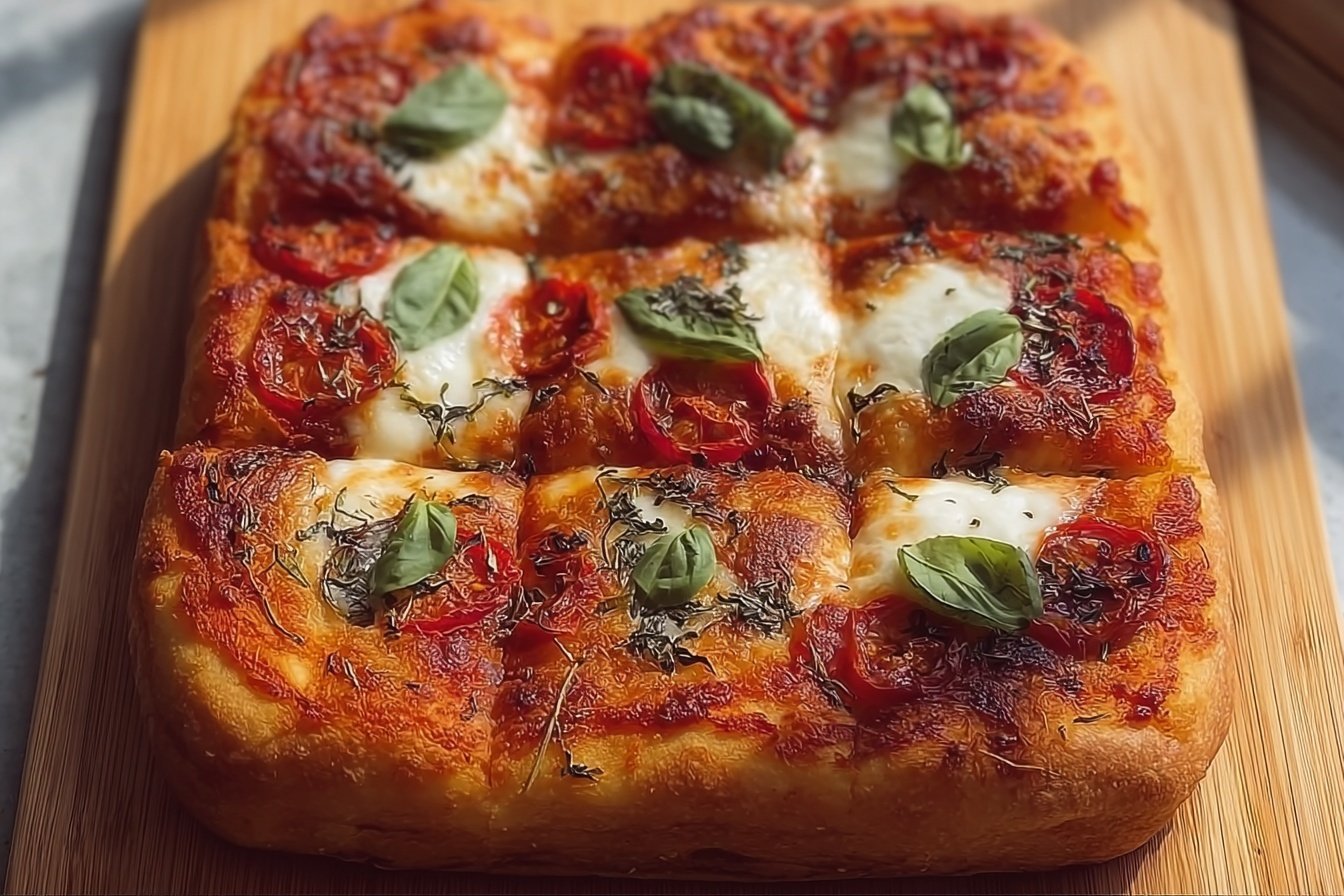
Why You’ll Love This Focaccia Pizza
There’s something truly magical about a dish that brings together the best of two beloved comfort foods. This focaccia pizza combines the airy, olive oil-rich texture of traditional Italian focaccia bread with the irresistible toppings of classic pizza, creating a meal that satisfies on every level. Whether you’re a seasoned home baker or just starting your cooking journey, this recipe offers something special for everyone at your table.
Ease of Preparation
One of the biggest advantages of this homemade focaccia pizza is its forgiving nature. Unlike traditional pizza dough that requires vigorous kneading and precise stretching techniques, this focaccia dough comes together with minimal effort. The no-knead method means you simply mix the ingredients, let time do the work, and press the dough into your baking sheet. With a total hands-on time of under 45 minutes spread across two days, this recipe fits perfectly into busy schedules while still delivering restaurant-quality results.
Health Benefits
This recipe incorporates extra-virgin olive oil, which offers numerous benefits of olive oil including heart-healthy monounsaturated fats and powerful antioxidants. The fresh garlic in the sauce provides immune-boosting compounds, and you can read more about the health benefits of garlic to understand why it’s such a valuable addition to your cooking. Each serving delivers a satisfying 36 grams of protein from the three-cheese combination, making it a filling meal that keeps you energized.
Versatility
The beauty of this easy focaccia pizza recipe lies in its adaptability. The base recipe works beautifully on its own, but you can easily customize it with your favorite vegetables, meats, or plant-based alternatives. Whether you’re cooking for picky eaters, vegetarians, or those following specific dietary plans, the foundation remains the same while toppings can shift to match any preference or restriction.
Distinctive Flavor
What sets this dish apart is the combination of textures and tastes that develop through the slow fermentation process. The long rest in the refrigerator allows complex flavors to develop in the dough, while the no-cook tomato sauce maintains a bright, fresh taste that contrasts beautifully with the rich, melted cheeses. When the golden crust bubbles up just right and the cheese melts into gooey pockets, you’ll know this focaccia pizza has reached its perfect, cozy peak a slice you’ll want to savor slowly, bite after satisfying bite.
Jump To
- 1. Why You’ll Love This Focaccia Pizza
- 2. Essential Ingredients for Focaccia Pizza
- 3. How to Prepare the Perfect Focaccia Pizza: Step-by-Step Guide
- 4. Dietary Substitutions to Customize Your Focaccia Pizza
- 5. Mastering Focaccia Pizza: Advanced Tips and Variations
- 6. How to Store Focaccia Pizza: Best Practices
- 7. FAQs: Frequently Asked Questions About Focaccia Pizza
- 8. Focaccia Pizza
Essential Ingredients for Focaccia Pizza
Creating the perfect best focaccia pizza recipe starts with understanding each ingredient’s role in the final dish. Here’s a comprehensive breakdown of everything you’ll need, along with why each component matters for achieving that restaurant-quality result at home.
Dough Ingredients
- 4 1/2 cups all-purpose flour, plus more as needed Forms the structural foundation of your focaccia dough, providing the perfect balance of chewiness and tenderness.
- 3 teaspoons kosher salt, divided 2 1/2 teaspoons for the dough to develop flavor and strengthen gluten structure, plus 1/2 teaspoon for seasoning the sauce.
- 1 1/2 teaspoons instant or active dry yeast The leavening agent that creates those signature air pockets and helps the dough rise to pillowy perfection.
- 1 3/4 cups lukewarm water Activates the yeast and hydrates the flour; temperature matters for proper yeast activation without killing it.
- 6 tablespoons extra-virgin olive oil, divided 3 tablespoons go into the dough for richness, while the remaining oil coats the pan and creates that crispy, golden bottom crust.
Sauce and Topping Ingredients
- 1 (14-ounce) can whole tomatoes, or 1/2 (28-ounce) can The base for your no-cook sauce; whole tomatoes crush beautifully by hand for the perfect chunky texture.
- 2 cloves garlic Minced fresh garlic adds aromatic depth to your simple tomato sauce without requiring any cooking.
- 1 teaspoon red wine vinegar Provides brightness and acidity that balances the richness of the cheeses and dough.
- Red pepper flakes Add as much or as little as you like for a gentle heat that lifts all the other flavors.
Cheese Selection
- 8 ounces low-moisture mozzarella cheese, shredded (about 2 cups) Creates that classic cheese pull and forms a protective barrier between sauce and dough.
- 8 ounces whole-milk ricotta cheese (about 1 cup) Adds creamy pockets of richness throughout the pizza, creating delightful texture contrasts.
- 1 ounce Parmesan cheese, finely grated (about 1/2 cup packed or 1/3 cup store-bought) Sprinkled after baking for a sharp, salty finish that brings all the flavors together.
- 4 large fresh basil leaves Torn and added after baking for a fresh, aromatic finish that makes the dish sing.
Special Dietary Options
Vegan: Replace the mozzarella with vegan shredded cheese, substitute cashew or almond-based ricotta, and use nutritional yeast instead of Parmesan. The dough itself is already vegan-friendly when made with olive oil.
Gluten-free: Use a high-quality gluten-free all-purpose flour blend designed for yeast baking. Add an extra tablespoon of olive oil to compensate for the lack of gluten structure.
Lower-calorie: Reduce the cheese amounts by 25% and add more vegetables like roasted bell peppers or sautéed mushrooms for volume without excessive calories.
How to Prepare the Perfect Focaccia Pizza: Step-by-Step Guide
Creating this simple focaccia pizza is a rewarding process that unfolds over two days, though most of that time is hands-off resting and fermenting. Follow these detailed steps to achieve the crispy exterior, airy interior, and perfectly melted toppings that make this dish so memorable.
First Step: Making the Dough
In a large bowl, combine 4 1/2 cups all-purpose flour, 2 1/2 teaspoons kosher salt, and 1 1/2 teaspoons yeast. Whisk these dry ingredients together to ensure even distribution. Add 1 3/4 cups lukewarm water and 3 tablespoons of your extra-virgin olive oil to the bowl. Using a wooden spoon or your hands, stir everything together until no dry flour remains and a shaggy, sticky dough forms. Don’t worry about making it smooth this is a no-knead dough, so the brief mixing is all it needs.
Knead the dough just enough to bring it together into a rough ball. It should still be quite sticky and tacky to the touch, which is exactly what you want. Cover the bowl tightly with plastic wrap or a fitted lid and place it in a warm, draft-free area of your kitchen. Let the dough rise at room temperature for 2 hours. During this time, the yeast will begin working, creating bubbles and developing the beginning of that characteristic focaccia texture.
Second Step: Refrigerated Rest
After the initial 2-hour rise, your dough will have puffed up noticeably but won’t have doubled in size yet. This is the perfect moment to transfer the covered bowl to your refrigerator. The cold environment slows down the yeast activity while allowing enzymes to break down starches and proteins in the flour, developing deeper, more complex flavors that simply can’t be achieved with a quick rise.
Let the dough rest in the refrigerator for 8 to 24 hours. This extended rest is one of the key secrets to this focaccia recipe it transforms a simple flour and water mixture into something with remarkable flavor and structure. The longer rest also makes the dough easier to handle and gives the finished crust a better chew and more irregular, appealing hole structure.
Third Step: Preparing the Pan and Dough
When you’re ready to bake, remove the dough from the refrigerator. Drizzle 2 tablespoons of olive oil onto a 13×18-inch rimmed baking sheet, spreading it to coat the bottom evenly. This generous oiling is crucial it creates the crispy, golden bottom that distinguishes great focaccia from ordinary bread.
Transfer the cold dough onto the prepared baking sheet. Pour another tablespoon of olive oil over the top and use your hands to coat the dough surface completely. Press the dough gently with your palms, spreading it to about 1-inch thickness without forcing it all the way to the edges. Cover the dough loosely with plastic wrap or a clean kitchen towel and let it rest for 10 minutes. This short rest allows the gluten to relax, making the next stretching step much easier.
While the dough rests, strain your canned whole tomatoes. Place a colander over a bowl and pour in the tomatoes, discarding the watery liquid that drains away. You want to remove excess moisture that could make your pizza soggy.
Fourth Step: Stretching and Final Rise
After the 10-minute rest, your dough will be more cooperative. Using your fingertips, gently press and stretch the dough toward the edges of the baking sheet. Work from the center outward, creating small dimples with your fingers as you go. Don’t worry if the dough resists or springs back simply let it rest for a few more minutes before continuing.
Once the dough reaches all edges of the pan, cover it again and let it rest until puffed and risen, about 25 minutes. Meanwhile, preheat your oven to 475°F with the rack positioned in the lower third. This high heat and lower position ensure the bottom of the focaccia gets crispy while the top cooks evenly.
Fifth Step: Preparing the No-Cook Sauce
While the dough completes its final rise, prepare your simple, fresh tomato sauce. Take the strained tomatoes and crush them by hand into bite-sized pieces. Some people prefer larger chunks while others like a finer texture adjust according to your preference. Transfer the crushed tomatoes to a bowl and add the minced garlic cloves, remaining olive oil, 1 teaspoon red wine vinegar, the remaining 1/2 teaspoon of kosher salt, and red pepper flakes to taste.
Stir everything together and let the sauce sit for at least 10 minutes. This resting period allows the flavors to meld and the garlic to mellow slightly. The beauty of this no-cook approach is that it preserves the bright, fresh taste of the tomatoes while infusing them with the aromatic qualities of garlic and the gentle heat of pepper flakes.
Sixth Step: Assembling the Pizza
Once the dough has puffed up nicely, it’s time for the dimpling technique that gives focaccia its signature appearance. Press your fingers firmly into the dough surface, creating deep indentations all over. These dimples serve both aesthetic and practical purposes they create pockets for olive oil and sauce to pool, and they give the bread its characteristic texture.
Now comes an important layering technique for this pizza recipe: sprinkle 1 cup of shredded mozzarella cheese evenly over the dimpled dough, leaving a 1/2-inch border around the edges. This first cheese layer acts as a moisture barrier, protecting the dough from becoming soggy under the sauce. Then gently spoon your prepared tomato sauce over the cheese, distributing it evenly. Add the remaining mozzarella over the sauce. Finally, dollop the ricotta cheese in small spoonfuls across the surface these creamy pockets will create delightful bursts of richness in every bite.
Seventh Step: Baking to Golden Perfection
Slide your assembled focaccia pizza into the preheated 475°F oven. Bake for 17 to 20 minutes, keeping a close eye on it during the final minutes. You’re looking for deeply golden-brown edges, melted and slightly bubbling cheese, and a kitchen filled with an irresistible aroma.
While the pizza bakes, grate your Parmesan cheese and tear the fresh basil leaves into smaller pieces. Having these ready means you can finish the pizza immediately when it comes out of the oven, when the residual heat will slightly wilt the basil and release its aromatic oils.
Final Step: Finishing and Serving
Remove the baked focaccia pizza from the oven and immediately sprinkle with the grated Parmesan cheese. Let the pizza cool on the baking sheet for about 5 minutes this resting period allows the cheese to set slightly and makes cutting easier. Scatter the torn basil leaves across the surface and add a pinch more red pepper flakes if you enjoy extra heat.
Using a sharp knife or pizza cutter, slice the focaccia into 12 squares. Serve warm, either directly from the baking sheet or transferred to a large cutting board for a more rustic presentation. Each square delivers the perfect balance of crispy crust, chewy interior, fresh sauce, and creamy cheeses.
| Nutritional Information | Per Serving (1/6 of recipe) | Daily Value |
|---|---|---|
| Calories | 853 | — |
| Total Fat | 42.8 g | 65.8% |
| Saturated Fat | 19.7 g | 98.7% |
| Carbohydrates | 80.4 g | 26.8% |
| Fiber | 5.3 g | 21.4% |
| Sugars | 4.7 g | — |
| Protein | 36.3 g | 72.5% |
| Sodium | 1033.9 mg | 43.1% |

Dietary Substitutions to Customize Your Focaccia Pizza
One of the wonderful aspects of this focaccia dough is how readily it adapts to different dietary needs and ingredient preferences. Whether you’re cooking for someone with specific restrictions or simply want to use what you have on hand, these substitutions help you create a personalized version without sacrificing flavor or texture.
Protein and Main Component Alternatives
For those seeking to add more protein or different flavors, consider incorporating cooked Italian sausage, pepperoni, or prosciutto. These meats pair beautifully with the three-cheese combination and add a savory depth that many enjoy. If you’re looking for a lighter option, try adding grilled chicken pieces seasoned with Italian herbs just be sure to pat them dry before adding to avoid excess moisture.
Vegetarians can enhance their homemade focaccia pizza with protein-rich additions like sautéed mushrooms, artichoke hearts, or even white beans. These ingredients contribute substance and nutrition while complementing the Mediterranean flavor profile. For a plant-based cheese alternative, many brands now offer excellent mozzarella and ricotta substitutes that melt and stretch similarly to dairy versions.
Vegetable, Sauce, and Seasoning Modifications
The tomato sauce can be replaced with pesto for a completely different but equally delicious experience. Basil pesto works particularly well with the cheeses in this recipe, creating a fragrant green-topped pizza that’s visually stunning. Alternatively, try a white pizza approach by skipping the tomato sauce entirely and using a garlic-infused olive oil base instead.
Vegetable toppings require some consideration. Those that release significant moisture like zucchini, eggplant, or fresh tomatoes should be pre-cooked and well-drained before adding to your pizza. Hardy vegetables such as bell peppers, red onions, or broccoli can be added raw but benefit from being thinly sliced. For a seasonal twist, try roasted butternut squash in fall or fresh asparagus in spring.
Keep toppings simple to maintain the light, airy character of the crust. Overloading with heavy ingredients will weigh down the dough and prevent proper rising. A good rule of thumb: limit total toppings to 1-2 cups, and always pre-cook any vegetables that release liquid.
Herb variations offer another dimension of customization. While basil is classic, consider adding fresh oregano, thyme, or rosemary to the dough itself. These herbs infuse the crust with aromatic oils during baking and pair wonderfully with the Mediterranean flavors. A sprinkle of flaky sea salt on top before serving adds a delightful crunch and intensifies all the flavors.
Mastering Focaccia Pizza: Advanced Tips and Variations
Once you’ve mastered the basic technique, there are numerous ways to refine and vary your focaccia pizza recipe. These professional tips and creative variations will help you take your baking to the next level while impressing family and friends with your expertise.
Pro Cooking Techniques
The quality of your ingredients directly impacts the final result. Always use the best extra-virgin olive oil you can afford it’s a primary flavor in focaccia and appears throughout the recipe. Similarly, choose high-quality canned tomatoes from Italy (San Marzano tomatoes are ideal) for the most flavorful sauce.
Temperature management is crucial for perfect results. Let the refrigerated dough come close to room temperature before baking for better spreading and more even cooking. If your kitchen is particularly cold, the final rise may take longer; conversely, a warm kitchen will speed up fermentation. Learn to judge by appearance (puffy and risen) rather than strict timing.
For an extra-crispy bottom crust, consider preheating your baking sheet in the oven before transferring the shaped dough to it. This technique, borrowed from professional bread baking, creates immediate oven spring and ensures the bottom crust begins cooking the moment the dough hits the pan.
Flavor Variations
The best focaccia pizza recipe serves as a canvas for countless flavor combinations. Try a Mediterranean version with sun-dried tomatoes, kalamata olives, and crumbled feta cheese. Or create a white pizza with caramelized onions, gruyere cheese, and fresh thyme. A breakfast variation with scrambled eggs, bacon, and a drizzle of maple syrup transforms this into a morning feast.
Seasonal variations keep this recipe exciting year-round. In summer, top with fresh heirloom tomatoes and burrata. Fall calls for roasted pumpkin and sage. Winter pairs beautifully with roasted root vegetables and gorgonzola. Spring invites asparagus, peas, and lemon zest.
Presentation Tips
Visual appeal matters almost as much as taste. After baking, let the focaccia rest for 5 minutes before cutting this allows the cheese to set so your squares hold their shape. Use a sharp knife or pizza wheel and press down firmly rather than sawing, which keeps the edges clean.
Serve on a wooden cutting board for rustic charm, or transfer to a large platter for a more formal presentation. A final drizzle of high-quality olive oil and a sprinkle of flaky sea salt elevates both appearance and taste. Fresh herb garnishes should be added at the last moment to maintain their bright color.
Make-Ahead Options
For busy schedules, this recipe offers excellent make-ahead potential. The dough can refrigerate for up to 48 hours (though 8-24 is optimal). You can also prepare and freeze the dough before the final rise simply thaw overnight in the refrigerator, then proceed with the recipe.
The no-cook sauce can be made up to 3 days ahead and refrigerated. Shred cheeses the day before for easier assembly. When ready to serve, simply bring ingredients to room temperature, stretch the dough, assemble, and bake for fresh, hot focaccia pizza in under 30 minutes of active time.
How to Store Focaccia Pizza: Best Practices
Proper storage preserves the quality of your leftover focaccia pizza, allowing you to enjoy it over several days without sacrificing flavor or texture. Follow these guidelines to maintain the best possible eating experience.
Refrigeration Guidelines
Allow the baked pizza to cool completely before storing this prevents condensation that can make the crust soggy. Once cooled, cut into individual squares and store in an airtight container with parchment paper between layers to prevent sticking. Properly stored, refrigerated focaccia pizza stays fresh for up to 4 days.
For optimal quality, avoid covering the pizza while it’s still warm, as trapped steam softens the crispy crust. If you need to refrigerate quickly, leave the container lid slightly ajar until completely cool, then seal tightly.
Freezing for Long-Term Storage
Focaccia pizza freezes remarkably well for longer storage. Individually wrap cooled squares in plastic wrap, then place in a freezer-safe bag or container. Label with the date and freeze for up to 2 months. This method allows you to remove only what you need rather than defrosting the entire batch.
For best results when freezing, slightly underbake the pizza (remove about 2 minutes early). This prevents overcooking during reheating. Frozen focaccia maintains its flavor well, though the texture may be slightly less airy than fresh.
Reheating for Best Results
The oven method produces the best reheating results. Preheat to 350°F and place refrigerated squares on a baking sheet. Bake for 10-15 minutes until heated through and the crust crisps up again. A light drizzle of olive oil before reheating helps restore moisture to the crust.
Avoid microwaving whenever possible, as it creates a soggy crust and unevenly heated interior. If you must use a microwave, place a cup of water alongside the pizza to help maintain moisture, and heat in 30-second intervals.
Meal Prep Considerations
This recipe works wonderfully for meal preparation. Bake a full sheet on Sunday, and you have lunches or dinners for most of the week. Pair each square with a simple green salad for a complete meal. The high protein content (36 grams per serving) makes this a satisfying option that keeps you full longer.
If you enjoy making Italian-inspired dishes ahead of time, consider pairing this with other make-ahead favorites. For instance, you might want to try this million dollar lasagna recipe for another satisfying dinner option that reheats beautifully throughout the week. Similarly, this meat pizza casserole offers another creative approach to combining classic pizza flavors in a convenient format.

FAQs: Frequently Asked Questions About Focaccia Pizza
What is focaccia pizza?
Focaccia pizza is a hybrid dish that combines the thick, airy crust of focaccia bread with classic pizza toppings. Unlike thin-crust pizza, it uses an oil-rich, no-knead dough that ferments slowly for a chewy texture and big bubbles. Start by mixing flour, water, yeast, salt, and olive oil, then let it rest in the fridge for 8-24 hours. After rising, dimple the dough, add sauce, cheeses, and toppings, then bake at 450°F for 20-25 minutes until golden. This method gives a crispy bottom and soft interior, perfect for home cooks. It’s forgiving for beginners since the dough handles easily and toppings sink into the dimples for even flavor distribution. Serve it hot for the best taste. (98 words)
How do you make focaccia pizza dough?
Focaccia pizza dough is a simple no-knead recipe using 500g bread flour, 2 cups lukewarm water, 2 tsp instant yeast, 2 tsp kosher salt, and 1/4 cup extra-virgin olive oil. Mix until shaggy, cover, and let rise at room temperature for 1-2 hours until doubled. Fold gently, then refrigerate 8-24 hours for flavor development. Oil a 9×13-inch pan generously, place dough in, and let it proof another 1-2 hours until puffy. Drizzle more oil, dimple with fingers to create wells. This slow process builds structure and taste without kneading. Total hands-on time is under 15 minutes. (102 words)
How do you make tomato sauce for focaccia pizza?
For focaccia pizza, use a quick no-cook sauce: Drain one 28-oz can whole peeled tomatoes, crush by hand for chunky texture, then stir in 3 minced garlic cloves, 3 tbsp extra-virgin olive oil, 1 tbsp red wine vinegar, 1 tsp kosher salt, and 1/4 tsp red pepper flakes. No cooking needed—let it sit 10 minutes for flavors to meld. This keeps the sauce fresh and juicy, preventing a soggy crust. Spread 1-1.5 cups evenly over dimpled dough before adding cheese. Adjust salt to taste; it’s ready in 5 minutes and uses pantry staples. (96 words)
What are the best cheeses and toppings for focaccia pizza?
Layer shredded mozzarella (two handfuls first, then more after sauce) to shield the crust from sogginess. Dollop whole-milk ricotta (1/2 cup) for creaminess, and finish with grated Parmesan post-bake for sharpness. For toppings, add pepperoni, cooked sausage, or sautéed veggies like peppers and onions—drain excess liquid first. Scatter fresh basil or oregano after baking. Bake at 450°F for 20-25 minutes until cheese bubbles and crust crisps. This combo yields balanced flavors; limit to 1-2 cups total toppings to avoid overload. Experiment with mushrooms or olives, but precook watery ones. (104 words)
How do you store leftover focaccia pizza?
Cool focaccia pizza completely, then store in an airtight container or wrap tightly in plastic and foil. Refrigerate up to 4 days. Reheat in a 350°F oven for 10-15 minutes on a baking sheet to restore crispness—avoid microwave to prevent sogginess. For longer storage, freeze slices individually in freezer bags up to 2 months; thaw overnight in fridge and reheat as above. Slice before storing for easy portions. This keeps the airy crust intact and flavors fresh. If it dries out, drizzle olive oil before reheating. Always check for spoilage before eating. (98 words)

Focaccia Pizza
- Total Time: 11 hours
- Yield: 6 servings
- Diet: Vegetarian
Description
🍕 Fluffy no-knead focaccia pizza with chunky tomato sauce, melty mozzarella and ricotta – crispy golden perfection!
🧀 Deep flavor from overnight rest, simple toppings for airy crust delight in under an hour bake.
Ingredients
– 4 1/2 cups all-purpose flour, plus more as needed
– 3 teaspoons kosher salt, divided
– 1 1/2 teaspoons instant or active dry yeast
– 1 3/4 cups lukewarm water
– 6 tablespoons extra-virgin olive oil, divided
– 1 (14-ounce) can whole tomatoes, or 1/2 (28-ounce) can
– 2 cloves garlic
– 1 teaspoon red wine vinegar
– Red pepper flakes
– 8 ounces low-moisture mozzarella cheese, shredded (about 2 cups)
– 8 ounces whole-milk ricotta cheese (about 1 cup)
– 1 ounce Parmesan cheese, finely grated (about 1/2 cup packed or 1/3 cup store-bought)
– 4 large fresh basil leaves
Instructions
1-First Step: Making the Dough In a large bowl, combine 4 1/2 cups all-purpose flour, 2 1/2 teaspoons kosher salt, and 1 1/2 teaspoons yeast. Whisk these dry ingredients together to ensure even distribution. Add 1 3/4 cups lukewarm water and 3 tablespoons of your extra-virgin olive oil to the bowl. Using a wooden spoon or your hands, stir everything together until no dry flour remains and a shaggy, sticky dough forms. Don’t worry about making it smooth this is a no-knead dough, so the brief mixing is all it needs. Knead the dough just enough to bring it together into a rough ball. It should still be quite sticky and tacky to the touch, which is exactly what you want. Cover the bowl tightly with plastic wrap or a fitted lid and place it in a warm, draft-free area of your kitchen. Let the dough rise at room temperature for 2 hours. During this time, the yeast will begin working, creating bubbles and developing the beginning of that characteristic focaccia texture.
2-Second Step: Refrigerated Rest After the initial 2-hour rise, your dough will have puffed up noticeably but won’t have doubled in size yet. This is the perfect moment to transfer the covered bowl to your refrigerator. The cold environment slows down the yeast activity while allowing enzymes to break down starches and proteins in the flour, developing deeper, more complex flavors that simply can’t be achieved with a quick rise. Let the dough rest in the refrigerator for 8 to 24 hours. This extended rest is one of the key secrets to this focaccia recipe it transforms a simple flour and water mixture into something with remarkable flavor and structure. The longer rest also makes the dough easier to handle and gives the finished crust a better chew and more irregular, appealing hole structure.
3-Third Step: Preparing the Pan and Dough When you’re ready to bake, remove the dough from the refrigerator. Drizzle 2 tablespoons of olive oil onto a 13×18-inch rimmed baking sheet, spreading it to coat the bottom evenly. This generous oiling is crucial it creates the crispy, golden bottom that distinguishes great focaccia from ordinary bread. Transfer the cold dough onto the prepared baking sheet. Pour another tablespoon of olive oil over the top and use your hands to coat the dough surface completely. Press the dough gently with your palms, spreading it to about 1-inch thickness without forcing it all the way to the edges. Cover the dough loosely with plastic wrap or a clean kitchen towel and let it rest for 10 minutes. This short rest allows the gluten to relax, making the next stretching step much easier. While the dough rests, strain your canned whole tomatoes. Place a colander over a bowl and pour in the tomatoes, discarding the watery liquid that drains away. You want to remove excess moisture that could make your pizza soggy.
4-Fourth Step: Stretching and Final Rise After the 10-minute rest, your dough will be more cooperative. Using your fingertips, gently press and stretch the dough toward the edges of the baking sheet. Work from the center outward, creating small dimples with your fingers as you go. Don’t worry if the dough resists or springs back simply let it rest for a few more minutes before continuing. Once the dough reaches all edges of the pan, cover it again and let it rest until puffed and risen, about 25 minutes. Meanwhile, preheat your oven to 475°F with the rack positioned in the lower third. This high heat and lower position ensure the bottom of the focaccia gets crispy while the top cooks evenly.
5-Fifth Step: Preparing the No-Cook Sauce While the dough completes its final rise, prepare your simple, fresh tomato sauce. Take the strained tomatoes and crush them by hand into bite-sized pieces. Some people prefer larger chunks while others like a finer texture adjust according to your preference. Transfer the crushed tomatoes to a bowl and add the minced garlic cloves, remaining olive oil, 1 teaspoon red wine vinegar, the remaining 1/2 teaspoon of kosher salt, and red pepper flakes to taste. Stir everything together and let the sauce sit for at least 10 minutes. This resting period allows the flavors to meld and the garlic to mellow slightly. The beauty of this no-cook approach is that it preserves the bright, fresh taste of the tomatoes while infusing them with the aromatic qualities of garlic and the gentle heat of pepper flakes.
6-Sixth Step: Assembling the Pizza Once the dough has puffed up nicely, it’s time for the dimpling technique that gives focaccia its signature appearance. Press your fingers firmly into the dough surface, creating deep indentations all over. These dimples serve both aesthetic and practical purposes they create pockets for olive oil and sauce to pool, and they give the bread its characteristic texture. Now comes an important layering technique for this pizza recipe: sprinkle 1 cup of shredded mozzarella cheese evenly over the dimpled dough, leaving a 1/2-inch border around the edges. This first cheese layer acts as a moisture barrier, protecting the dough from becoming soggy under the sauce. Then gently spoon your prepared tomato sauce over the cheese, distributing it evenly. Add the remaining mozzarella over the sauce. Finally, dollop the ricotta cheese in small spoonfuls across the surface these creamy pockets will create delightful bursts of richness in every bite.
7-Seventh Step: Baking to Golden Perfection Slide your assembled focaccia pizza into the preheated 475°F oven. Bake for 17 to 20 minutes, keeping a close eye on it during the final minutes. You’re looking for deeply golden-brown edges, melted and slightly bubbling cheese, and a kitchen filled with an irresistible aroma. While the pizza bakes, grate your Parmesan cheese and tear the fresh basil leaves into smaller pieces. Having these ready means you can finish the pizza immediately when it comes out of the oven, when the residual heat will slightly wilt the basil and release its aromatic oils.
8-Final Step: Finishing and Serving Remove the baked focaccia pizza from the oven and immediately sprinkle with the grated Parmesan cheese. Let the pizza cool on the baking sheet for about 5 minutes this resting period allows the cheese to set slightly and makes cutting easier. Scatter the torn basil leaves across the surface and add a pinch more red pepper flakes if you enjoy extra heat. Using a sharp knife or pizza cutter, slice the focaccia into 12 squares. Serve warm, either directly from the baking sheet or transferred to a large cutting board for a more rustic presentation. Each square delivers the perfect balance of crispy crust, chewy interior, fresh sauce, and creamy cheeses.
Notes
🧀 Layer mozzarella under sauce to prevent soggy crust.
❄️ Overnight fridge rest builds superior flavor and structure.
🍅 Hand-crush whole tomatoes for chunky juicy no-cook sauce.
- Prep Time: 45 minutes
- Rise + Refrigerate: 10-26 hours
- Cook Time: 20 minutes
- Category: Main Course
- Method: Oven
- Cuisine: Italian
Nutrition
- Serving Size: 2 squares
- Calories: 853 kcal
- Sugar: 5g
- Sodium: 1034mg
- Fat: 43g
- Saturated Fat: 20g
- Unsaturated Fat: 23g
- Trans Fat: 0g
- Carbohydrates: 80g
- Fiber: 5g
- Protein: 36g
- Cholesterol: 90mg
Keywords: Focaccia Pizza Recipe, Best Focaccia Pizza, No-Knead Focaccia Pizza, Simple Focaccia Pizza