
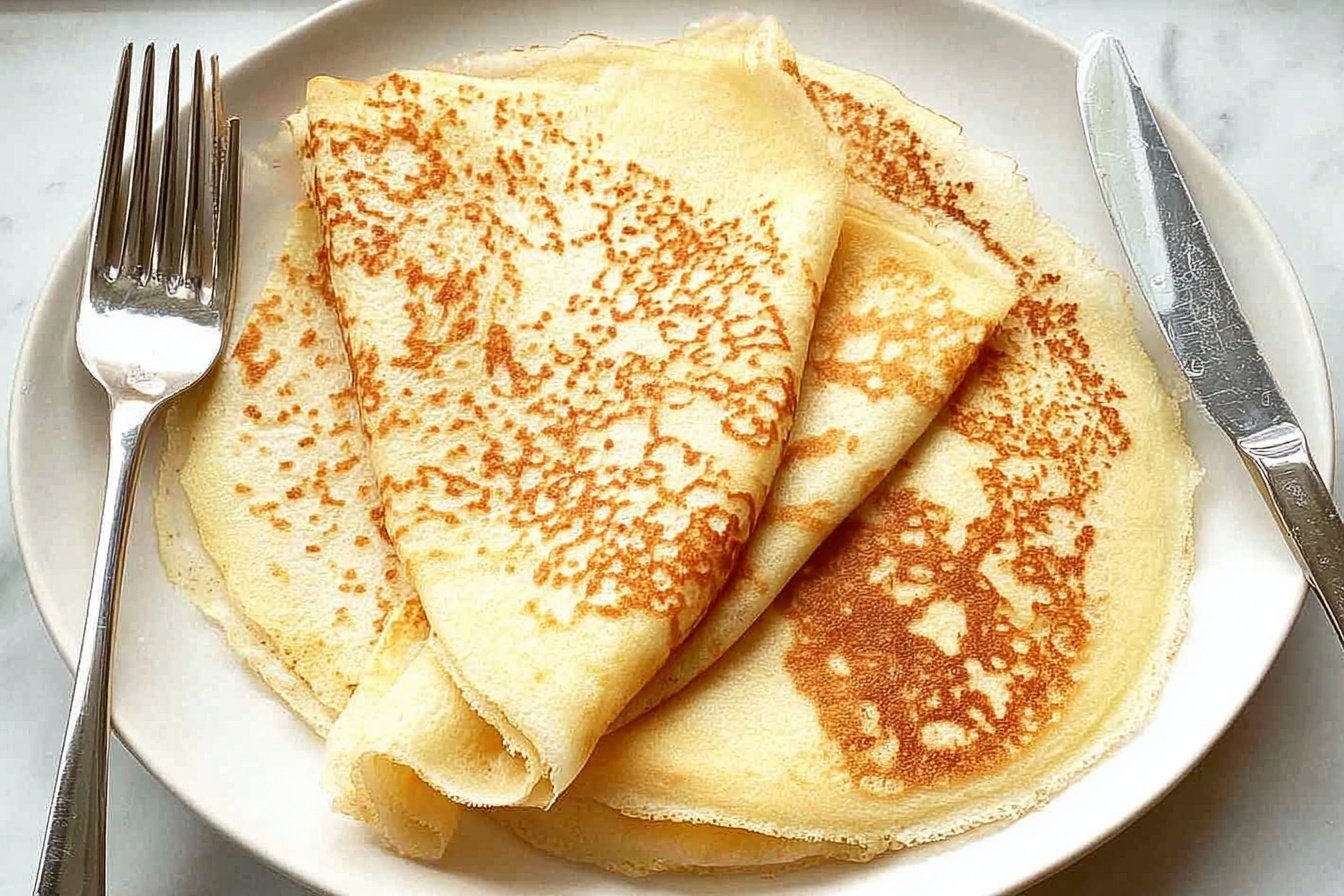
Why You’ll Love This Crepes
If you’ve ever wanted to master the art of making crepes at home, this crepe recipe is your perfect starting point. These delicate French pancakes have become a beloved dish worldwide, and for good reason. Whether you’re craving sweet crepes filled with Nutella and fresh berries or savory crepes stuffed with ham and cheese, this versatile recipe delivers every single time.
- Ease of preparation: Learning how to make crepes is surprisingly simple. With just a handful of pantry staples and about 30 minutes of your time, you can create restaurant-quality French crepes right in your own kitchen. The batter comes together in minutes, and each crepe cooks in just 1-2 minutes per side.
- Health benefits: Unlike heavy pancakes or waffles, crepes are naturally light and thin, making them a great option for those watching their portions. You can easily control the sweetness and fill them with nutritious ingredients like fresh fruits, yogurt, or vegetables for a balanced meal.
- Versatility: This easy crepe recipe works beautifully for both sweet and savory applications. Simply omit the vanilla extract for savory versions, and you have a blank canvas for endless filling combinations. They’re perfect for breakfast, brunch, lunch, dinner, or even dessert.
- Distinctive flavor: The combination of butter, milk, and a hint of vanilla creates a subtly rich flavor that pairs wonderfully with any topping or filling. The crispy, lacy edges add a delightful texture that makes each bite memorable.
Jump To
- 1. Why You’ll Love This Crepes
- 2. Essential Ingredients for Crepes
- 3. How to Prepare the Perfect Crepes: Step-by-Step Guide
- 4. Dietary Substitutions to Customize Your Crepes
- 5. Mastering Crepes: Advanced Tips and Variations
- 6. How to Store Crepes: Best Practices
- 7. FAQs: Frequently Asked Questions About Crepes
- 8. Crepes
Essential Ingredients for Crepes
Creating the perfect crepe batter requires just a few simple ingredients that you likely already have in your kitchen. Each component plays a crucial role in achieving that signature thin, tender texture that makes crepes so irresistible.
Main Ingredients
- 3 tablespoons unsalted butter, plus additional 3 to 4 tablespoons for the pan – Butter adds richness and helps create those beautifully crisp, golden edges. The additional butter for the pan prevents sticking and enhances flavor.
- 1 cup all-purpose flour – The foundation of your crepe batter, providing structure while keeping the texture delicate and tender.
- 1 tablespoon granulated sugar – Adds just a touch of sweetness to balance the flavors. For savory crepes, you can reduce or omit this ingredient.
- 1/8 teaspoon salt – A small but essential amount that enhances all the other flavors in your simple crepes recipe.
- 3/4 cup whole milk at room temperature – Creates a rich, creamy batter. Room temperature ingredients blend more smoothly and help prevent lumps.
- 1/2 cup water at room temperature – Lightens the batter and helps achieve that perfect, thin consistency that French crepes are known for.
- 2 large eggs at room temperature – Bind the ingredients together and add structure while keeping the crepes tender.
- 1 1/2 teaspoons pure vanilla extract (optional for sweet crepes; omit for savory) – Adds a lovely aromatic flavor that pairs beautifully with sweet fillings.
Special Dietary Options
For those with dietary restrictions, this crepes recipe for beginners can be easily adapted:
- Vegan: Substitute the butter with coconut oil or vegan butter, use plant-based milk (like almond or oat), and replace eggs with 2 flax eggs (2 tablespoons ground flaxseed mixed with 6 tablespoons water).
- Gluten-free: Replace all-purpose flour with a 1:1 gluten-free flour blend. The texture may be slightly different, but the results are still delicious.
- Low-calorie: Use low-fat milk, reduce the butter to 2 tablespoons, and skip the sugar for savory versions.
How to Prepare the Perfect Crepes: Step-by-Step Guide
Learning how to make crepes is easier than you might think. Follow these detailed steps, and you’ll be flipping perfect French crepes like a pro in no time. This crepes recipe video companion guide walks you through every stage of the process.
Step 1: Prepare Your Ingredients and Equipment
Before you begin mixing, gather all your ingredients and let them come to room temperature. Cold ingredients can cause the butter to solidify and create lumps in your batter. You’ll need a medium mixing bowl, a whisk, an 8-inch nonstick skillet or crepe pan, and a spatula. Having everything ready makes the process smooth and enjoyable.
Melt your 3 tablespoons of unsalted butter and let it cool slightly. Room temperature eggs and milk will incorporate much more easily into the batter, giving you a silky smooth consistency.
Step 2: Mix the Dry Ingredients
In your medium mixing bowl, whisk together the dry ingredients. Combine 1 cup of all-purpose flour, 1 tablespoon of granulated sugar, and 1/8 teaspoon of salt. Whisking these ingredients together first ensures even distribution and prevents any pockets of salt or sugar in your finished crepes.
For savory crepes, simply omit the sugar at this stage. Some cooks also like to add a pinch of herbs or garlic powder directly to the dry ingredients for extra flavor.
Step 3: Add Wet Ingredients and Create the Batter
Create a well in the center of your dry ingredients. Crack 2 large eggs into the well and begin whisking gently, gradually pulling in the flour from the edges. Slowly pour in 3/4 cup of whole milk and 1/2 cup of water while continuing to whisk. This gradual addition helps prevent lumps from forming.
Once the liquids are incorporated, add your slightly cooled melted butter and 1 1/2 teaspoons of vanilla extract (if making sweet crepes). Whisk until completely smooth. The batter should have a consistency similar to heavy cream, thin enough to spread easily but not watery.
Pro Tip: If you notice any small lumps, don’t worry. Simply strain the batter through a fine-mesh sieve for a perfectly smooth consistency.
Step 4: Chill the Batter
Cover your bowl with plastic wrap and refrigerate the crepe batter for at least 30 minutes, or up to overnight. This resting period is crucial because it allows the flour to fully hydrate and the gluten to relax. Skipping this step can result in tough, rubbery crepes that tear easily.
During this resting time, the starches in the flour absorb the liquid, which creates a more cohesive batter. The butter also re-solidifies slightly, which helps create those coveted crispy edges during cooking.
Step 5: Heat and Prepare Your Pan
After chilling, remove your batter from the refrigerator and give it a gentle stir. Heat your 8-inch nonstick skillet or crepe pan over medium heat. Add about 1 teaspoon of the additional butter and let it melt, swirling to coat the pan evenly.
The pan is ready when a drop of water sizzles immediately upon contact. Too hot, and your crepes will brown too quickly; too cool, and they won’t develop those lovely crisp edges. Medium heat is your sweet spot for this easy crepe recipe.
Step 6: Cook Your First Crepe
Pour approximately 1/4 cup of batter into the center of your heated, buttered pan. Immediately lift the pan and swirl it in a circular motion, spreading the batter into a thin, even layer that covers the bottom of the pan. This swirling technique takes practice, but don’t worry if your first few aren’t perfect.
Cook for 1-2 minutes until the edges begin to lift and turn golden brown. The top should look set, no longer wet or shiny. Run your spatula around the edges to loosen, then gently flip the crepe using either your spatula or your fingers (carefully, as it will be hot).
Step 7: Finish and Stack
Cook the second side for about 30 seconds to 1 minute until lightly golden. Transfer your finished crepe to a plate. Continue this process with the remaining batter, adding a small amount of butter to the pan between each crepe.
Stack your finished crepes on a plate as you go. They’ll stay warm and pliable, making them easy to fold and fill when you’re ready to serve. This recipe yields approximately 12-14 crepes, depending on the size of your pan.

Dietary Substitutions to Customize Your Crepes
One of the best things about this simple crepes recipe is how easily it adapts to different dietary needs and preferences. Whether you’re cooking for someone with allergies or simply want to try something different, these substitutions help you create delicious results every time.
Protein and Main Component Alternatives
For those looking to increase the protein content or accommodate egg allergies, there are several options available. Flax eggs work wonderfully as a vegan alternative: mix 2 tablespoons of ground flaxseed with 6 tablespoons of water and let it sit for 5 minutes until gelatinous. This replacement provides a subtle nutty flavor that pairs well with both sweet and savory fillings.
You can also experiment with protein-rich fillings to boost the nutritional value. Greek yogurt, cottage cheese, or nut butters make excellent additions. If you’re looking for a hearty breakfast option, check out our blueberry cottage cheese breakfast bake for more protein-packed breakfast inspiration.
Vegetable, Sauce, and Seasoning Modifications
Transform your sweet crepes into savory delights by simply omitting the vanilla extract and sugar. Add fresh herbs like thyme, rosemary, or chives directly to the batter for an aromatic touch. A pinch of black pepper or garlic powder can add wonderful depth to savory versions.
For fillings, the possibilities are endless. Sautéed mushrooms with gruyere cheese, fresh spinach with feta and sun-dried tomatoes, or classic ham and Swiss all work beautifully. Sweet options like lemon curd, chocolate hazelnut spread, or fresh berries with whipped cream are always crowd-pleasers.
The milk-to-water ratio can also be adjusted based on your preferences. More milk creates richer crepes, while more water makes them lighter. For a decadent treat, try substituting some of the milk with heavy cream.
Mastering Crepes: Advanced Tips and Variations
Once you’ve mastered the basic technique, it’s time to take your crepe recipe skills to the next level. These advanced tips and creative variations will help you impress family and friends with your culinary prowess.
Pro Cooking Techniques
The key to perfect French crepes lies in the details. Always use room temperature ingredients for the smoothest batter. When swirling the batter, work quickly but confidently; hesitation leads to uneven thickness. Let the pan heat properly between each crepe for consistent results.
A proper basic crepes recipe becomes second nature with practice. The more you make them, the better you’ll become at judging the perfect temperature and timing.
Flavor Variations
Experiment with different flavors by adding ingredients directly to your batter. Citrus zest (lemon, orange, or lime) brightens sweet crepes beautifully. A tablespoon of cocoa powder transforms them into chocolate crepes perfect for dessert. For savory versions, try adding finely grated Parmesan cheese or fresh herbs.
| Variation | Add to Batter | Best Fillings |
|---|---|---|
| Chocolate Crepes | 1 tbsp cocoa powder | Nutella, berries, whipped cream |
| Citrus Crepes | 1 tsp lemon or orange zest | Lemon curd, berries, honey |
| Herbed Crepes | 1 tbsp fresh chopped herbs | Cheese, vegetables, meats |
| Spiced Crepes | 1/2 tsp cinnamon | Apples, caramel, nuts |
Presentation Tips
Fold your crepes in different ways for visual appeal. The classic quarter fold (fold in half, then in half again) shows off your fillings. Roll them for a sleek presentation, or fold them into triangles for an elegant look. A dusting of powdered sugar, a drizzle of chocolate sauce, or fresh herb sprigs adds that professional finishing touch.
Make-Ahead Options
For busy schedules, you can prepare the batter up to 24 hours in advance and store it covered in the refrigerator. Cooked, unfilled crepes can be stacked with parchment paper between them and stored for later use. This makes them perfect for meal prep or entertaining when you want to spend more time with your guests and less time in the kitchen.
How to Store Crepes: Best Practices
Proper storage ensures your homemade crepes stay fresh and delicious for future meals. Whether you have leftovers or want to batch-cook for the week ahead, these guidelines will help you maintain quality and flavor.
Refrigeration
Allow your cooked crepes to cool completely before storing. Stack them with parchment paper or wax paper between each crepe to prevent sticking. Place the stack in an airtight container or wrap tightly with plastic wrap. Store in the refrigerator for up to 2 days. Filled crepes should be consumed within 1 day and stored separately from unfilled ones.
Freezing
For longer storage, freezing works wonderfully. Stack cooled crepes with parchment paper between each one, then place the stack in a freezer-safe bag or container. Remove as much air as possible before sealing. Frozen crepes maintain their quality for up to 1 month. Label with the date so you know when they were made.
Reheating
To reheat refrigerated crepes, simply place them in a warm pan for 30 seconds on each side, or microwave them for 10-15 seconds. For frozen crepes, thaw them overnight in the refrigerator first. You can also reheat them directly from frozen in a 275°F oven wrapped in foil for about 5-10 minutes. Avoid high heat, which can make them tough and rubbery.
For more breakfast inspiration that stores well, try our ham and cheese hash brown casserole, which also reheats beautifully for busy mornings.

FAQs: Frequently Asked Questions About Crepes
What are crepes?
Crepes are thin, delicate French pancakes made from a simple batter of flour, eggs, milk, water, butter, and a pinch of salt—no baking powder or leavening agents needed. They’re lacy-thin with crisp, buttery edges when cooked right, unlike thicker American pancakes. Fill them with sweet options like Nutella, fresh berries, and whipped cream, or go savory with ham, cheese, eggs, or mushrooms. This versatility makes crepes a quick meal or dessert staple. Start with 1 cup flour, 2 eggs, 1 cup milk, 1/4 cup water, 2 tbsp melted butter, and salt. Whisk smooth, chill 30 minutes, then cook in a buttered 8-inch skillet over medium heat, swirling batter thin. Each side cooks in 1-2 minutes for about 12-14 crepes from this base recipe. Perfect for brunch or snacks.
Why chill crepe batter before cooking?
Chilling the crepe batter for at least 30 minutes (or up to overnight) lets the flour fully hydrate, which relaxes the gluten and prevents rubbery texture. It also thickens the mixture slightly for easier spreading and crispier edges. Without chilling, batter can be too runny, leading to uneven, holey crepes that tear easily. After mixing flour, eggs, milk, water, and butter, cover and refrigerate. Stir gently before use if it separates. This step improves flavor as ingredients meld, mimicking professional results at home. Pro tip: Taste the batter and adjust salt or sugar for sweet/savory. In tests, chilled batter yields 20% fewer failed crepes. Use within 24 hours for best results.
What pan should I use to make crepes at home?
An 8-inch nonstick skillet or crepe pan works best for home cooks—affordable and easy to handle. Avoid large pans; smaller sizes (7-9 inches) let batter spread thinly for even cooking. Heat over medium, melt 1 tsp butter per crepe, pour 1/4 cup batter, swirl to coat bottom. Cook 1-2 minutes until edges lift, flip with a spatula. No specialty pan needed; cast iron or stainless steel works if well-seasoned and buttered generously between crepes to prevent sticking. Clean with a paper towel between uses. This setup makes 12-14 crepes effortlessly. For crisp edges, keep heat medium-low. Link to our full crepe recipe for exact pan temps.
How do you store and reheat leftover crepes?
Cool unfilled crepes completely, then stack with parchment paper between each to avoid sticking. Store in an airtight container in the fridge up to 2 days or freeze up to 1 month in a zip-top bag. Filled crepes last 1 day refrigerated. To reheat: Microwave stacks 10-20 seconds per crepe, or oven at 275°F on a parchment-lined sheet covered with foil for 5-10 minutes—keeps them soft without drying. Avoid high heat to prevent toughness. Thaw frozen ones overnight in fridge first. This method preserves the delicate texture. Fill just before serving for freshness. Great for meal prep; one batch feeds 4-6 people.
Can I make savory crepes and what’s the best batter tweak?
Yes, swap sweet batter for savory by skipping sugar and vanilla, adding 1/4 tsp black pepper, herbs like thyme, or garlic powder. Use the base: 1 cup flour, 2 eggs, 3/4 cup milk, 1/4 cup water, 2 tbsp butter, salt. Milk-water mix keeps them light—not limp like all-water or heavy like all-milk. Chill, cook as usual. Fill with spinach, feta, and egg; chicken and mushrooms; or smoked salmon and cream cheese. Yields 12-14. Common issue: Add 1 tbsp more flour if too thin for savory heft. These pair with salads or soups. For vegan, use plant milk, flax eggs. See our savory crepe fillings guide for 10 ideas.

Crepes
- Total Time: 1 hour
- Yield: 12 crepes
- Diet: Vegetarian
Description
🥞 Learn how to make perfect thin crepes at home – delicate, versatile base for sweet or savory fillings everyone loves!
🍳 Simple batter with video-guide ease, ready in under an hour – impressive brunch or dessert staple!
Ingredients
– 3 tablespoons unsalted butter, plus additional 3 to 4 tablespoons for the pan
– 1 cup all-purpose flour
– 1 tablespoon granulated sugar
– 1/8 teaspoon salt
– 3/4 cup whole milk at room temperature
– 1/2 cup water at room temperature
– 2 large eggs at room temperature
– 1 1/2 teaspoons pure vanilla extract (optional for sweet crepes; omit for savory)
Instructions
1-Step 1: Prepare Your Ingredients and Equipment Before you begin mixing, gather all your ingredients and let them come to room temperature. Cold ingredients can cause the butter to solidify and create lumps in your batter. You’ll need a medium mixing bowl, a whisk, an 8-inch nonstick skillet or crepe pan, and a spatula. Having everything ready makes the process smooth and enjoyable. Melt your 3 tablespoons of unsalted butter and let it cool slightly. Room temperature eggs and milk will incorporate much more easily into the batter, giving you a silky smooth consistency.
2-Step 2: Mix the Dry Ingredients In your medium mixing bowl, whisk together the dry ingredients. Combine 1 cup of all-purpose flour, 1 tablespoon of granulated sugar, and 1/8 teaspoon of salt. Whisking these ingredients together first ensures even distribution and prevents any pockets of salt or sugar in your finished crepes. For savory crepes, simply omit the sugar at this stage. Some cooks also like to add a pinch of herbs or garlic powder directly to the dry ingredients for extra flavor.
3-Step 3: Add Wet Ingredients and Create the Batter Create a well in the center of your dry ingredients. Crack 2 large eggs into the well and begin whisking gently, gradually pulling in the flour from the edges. Slowly pour in 3/4 cup of whole milk and 1/2 cup of water while continuing to whisk. This gradual addition helps prevent lumps from forming. Once the liquids are incorporated, add your slightly cooled melted butter and 1 1/2 teaspoons of vanilla extract (if making sweet crepes). Whisk until completely smooth. The batter should have a consistency similar to heavy cream, thin enough to spread easily but not watery.
4-Step 4: Chill the Batter Cover your bowl with plastic wrap and refrigerate the crepe batter for at least 30 minutes, or up to overnight. This resting period is crucial because it allows the flour to fully hydrate and the gluten to relax. Skipping this step can result in tough, rubbery crepes that tear easily. During this resting time, the starches in the flour absorb the liquid, which creates a more cohesive batter. The butter also re-solidifies slightly, which helps create those coveted crispy edges during cooking.
5-Step 5: Heat and Prepare Your Pan After chilling, remove your batter from the refrigerator and give it a gentle stir. Heat your 8-inch nonstick skillet or crepe pan over medium heat. Add about 1 teaspoon of the additional butter and let it melt, swirling to coat the pan evenly. The pan is ready when a drop of water sizzles immediately upon contact. Too hot, and your crepes will brown too quickly; too cool, and they won’t develop those lovely crisp edges. Medium heat is your sweet spot for this easy crepe recipe.
6-Step 6: Cook Your First Crepe Pour approximately 1/4 cup of batter into the center of your heated, buttered pan. Immediately lift the pan and swirl it in a circular motion, spreading the batter into a thin, even layer that covers the bottom of the pan. This swirling technique takes practice, but don’t worry if your first few aren’t perfect. Cook for 1-2 minutes until the edges begin to lift and turn golden brown. The top should look set, no longer wet or shiny. Run your spatula around the edges to loosen, then gently flip the crepe using either your spatula or your fingers (carefully, as it will be hot).
7-Step 7: Finish and Stack Cook the second side for about 30 seconds to 1 minute until lightly golden. Transfer your finished crepe to a plate. Continue this process with the remaining batter, adding a small amount of butter to the pan between each crepe. Stack your finished crepes on a plate as you go. They’ll stay warm and pliable, making them easy to fold and fill when you’re ready to serve. This recipe yields approximately 12-14 crepes, depending on the size of your pan.
Notes
🥛 Use room temperature ingredients to prevent lumps and ensure smooth, tender crepes.
⏰ Let batter rest 30 minutes for best texture – gluten relaxes for delicate results.
🔥 Swirl batter quickly in a hot non-stick pan for ultra-thin, even crepes every time.
- Prep Time: 10 minutes
- Rest: 30 minutes
- Cook Time: 20 minutes
- Category: Breakfast
- Method: Stovetop
- Cuisine: French
Nutrition
- Serving Size: 1 crepe
- Calories: 100
- Sugar: 2g
- Sodium: 60mg
- Fat: 5g
- Saturated Fat: 3g
- Unsaturated Fat: 2g
- Trans Fat: 0g
- Carbohydrates: 11g
- Fiber: 0g
- Protein: 3g
- Cholesterol: 40mg
Keywords: how to make crepes, simple crepe recipe, crepes video guide, easy french crepes