
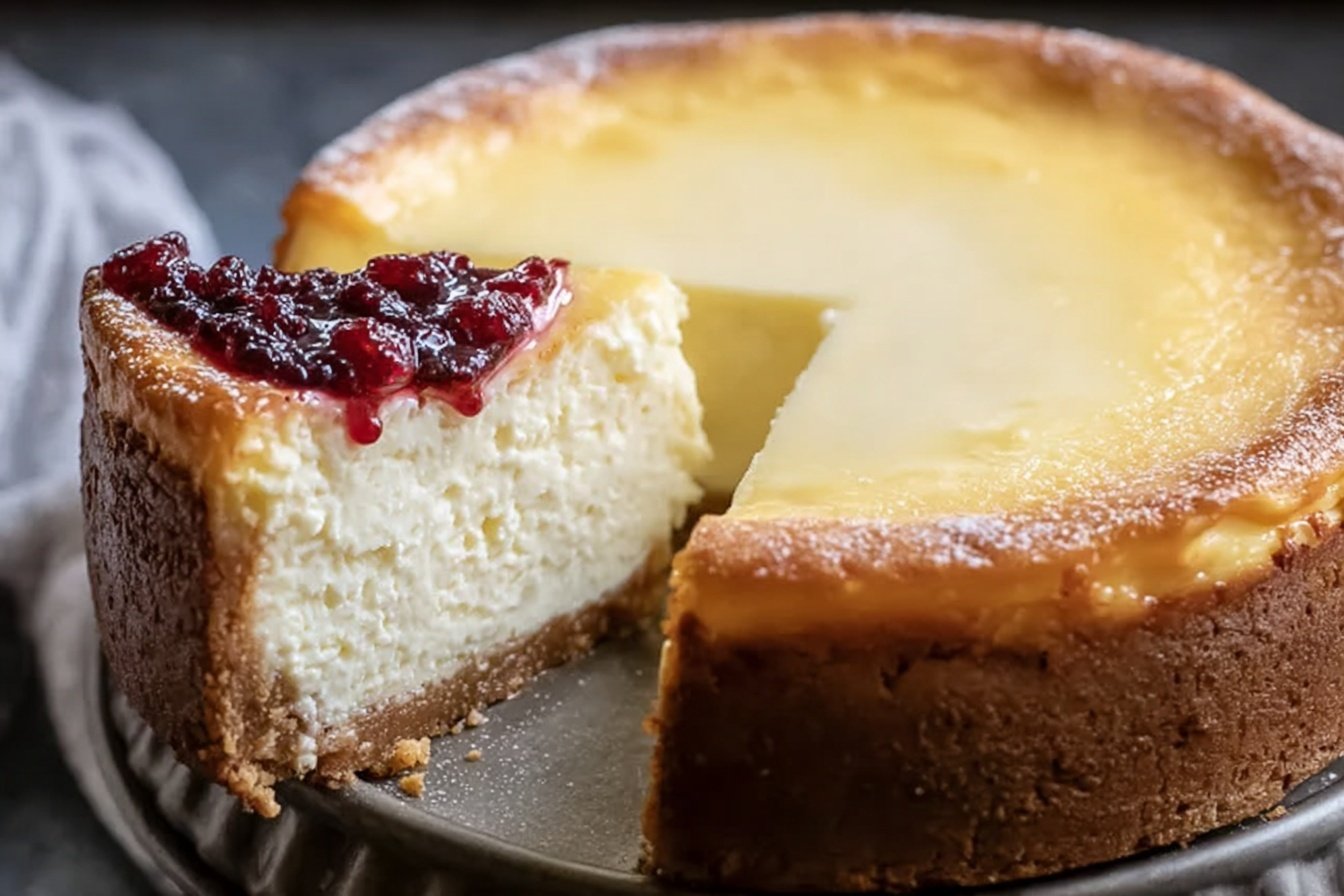
Why You’ll Love This Creamy Cheesecake Recipe
If you have been searching for a Creamy Cheesecake Recipe that feels bakery-worthy but still fits into a home kitchen routine, this one checks all the boxes. It has a classic graham cracker crust, a silky filling, and that rich flavor people expect from a true cheesecake. It is the kind of dessert that makes birthdays, holidays, and weekend dinners feel extra special.
- Easy to make: The steps are straightforward, and the recipe uses simple pantry staples plus a few dairy basics. Even if this is your first cheesecake, the process is easy to follow.
- Rich and satisfying: Full-fat cream cheese, heavy cream, butter, and eggs create a dense, creamy texture that feels indulgent in every bite.
- Great for planning ahead: This dessert needs time to chill, which makes it a smart choice for busy parents, working professionals, and anyone prepping for an event.
- Flexible for serving: You can dress it up with whipped cream, fruit sauce, chocolate sauce, or even a simple berry topping.
According to cream cheese nutrition information, cream cheese is calorie-dense and rich, which is exactly why this cheesecake tastes so satisfying. If you love creamy desserts, you might also enjoy browsing this strawberry cream cheese chill pie for another smooth and fruity treat.
Tip: This cheesecake gets better after a full overnight chill, so plan ahead if you want the cleanest slices and best texture.
Jump To
- 1. Why You’ll Love This Creamy Cheesecake Recipe
- 2. Essential Ingredients for Creamy Cheesecake Recipe
- 3. How to Prepare the Perfect Creamy Cheesecake Recipe: Step-by-Step Guide
- 4. Protein and Main Component Alternatives
- 5. Vegetable, Sauce, and Seasoning Modifications
- 6. Mastering Creamy Cheesecake Recipe: Advanced Tips and Variations
- 7. How to Store Creamy Cheesecake Recipe: Best Practices
- 8. FAQs: Frequently Asked Questions About Creamy Cheesecake Recipe
- 9. Creamy Cheesecake Recipe
Essential Ingredients for Creamy Cheesecake Recipe
The ingredient list for this Creamy Cheesecake Recipe is simple, but each item matters. Using the right dairy, the right sugar, and the right pan setup gives you that classic cheesecake texture people love.
Crust Ingredients
- 2 cups graham cracker crumbs – Creates the sweet, buttery base for the cheesecake.
- 1/3 cup sugar – Adds sweetness and helps the crust hold together.
- 7 tablespoons melted butter – Binds the crumbs and adds flavor.
Cheesecake Filling Ingredients
- 5 blocks (40 ounces total) full-fat brick-style cream cheese, room temperature – Gives the filling its rich, smooth structure.
- 1 and 1/2 cups granulated sugar – Sweetens the filling while keeping the flavor classic.
- 1 tablespoon pure vanilla extract – Adds warm flavor and depth.
- 5 large eggs, room temperature – Help the cheesecake set properly.
- 3 large egg yolks, room temperature – Add extra richness and a softer, creamier texture.
- 1/2 cup heavy cream, room temperature – Makes the filling silky and smooth.
- Extra 1/4 cup heavy cream, optional – For a creamier texture if you want an even softer finish.
Special Dietary Options
- Vegan: Use dairy-free cream cheese, plant-based butter, and egg substitutes made for baking, though the texture will be different from the classic version.
- Gluten-free: Swap the graham crackers for certified gluten-free graham-style crumbs or gluten-free cookies.
- Low-calorie: Use reduced-fat cream cheese, though the result will be less rich and may bake up a bit softer.
| Ingredient | Amount | Purpose |
|---|---|---|
| Graham cracker crumbs | 2 cups | Build the crust |
| Full-fat cream cheese | 40 ounces | Create the creamy filling |
| Heavy cream | 1/2 cup | Keep the texture smooth |
| Eggs and yolks | 8 total | Help the cheesecake set |
How to Prepare the Perfect Creamy Cheesecake Recipe: Step-by-Step Guide
Making cheesecake is mostly about patience and gentle handling. Once you understand the rhythm, the process feels very manageable. Follow these steps closely and you will get a smooth, creamy dessert with very little cracking.
First Step: Prep the pan and oven
Preheat your oven to 350 degrees Fahrenheit. Lightly spray a 9-inch springform pan with non-stick spray, then wrap the bottom and sides with multiple layers of heavy-duty aluminum foil. This foil wrap matters because it protects the pan from water seepage during the water bath. If you want easier release later, you can also line the bottom of the pan with parchment paper before adding the crust.
Second Step: Make and bake the crust
In a bowl, combine 2 cups graham cracker crumbs, 1/3 cup sugar, and 7 tablespoons melted butter. Stir until everything looks evenly coated and sandy. Press the mixture firmly into the prepared springform pan, making sure the bottom is packed well and the edges are even. Bake the crust for 8 minutes, then set it aside to cool while you make the filling.
Third Step: Beat the cream cheese mixture
Add the room temperature cream cheese to a stand mixer, hand mixer bowl, or food processor. Beat until completely smooth. Scrape down the sides and bottom of the bowl, then add 1 and 1/2 cups granulated sugar and 1 tablespoon pure vanilla extract. Mix again until the batter looks creamy and glossy.
Fourth Step: Add the eggs slowly
Add the 5 large eggs and 3 large egg yolks one at a time. Mix thoroughly after each addition, but do not overmix. Overmixing can add too much air, which can lead to cracks or a souffle-like texture instead of a dense cheesecake. Keep the batter smooth and gentle.
Fifth Step: Stir in the heavy cream
Pour in 1/2 cup heavy cream and mix just until combined. If you want a softer, richer texture, you can add an extra 1/4 cup heavy cream. The batter should look thick, smooth, and pourable.
Sixth Step: Assemble and set up the water bath
Pour the batter over the cooled crust and smooth the top with a spatula. Place the springform pan inside a larger roasting pan. Then add about 2 inches of hot water to the roasting pan to create a water bath. The water bath helps the cheesecake bake slowly and evenly, which keeps the center silky and the top from cracking.
Seventh Step: Bake the cheesecake
Bake the cheesecake for 1 hour and 10 minutes. The edges should look firm, while the center should still have a slight wobble. That wobble is a good sign. It means the cheesecake is almost set without drying out.
Eighth Step: Cool it slowly
Turn off the oven and leave the cheesecake inside with the door closed for 45 minutes. This gentle cooling helps prevent sudden temperature changes, which can cause cracks. After that, remove the cheesecake from the oven and run a knife around the edges to loosen it from the pan.
Ninth Step: Chill before serving
Place the cheesecake on a cooling rack until it reaches room temperature. Then cover it loosely with plastic wrap and chill in the refrigerator for at least 8 hours or overnight. This step is not optional if you want the best texture. A fully chilled cheesecake slices cleanly and tastes better too.
Final Step: Slice and serve
When you are ready to serve, use a sharp knife wiped clean between each slice. Top the cheesecake with freshly whipped cream, chocolate sauce, or fruit sauce if you like. For another fun dessert idea, you might also like these cannoli cheesecake bars, which bring a similar creamy flavor in a handheld form.
For the cleanest slices, let the cheesecake sit at room temperature for 10 to 15 minutes before cutting.
Protein and Main Component Alternatives
This recipe is built around cream cheese, eggs, and heavy cream, so it is not easy to swap one main ingredient without changing the result. Still, there are a few helpful options if you need to work around allergies, preferences, or what you already have in the kitchen.
Cream cheese alternatives
For a lighter result, you can use reduced-fat cream cheese, but the cheesecake will be less rich and may bake a little softer. If you need a dairy-free version, choose a plant-based cream cheese made for baking. The flavor will be a little different, but it can still give you a smooth dessert.
Egg alternatives
If you cannot use eggs, there are egg replacers designed for baking, though the texture will not be as classic. Cheesecake depends on eggs for structure, so this swap works best for mini versions or experimental batches rather than the full traditional recipe.
Heavy cream alternatives
You can replace heavy cream with full-fat coconut cream if you want a dairy-free option. This gives the filling a softer texture and a mild coconut flavor. Half-and-half can work in a pinch, but the cheesecake will be less creamy and may not set as firmly.
Sweetener alternatives
Granulated sugar gives this cheesecake its classic flavor, but if you want a lower-sugar version, use a baking-friendly sugar substitute made for 1:1 replacement. Keep in mind that this may slightly change the texture and browning.
Vegetable, Sauce, and Seasoning Modifications
Cheesecake is usually all about the creamy filling, but toppings and flavor add-ins can make each version feel new. If you want to match the season, use what you have, or give the dessert a little twist, these ideas can help.
Fruit toppings
Fresh berries, strawberry sauce, blueberry sauce, and raspberry compote all work beautifully with the rich filling. In warmer months, peaches are another lovely option. If you enjoy fruity desserts, take a look at this peaches and cream trifle for another sweet and creamy serving idea.
Chocolate and caramel sauces
Drizzle slices with warm chocolate sauce, caramel sauce, or even a ganache if you want a more dessert-shop feel. These toppings are especially nice for holidays and birthdays. A little goes a long way since the cheesecake itself is already rich.
Seasoning ideas
This recipe keeps the flavor classic with pure vanilla extract, but you can add a small amount of lemon zest, cinnamon, or almond extract if you want a different profile. Just keep the additions light so the cheesecake still tastes balanced. For a more festive finish, sprinkle crushed graham crackers or cookie crumbs on top before serving.
Simple presentation upgrades
Try piping whipped cream around the edges, then place a few berries in the center. You can also add chocolate curls or a light dusting of powdered sugar. These small touches make the cheesecake look polished without much extra work.
Mastering Creamy Cheesecake Recipe: Advanced Tips and Variations
Once you have made this Creamy Cheesecake Recipe once or twice, you may want to start fine-tuning it. That is where the little tricks make a big difference.
Pro cooking techniques
Start with room temperature ingredients. Cold cream cheese does not blend well, and cold eggs can make the batter lumpy. Beat the cream cheese until smooth before adding anything else, and scrape the bowl often. Also, keep your mixing gentle once the eggs go in. That is one of the best ways to avoid cracks and dense spots.
The water bath is another important technique. It keeps the oven heat mild and steady, which helps the cheesecake bake with that soft, custardy center. If you are worried about the crust getting soggy, double or triple wrap the springform pan with foil. That protection matters.
Flavor variations
You can keep the filling plain and change only the toppings, or you can give the batter a small flavor twist. Here are a few easy ideas:
- Add a little lemon zest for a brighter flavor.
- Swirl in raspberry sauce before baking.
- Top with chocolate ganache and whipped cream.
- Serve with a fruit compote for a lighter finish.
If you like cheesecake recipes with a twist, you may also enjoy this cinnamon roll honeybun cheesecake for a sweeter, bakery-style variation.
Presentation tips
For neat slices, dip your knife in hot water and wipe it dry before each cut. This gives you cleaner edges and a more professional look. If you are serving guests, place each slice on a dessert plate with a spoonful of sauce beside it and a small garnish on top.
Make-ahead options
This dessert is perfect for holiday prep, family gatherings, and busy weeks. Since it needs several hours to chill, it actually works better when made the day before. You can bake it in the evening, chill it overnight, and serve it the next day without rushing.
A fully chilled cheesecake is easier to slice, tastes better, and holds its shape much more neatly on the plate.
How to Store Creamy Cheesecake Recipe: Best Practices
Storing cheesecake the right way helps keep the texture smooth and the crust in good shape. Because this dessert is made with dairy, it needs proper chilling and sealing.
Refrigeration
Wrap leftover cheesecake tightly in plastic wrap, then cover it again with aluminum foil or place it in an airtight container. Store it in the refrigerator for up to 5 days. Keep it away from foods with strong odors, since cheesecake can pick those up.
Freezing
To freeze, chill the cheesecake fully first. Then wrap slices or the whole cheesecake tightly in plastic wrap and foil. You can freeze it for up to 2 months. For best results, thaw it overnight in the fridge instead of using the microwave or oven.
Reheating
Cheesecake is usually served cold or slightly cool, so you do not really reheat it. If you prefer a softer bite, let it sit at room temperature for 10 to 15 minutes before serving. That brings back some of the creaminess without changing the structure.
Meal prep considerations
If you are making dessert for a party, slice the cheesecake only after it is fully chilled. This keeps the edges neat and helps each piece hold its shape. You can also freeze individual slices for quick desserts later in the week.

FAQs: Frequently Asked Questions About Creamy Cheesecake Recipe
What temperature and time do I bake a creamy cheesecake?
Bake the graham cracker crust at 350°F for 10-12 minutes until lightly golden. For the creamy cheesecake filling, place the springform pan in a water bath and bake at 350°F for 1 hour and 10 minutes. Then, turn off the oven, leave the door closed, and let the cheesecake sit inside for 45 minutes. This gentle cooling prevents cracks. After that, remove it from the water bath, run a knife around the edges, and cool to room temperature before chilling overnight. Internal temperature should reach 150-155°F in the center for doneness. Always use a roasting pan with 1-2 inches of hot water for the bath to ensure even baking and a silky texture. Total active bake time is about 1 hour 55 minutes including resting. (98 words)
Can I use a store-bought prebaked graham cracker crust for cheesecake?
Yes, a store-bought prebaked graham cracker crust works well for creamy cheesecake and saves time. Choose a deep-dish 9-inch version to fit the filling. Place it directly on a baking sheet for stability, add the batter, and bake in a water bath as directed at 350°F. It may brown faster, so cover edges with foil if needed after 45 minutes. After baking and chilling, the crust holds up during slicing if chilled fully. For best results, brush the inside with melted butter before filling to prevent sogginess. This shortcut yields the same creamy results without compromising flavor or texture. Avoid shallow pie crusts as they overflow. (112 words)
Does baking time change if I make two creamy cheesecakes at once?
Baking two creamy cheesecakes simultaneously follows the same times if using matching 9-inch springform pans in a large oven. Preheat to 350°F, prebake crusts for 10-12 minutes each. Fill both, place in separate water baths (use two roasting pans or one large enough), and bake for 1 hour 10 minutes. Turn off oven and rest 45 minutes inside. Rotate pans halfway if your oven heats unevenly. Ensure at least 2 inches between pans for air flow. Ovens vary, so check centers reach 150-155°F. This doubles output efficiently without adjustments, perfect for events. Cool and chill both overnight before serving. (104 words)
Why doesn’t the crust stick to my cheesecake when I cut it, and how do I remove it from the springform pan for freezing?
A loose crust happens if not pressed firmly enough or if under-chilled. Fix by mixing crust with extra melted butter (1/4 cup more per recipe), press tightly with a glass bottom, and chill 30 minutes before baking. After full overnight chill, warm a knife in hot water, wipe dry, and slice slowly for clean cuts. For freezing without the pan bottom, line the springform with parchment circle before assembling. After cooling, unlatch sides, lift cake by parchment edges onto a cardboard round, slide off pan base, wrap tightly in plastic and foil, and freeze up to 3 months. Thaw in fridge 24 hours. (118 words)
Can I make mini creamy cheesecakes in a muffin tin, and what about water bath and baking time?
Yes, mini creamy cheesecakes in a muffin tin are easy and portion-controlled. Line a 12-cup tin with paper liners. Press 1-2 tbsp graham crumb mix per cup, prebake at 350°F for 5 minutes. Fill 3/4 full with batter. For water bath, place tin in a larger baking pan with 1/2 inch hot water, or skip and cover loosely with foil to prevent cracks. Bake at 325°F for 18-22 minutes until centers are set but slightly jiggly. Cool in tin 30 minutes, then chill 4 hours. Yields 24 minis. Top with fruit or whipped cream. Perfect for parties, freezes well too. (108 words)

Creamy Cheesecake Recipe
- Total Time: 9 hours 40 minutes
- Yield: 12-16 servings
- Diet: Vegetarian
Description
🍰 Foolproof creamy cheesecake with buttery graham crust and crack-free top – water bath magic for silky perfection.
😋 Rich, indulgent classic that chills overnight, slices beautifully for holidays or celebrations.
Ingredients
– 2 cups graham cracker crumbs Creates the sweet, buttery base for the cheesecake.
– 1/3 cup sugar Adds sweetness and helps the crust hold together.
– 7 tablespoons melted butter Binds the crumbs and adds flavor.
– 5 blocks (40 ounces total) full-fat brick-style cream cheese, room temperature Gives the filling its rich, smooth structure.
– 1 and 1/2 cups granulated sugar Sweetens the filling while keeping the flavor classic.
– 1 tablespoon pure vanilla extract Adds warm flavor and depth.
– 5 large eggs, room temperature Help the cheesecake set properly.
– 3 large egg yolks, room temperature Add extra richness and a softer, creamier texture.
– 1/2 cup heavy cream, room temperature Makes the filling silky and smooth.
– Extra 1/4 cup heavy cream, optional For a creamier texture if you want an even softer finish.
Instructions
1-First Step: Prep the pan and oven Preheat your oven to 350 degrees Fahrenheit. Lightly spray a 9-inch springform pan with non-stick spray, then wrap the bottom and sides with multiple layers of heavy-duty aluminum foil. This foil wrap matters because it protects the pan from water seepage during the water bath. If you want easier release later, you can also line the bottom of the pan with parchment paper before adding the crust.
2-Second Step: Make and bake the crust In a bowl, combine 2 cups graham cracker crumbs, 1/3 cup sugar, and 7 tablespoons melted butter. Stir until everything looks evenly coated and sandy. Press the mixture firmly into the prepared springform pan, making sure the bottom is packed well and the edges are even. Bake the crust for 8 minutes, then set it aside to cool while you make the filling.
3-Third Step: Beat the cream cheese mixture Add the room temperature cream cheese to a stand mixer, hand mixer bowl, or food processor. Beat until completely smooth. Scrape down the sides and bottom of the bowl, then add 1 and 1/2 cups granulated sugar and 1 tablespoon pure vanilla extract. Mix again until the batter looks creamy and glossy.
4-Fourth Step: Add the eggs slowly Add the 5 large eggs and 3 large egg yolks one at a time. Mix thoroughly after each addition, but do not overmix. Overmixing can add too much air, which can lead to cracks or a souffle-like texture instead of a dense cheesecake. Keep the batter smooth and gentle.
5-Fifth Step: Stir in the heavy cream Pour in 1/2 cup heavy cream and mix just until combined. If you want a softer, richer texture, you can add an extra 1/4 cup heavy cream. The batter should look thick, smooth, and pourable.
6-Sixth Step: Assemble and set up the water bath Pour the batter over the cooled crust and smooth the top with a spatula. Place the springform pan inside a larger roasting pan. Then add about 2 inches of hot water to the roasting pan to create a water bath. The water bath helps the cheesecake bake slowly and evenly, which keeps the center silky and the top from cracking.
7-Seventh Step: Bake the cheesecake Bake the cheesecake for 1 hour and 10 minutes. The edges should look firm, while the center should still have a slight wobble. That wobble is a good sign. It means the cheesecake is almost set without drying out.
8-Eighth Step: Cool it slowly Turn off the oven and leave the cheesecake inside with the door closed for 45 minutes. This gentle cooling helps prevent sudden temperature changes, which can cause cracks. After that, remove the cheesecake from the oven and run a knife around the edges to loosen it from the pan.
9-Ninth Step: Chill before serving Place the cheesecake on a cooling rack until it reaches room temperature. Then cover it loosely with plastic wrap and chill in the refrigerator for at least 8 hours or overnight. This step is not optional if you want the best texture. A fully chilled cheesecake slices cleanly and tastes better too.
10-Final Step: Slice and serve When you are ready to serve, use a sharp knife wiped clean between each slice. Top the cheesecake with freshly whipped cream, chocolate sauce, or fruit sauce if you like. For another fun dessert idea, you might also like these cannoli cheesecake bars, which bring a similar creamy flavor in a handheld form.
Notes
🌡️ All ingredients at room temperature ensure smooth batter without lumps or cracks.
🛁 Water bath prevents drying; use heavy foil to block leaks.
❄️ Chill 8+ hours minimum for cheesecake to set perfectly before slicing.
- Prep Time: 30 minutes
- Chill: 8 hours
- Cook Time: 1 hour 10 minutes
- Category: Desserts
- Method: Baking
- Cuisine: American
Nutrition
- Serving Size: 1 slice
- Calories: 550
- Sugar: 25g
- Sodium: 400mg
- Fat: 42g
- Saturated Fat: 24g
- Unsaturated Fat: 18g
- Trans Fat: 0g
- Carbohydrates: 38g
- Fiber: 0g
- Protein: 10g
- Cholesterol: 220mg
Keywords: best cheesecake recipe, creamy new york cheesecake, classic cheesecake, homemade cheesecake