
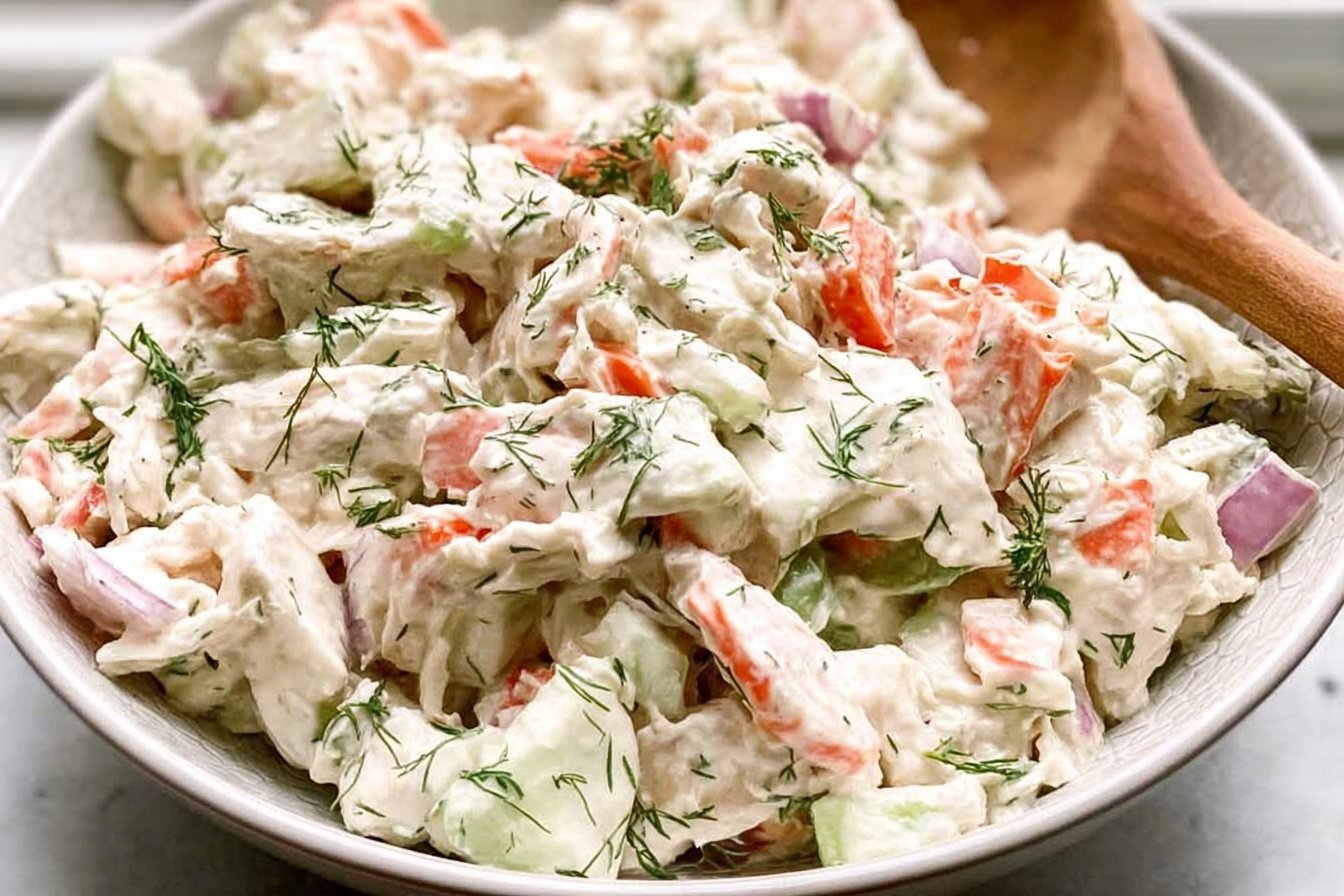
Why You’ll Love This Crab Salad
There’s something truly special about a well-made crab salad that brings together the fresh taste of the sea with creamy, satisfying textures. Whether you’re preparing a quick weekday lunch or planning a gathering with friends and family, this crab salad recipe delivers on every front. It’s the kind of dish that makes you wonder why you ever ordered takeout when something this delicious could come together so effortlessly in your own kitchen.
Here’s why this recipe deserves a permanent spot in your meal rotation:
- Ease of preparation: With just 11 minutes total time (10 minutes prep and 1 minute of actual cooking), this salad comes together faster than most people spend deciding what to eat. No complicated techniques, no hard-to-find ingredients, and absolutely no stress. Simply chop, mix, and serve.
- Health benefits: At just 309 calories per serving with 6g of protein, this seafood salad offers a lighter alternative to heavier mayonnaise-based sides. The crab provides lean protein while celery adds a satisfying crunch and fiber. Plus, you’re getting a good dose of Vitamin B12 from the seafood.
- Versatility: This fresh crab salad adapts beautifully to any occasion. Serve it on a bed of greens for a low-carb lunch, scoop it onto croissants for an elegant sandwich, or pair it with crackers as an appetizer. It works for casual family dinners and fancy brunches alike.
- Distinctive flavor: The combination of sweet imitation crab, bright lemon juice, fresh dill, and creamy mayonnaise creates a flavor profile that’s both refreshing and satisfying. The red onion adds just enough bite, while the celery brings a crisp texture that keeps every bite interesting.
Jump To
- 1. Why You’ll Love This Crab Salad
- 2. Essential Ingredients for Crab Salad
- 3. How to Prepare the Perfect Crab Salad: Step-by-Step Guide
- 4. Protein and Main Component Alternatives
- 5. Vegetable, Sauce, and Seasoning Modifications
- 6. Mastering Crab Salad: Advanced Tips and Variations
- 7. How to Store Crab Salad: Best Practices
- 8. FAQs: Frequently Asked Questions About Crab Salad
- 9. Crab Salad
Essential Ingredients for Crab Salad
Creating the best crab salad recipe starts with gathering quality ingredients. Each component plays a vital role in building layers of flavor and texture. Here’s everything you’ll need to make this easy crab salad recipe at home:
Main Ingredients
- 1 pound imitation crab meat (flaked style, or sticks cut into slices) – This forms the hearty base of your salad, providing that signature sweet seafood flavor and tender texture that makes every bite satisfying
- 1/2 cup celery, finely chopped – Adds essential crunch and a fresh, clean flavor that balances the creaminess of the dressing
- 3 tablespoons red onion, finely chopped – Brings a subtle sharpness and beautiful color contrast without overpowering the delicate crab flavor
- 1/2 teaspoon seasoning – Your choice of Old Bay, seafood seasoning, or a simple salt and pepper blend that ties all flavors together
- 2 teaspoons lemon juice – Provides brightness and acidity that cuts through the richness of the mayonnaise while highlighting the seafood notes
- Salt and pepper to taste – Essential seasonings that bring out the best in every ingredient
- 1/2 cup mayonnaise – Creates the creamy, luscious dressing that coats each piece of crab and vegetable
- 1 1/2 tablespoons fresh dill, chopped (plus more for garnish) – Delivers an herbaceous, fresh flavor that pairs beautifully with seafood
Special Dietary Options
- Vegan: Substitute imitation crab with hearts of palm or jackfruit for a plant-based alternative, and use vegan mayonnaise
- Gluten-free: This recipe is naturally gluten-free when using certified gluten-free imitation crab and mayonnaise
- Low-calorie: Swap regular mayonnaise for low-fat mayonnaise or Greek yogurt to reduce the calorie count significantly
How to Prepare the Perfect Crab Salad: Step-by-Step Guide
Making this crab salad recipe fresh tasty seafood dish at home is incredibly straightforward. Follow these simple steps for perfect results every single time.
Step 1: Prepare Your Workspace and Ingredients
Before you begin mixing, gather all your ingredients and equipment. You’ll need a large mixing bowl, a sharp knife, a cutting board, and measuring cups and spoons. Having everything ready makes the process smooth and enjoyable. Take your imitation crab out of the refrigerator and let it sit for about 5 minutes – this makes it easier to work with and helps the flavors meld better during mixing.
Step 2: Prep the Vegetables
Fine chopping is key to achieving the perfect texture in your crab salad. Start by washing your celery stalks thoroughly under cold water. Pat them dry with a clean kitchen towel or paper towels. Remove any strings from the celery if needed, then slice the stalks lengthwise before cutting crosswise into thin slices. The goal is pieces small enough that they distribute evenly throughout the salad without overpowering any single bite.
Next, peel your red onion and cut it in half from root to tip. Place the flat side down on your cutting board for stability. Slice the onion as thinly as possible, then rotate and cut crosswise to create a fine dice. If you find raw onion too strong, you can soak the chopped pieces in cold water for 10 minutes before adding them to your salad – this mellows the sharpness while keeping the onion flavor.
Step 3: Handle the Crab Meat
If you’re using flaked-style imitation crab, you can use it directly from the package. For stick-style imitation crab, you’ll want to shred or slice it yourself. Simply pull the sticks apart with your fingers into thin strips, or use a knife to cut them into bite-sized pieces. Some people prefer larger chunks for a more substantial texture, while others like smaller pieces for a smoother consistency. There’s no wrong answer here – it’s all about your personal preference.
Pro tip: If you’re lucky enough to use real crab meat instead of imitation, handle it gently to preserve those precious lump pieces. Real crab is more delicate and can become mushy if overworked.
Step 4: Prepare the Fresh Dill
Fresh herbs make a tremendous difference in this recipe. Rinse your dill under cool water and pat it dry thoroughly. Remove the thick stems and gather the feathery fronds. Bunch them together on your cutting board and rock your knife through them several times until they’re finely chopped. The oils released during chopping will intensify the dill flavor throughout your salad. Set aside a small amount for garnish if desired.
Step 5: Create the Dressing Base
In your large mixing bowl, add the mayonnaise first. This creates a foundation that will coat all your ingredients evenly. Add the lemon juice, seasoning, salt, and pepper to the mayonnaise. Stir until fully combined – this ensures that every bite of your finished salad will have balanced flavor. Taste the dressing at this stage and adjust seasonings if needed. Remember, you can always add more seasoning, but you can’t take it away once it’s mixed in.
Step 6: Combine All Ingredients
Now comes the satisfying part. Add your prepared crab meat, chopped celery, diced red onion, and most of the chopped dill to the bowl with your dressing. Reserve a small sprinkle of dill for the final garnish. Using a large spoon or spatula, gently fold everything together. The keyword here is gently – you want to coat each piece of crab and vegetable with the creamy dressing without breaking down the crab into a mushy texture.
Fold from the bottom of the bowl, bringing the ingredients up and over. Continue until everything is evenly distributed and coated with the dressing. This should only take about 30 seconds to 1 minute of gentle mixing.
Step 7: Final Seasoning and Chill
Taste your creation and add more salt, pepper, or lemon juice as needed. The flavors should be bright and balanced – not too salty, not too acidic. If everything tastes good, you can serve immediately, but this salad really shines when you let it chill. Cover the bowl with plastic wrap or transfer to an airtight container and refrigerate for at least 30 minutes. This resting period allows the flavors to meld together beautifully.
Step 8: Serve and Garnish
When you’re ready to serve, give the salad one final gentle stir. Transfer to a serving bowl or individual plates. Sprinkle the reserved fresh dill on top for a pop of color and fresh flavor. Your crab salad is now ready to enjoy!
Protein and Main Component Alternatives
While this recipe calls for imitation crab meat, there are plenty of delicious alternatives that can transform this dish to suit your taste preferences, budget, or dietary needs. Each option brings its own unique characteristics to the table.
Real Crab Meat Options
For special occasions or when you want to treat yourself, real crab meat takes this salad to another level. Lump crab meat offers large, impressive pieces that look beautiful on a plate and have a sweet, delicate flavor. Claw meat is darker and has a more robust crab flavor – it’s also more affordable than lump meat. Backfin crab meat falls somewhere in between, offering good flavor at a moderate price point.
When using real crab, you’ll want to pick through it carefully to remove any bits of shell. Drain it well before adding to your salad, as excess liquid can make the dressing watery. Real crab is more perishable than imitation, so plan to make and consume your salad within 1-2 days.
Other Seafood Alternatives
This salad works beautifully with other cooked seafood options. Shrimp can be boiled, cooled, and chopped to create a shrimp salad that’s equally delicious. Lobster makes an indulgent version perfect for summer entertaining. Cooked bay scallops offer a sweet, tender alternative that pairs wonderfully with the lemon-dill dressing.
For a seafood combination, try mixing crab with small cooked shrimp for a classic seafood salad. If you enjoy this combination, you might also love our creamy crab and shrimp seafood bisque for a warming meal on cooler days.
Vegetarian and Vegan Substitutes
Creating a plant-based version of crab salad is easier than you might think. Hearts of palm have a remarkably similar texture to crab when shredded and a mild flavor that takes on seasonings beautifully. Drain a can of hearts of palm, shred with a fork, and use exactly as you would crab meat.
Jackfruit is another excellent option. Look for young green jackfruit in water (not syrup), drain it well, and shred the chunks. The texture closely resembles flaked crab, and when seasoned with Old Bay or seafood seasoning, the flavor profile is surprisingly close to the original.
Fish Options
Cooked, flaked white fish can work in this salad as well. Alaskan pollock or cod have mild flavors that won’t compete with your other ingredients. Simply bake or poach the fish until cooked through, let it cool completely, then flake it into bite-sized pieces before adding to your salad mixture.
Vegetable, Sauce, and Seasoning Modifications
One of the beauties of this recipe is how easily it adapts to what you have on hand or your personal preferences. The base recipe is delicious, but don’t be afraid to make it your own with creative modifications.
Vegetable Variations
The celery and red onion provide classic flavors, but numerous other vegetables can add interesting textures and tastes:
- Green onions: A milder alternative to red onion, green onions add a fresh onion flavor without the sharp bite. Use both the white and green parts for color contrast.
- Bell peppers: Finely diced red, yellow, or orange bell peppers add sweetness and a satisfying crunch. They also bring beautiful color to the finished dish.
- Cucumber: Peeled, seeded, and diced cucumber adds refreshing crispness, especially nice in summer months.
- Water chestnuts: For a unique textural element, add drained, chopped water chestnuts. They stay crunchy even when mixed with the creamy dressing.
- Corn: Fresh or thawed frozen corn kernels add natural sweetness that complements the sweet crab flavor.
- Avocado: Diced avocado makes the salad richer and creamier. Add it just before serving to prevent browning.
Sauce and Dressing Modifications
While mayonnaise is traditional, you have options for changing up the creamy element:
Greek yogurt can replace some or all of the mayonnaise for a tangier, higher-protein version. Start by substituting half the mayo with plain Greek yogurt and adjust to your taste. The texture will be slightly different but equally delicious.
Sour cream adds a different kind of tanginess. A blend of half mayonnaise and half sour cream creates a lighter-tasting dressing that many people prefer.
For added flavor complexity, stir in a teaspoon of Dijon mustard or a dash of hot sauce. A spoonful of sweet pickle relish adds a touch of sweetness and another layer of texture.
Seasoning Options
The seasoning choice significantly impacts the final flavor of your salad:
| Seasoning | Flavor Profile | Best For |
|---|---|---|
| Old Bay | Celery salt, paprika, and spices | Classic seafood flavor |
| Cajun seasoning | Spicy and herby | Those who like heat |
| Lemon pepper | Bright citrus with mild pepper | Lighter, fresher taste |
| Everything bagel | Garlic, onion, sesame, poppy | Modern twist |
| Dill weed alone | Herbal and fresh | Simple, clean flavor |
Fresh herbs beyond dill can also brighten the salad. Try adding fresh parsley, chives, or tarragon for different flavor dimensions. A combination of dill and parsley is particularly nice.
Mastering Crab Salad: Advanced Tips and Variations
Once you’ve mastered the basic recipe, these expert techniques and creative variations will help you take your seafood salad to new heights.
Pro Cooking Techniques
The temperature of your ingredients matters more than you might think. Cold ingredients stay firmer and fresher-tasting in the finished salad. Keep your crab meat, vegetables, and mayonnaise refrigerated until you’re ready to assemble. If you have time, chill your mixing bowl in the freezer for 10 minutes before starting – this keeps everything cool during preparation.
For the best texture, drain your crab meat thoroughly. Excess liquid dilutes your dressing and makes the salad watery. Place the crab in a fine-mesh strainer and let it drain for at least 15 minutes in the refrigerator. Gently press with paper towels to remove any remaining moisture.
Flavor Variations
Mediterranean Crab Salad: Add chopped sun-dried tomatoes, kalamata olives, and crumbled feta cheese. Replace half the dill with fresh basil and add a clove of minced garlic to the dressing.
Asian-Inspired Crab Salad: Use a dressing made from mayonnaise mixed with a tablespoon of sesame oil and a teaspoon of sriracha. Add chopped cucumber, shredded carrot, and top with sesame seeds and sliced green onions.
California-Style Crab Salad: Add diced avocado, crispy bacon bits, and halved cherry tomatoes. Serve on sourdough bread for an incredible sandwich experience. If you enjoy seafood with bold flavors, our Mexican shrimp cocktail offers another delicious way to enjoy seafood.
Presentation Tips
How you present your crab salad can make it look as impressive as it tastes. For a beautiful appetizer presentation, serve the salad in endive leaves or on cucumber slices. For a main course, pile it high on a buttery croissant or stuff it into a ripe avocado half.
Garnishes add visual appeal and fresh flavor. Beyond the reserved dill, try adding a lemon wedge, a sprinkle of paprika for color, or a few capers for briny contrast. Microgreens or sprouted seeds add a modern, restaurant-quality touch.
Make-Ahead Options
This salad is perfect for meal prep. You can chop all your vegetables up to a day ahead and store them in separate airtight containers in the refrigerator. The dressing can also be made ahead and stored separately. When you’re ready to serve, simply combine everything and give it a gentle mix.
According to Dinner at the Zoo, letting the salad rest in the refrigerator for at least an hour before serving allows the flavors to develop fully.
How to Store Crab Salad: Best Practices
Proper storage keeps your homemade crab salad fresh and safe to eat. Follow these guidelines to maintain quality and prevent foodborne illness.
Refrigeration Guidelines
Store your crab salad in an airtight container in the coldest part of your refrigerator, typically the back of the bottom shelf. The ideal temperature is 40°F or below. When stored properly, imitation crab salad stays fresh for up to 2 days, maintaining its texture and flavor.
Before storing, press plastic wrap directly onto the surface of the salad to minimize air exposure, then seal with the container lid. This prevents the mayonnaise from developing an off flavor and keeps the vegetables from oxidizing.
Freezing Considerations
Freezing crab salad is not recommended. The mayonnaise-based dressing separates when frozen and thawed, resulting in an unappetizing, watery texture. The vegetables also become limp and lose their satisfying crunch. For best quality, prepare only what you’ll consume within 2 days.
Serving and Reheating
Crab salad is meant to be served cold or at room temperature. There’s no reheating required – in fact, heating would destroy the fresh, bright flavors you’ve worked to create. Remove the salad from the refrigerator about 15-20 minutes before serving to take the chill off, which allows the flavors to come through more fully.
Meal Prep Strategies
If you love having ready-to-eat options in your fridge, consider prepping components separately. Store chopped vegetables, dressing, and crab meat in individual containers. When hunger strikes, mix together a single serving for the freshest possible salad. This approach extends your prep to 3-4 days while maintaining optimal texture.

FAQs: Frequently Asked Questions About Crab Salad
What is crab salad made of?
Crab salad typically features shredded crab meat—either real lump crab or affordable imitation crab—as the star ingredient. Mix it with finely chopped celery and red onion for crunch, fresh dill or parsley for flavor, and a creamy dressing of mayonnaise, lemon juice, Dijon mustard, and a pinch of salt and pepper. For extra taste, add Old Bay seasoning or capers. This simple combination creates a refreshing seafood salad perfect for sandwiches, lettuce wraps, or as a dip. Use 1 pound of crab meat, 1/2 cup mayo, 1/4 cup each of celery and onion, 2 tablespoons lemon juice, 1 teaspoon mustard, and herbs to taste. Prep time is just 10 minutes, no cooking required. Adjust mayo for creaminess and chill for 30 minutes to let flavors blend. (92 words)
What is imitation crab?
Imitation crab, also called surimi, is a budget-friendly seafood substitute made from mild white fish like Alaskan pollock. The fish is minced, blended with egg whites, starch, and natural crab flavorings, then shaped and colored to mimic real crab legs or chunks. It’s sold in most grocery stores year-round, costs less than fresh crab, and has a sweet, tender texture ideal for salads. In crab salad, shred 8-12 ounces of it for the base. It’s gluten-free but check labels for additives. Nutrition per 3-ounce serving: 90 calories, 1g fat, 10g protein, low in mercury compared to real crab. Real crab works too but imitation holds up better in creamy mixes without falling apart. (112 words)
How do you make crab salad at home?
Start with 1 pound shredded imitation or real crab meat in a large bowl. Add 1/2 cup diced celery, 1/4 cup minced red onion, 2 tablespoons chopped fresh dill, and 1/4 cup mayonnaise. Squeeze in juice from 1 lemon, stir in 1 teaspoon Dijon mustard, 1/2 teaspoon Old Bay seasoning, salt, and pepper to taste. Gently fold everything together to avoid breaking the crab. Taste and adjust seasoning. Cover and refrigerate for 30 minutes to 1 hour for best flavor. Makes 4-6 servings. Serve on croissants, crackers, or mixed greens. Pro tip: Use a fork to shred crab for even texture. Total time: 15 minutes active, plus chilling. Stores well for meal prep. (118 words)
Can you use real crab instead of imitation crab in crab salad?
Yes, real crab meat—like lump or claw from blue or Dungeness crabs—makes an excellent upgrade for crab salad, offering a sweeter, more delicate flavor and firmer texture. Use 1 pound fresh, pasteurized, or canned crab, drained well. Gently fold into the mayo-lemon dressing with veggies to preserve chunks. It’s pricier (about $20-30 per pound vs. $5 for imitation) and seasonal, but worth it for special occasions. Avoid overmixing to keep it luxurious. Nutrition boost: Real crab has more omega-3s (0.3g per 3oz) and natural B12. Source from reputable fish markets for freshness—smell should be briny, not fishy. Imitation is fine for everyday; real elevates potlucks or holidays. (108 words)
How long does crab salad last in the fridge?
Homemade crab salad lasts 3-5 days in the fridge when stored properly in an airtight container at 40°F or below. Imitation crab versions hold up best due to preservatives, while real crab salads should be eaten within 2-3 days to avoid spoilage. Always check for off smells, sliminess, or color changes before eating. Don’t freeze—it makes the texture watery. For safety, label with dates. Pro tip: Portion into single servings for grab-and-go lunches. Mayo-based salads risk bacterial growth if left out over 2 hours. Serve chilled and pair with crackers or bread. If using yogurt instead of mayo, it extends freshness slightly. Follow USDA guidelines: discard after 5 days max. (102 words)
Crab Salad
- Total Time: 10 minutes
- Yield: 4 servings
- Diet: Pescatarian
Description
🦀 Fresh crab salad mixes flaky crab with crisp celery, zesty lemon, and dill – light, refreshing seafood packed with flavor!
🍋 No-cook dish ready in 10 minutes – ideal for sandwiches, lettuce wraps, or appetizers!
Ingredients
– 1 pound imitation crab meat (flaked style, or sticks cut into slices)
– 1/2 cup celery, finely chopped
– 3 tablespoons red onion, finely chopped
– 1/2 teaspoon seasoning
– 2 teaspoons lemon juice
– Salt and pepper to taste
– 1/2 cup mayonnaise
– 1 1/2 tablespoons fresh dill, chopped (plus more for garnish)
Instructions
1-Step 1: Prepare Your Workspace and Ingredients Before you begin mixing, gather all your ingredients and equipment. You’ll need a large mixing bowl, a sharp knife, a cutting board, and measuring cups and spoons. Having everything ready makes the process smooth and enjoyable. Take your imitation crab out of the refrigerator and let it sit for about 5 minutes – this makes it easier to work with and helps the flavors meld better during mixing.
2-Step 2: Prep the Vegetables Fine chopping is key to achieving the perfect texture in your crab salad. Start by washing your celery stalks thoroughly under cold water. Pat them dry with a clean kitchen towel or paper towels. Remove any strings from the celery if needed, then slice the stalks lengthwise before cutting crosswise into thin slices. The goal is pieces small enough that they distribute evenly throughout the salad without overpowering any single bite. Next, peel your red onion and cut it in half from root to tip. Place the flat side down on your cutting board for stability. Slice the onion as thinly as possible, then rotate and cut crosswise to create a fine dice. If you find raw onion too strong, you can soak the chopped pieces in cold water for 10 minutes before adding them to your salad – this mellows the sharpness while keeping the onion flavor.
3-Step 3: Handle the Crab Meat If you’re using flaked-style imitation crab, you can use it directly from the package. For stick-style imitation crab, you’ll want to shred or slice it yourself. Simply pull the sticks apart with your fingers into thin strips, or use a knife to cut them into bite-sized pieces. Some people prefer larger chunks for a more substantial texture, while others like smaller pieces for a smoother consistency. There’s no wrong answer here – it’s all about your personal preference.
4-Step 4: Prepare the Fresh Dill Fresh herbs make a tremendous difference in this recipe. Rinse your dill under cool water and pat it dry thoroughly. Remove the thick stems and gather the feathery fronds. Bunch them together on your cutting board and rock your knife through them several times until they’re finely chopped. The oils released during chopping will intensify the dill flavor throughout your salad. Set aside a small amount for garnish if desired.
5-Step 5: Create the Dressing Base In your large mixing bowl, add the mayonnaise first. This creates a foundation that will coat all your ingredients evenly. Add the lemon juice, seasoning, salt, and pepper to the mayonnaise. Stir until fully combined – this ensures that every bite of your finished salad will have balanced flavor. Taste the dressing at this stage and adjust seasonings if needed. Remember, you can always add more seasoning, but you can’t take it away once it’s mixed in.
6-Step 6: Combine All Ingredients Now comes the satisfying part. Add your prepared crab meat, chopped celery, diced red onion, and most of the chopped dill to the bowl with your dressing. Reserve a small sprinkle of dill for the final garnish. Using a large spoon or spatula, gently fold everything together. The keyword here is gently – you want to coat each piece of crab and vegetable with the creamy dressing without breaking down the crab into a mushy texture. Fold from the bottom of the bowl, bringing the ingredients up and over. Continue until everything is evenly distributed and coated with the dressing. This should only take about 30 seconds to 1 minute of gentle mixing.
7-Step 7: Final Seasoning and Chill Taste your creation and add more salt, pepper, or lemon juice as needed. The flavors should be bright and balanced – not too salty, not too acidic. If everything tastes good, you can serve immediately, but this salad really shines when you let it chill. Cover the bowl with plastic wrap or transfer to an airtight container and refrigerate for at least 30 minutes. This resting period allows the flavors to meld together beautifully.
8-Step 8: Serve and Garnish When you’re ready to serve, give the salad one final gentle stir. Transfer to a serving bowl or individual plates. Sprinkle the reserved fresh dill on top for a pop of color and fresh flavor. Your crab salad is now ready to enjoy!
Notes
🦀 Opt for fresh lump crab for luxury or imitation for easy, affordable option.
🌿 Fresh dill shines brightest; sub 1/2 tsp dried if unavailable.
🥄 Swap low-fat mayo to lighten calories without losing creaminess.
- Prep Time: 10 minutes
- Category: Salads
- Method: No Cook
- Cuisine: American
Nutrition
- Serving Size: 1/4 recipe
- Calories: 309
- Sugar: 4g
- Sodium: 625mg
- Fat: 17g
- Saturated Fat: 3g
- Unsaturated Fat: 14g
- Trans Fat: 0g
- Carbohydrates: 21g
- Fiber: 1g
- Protein: 6g
- Cholesterol: 24mg
Keywords: crab salad recipe, fresh crab salad, tasty seafood salad, easy imitation crab salad