
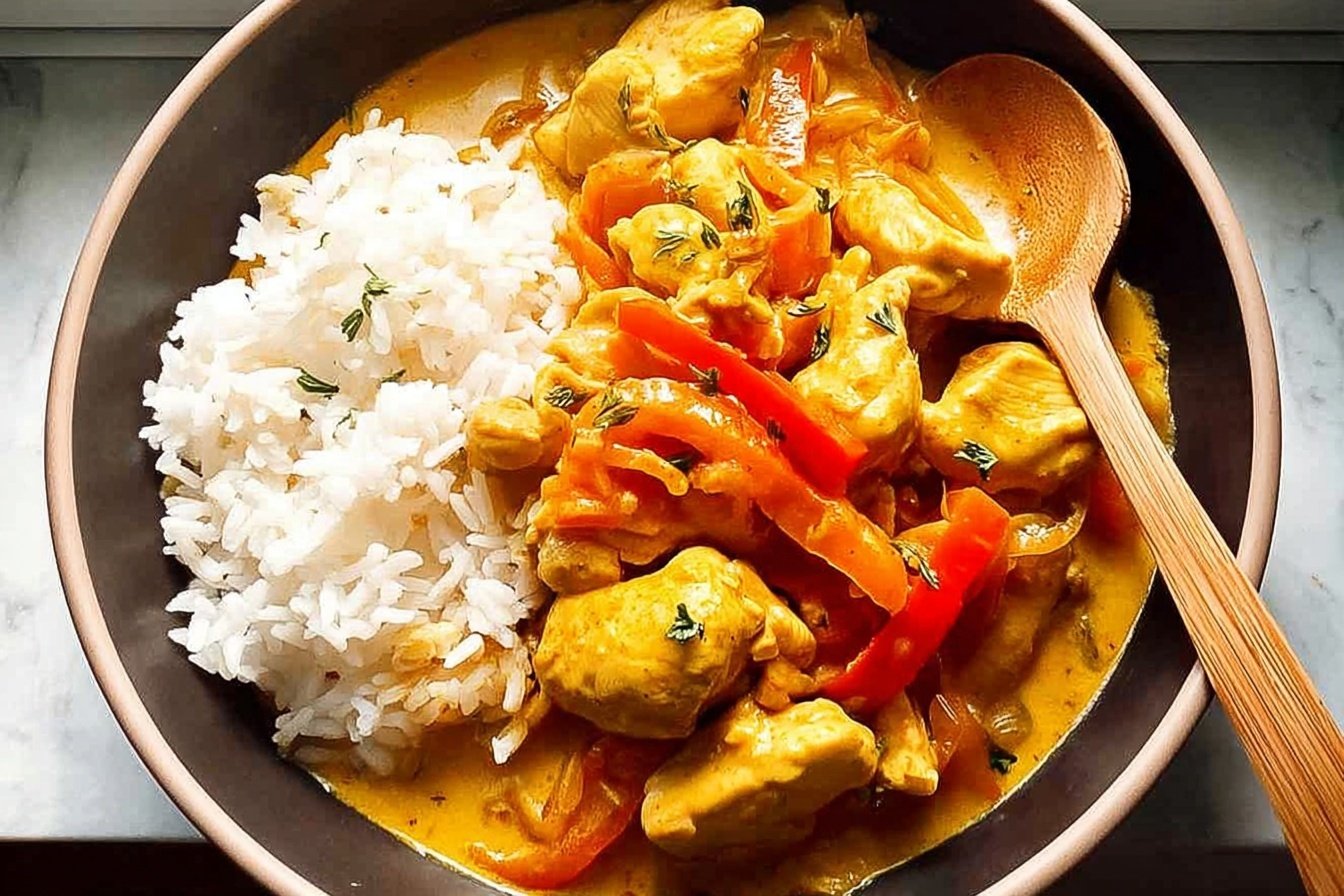
Why You’ll Love This Coconut Chicken Curry
When you’re looking for a satisfying meal that comes together quickly, this coconut chicken curry is a real winner for busy weeknights. It’s packed with bold Thai-inspired flavors and requires just one pot, which means less cleanup afterward. The creamy coconut milk creates a luscious sauce that coats tender chicken pieces perfectly, making every bite feel indulgent without requiring hours in the kitchen.
- Ease of preparation: This recipe takes just 30 minutes from start to finish, with only 15 minutes of prep work and 15 minutes of cooking time. The straightforward steps make it perfect for beginner cooks or anyone short on time.
- Health benefits: Each serving delivers 27g of protein and only 13g of carbohydrates, making it a nutritious choice. The dish also provides vitamins A and C, plus 788mg of potassium. Coconut milk contains healthy fats that help keep you satisfied longer.
- Versatility: You can easily customize this curry based on what you have on hand. Swap chicken breasts for thighs, add extra vegetables like carrots or spinach, or make it vegetarian with tofu. It’s also naturally gluten-free.
- Distinctive flavor: The combination of yellow curry powder, red curry paste, and fresh aromatics like garlic and ginger creates layers of flavor. Brown sugar and lime juice balance the richness, while fresh cilantro and basil add brightness.
This Thai chicken curry has become a reader favorite because it delivers restaurant-quality results with simple ingredients found at most grocery stores.
Jump To
- 1. Why You’ll Love This Coconut Chicken Curry
- 2. Essential Ingredients for Coconut Chicken Curry
- 3. How to Prepare the Perfect Coconut Chicken Curry: Step-by-Step Guide
- 4. Protein and Main Component Alternatives
- 5. Vegetable, Sauce, and Seasoning Modifications
- 6. Mastering Coconut Chicken Curry: Advanced Tips and Variations
- 7. How to Store Coconut Chicken Curry: Best Practices
- 8. FAQs: Frequently Asked Questions About Coconut Chicken Curry
- 9. Coconut Chicken Curry
Essential Ingredients for Coconut Chicken Curry
Before you start cooking, gather all your ingredients. Having everything prepped and measured makes the cooking process smooth and enjoyable. Here’s everything you’ll need to make this creamy chicken curry:
Main Ingredients
- 2 tablespoons coconut oil – Used for sautéing the aromatics; provides a subtle coconut flavor that complements the dish beautifully
- 1 yellow onion, diced – Creates a sweet, savory base when caramelized; yellow onions work best for their natural sweetness
- 1 tablespoon garlic, minced – Fresh garlic adds pungent, aromatic depth; about 3-4 cloves
- 1 tablespoon ginger, minced – Fresh ginger brings warm, spicy notes; peel before mincing
- 2 tablespoons yellow curry powder – The foundation of flavor; contains turmeric, cumin, and other warming spices
- 1-2 tablespoons red curry paste – Adds authentic Thai heat and complexity; adjust amount based on spice preference
- 1 teaspoon coriander – Ground coriander adds citrusy, floral notes that brighten the curry
- 1 red bell pepper, sliced – Provides sweetness, color, and crunch; slice into thin strips for even cooking
- 1-1.5 pounds boneless skinless chicken breast or thighs, cut into pieces – The main protein; thighs stay juicier while breasts are leaner
- Salt and pepper to taste – Season throughout cooking for best flavor development
- 1 can (13.5 ounces/400 ml) full-fat coconut milk – Creates the creamy base; full-fat is essential for proper texture
- 1 tablespoon lime juice – Fresh lime adds brightness and cuts through the richness
- 1 tablespoon brown sugar – Balances savory flavors and helps round out the curry
- 1-2 teaspoons fish sauce (optional) – Adds umami depth and authenticity; omit for vegetarian version
For Serving and Garnish
- Fresh cilantro and/or basil – Adds fresh, herbal notes and vibrant color
- Chopped peanuts or cashews (optional) – Provides crunch and nutty flavor
- Lime wedges – For squeezing over finished curry
- Cooked basmati rice or naan bread – For soaking up the delicious sauce
Special Dietary Options
This recipe adapts well to various dietary needs:
- Vegan/Vegetarian: Replace chicken with firm tofu or chickpeas. Skip the fish sauce and use soy sauce instead. The cooking method remains the same.
- Gluten-free: This curry is naturally gluten-free when made as written. Just verify your curry paste and fish sauce brands are certified gluten-free.
- Low-calorie: Use lite coconut milk and chicken breast instead of thighs. Note that the sauce won’t thicken as much, so you may need to simmer longer.
Pro Tip: Full-fat coconut milk is crucial for achieving that restaurant-quality creamy texture. Lite coconut milk contains too much water and won’t thicken properly, while cream of coconut is too sweet for savory dishes.
How to Prepare the Perfect Coconut Chicken Curry: Step-by-Step Guide
Follow these detailed instructions to create a delicious Thai coconut chicken curry in your own kitchen. The process is straightforward, and I’ll walk you through each step.
Step 1: Prepare Your Ingredients (Mise en Place)
Start by prepping all your ingredients before you turn on the stove. Dice the yellow onion into small, even pieces. Mince the garlic and ginger finely so they distribute their flavor throughout the curry. Slice the red bell pepper into thin strips. Cut the chicken into bite-sized pieces, about 1-inch cubes, for even cooking. Having everything ready makes the cooking process much smoother and prevents any ingredients from burning while you’re still chopping.
Step 2: Heat the Pan and Sauté the Onion
Heat about 2 tablespoons of coconut oil in a large skillet or Dutch oven over medium heat. Once the oil shimmers, add the diced onion. Sauté the onion for approximately 5 minutes, stirring occasionally, until it turns golden and translucent. This step is crucial because caramelized onions provide a sweet, deep flavor base for your curry. Don’t rush this part the onions should have slightly browned edges.
Step 3: Bloom the Aromatics and Spices
Add the minced garlic and ginger to the golden onions. Stir constantly for about 30 seconds until fragrant be careful not to let the garlic burn, as it becomes bitter. Next, add 2 tablespoons of yellow curry powder, 1-2 tablespoons of red curry paste (depending on your heat preference), and 1 teaspoon of coriander. Stir everything together and let the spices toast for about 1 minute.
Blooming spices in hot oil releases their essential oils and intensifies their flavor dramatically. You’ll notice the mixture becomes incredibly aromatic. This step transforms the dish from good to restaurant-quality.
Step 4: Add the Chicken and Bell Pepper
Add the sliced red bell pepper and chicken pieces to the pan. Season generously with salt and pepper. Cook the chicken for about 5 minutes, stirring frequently, until the exterior is browned on all sides. The chicken doesn’t need to cook through completely at this stage it will finish cooking in the coconut sauce. Browning the meat first adds flavor through the Maillard reaction and gives the curry better texture.
Step 5: Create the Creamy Sauce
Pour in the entire can of full-fat coconut milk. Add 1 tablespoon of lime juice and 1 tablespoon of brown sugar. Stir everything together, scraping up any browned bits from the bottom of the pan those bits contain concentrated flavor. Bring the mixture to a gentle simmer, then reduce the heat to medium-low.
Let the curry simmer uncovered for about 10 minutes. During this time, the sauce will thicken slightly and the chicken will cook through completely. Stir occasionally to prevent sticking. If you’re using fish sauce (1-2 teaspoons), add it during the last 2 minutes of cooking.
Step 6: Finish and Serve
Taste your curry and adjust the seasoning as needed. You might want more salt, a squeeze of lime, or a pinch of brown sugar depending on your preference. Remove from heat and serve immediately over fluffy basmati rice or with warm naan bread. Garnish with fresh cilantro or basil, chopped nuts if desired, and lime wedges on the side.
| Nutritional Information (Per Serving) | Amount |
|---|---|
| Calories | 464 |
| Carbohydrates | 13g |
| Protein | 27g |
| Total Fat | 35g (28g saturated) |
| Cholesterol | 73mg |
| Sodium | 149mg |
| Potassium | 788mg |
| Fiber | 2g |
| Sugar | 6g |
This creamy chicken curry serves about 4 people and pairs wonderfully with steamed vegetables or a simple cucumber salad on the side. For another delicious weeknight dinner option, check out this creamy chicken and broccoli pasta that’s equally satisfying.
Protein and Main Component Alternatives
While boneless skinless chicken breast or thighs are the traditional choice for this coconut curry, you can easily swap the protein based on your preferences or what you have available. Each alternative brings its own unique qualities to the dish.
Chicken Thighs vs. Chicken Breast
Chicken thighs are my preferred choice for curry because they remain juicy and tender even after simmering. The slightly higher fat content helps the meat stay moist and absorb more flavor from the sauce. Chicken breasts are leaner and lower in calories, but they can dry out if overcooked. If using breasts, cut them into slightly larger pieces and watch the cooking time carefully.
Seafood Options
Shrimp makes an excellent substitute for chicken in this recipe. Add peeled and deveined shrimp during the last 5-6 minutes of cooking since they cook much faster than chicken. White fish like cod or halibut also works beautifully cut into chunks and add during the final 8 minutes. The delicate flavor of fish pairs wonderfully with the creamy coconut sauce.
Vegetarian and Vegan Proteins
Firm tofu is a fantastic plant-based option. Press the tofu to remove excess moisture, cut into cubes, and pan-fry separately until golden before adding to the curry. This step prevents the tofu from becoming soggy. Chickpeas are another great option they add protein and a pleasant texture. For a protein-packed meal that’s still vegetarian, try using a combination of chickpeas and vegetables.
Other Meat Alternatives
Thinly sliced beef or pork can work in this curry, though cooking times will vary. Beef should simmer a bit longer to become tender. For a unique twist, try duck breast it has rich flavor that stands up beautifully to the bold spices. You might also enjoy this balsamic chicken breast recipe for another flavorful protein dish.
Vegetable, Sauce, and Seasoning Modifications
One of the best things about this easy coconut chicken curry recipe is how adaptable it is. You can modify the vegetables, adjust the sauce consistency, and experiment with different seasonings to create your perfect version.
Vegetable Additions and Substitutions
The red bell pepper in this recipe provides sweetness and color, but you can add so much more. Carrots pair beautifully slice them thinly so they cook through in the simmering time. Spinach or kale can be stirred in during the last 2 minutes of cooking for extra nutrients and vibrant color. Green beans, snap peas, or zucchini also work well.
For a heartier curry, add diced potatoes or sweet potatoes. Cut them small (about 1/2 inch) so they cook through in the same time as the chicken. Cauliflower florets are another excellent addition they absorb the curry flavors beautifully and add texture.
Sauce Variations
If your curry sauce is thinner than you’d like, create a cornstarch slurry by mixing 1 teaspoon of cornstarch with 1 tablespoon of cold water. Stir it into the simmering curry and cook for another minute until thickened. For a richer sauce, you can add a tablespoon of tomato paste along with the spices for depth of flavor.
Some cooks like to add a splash of coconut cream at the end for extra richness. Others prefer a brighter sauce and add extra lime juice. The beauty of this recipe is that you can adjust it to your taste preferences.
Seasoning Adjustments
The combination of yellow curry powder and red curry paste creates a balanced flavor profile, but you can customize the heat level. For a milder curry, use just 1 tablespoon of red curry paste. For more spice, add fresh Thai chilies or a dash of cayenne. If you love garlic, increase the amount to 2 tablespoons for a more pungent kick.
Fresh herbs make a big difference in the final dish. Thai basil has a distinct anise flavor that’s perfect for curry. Cilantro adds freshness. Some people also enjoy adding a handful of fresh spinach at the end for both nutrition and color.
Mastering Coconut Chicken Curry: Advanced Tips and Variations
Once you’ve mastered the basic recipe, try these advanced techniques and creative variations to take your curry to the next level.
Pro Cooking Techniques
For the best flavor development, toast your curry powder and spices in the hot oil before adding any liquid. This step, called blooming, releases the essential oils and intensifies the flavor dramatically. You’ll notice the spices become more fragrant within seconds.
When browning chicken, don’t overcrowd the pan. If necessary, cook the chicken in two batches. Overcrowding causes the meat to steam rather than brown, resulting in less flavor and rubbery texture. Pat the chicken dry before adding it to the pan for better browning.
Flavor Variations
For a Thai green curry variation, substitute green curry paste for the red curry paste. Green curry is typically brighter and more herbaceous. If you prefer a Massaman-style curry, add 1 tablespoon of peanut butter and a pinch of cinnamon and cardamom to the sauce.
You can also create a more Indian-inspired version by adding garam masala instead of yellow curry powder and including ingredients like diced tomatoes and ghee. The possibilities are endless once you understand the base technique.
Presentation Tips
Restaurant-quality presentation makes any meal feel special. Serve your curry in wide, shallow bowls over basmati rice. Garnish strategically with fresh herbs placed in the center, a sprinkle of chopped nuts for texture, and a lime wedge on the side. A drizzle of coconut cream on top creates an attractive contrast.
Make-Ahead Options
This curry tastes even better the next day as the flavors continue to develop. You can make it up to 2 days in advance and store it in the refrigerator. For meal prep, portion the curry into individual containers with cooked rice. According to research on coconut milk’s health properties, the healthy fats help preserve the dish well for storage.
How to Store Coconut Chicken Curry: Best Practices
Proper storage ensures your curry stays fresh and delicious for future meals. Here’s everything you need to know about storing leftovers.
Refrigeration
Store leftover coconut chicken curry in an airtight container in the refrigerator for up to 3-4 days. The flavors often improve after a day as the spices continue to meld together. When you’re ready to eat, the sauce may have thickened considerably just add a splash of water or coconut milk when reheating.
Freezing
This curry freezes exceptionally well for up to 3 months. Portion it into freezer-safe containers or heavy-duty freezer bags, leaving some headspace for expansion. Flat bags save space and allow for quicker thawing. Label with the date so you know when you made it.
Note that the texture of the bell pepper may change slightly after freezing, becoming softer. If texture matters to you, consider adding fresh bell pepper when reheating rather than freezing it with the curry.
Reheating
For best results, thaw frozen curry in the refrigerator overnight before reheating. Warm it gently in a saucepan over medium-low heat, stirring occasionally. Add a splash of coconut milk or water if the sauce seems too thick. The curry should reach 165°F (74°C) throughout for food safety. Avoid microwaving at high power, as this can cause the coconut milk to separate.
Meal Prep Considerations
This recipe is perfect for weekly meal prep. Cook a double batch on the weekend and portion it into containers with rice. The curry provides protein, healthy fats, and vegetables in one convenient package. For a complete meal prep rotation, pair this with other recipes throughout the week.

FAQs: Frequently Asked Questions About Coconut Chicken Curry
What makes coconut chicken curry sweet?
Coconut chicken curry gets its sweetness from several key ingredients and techniques. Slowly cooking onions until they brown caramelizes their natural sugars, creating a deep sweetness. Full-fat coconut milk adds a creamy, subtly sweet base that’s milder than cream. A touch of brown sugar balances flavors (about 1 teaspoon per recipe). Coriander seeds bring a natural sweet note, while many curry powders include sweet spices like cinnamon and cloves. To control sweetness, taste as you go and adjust sugar or add lime juice at the end. This combination gives the dish its signature mild, tropical profile without overpowering the savory chicken and spices. (87 words)
What does curry powder taste like in coconut chicken curry?
Curry powder in coconut chicken curry blends savory earthiness with hints of sweetness. Core spices like cumin provide a warm, nutty depth; turmeric adds a peppery, golden earthiness; and bay leaf contributes subtle herbal notes. Sweeter elements from cinnamon, cloves, and sometimes fenugreek brighten the mix, complementing the coconut milk’s richness. The result is a balanced, aromatic flavor—not too spicy unless you add chilies. For best results, toast the powder in oil before adding liquids to release oils and intensify taste. Store in an airtight container away from light for up to 6 months. (92 words)
Coconut milk vs coconut cream for chicken curry—which to use?
Use full-fat coconut milk for coconut chicken curry—it’s the right consistency (like cow’s milk) from simmering 1 part shredded coconut with 1 part water, providing creaminess without heaviness. Coconut cream, made from 4 parts coconut to 1 part water, is thicker and richer, which can make the curry too dense and coconut-dominant. Avoid sweetened cream of coconut, meant for desserts. Shake the can well before opening to mix the fat layer. If your sauce is thin, simmer uncovered to reduce. Always check labels for additives. (89 words)
Can I use coconut cream in coconut chicken curry?
Stick to full-fat coconut milk for coconut chicken curry rather than coconut cream. Cream is too thick, overpowering the dish with intense coconut flavor and preventing proper sauce cohesion. Lite coconut milk lacks richness and won’t thicken well during cooking. If you only have cream, dilute it 1:1 with water to mimic milk, but test flavor first. For best texture, add coconut milk after browning chicken and onions, simmering 20-25 minutes until sauce reduces. This keeps the curry silky and balanced for serving over rice. (85 words)
How do I store leftover coconut chicken curry?
Store coconut chicken curry in an airtight container in the fridge for up to 4 days. The coconut milk may separate slightly—stir well when reheating on stovetop over medium heat with a splash of water. For freezing, portion into freezer bags (flattens for space) and freeze up to 3 months; thaw overnight in fridge before reheating. Avoid microwaving large batches to prevent curdling. Reheat to 165°F (74°C) for safety. This preserves flavor and tenderness of the chicken while maintaining the creamy sauce. Label with dates for easy tracking. (92 words)

Coconut Chicken Curry
- Total Time: 30 minutes
- Yield: 4 servings
- Diet: Gluten Free
Description
🥥 Indulge in a creamy, aromatic coconut chicken curry that’s rich in Thai flavors, packed with tender chicken and veggies for a nourishing, restaurant-quality meal at home.
🌴 This quick 30-minute one-pot wonder is perfect for busy nights, offering healthy comfort food that’s naturally gluten-free and bursting with exotic spices.
Ingredients
– 2 tablespoons coconut oil for sautéing the aromatics
– 1 yellow onion, diced for sweet, savory base
– 1 tablespoon garlic, minced for aromatic depth
– 1 tablespoon ginger, minced for warm, spicy notes
– 2 tablespoons yellow curry powder for flavor foundation
– 1-2 tablespoons red curry paste for heat and complexity
– 1 teaspoon coriander for citrusy, floral notes
– 1 red bell pepper, sliced for sweetness, color, and crunch
– 1-1.5 pounds boneless skinless chicken breast or thighs, cut into pieces for main protein
– Salt and pepper to taste for seasoning
– 1 can (13.5 ounces/400 ml) full-fat coconut milk for creamy base
– 1 tablespoon lime juice for brightness
– 1 tablespoon brown sugar for balancing flavors
– 1-2 teaspoons fish sauce (optional) for umami depth
– Fresh cilantro and/or basil for fresh, herbal notes
– Chopped peanuts or cashews (optional) for crunch and nutty flavor
– Lime wedges for squeezing over finished curry
– Cooked basmati rice or naan bread for soaking up the sauce
Instructions
1-Step 1: Prepare Your Ingredients (Mise en Place) Start by prepping all your ingredients before you turn on the stove. Dice the yellow onion into small, even pieces. Mince the garlic and ginger finely so they distribute their flavor throughout the curry. Slice the red bell pepper into thin strips. Cut the chicken into bite-sized pieces, about 1-inch cubes, for even cooking. Having everything ready makes the cooking process much smoother and prevents any ingredients from burning while you’re still chopping.
2-Step 2: Heat the Pan and Sauté the Onion Heat about 2 tablespoons of coconut oil in a large skillet or Dutch oven over medium heat. Once the oil shimmers, add the diced onion. Sauté the onion for approximately 5 minutes, stirring occasionally, until it turns golden and translucent. This step is crucial because caramelized onions provide a sweet, deep flavor base for your curry. Don’t rush this part the onions should have slightly browned edges.
3-Step 3: Bloom the Aromatics and Spices Add the minced garlic and ginger to the golden onions. Stir constantly for about 30 seconds until fragrant be careful not to let the garlic burn, as it becomes bitter. Next, add 2 tablespoons of yellow curry powder, 1-2 tablespoons of red curry paste (depending on your heat preference), and 1 teaspoon of coriander. Stir everything together and let the spices toast for about 1 minute.
Blooming spices in hot oil releases their essential oils and intensifies their flavor dramatically. You’ll notice the mixture becomes incredibly aromatic. This step transforms the dish from good to restaurant-quality.
4-Step 4: Add the Chicken and Bell Pepper Add the sliced red bell pepper and chicken pieces to the pan. Season generously with salt and pepper. Cook the chicken for about 5 minutes, stirring frequently, until the exterior is browned on all sides. The chicken doesn’t need to cook through completely at this stage it will finish cooking in the coconut sauce. Browning the meat first adds flavor through the Maillard reaction and gives the curry better texture.
5-Step 5: Create the Creamy Sauce Pour in the entire can of full-fat coconut milk. Add 1 tablespoon of lime juice and 1 tablespoon of brown sugar. Stir everything together, scraping up any browned bits from the bottom of the pan those bits contain concentrated flavor. Bring the mixture to a gentle simmer, then reduce the heat to medium-low.
Let the curry simmer uncovered for about 10 minutes. During this time, the sauce will thicken slightly and the chicken will cook through completely. Stir occasionally to prevent sticking. If you’re using fish sauce (1-2 teaspoons), add it during the last 2 minutes of cooking.
6-Step 6: Finish and Serve Taste your curry and adjust the seasoning as needed. You might want more salt, a squeeze of lime, or a pinch of brown sugar depending on your preference. Remove from heat and serve immediately over fluffy basmati rice or with warm naan bread. Garnish with fresh cilantro or basil, chopped nuts if desired, and lime wedges on the side.
Notes
🥥 Use full-fat coconut milk for the creamiest texture and richest flavor (avoid lite versions).
🍲 If sauce is too thin, thicken with a cornstarch slurry (1 tsp cornstarch + 1 tbsp water).
❄️ Leftovers store in the fridge up to 3 days or freeze up to 3 months; reheat with a splash of coconut milk.
- Prep Time: 15 minutes
- Cook Time: 15 minutes
- Category: Chicken
- Method: Stovetop
- Cuisine: Thai
Nutrition
- Serving Size: 1 serving
- Calories: 464 kcal
- Sugar: 6g
- Sodium: 149mg
- Fat: 35g
- Saturated Fat: 28g
- Unsaturated Fat: 7g
- Trans Fat: 0g
- Carbohydrates: 13g
- Fiber: 2g
- Protein: 27g
- Cholesterol: 73mg
Keywords: coconut chicken curry, creamy thai curry, easy chicken curry, thai style recipe