
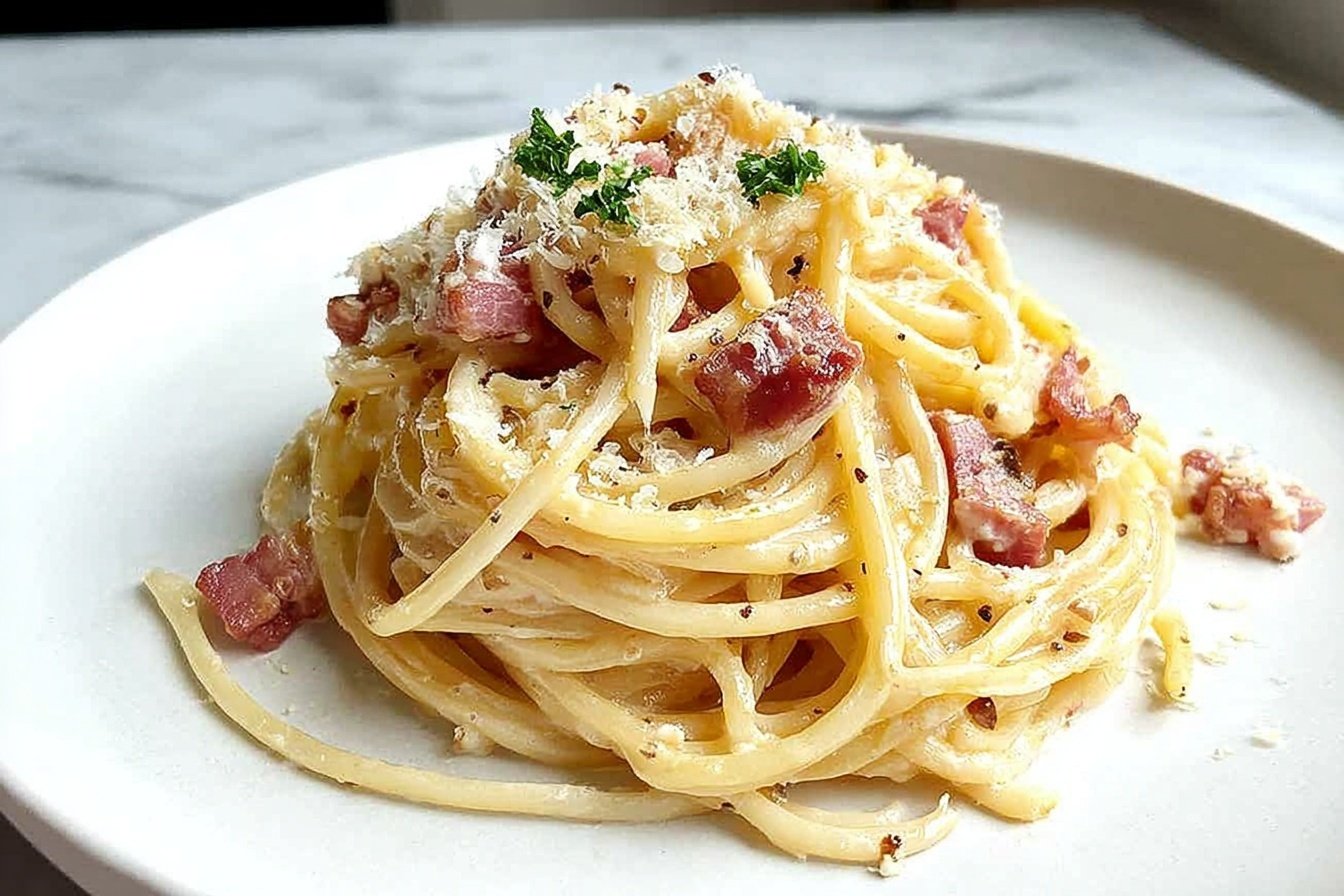
Why You’ll Love This Carbonara
There’s something truly magical about a well-made carbonara that keeps you coming back for more. This classic Italian pasta dish has earned its place as a beloved favorite around the world, and for good reason. Whether you’re a seasoned home cook or just starting your culinary journey, this carbonara recipe will quickly become a go-to in your kitchen.
- Ease of preparation: One of the biggest advantages of this simple spaghetti carbonara is how quickly it comes together. With just 20 minutes from start to finish (5 minutes prep and 15 minutes cook time), you can have a restaurant-quality meal on the table faster than ordering takeout. The straightforward technique means you don’t need fancy equipment or years of training to achieve amazing results.
- Health benefits: Unlike many creamy pasta dishes that rely on heavy cream, this authentic carbonara gets its richness from eggs, cheese, and the natural fats from guanciale. This means you’re getting quality protein from eggs and cured pork, calcium from the cheese, and carbohydrates for energy. The dish proves that indulgent-tasting food can still be made with wholesome, recognizable ingredients.
- Versatility: While this traditional carbonara recipe calls for specific ingredients, it’s wonderfully adaptable to what you have on hand. Don’t have guanciale? Pancetta or thick-cut bacon works beautifully. Need a gluten-free option? Simply swap in your favorite gluten-free spaghetti. The core technique remains the same, making it accessible for various dietary needs.
- Distinctive flavor: What makes this Italian carbonara truly special is the way the flavors come together. The salty, savory depth of the cured pork, the sharp bite of freshly ground black pepper, the creamy richness of the egg and cheese sauce, and the perfect al dente pasta create a symphony of tastes that’s simultaneously comforting and sophisticated.
Jump To
- 1. Why You’ll Love This Carbonara
- 2. Essential Ingredients for Carbonara
- 3. How to Prepare the Perfect Carbonara: Step-by-Step Guide
- 4. Dietary Substitutions to Customize Your Carbonara
- 5. Mastering Carbonara: Advanced Tips and Variations
- 6. How to Store Carbonara: Best Practices
- 7. FAQs: Frequently Asked Questions About Carbonara
- 8. Carbonara
Essential Ingredients for Carbonara
The beauty of pasta carbonara lies in its simplicity. Each ingredient plays a crucial role in creating that signature silky sauce and balanced flavor profile. Here’s everything you’ll need to make this classic carbonara recipe at home:
Main Ingredients
- 175g guanciale – This cured pork jowl is the traditional choice for authentic flavor. The high fat content renders beautifully, creating the flavorful base for your sauce. Can be substituted with pancetta or thick-cut bacon if needed.
- 2 whole eggs – Provide structure and richness to the sauce, helping create that creamy texture without any actual cream.
- 2 egg yolks – Extra yolks add more richness and help the sauce achieve its signature velvety consistency.
- 100g parmigiano reggiano or pecorino romano – Must be freshly grated for proper melting. Pre-grated cheese contains anti-caking agents that prevent smooth incorporation into the sauce.
- 1/4 teaspoon black pepper, freshly ground – Essential for that classic carbonara bite. Freshly ground makes a noticeable difference in flavor intensity.
- 400g spaghetti – The traditional pasta shape for carbonara. Its long strands are perfect for holding the silky sauce.
- 1 tablespoon kosher or cooking salt – For seasoning the pasta water. Properly salted water is crucial for well-seasoned pasta.
- 1/2 cup reserved pasta cooking water – This starchy liquid is the secret ingredient that helps emulsify the sauce into something creamy and smooth.
- 1 garlic clove finely minced (optional) – While not traditional, some cooks enjoy the subtle aromatic boost it provides.
- Garnish: finely chopped parsley and extra parmigiano reggiano (optional) – For a pop of color and an extra savory finish.
Special Dietary Options
| Dietary Need | Substitution | Notes |
|---|---|---|
| Gluten-free | Gluten-free spaghetti | Choose a high-quality brand for best texture; reserve extra pasta water as gluten-free pasta releases less starch |
| Lower calorie | Reduce guanciale to 100g | Still maintains flavor while cutting some fat; can also use turkey bacon though sauce will be less creamy |
| Dairy-free | Nutritional yeast + dairy-free parmesan alternative | Will alter the flavor profile significantly; not traditional but workable for allergies |
| Egg allergy | Silken tofu blended with olive oil | Creates a creamy texture but changes the character of the dish entirely |
How to Prepare the Perfect Carbonara: Step-by-Step Guide
Learning how to make carbonara that rivals any Roman trattoria is easier than you might think. The key lies in understanding the technique and timing. Follow these detailed steps for foolproof results every time.
Step 1: Prepare the Guanciale
Start by cutting your guanciale into thick batons about 0.5cm thick. You want pieces that are substantial enough to provide meaty bites throughout the pasta, not thin strips that will crisp up like bacon bits. The fat needs room to render slowly, creating that liquid gold that forms the foundation of your carbonara sauce. If you’re using pancetta or bacon as a substitute, aim for the same thickness and look for cuts with good fat marbling.
Step 2: Prepare the Egg Mixture
While your guanciale is being prepared, whisk together the 2 whole eggs, 2 egg yolks, the finely grated cheese (100g), and 1/4 teaspoon of freshly ground black pepper in a large bowl. Whisk vigorously until the mixture is completely smooth and slightly pale in color. The bowl should be large enough to comfortably hold all the cooked pasta later, which is crucial for the mixing step. This mixture forms the base of your creamy sauce.
Pro Tip: Using a large bowl for mixing the eggs and cheese with the hot pasta is essential. It gives you room to work quickly and toss the pasta properly, which helps prevent the eggs from scrambling and ensures even coating.
Step 3: Cook the Pasta
Bring 4 liters (4 quarts) of water to a rolling boil in a large pot. Add 1 tablespoon of kosher or cooking salt. The water should taste pleasantly salty, like a well-seasoned soup. Add your 400g of spaghetti and cook until it’s firm but fully cooked, what Italians call “al dente.” This usually means cooking it 1-2 minutes less than the package instructions suggest.
Before draining, reserve at least 1 cup of the starchy cooking water. This liquid is absolutely essential for creating the silky emulsion that makes spaghetti carbonara so special. Set this reserved water aside in a heat-proof container.
Step 4: Cook the Guanciale
In a non-stick pan over medium-high heat, cook your guanciale pieces until they turn golden brown and the fat has rendered out, about 5-7 minutes. You want the meat to be crispy on the outside but still have some give in the center. If you’re using the optional garlic, add it in the last minute of cooking so it softens without burning. Remove the pan from heat once the guanciale is perfectly rendered.
Step 5: Coat the Pasta in Guanciale Fat
Transfer your drained hot pasta directly into the pan with the rendered guanciale fat. Toss the pasta vigorously to coat every strand in that flavorful fat. This step does two things: it flavors the pasta itself and creates a thin fat coating that helps protect the eggs from cooking too quickly in the next step. The pasta should be glistening with the rendered fat.
Step 6: Create the Sauce
This is the most critical moment in making easy carbonara. Working quickly but calmly, transfer the hot pasta and all the guanciale fat from the pan into your large bowl containing the egg and cheese mixture. Add 1/2 cup of the reserved pasta water at the same time.
Immediately begin stirring vigorously with the handle of a wooden spoon. The handle is ideal because it’s less likely to scrape the bottom of the bowl and allows for a more vigorous stirring motion. Stir in a circular motion, lifting and tossing the pasta continuously for about 1 minute.
Step 7: Achieve the Perfect Consistency
As you stir, you’ll notice the sauce beginning to thicken and become creamy. The residual heat from the pasta gently cooks the eggs without scrambling them, while the starchy pasta water helps create an emulsion with the fat and cheese. If the sauce seems too thick, add a splash more pasta water. If it’s too loose, keep stirring. The goal is a glossy, silky sauce that coats each strand of pasta beautifully.
Step 8: Serve Immediately
Carbonara waits for no one. Serve your finished dish immediately in warm bowls. Pre-warming your bowls helps keep the pasta at its best longer by preventing the sauce from thickening too quickly. If desired, garnish with finely chopped parsley and extra grated parmigiano reggiano. A final crack of black pepper adds a beautiful finishing touch.
For another comforting pasta dish that’s perfect for busy weeknights, check out this creamy chicken and broccoli pasta recipe that’s equally satisfying.

Dietary Substitutions to Customize Your Carbonara
While purists might insist on the traditional ingredients, the reality is that home cooking is about making delicious food that works for your lifestyle and dietary needs. Here are some thoughtful substitutions that can help you enjoy pasta carbonara even with restrictions or limitations.
Protein and Main Component Alternatives
The guanciale is central to authentic carbonara, but excellent alternatives exist. Pancetta, made from cured pork belly rather than jowl, is the closest substitute and widely available in most grocery stores. Look for thick-cut pieces with visible fat marbling. Thick-cut streaky bacon works too, though it will add a subtle smoky flavor that’s not traditional but still delicious. For those avoiding pork entirely, consider using a high-quality vegetarian guanciale alternative or even diced chicken breast, though you’ll need to add extra olive oil to compensate for the missing rendered fat.
When selecting your protein, remember that fat is not the enemy here. It’s essential for creating that silky sauce. Avoid lean cuts like ham or turkey bacon, as they simply don’t provide the necessary fat content for proper emulsification. If you’re watching calories, use slightly less meat rather than switching to a leaner alternative.
Vegetable, Sauce, and Seasoning Modifications
While vegetables aren’t traditional in carbonara, some cooks enjoy adding peas for sweetness and color, or sautéed mushrooms for an earthy depth. If you’re interested in creative pasta variations, you might enjoy exploring this creamy beef and bowtie pasta recipe as well.
For the cheese component, the traditional choice is Pecorino Romano, a sheep’s milk cheese with a sharp, salty flavor. Parmigiano Reggiano, a cow’s milk cheese, is milder and more widely available. Either works beautifully, or you can use a combination of both for a more complex flavor profile. What matters most is that you grate it fresh from a block, as pre-grated cheeses contain cellulose and other anti-caking agents that prevent smooth melting.
Seasoning variations are minimal but meaningful. The classic recipe uses only black pepper, but some modern variations include a pinch of nutmeg for warmth or red pepper flakes for heat. The optional garlic mentioned in the recipe adds an aromatic dimension that many find delicious, even if it’s not strictly traditional.
Mastering Carbonara: Advanced Tips and Variations
Once you’ve mastered the basic traditional carbonara recipe, you can start refining your technique and exploring variations. Here are some advanced tips that will take your carbonara from good to extraordinary.
Pro Cooking Techniques
The most common mistake when making carbonara is scrambling the eggs. This happens when the eggs get too hot too quickly. To prevent this, remove your pan from heat before adding the pasta to the egg mixture. The residual heat from the pasta is enough to cook the eggs gently. Never add the egg mixture to a hot pan on the stove.
Another professional technique is tempering your eggs. Before adding the hot pasta, whisk a small amount of the reserved pasta water into your egg mixture. This gradual temperature increase helps prevent the eggs from shocking when they meet the hot pasta.
Flavor Variations
While the classic recipe is perfect as is, there’s room for creativity. Try adding a tablespoon of olive oil with your guanciale for extra richness. Some cooks swear by adding a splash of dry white wine to the guanciale pan and letting it reduce before adding the pasta. This adds a subtle acidity that balances the richness.
For a seasonal twist, try using different hard cheeses. Aged gouda brings caramel notes, while manchego adds a nutty quality. Just remember that any cheese you use should be hard and aged enough to grate finely and melt smoothly.
Presentation Tips
Restaurant-quality presentation is easier than you think. Use a carving fork and large spoon to twirl individual portions of pasta into neat nests. This not only looks beautiful but also helps the sauce distribute evenly. Top each serving with a few pieces of the crispest guanciale and a final dusting of cheese and pepper.
Make-Ahead Options
Carbonara is best served immediately, but you can prep components ahead of time. Grate your cheese and store it in an airtight container. Cut your guanciale and keep it refrigerated. Mix your eggs and seasonings in a container, ready to pour. When it’s time to eat, you’ll only need to cook the pasta and guanciale, making the final assembly a 10-minute affair.
How to Store Carbonara: Best Practices
Let’s be honest: carbonara is at its absolute best the moment it’s made. The silky sauce, the perfectly coated pasta, the crispy guanciale. However, life happens, and sometimes you have leftovers. Here’s how to handle storage properly.
Refrigeration
Store leftover spaghetti carbonara in an airtight container in the refrigerator for up to 24 hours. The sauce will tighten up and lose some of its creamy consistency, but the flavor will remain delicious. Pack the pasta in a single layer if possible, or at least avoid compacting it too much.
Reheating
The key to reheating carbonara is gentle heat and added moisture. Place your leftovers in a non-stick pan over low heat. Add a splash of water or even a drizzle of olive oil. Stir gently and continuously until the pasta is warmed through and the sauce has loosened. The microwave is not ideal as it tends to heat unevenly and can make the eggs rubbery.
Freezing
Freezing carbonara is not recommended. The egg-based sauce separates when frozen and thawed, resulting in a curdled texture that no amount of stirring can fix. The pasta also becomes mushy. If you must freeze, know that the texture will be significantly compromised.
Meal Prep Considerations
For meal prep, consider preparing the components separately rather than making the full dish ahead. Cook and store the guanciale in one container. Grate and store the cheese separately. Keep the eggs whole until you’re ready to cook. Prepare the pasta fresh when you’re ready to eat for the best experience.
FAQs: Frequently Asked Questions About Carbonara
What are the ingredients for authentic carbonara?
Authentic carbonara requires just a few simple ingredients: guanciale (cured pork cheek), eggs (typically 1 whole egg and 2-3 yolks per 100g pasta), Pecorino Romano or Parmigiano-Reggiano cheese (finely grated), black pepper, and spaghetti or another long pasta. Use starchy pasta water to emulsify the sauce. No cream, garlic, or onions—those are non-traditional additions. For 4 servings: 400g spaghetti, 200g guanciale, 100g Pecorino, 4 eggs (1 whole + 3 yolks), pepper. Steps: Boil salted pasta water, cook guanciale until fat renders, mix egg-cheese off heat, toss with hot pasta and pasta water for a silky sauce. This keeps the dish light yet rich, true to Roman origins. (92 words)
Can I substitute guanciale in carbonara?
Guanciale, made from pork jowls, provides essential fat and flavor for authentic carbonara. If unavailable, use pancetta (cured pork belly) or thick-cut streaky bacon—avoid lean varieties as fat helps emulsify the sauce. Cut into 1cm cubes or thick strips. For best results, source unsmoked, high-fat options. Ratio: 50g per person. Fry slowly to render fat without crisping too much, then mix into the egg-cheese sauce with pasta. Pancetta is closer in texture; bacon adds a subtle smokiness. Never use ham or turkey bacon—they lack the necessary fat. This swap maintains creaminess while staying close to tradition. (98 words)
Is it safe to eat raw eggs in carbonara?
Yes, in most developed countries, pasteurized or high-quality fresh eggs from reputable sources are safe for raw use in carbonara, similar to mayo or tiramisu. Risk of salmonella is low (about 1 in 20,000 eggs in the US). Cook pasta to 75°C (167°F) minimum—residual heat gently cooks the eggs without scrambling. Use pasteurized eggs for extra caution, especially for pregnant people, elderly, or immunocompromised. Store eggs refrigerated, check freshness (float test: sink = fresh). Pro tip: Temper eggs by mixing with hot pasta water first. Millions enjoy carbonara weekly without issues—focus on quality ingredients. (96 words)
How do you make carbonara creamy without cream?
True creaminess comes from emulsifying eggs, cheese, guanciale fat, and starchy pasta water—no dairy cream needed. Boil spaghetti in well-salted water (1-2% salt). Reserve 1 cup starchy water. Crisp guanciale, remove from heat. Whisk 1 egg + yolks with grated Pecorino (1:1 egg-cheese ratio). Off heat, toss hot pasta in guanciale pan, add egg mix, splash pasta water—stir vigorously for 1 minute to thicken into glossy sauce. Heat from pasta cooks eggs to 65-70°C safely. Add pepper last. Mistake to avoid: high heat scrambles eggs. Result: velvety coating that clings perfectly. Serves 4 in under 20 minutes. (102 words)
What pasta should I use for carbonara and how to serve it?
Spaghetti is traditional for carbonara, but bucatini, rigatoni, or any long pasta works—avoid short shapes as sauce needs strands to cling to. Use 100g dry per person; bronze-die for better starch. Cook al dente. Serve immediately in pre-warmed bowls to prevent sauce thickening or pasta sticking. Garnish with extra grated Pecorino and pepper. Pair with crisp white wine like Frascati. Don’t reheat—sauce breaks. Leftovers? Store airtight in fridge up to 1 day, but texture suffers. For best results: Plate family-style, twirl generously. This preserves the juicy, emulsified texture Romans prize. (94 words)
Carbonara
- Total Time: 20 minutes
- Yield: 4 servings
- Diet: Omnivore
Description
🍝 Savor authentic Italian carbonara with silky egg-cheese sauce, crispy guanciale, and al dente spaghetti – creamy without cream!
🥓 Simple 20-minute classic delivers rich, comforting flavors for effortless weeknight pasta mastery.
Ingredients
– 175g guanciale
– 2 whole eggs
– 2 egg yolks
– 100g parmigiano reggiano or pecorino romano
– 1/4 teaspoon black pepper, freshly ground
– 400g spaghetti
– 1 tablespoon kosher or cooking salt
– 1/2 cup reserved pasta cooking water
– 1 garlic clove finely minced (optional)
– finely chopped parsley (optional)
– extra parmigiano reggiano (optional)
Instructions
1-Step 1: Prepare the Guanciale Start by cutting your guanciale into thick batons about 0.5cm thick. You want pieces that are substantial enough to provide meaty bites throughout the pasta, not thin strips that will crisp up like bacon bits. The fat needs room to render slowly, creating that liquid gold that forms the foundation of your carbonara sauce. If you’re using pancetta or bacon as a substitute, aim for the same thickness and look for cuts with good fat marbling.
2-Step 2: Prepare the Egg Mixture While your guanciale is being prepared, whisk together the 2 whole eggs, 2 egg yolks, the finely grated cheese (100g), and 1/4 teaspoon of freshly ground black pepper in a large bowl. Whisk vigorously until the mixture is completely smooth and slightly pale in color. The bowl should be large enough to comfortably hold all the cooked pasta later, which is crucial for the mixing step. This mixture forms the base of your creamy sauce.
3-Step 3: Cook the Pasta Bring 4 liters (4 quarts) of water to a rolling boil in a large pot. Add 1 tablespoon of kosher or cooking salt. The water should taste pleasantly salty, like a well-seasoned soup. Add your 400g of spaghetti and cook until it’s firm but fully cooked, what Italians call “al dente.” Before draining, reserve at least 1 cup of the starchy cooking water. This liquid is absolutely essential for creating the silky emulsion that makes spaghetti carbonara so special. Set this reserved water aside in a heat-proof container.
4-Step 4: Cook the Guanciale In a non-stick pan over medium-high heat, cook your guanciale pieces until they turn golden brown and the fat has rendered out, about 5-7 minutes. You want the meat to be crispy on the outside but still have some give in the center. If you’re using the optional garlic, add it in the last minute of cooking so it softens without burning. Remove the pan from heat once the guanciale is perfectly rendered.
5-Step 5: Coat the Pasta in Guanciale Fat Transfer your drained hot pasta directly into the pan with the rendered guanciale fat. Toss the pasta vigorously to coat every strand in that flavorful fat. This step does two things: it flavors the pasta itself and creates a thin fat coating that helps protect the eggs from cooking too quickly in the next step. The pasta should be glistening with the rendered fat.
6-Step 6: Create the Sauce This is the most critical moment in making easy carbonara. Working quickly but calmly, transfer the hot pasta and all the guanciale fat from the pan into your large bowl containing the egg and cheese mixture. Add 1/2 cup of the reserved pasta water at the same time. Immediately begin stirring vigorously with the handle of a wooden spoon. The handle is ideal because it’s less likely to scrape the bottom of the bowl and allows for a more vigorous stirring motion. Stir in a circular motion, lifting and tossing the pasta continuously for about 1 minute.
7-Step 7: Achieve the Perfect Consistency As you stir, you’ll notice the sauce beginning to thicken and become creamy. The residual heat from the pasta gently cooks the eggs without scrambling them, while the starchy pasta water helps create an emulsion with the fat and cheese. If the sauce seems too thick, add a splash more pasta water. If it’s too loose, keep stirring. The goal is a glossy, silky sauce that coats each strand of pasta beautifully.
8-Step 8: Serve Immediately Carbonara waits for no one. Serve your finished dish immediately in warm bowls. Pre-warming your bowls helps keep the pasta at its best longer by preventing the sauce from thickening too quickly. If desired, garnish with finely chopped parsley and extra grated parmigiano reggiano. A final crack of black pepper adds a beautiful finishing touch.
Notes
🥓 Guanciale for authentic porky richness; fatty pancetta/bacon as subs.
🍳 No cream ever – pasta water creates true silky sauce magic.
🧀 Freshly grate cheese only; pre-grated won’t melt smoothly.
- Prep Time: 5 minutes
- Cook Time: 15 minutes
- Category: Main Dish
- Method: Stovetop
- Cuisine: Italian
Nutrition
- Serving Size: 1 cup
- Calories: 700
- Sugar: 2g
- Sodium: 1200mg
- Fat: 32g
- Saturated Fat: 12g
- Unsaturated Fat: 18g
- Trans Fat: 0g
- Carbohydrates: 70g
- Fiber: 3g
- Protein: 28g
- Cholesterol: 220mg
Keywords: carbonara recipe, classic italian carbonara, simple carbonara pasta, authentic carbonara