
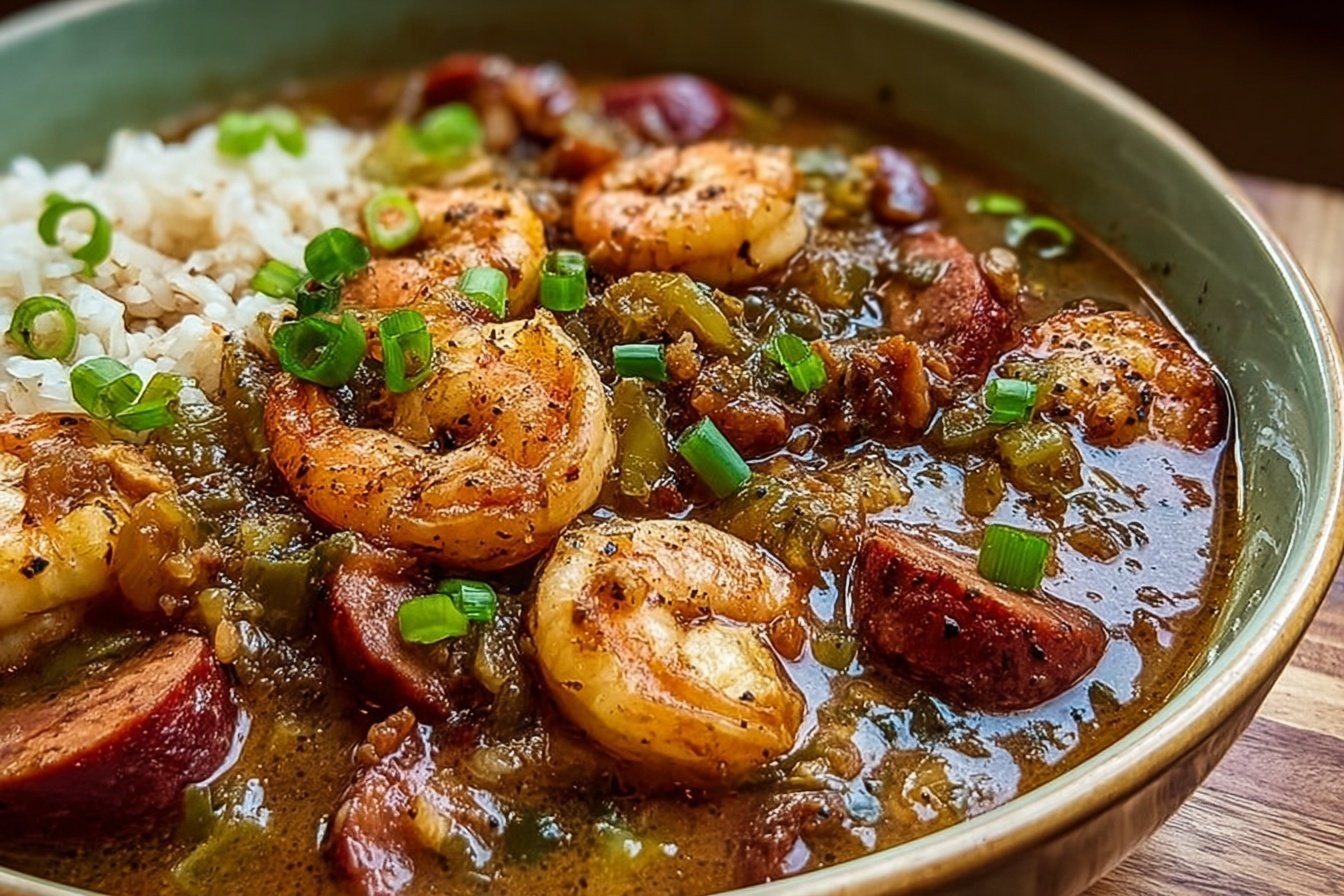
Why You’ll Love This Cajun Gumbo Recipe
This Cajun Gumbo Recipe brings bold Louisiana comfort right to your kitchen. It has that rich, smoky flavor people crave, but the steps are simple enough for a home cook on a busy weeknight. If you love hearty meals that feed a crowd and taste even better the next day, this one is going to be a keeper.
- Easy to make: The method is straightforward, and much of the work happens in one pot after you build the roux. Once the vegetables soften and the sausage is browned, the gumbo comes together with very little fuss.
- Filling and balanced: With chicken, shrimp, sausage, and broth, this Cajun Gumbo Recipe gives you a satisfying meal with plenty of protein. It is also served with rice, which makes it perfect for hungry families and meal prep.
- Flexible for different needs: You can swap kielbasa for andouille, use pre-cooked shrimp, add okra if you like, or leave it out. That makes this gumbo easy to adapt for different tastes and what you already have in the fridge.
- Deep, unforgettable flavor: The dark roux gives the gumbo its signature taste. Add in the Cajun seasoning, chicken broth, sautéed vegetables, sausage drippings, and herbs, and you get a bowl that feels warm, rich, and comforting.
Tip: If you have time, make this Cajun Gumbo Recipe a day ahead. The flavor gets even better after it rests overnight.
If you enjoy comforting Southern-style dinners, you may also like my smothered chicken and rice for another cozy family meal.
Jump To
- 1. Why You’ll Love This Cajun Gumbo Recipe
- 2. Essential Ingredients for Cajun Gumbo Recipe
- 3. How to Prepare the Perfect Cajun Gumbo Recipe: Step-by-Step Guide
- 4. Nutrition and Recipe Details
- 5. Dietary Substitutions to Customize Your Cajun Gumbo Recipe
- 6. Mastering Cajun Gumbo Recipe: Advanced Tips and Variations
- 7. How to Store Cajun Gumbo Recipe: Best Practices
- 8. FAQs: Frequently Asked Questions About Cajun Gumbo Recipe
- 9. Cajun Gumbo Recipe
Essential Ingredients for Cajun Gumbo Recipe
Here is everything you need for this Cajun Gumbo Recipe, listed clearly so you can gather and prep with ease. Each ingredient plays an important role in the final flavor and texture.
For the Roux
- 1 cup flour – forms the base of the roux and helps thicken the gumbo.
- 2/3 cup oil, vegetable or canola oil – mixes with the flour to create the dark, rich roux.
For the Gumbo
- 1 bunch celery, diced, leaves and all – adds classic flavor and depth.
- 1 green bell pepper, diced – part of the Louisiana-style vegetable base.
- 1 large yellow onion, diced – brings sweetness and body to the broth.
- 1 bunch green onions, finely chopped – adds a fresh onion finish.
- 1 bunch fresh chopped parsley, finely chopped – gives the gumbo a bright herbal note.
- 2 to 3 cloves garlic – adds savory flavor and aroma.
- 1 to 2 tablespoons Cajun seasoning – brings spice and classic Cajun taste.
- 8 to 10 cups chicken broth – creates the soup base; chicken bouillon paste can be added for more flavor.
- 1 12 ounce package Andouille sausage, sliced into coins – adds smoky, spicy richness.
- Meat from 1 rotisserie chicken – makes the gumbo hearty and satisfying.
- 2 cups shrimp, uncooked or pre-cooked – adds seafood flavor and extra protein.
- Cooked rice, for serving – the classic way to enjoy gumbo.
Optional Ingredient
- About 1 cup chopped okra – optional, but helpful if you want extra thickness and a more traditional texture.
Special Dietary Options
- Vegetarian: Use vegetable broth instead of chicken broth, skip the chicken and sausage, and add mushrooms, beans, or extra okra for body.
- Gluten-free: Use a gluten-free flour blend for the roux and check that your Cajun seasoning and broth are certified gluten-free.
- Lower-calorie: Use less oil in the roux if needed, choose leaner sausage, and serve a smaller portion of rice with extra broth and vegetables.
For another meal packed with comforting flavor, you might also like chicken pot pie pasta or creamy crab and shrimp seafood bisque.
How to Prepare the Perfect Cajun Gumbo Recipe: Step-by-Step Guide
First Step: Make the Roux
Set a large heavy-bottomed pot or stainless steel Dutch oven over medium-low heat. Add 1 cup flour and 2/3 cup oil, then stir constantly as the mixture cooks for 30 to 45 minutes. The goal is a dark brown roux with the texture of cookie dough. Keep stirring because the roux can go from perfect to burnt quickly, and a burnt roux will make the whole gumbo taste bitter.
As the roux darkens, lower the heat if needed. If it looks too thick, add a little more oil. If it seems too loose, sprinkle in a touch more flour. Patience matters here, because this step builds the deep flavor that makes a Cajun Gumbo Recipe stand out.
Second Step: Brown the Sausage
While the roux cooks, slice the 12 ounce package of Andouille sausage into coins. Place the sausage in a separate skillet over medium-high heat and brown both sides. This step adds color and brings out the smoky flavor in the sausage. Once browned, move the sausage to a plate and set it aside.
If you are using kielbasa instead, brown it the same way. That quick sear helps keep the sausage from tasting flat later in the gumbo.
Third Step: Deglaze the Skillet
After the sausage is removed, pour 1/2 cup chicken broth into the skillet. Use a spoon to loosen the browned bits from the pan, since those little bits carry a lot of flavor. Pour the broth and all the drippings into the pot with the roux.
This small step helps build a richer base and keeps every bit of flavor in your gumbo.
Fourth Step: Add the Broth, Vegetables, and Garlic
Slowly pour in the remaining 8 to 10 cups chicken broth. Then add the diced celery with leaves, green bell pepper, yellow onion, green onions, parsley, and 2 to 3 cloves garlic. Stir well so the roux blends into the broth and coats the vegetables evenly. If you like a slightly thicker gumbo, start with less broth and add more later.
If you want to add okra, stir in about 1 cup chopped okra now with the other vegetables. You can also sauté the okra first with a little white vinegar to reduce the slimy texture if that is something you prefer to avoid.
Fifth Step: Simmer Until the Vegetables Soften
Bring the pot to a boil over medium heat, then let it cook for 5 to 7 minutes. The vegetables should begin to soften, and the gumbo will start smelling wonderful. Skim off any foam that rises to the top so the broth stays clean and smooth. Stir in 1 to 2 tablespoons Cajun seasoning, then taste the broth to see if you want more.
At this stage, you can also stir in a little chicken bouillon paste if the flavor needs more depth. Busy cooks will like that this recipe still feels manageable, even with a few flavor adjustments along the way.
Sixth Step: Add the Shrimp, Chicken, and Sausage
If you are using uncooked shrimp, add the 2 cups now and cook for about 2 minutes, just until they turn pink and curl. Do not overcook them or they can turn rubbery. Next, stir in the meat from 1 rotisserie chicken, the browned sausage, and any pre-cooked shrimp you are using.
This mix of chicken, sausage, and shrimp gives the gumbo a hearty, satisfying feel. It also makes the dish a smart choice when you want one pot to do a lot of the work.
Seventh Step: Taste and Adjust
Taste the gumbo and adjust the seasoning as needed. Add salt, pepper, more Cajun seasoning, extra garlic, chicken bouillon paste, or more broth depending on how bold or thick you want the final dish to be. The best gumbo is the one that tastes right to you, so do not be shy about making small changes.
Good gumbo should taste layered, not rushed. Let each round of seasoning guide you toward a bowl with depth and balance.
Final Step: Serve Over Rice
Spoon the hot gumbo over cooked rice and serve it warm. This recipe makes about 10 servings, so it is great for family dinner, guests, or leftovers through the week. If you can, let the gumbo rest overnight before serving it again. The flavors blend together even more, and many people think it tastes best the next day.
If you want to see another comforting dish with a rich homemade feel, check out loaded baked potato chicken casserole.
Nutrition and Recipe Details
| Recipe Detail | Amount |
|---|---|
| Prep Time | 20 minutes |
| Cook Time | 1 hour |
| Total Time | 1 hour 20 minutes |
| Servings | 10 |
| Calories | 465 per serving |
Approximate Nutrition Per Serving
- Calories: 465
- Carbohydrates: 14g
- Protein: 35g
- Fat: 30g
- Saturated Fat: 6g
- Polyunsaturated Fat: 6g
- Monounsaturated Fat: 13g
- Cholesterol: 167mg
- Sodium: 1247mg
- Potassium: 398mg
- Fiber: 1g
- Sugar: 2g
- Vitamin A: 929 IU
- Vitamin C: 19mg
- Calcium: 61mg
- Iron: 2mg

Dietary Substitutions to Customize Your Cajun Gumbo Recipe
Protein and Main Component Alternatives
If you want to adjust the protein in this Cajun Gumbo Recipe, there are plenty of easy swaps. You can replace Andouille sausage with kielbasa if that is what you have on hand. For a seafood-only version, skip the chicken and add more shrimp, crab, or even firm white fish near the end of cooking.
For a meat-free bowl, use vegetable broth and add beans, mushrooms, and extra okra. The roux and vegetable base still give you a hearty texture, so you do not need meat for the gumbo to feel satisfying. If you are cooking for a mixed crowd, you can also keep the sausage and chicken separate and let each person build their own bowl.
Vegetable, Sauce, and Seasoning Modifications
The classic vegetable base includes celery, bell pepper, onion, green onions, parsley, and garlic, but you can still adjust it a bit. Add okra if you want more thickness. Use a little extra broth if you want a lighter stew. For more heat, add extra Cajun seasoning or a pinch of cayenne pepper.
If you are watching sodium, use low-sodium broth and season slowly. A small amount of chicken bouillon paste can still be helpful, but add it a little at a time. For readers who like to keep dinner simple, this Cajun Gumbo Recipe works beautifully with pantry-friendly ingredients and flexible seasoning.
Mastering Cajun Gumbo Recipe: Advanced Tips and Variations
Pro Cooking Techniques
The biggest secret to a strong gumbo is the roux. Stir constantly and keep the heat steady so it turns dark without scorching. A stainless steel Dutch oven or stockpot works well because you can see the color better as it changes. Also, make the roux ahead of time if you know your day will be busy. It keeps well in the fridge for 3 to 5 days.
Flavor Variations
You can make this Cajun Gumbo Recipe your own by changing the protein mix or adjusting the seasoning. Try more shrimp for a seafood-forward version, or keep it extra hearty with more chicken and sausage. Some cooks like to add a little white vinegar to the okra before cooking, while others prefer the natural texture of okra left alone.
Presentation Tips
Serve the gumbo in wide bowls over fluffy hot rice, then finish with chopped green onions or parsley on top. A few extra spoonfuls of broth over the rice look inviting and help the bowl feel full and cozy. Warm bread on the side is also a nice touch if you are serving guests.
Make-Ahead Options
For busy schedules, make the roux a few days ahead and keep the vegetables chopped in the refrigerator. You can also cook the gumbo a day early and reheat it later. The flavors become richer after resting, which makes this recipe especially helpful for holidays, potlucks, and weekend meal prep.
How to Store Cajun Gumbo Recipe: Best Practices
Let the gumbo cool before storing it in airtight containers. In the refrigerator, it keeps well for 3 to 4 days. For longer storage, freeze it for 2 to 3 months. Keep the rice separate so it does not turn mushy.
To reheat, warm the gumbo on the stovetop over medium heat until it is bubbling. Add a splash of broth if it has thickened too much. If you are reheating a small portion, the microwave works too, but stir halfway through. For safety, reheat leftovers to 165°F before serving.
Meal prep tip: Portion gumbo into smaller containers so lunches are easy to grab all week long.

FAQs: Frequently Asked Questions About Cajun Gumbo Recipe
What’s the difference between gumbo and jambalaya?
Gumbo and jambalaya are both Cajun staples with overlapping ingredients like sausage, chicken, seafood, and the “holy trinity” of onions, celery, and bell peppers, but they differ in form and method. Gumbo is a hearty stew thickened with a dark roux (flour and fat cooked to nutty brown) or okra/filé powder, served over rice. Jambalaya is a one-pot rice dish where everything cooks together, similar to Spanish paella, absorbing flavors directly—no separate rice. Gumbo takes 2-3 hours due to roux-building; jambalaya cooks faster in 45-60 minutes. For authentic Cajun gumbo, focus on a deep roux for rich, earthy taste. If you’re new to both, start with gumbo for its stew-like comfort on cold nights. (92 words)
What is a roux and why does gumbo need it?
A roux is the base of authentic Cajun gumbo, made by whisking equal parts flour and oil (or fat like bacon grease) over medium heat until it turns chocolate-brown—about 20-40 minutes of constant stirring. This “dark roux” delivers nutty, toasted flavor and thickens the stew naturally, creating that signature silky texture without cornstarch. Without it, gumbo lacks depth and body; it’s what sets Louisiana gumbo apart from watery soups. Tip: Use a wide Dutch oven for even cooking—start low to avoid burning, which turns it bitter. Patience is key; a good roux makes or breaks your recipe. Store extras in the fridge up to a week. (98 words)
Can I make roux for gumbo ahead of time?
Yes, prepare your gumbo roux 3-5 days in advance to save time on cooking day. Cook equal parts flour and neutral oil (like vegetable or canola) in a heavy pot over medium-low heat, stirring nonstop until it’s dark brown and smells like roasted nuts—30-45 minutes. Cool completely, then store in a zip-top bag or airtight jar in the fridge. Reheat gently on the stove with a splash of broth before adding to your gumbo. This method prevents rushed, scorched roux and lets flavors mellow. For best results, label with the date; it freezes up to 3 months too. Pro tip: Microwave roux in short bursts as a quicker alternative, but watch closely. (102 words)
How do I store and freeze gumbo?
Fresh gumbo lasts 3-4 days in the fridge: cool it quickly to room temp, then transfer to airtight containers. For freezing, portion into freezer bags or containers (separate from rice to avoid sogginess), leaving headspace for expansion—good for 2-3 months. Thaw overnight in the fridge, then reheat on stovetop over medium heat, stirring until bubbling (add broth if thickened). Microwave works for singles: cover and stir every 2 minutes. Flavors improve after a day, so make ahead for parties. Avoid refreezing thawed gumbo. Always reheat to 165°F for safety. Label bags with dates for easy tracking. (96 words)
Can I add okra to gumbo or skip the chicken?
Absolutely—okra is a classic thickener in gumbo; add 1-2 cups sliced fresh or frozen with the “holy trinity” veggies. Sauté first in vinegar to cut sliminess, or roast to intensify flavor. It’s optional if using roux. Skip chicken easily: just up sausage or shrimp by ½ pound for balance—no other changes needed. This makes it vegetarian-friendly with veggie broth and plant-based sausage, or seafood-only for coastal style. Andouille sausage adds smoky spice. Experiment for your taste; gumbo’s flexible. Check our seafood gumbo variation post for more protein swaps and full recipe tweaks. (94 words)

Cajun Gumbo Recipe
- Total Time: 1 hour 20 minutes
- Yield: 10 servings
Description
🍲 Savor the bold, spicy essence of New Orleans with this authentic gumbo, featuring a rich dark roux and fresh seafood.
🦐 Hearty and comforting, it’s perfect for feeding a crowd at gatherings or cozy family dinners, improving in flavor overnight.
Ingredients
– 1 cup flour forms the base of the roux and helps thicken the gumbo.
– 2/3 cup oil, vegetable or canola oil mixes with the flour to create the dark, rich roux.
– 1 bunch celery, diced, leaves and all adds classic flavor and depth.
– 1 green bell pepper, diced part of the Louisiana-style vegetable base.
– 1 large yellow onion, diced brings sweetness and body to the broth.
– 1 bunch green onions, finely chopped adds a fresh onion finish.
– 1 bunch fresh chopped parsley, finely chopped gives the gumbo a bright herbal note.
– 2 to 3 cloves garlic adds savory flavor and aroma.
– 1 to 2 tablespoons Cajun seasoning brings spice and classic Cajun taste.
– 8 to 10 cups chicken broth creates the soup base; chicken bouillon paste can be added for more flavor.
– 1 12 ounce package Andouille sausage, sliced into coins adds smoky, spicy richness.
– Meat from 1 rotisserie chicken makes the gumbo hearty and satisfying.
– 2 cups shrimp, uncooked or pre-cooked adds seafood flavor and extra protein.
– Cooked rice, for serving the classic way to enjoy gumbo.
– About 1 cup chopped okra optional, but helpful if you want extra thickness and a more traditional texture.
Instructions
1-First Step: Make the Roux Set a large heavy-bottomed pot or stainless steel Dutch oven over medium-low heat. Add 1 cup flour and 2/3 cup oil, then stir constantly as the mixture cooks for 30 to 45 minutes. The goal is a dark brown roux with the texture of cookie dough. Keep stirring because the roux can go from perfect to burnt quickly, and a burnt roux will make the whole gumbo taste bitter. As the roux darkens, lower the heat if needed. If it looks too thick, add a little more oil. If it seems too loose, sprinkle in a touch more flour. Patience matters here, because this step builds the deep flavor that makes a Cajun Gumbo Recipe stand out.
2-Second Step: Brown the Sausage While the roux cooks, slice the 12 ounce package of Andouille sausage into coins. Place the sausage in a separate skillet over medium-high heat and brown both sides. This step adds color and brings out the smoky flavor in the sausage. Once browned, move the sausage to a plate and set it aside. If you are using kielbasa instead, brown it the same way. That quick sear helps keep the sausage from tasting flat later in the gumbo.
3-Third Step: Deglaze the Skillet After the sausage is removed, pour 1/2 cup chicken broth into the skillet. Use a spoon to loosen the browned bits from the pan, since those little bits carry a lot of flavor. Pour the broth and all the drippings into the pot with the roux. This small step helps build a richer base and keeps every bit of flavor in your gumbo.
4-Fourth Step: Add the Broth, Vegetables, and Garlic Slowly pour in the remaining 8 to 10 cups chicken broth. Then add the diced celery with leaves, green bell pepper, yellow onion, green onions, parsley, and 2 to 3 cloves garlic. Stir well so the roux blends into the broth and coats the vegetables evenly. If you like a slightly thicker gumbo, start with less broth and add more later. If you want to add okra, stir in about 1 cup chopped okra now with the other vegetables. You can also sauté the okra first with a little white vinegar to reduce the slimy texture if that is something you prefer to avoid.
5-Fifth Step: Simmer Until the Vegetables Soften Bring the pot to a boil over medium heat, then let it cook for 5 to 7 minutes. The vegetables should begin to soften, and the gumbo will start smelling wonderful. Skim off any foam that rises to the top so the broth stays clean and smooth. Stir in 1 to 2 tablespoons Cajun seasoning, then taste the broth to see if you want more. At this stage, you can also stir in a little chicken bouillon paste if the flavor needs more depth. Busy cooks will like that this recipe still feels manageable, even with a few flavor adjustments along the way.
6-Sixth Step: Add the Shrimp, Chicken, and Sausage If you are using uncooked shrimp, add the 2 cups now and cook for about 2 minutes, just until they turn pink and curl. Do not overcook them or they can turn rubbery. Next, stir in the meat from 1 rotisserie chicken, the browned sausage, and any pre-cooked shrimp you are using. This mix of chicken, sausage, and shrimp gives the gumbo a hearty, satisfying feel. It also makes the dish a smart choice when you want one pot to do a lot of the work.
7-Seventh Step: Taste and Adjust Taste the gumbo and adjust the seasoning as needed. Add salt, pepper, more Cajun seasoning, extra garlic, chicken bouillon paste, or more broth depending on how bold or thick you want the final dish to be. The best gumbo is the one that tastes right to you, so do not be shy about making small changes. Good gumbo should taste layered, not rushed. Let each round of seasoning guide you toward a bowl with depth and balance.
8-Final Step: Serve Over Rice Spoon the hot gumbo over cooked rice and serve it warm. This recipe makes about 10 servings, so it is great for family dinner, guests, or leftovers through the week. If you can, let the gumbo rest overnight before serving it again. The flavors blend together even more, and many people think it tastes best the next day. If you want to see another comforting dish with a rich homemade feel, check out loaded baked potato chicken casserole.
Notes
⏳ Master the dark roux with patience and constant stirring on medium-low heat to avoid burning.
❄️ Prepare the roux 3-5 days ahead and store in the refrigerator for easier assembly.
🍲 This gumbo tastes even better the next day as the flavors meld together.
- Prep Time: 20 minutes
- Cook Time: 1 hour
- Category: Soups & Stews
- Method: Stovetop
- Cuisine: Cajun
Nutrition
- Serving Size: 1 serving
- Calories: 465 calories
- Sugar: 2g
- Sodium: 1247mg
- Fat: 30g
- Saturated Fat: 6g
- Unsaturated Fat: 19g
- Trans Fat: 0g
- Carbohydrates: 14g
- Fiber: 1g
- Protein: 35g
- Cholesterol: 167mg
Keywords: gumbo, New Orleans gumbo, Cajun gumbo, authentic gumbo