
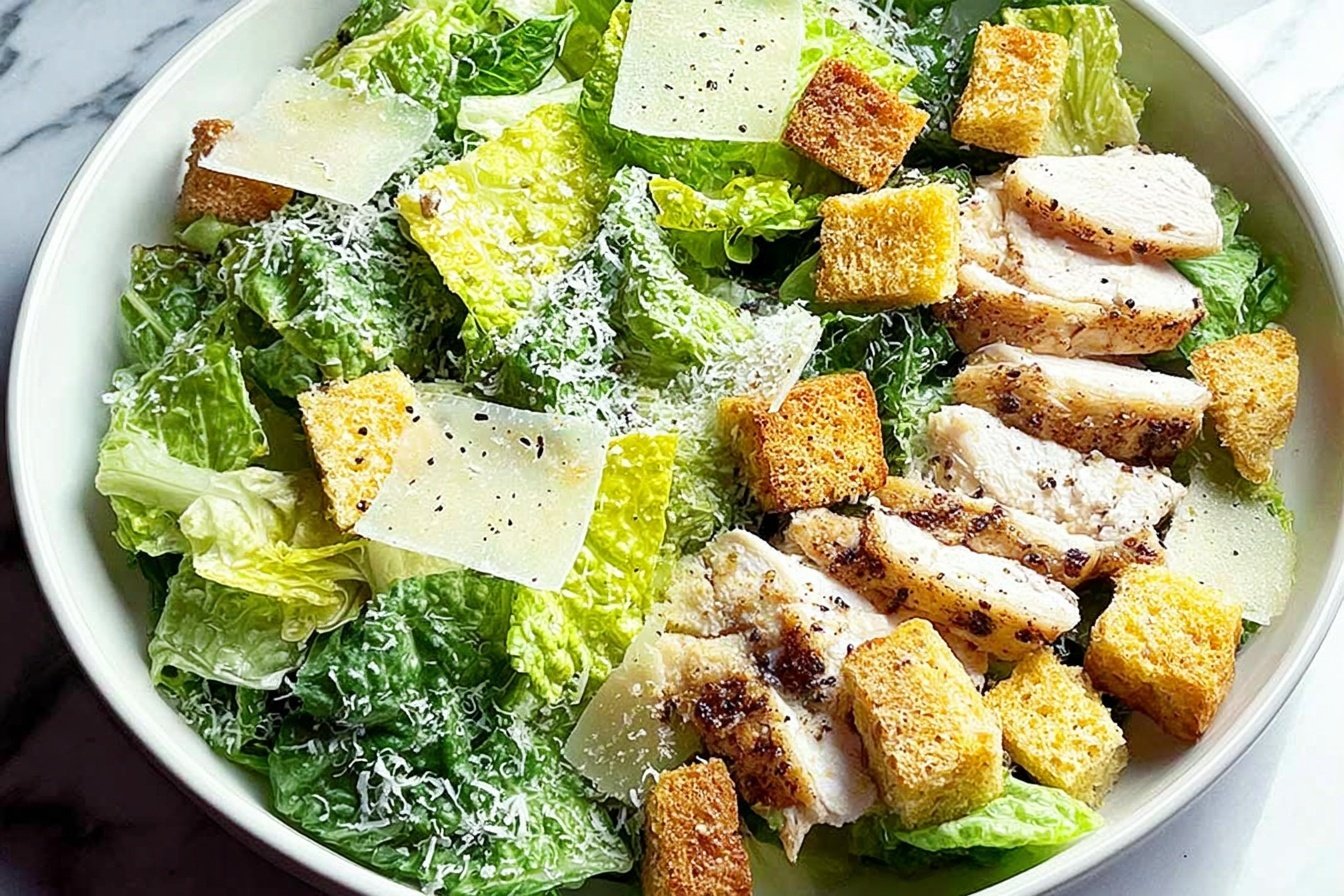
Why You’ll Love This Caesar Salad
There’s something magical about a perfectly crafted Caesar salad that keeps people coming back for more. My family can’t get enough of this easy homemade Caesar salad dressing – it’s packed with just the right balance of tangy lemon, savory anchovy, and rich Parmigiano-Reggiano, and it comes together in just 10 minutes. Whether you’re serving it as a side dish or making it the star of your meal, this recipe delivers restaurant-quality results right from your kitchen.
Here’s why this Caesar salad recipe deserves a permanent spot in your cooking rotation:
- Ease of preparation: This homemade Caesar dressing requires just 10 minutes of prep time and no special equipment beyond a whisk and bowl. You don’t need to worry about tempering eggs or using a blender – simply whisk everything together and you’re done. It’s perfect for busy weeknights when you want something delicious without spending hours in the kitchen.
- Health benefits: Romaine lettuce, the traditional base for Caesar salad, is packed with vitamins A, C, and K, plus folate and fiber. According to Healthline, romaine lettuce offers numerous health benefits including supporting eye health and immune function. The Parmigiano-Reggiano adds calcium and protein, while the lemon juice provides a boost of vitamin C.
- Versatility: This homemade Caesar salad dressing works beautifully beyond traditional Caesar salad. Use it as a dip for vegetables, a spread for sandwiches, or a sauce for grilled chicken. The recipe also adapts easily to dietary preferences – see our substitution section for vegan and lighter options.
- Distinctive flavor: The combination of anchovy paste, Dijon mustard, Worcestershire sauce, and authentic Parmigiano-Reggiano creates that signature umami-rich taste that makes Caesar salad so memorable. Using mayonnaise as the base gives you a safe, creamy texture without the risk of raw eggs.
Jump To
- 1. Why You’ll Love This Caesar Salad
- 2. Essential Ingredients for Caesar Salad
- 3. How to Prepare the Perfect Caesar Salad: Step-by-Step Guide
- 4. Dietary Substitutions to Customize Your Caesar Salad
- 5. Mastering Caesar Salad: Advanced Tips and Variations
- 6. How to Store Caesar Salad: Best Practices
- 7. FAQs: Frequently Asked Questions About Caesar Salad
- 8. Caesar Salad
Essential Ingredients for Caesar Salad
Creating the best Caesar salad dressing recipe starts with quality ingredients. Each component plays a vital role in building that classic flavor profile we all love. Here’s everything you’ll need for the dressing:
Dressing Ingredients
- 2 small cloves garlic (minced) – Fresh garlic provides that essential pungent kick. Mincing it finely helps distribute the flavor evenly throughout the dressing without overpowering bites.
- 1 teaspoon anchovy paste – This is the secret ingredient that gives Caesar dressing its signature savory depth. Anchovy paste is convenient and shelf-stable, usually found near canned tuna at your grocery store.
- 2 tablespoons freshly squeezed lemon juice – Fresh lemon juice adds brightness and acidity that balances the rich, creamy elements. Always use fresh rather than bottled for the best flavor.
- 1 teaspoon Dijon mustard – Dijon adds a subtle heat and helps emulsify the dressing, keeping everything blended smoothly together.
- 1 teaspoon Worcestershire sauce – This fermented sauce adds complexity with its blend of vinegar, molasses, anchovies, and spices.
- 1 cup mayonnaise (best quality) – Mayonnaise creates a safe, creamy base without the need for raw eggs. Choose a high-quality brand for the smoothest texture and best taste.
- 1/2 cup freshly grated Parmigiano-Reggiano – Look for authentic Parmigiano-Reggiano with the embossed rind. This cheese adds nutty, salty richness that defines a great Caesar dressing.
- 1/4 teaspoon salt – A small amount enhances all the other flavors. Remember that the Parmigiano-Reggiano and anchovy paste already contribute saltiness.
- 1/4 teaspoon freshly ground black pepper – Fresh pepper adds a gentle heat and aromatic quality that ties everything together.
For the Salad Base
- Romaine lettuce hearts – The classic choice for Caesar salad, romaine provides the perfect crunch and sturdy texture to hold the creamy dressing.
- Croutons – Homemade or store-bought, these add essential crunch and texture contrast.
- Additional Parmigiano-Reggiano shavings – For garnish and extra cheesy goodness on top.
Special Dietary Options
| Dietary Need | Substitution Options |
|---|---|
| Vegan | Use vegan mayonnaise, substitute anchovy paste with 1 tablespoon nutritional yeast plus 1/2 teaspoon miso paste, and use vegan Parmesan alternative |
| Gluten-free | Ensure Worcestershire sauce is gluten-free (some brands contain barley), use gluten-free croutons or skip them entirely |
| Low-calorie | Use light mayonnaise, reduce amount to 3/4 cup, or substitute half with Greek yogurt for added protein |
| Dairy-free | Omit Parmigiano-Reggiano or use dairy-free cheese alternative; nutritional yeast can add cheesy flavor |
How to Prepare the Perfect Caesar Salad: Step-by-Step Guide
Making easy Caesar salad dressing at home is simpler than you might think. This straightforward method yields a creamy, flavorful dressing that rivals any restaurant version. Follow these steps for perfect results every time.
First Step: Gather and Prep Your Ingredients
Before you begin, measure out all your ingredients and have them ready. This mise en place approach makes the process smooth and ensures you don’t forget anything. Mince your garlic cloves finely – you want the garlic flavor distributed evenly throughout the dressing. Squeeze your lemons fresh, as bottled lemon juice lacks the bright, fresh flavor that makes this dressing special. Grate your Parmigiano-Reggiano cheese using the fine holes on your box grater or a microplane for the best texture.
If you’re making the full salad, now is also the time to prepare your romaine lettuce. Wash the leaves thoroughly and dry them completely – a salad spinner works wonders here. Wet lettuce will dilute your beautiful dressing and make for a soggy salad. Chill the washed, dried romaine in the refrigerator until you’re ready to serve.
Second Step: Create the Flavor Base
In a medium bowl, combine the flavor-building ingredients that will give your dressing its distinctive character. Add the 2 small cloves of minced garlic, 1 teaspoon of anchovy paste, 2 tablespoons of freshly squeezed lemon juice, 1 teaspoon of Dijon mustard, and 1 teaspoon of Worcestershire sauce.
Whisk these ingredients together vigorously until well combined. The anchovy paste might seem intimidating if you’ve never used it before, but trust the process – it melts into the mixture and provides that classic Caesar flavor without an overpowering fishy taste. The lemon juice and mustard will help break down the garlic and create a smooth base.
Pro Tip: If you’re sensitive to raw garlic’s sharp bite, let the minced garlic sit in the lemon juice for about 5 minutes before adding the other ingredients. The acid helps mellow the garlic’s intensity.
Third Step: Add the Creamy Elements
Now it’s time to transform your flavor base into a rich, luscious dressing. Add the 1 cup of mayonnaise to your bowl, followed by the 1/2 cup of freshly grated Parmigiano-Reggiano, 1/4 teaspoon of salt, and 1/4 teaspoon of freshly ground black pepper.
Whisk everything together until completely smooth and well combined. The mayonnaise will create a thick, creamy texture, while the cheese adds body and savory depth. Take your time with this step – you want the dressing to be uniform with no pockets of mayonnaise or clumps of cheese.
The beauty of using mayonnaise as your base is that it eliminates any food safety concerns about raw eggs while still giving you that classic creamy Caesar dressing texture. It’s a modern approach that’s both practical and delicious.
Fourth Step: Taste and Adjust Seasoning
This is perhaps the most important step in creating the best Caesar salad dressing recipe. Taste your dressing and adjust the seasoning as needed. Everyone’s palate is different, and factors like the saltiness of your cheese or the potency of your garlic can vary.
Ask yourself these questions as you taste:
- Does it need more lemon juice for brightness?
- Could it use a bit more salt or pepper?
- Is the anchovy flavor present but not overwhelming?
- Is the texture smooth and spreadable?
Make any adjustments in small increments. A squeeze more lemon juice can brighten the entire dressing, while a pinch more salt can bring all the flavors into focus. Remember that flavors will continue to develop as the dressing sits in the refrigerator.
Final Step: Chill and Serve
For the best flavor, transfer your homemade Caesar dressing recipe to an airtight container and refrigerate for at least a few hours, or preferably overnight. This resting period allows the flavors to meld and mature, resulting in a more cohesive and delicious dressing.
When you’re ready to serve, remove the dressing from the refrigerator about 15 minutes beforehand to take the chill off. Cold dressing can seize up and won’t coat the lettuce as evenly as room-temperature dressing.
To assemble your Caesar salad, place your chilled, dry romaine lettuce in a large bowl. Add croutons if using, then drizzle the dressing over the top. Start with less than you think you need – you can always add more, but you can’t take it back. Toss gently but thoroughly to coat every leaf. Finish with additional shaved Parmigiano-Reggiano on top and a crack of fresh black pepper.
Serve immediately and enjoy the satisfaction of creating restaurant-quality Caesar salad at home. If you enjoy this recipe, check out my pasta salad recipe for another crowd-pleasing dish that’s perfect for gatherings.

Dietary Substitutions to Customize Your Caesar Salad
One of the wonderful things about Caesar salad is how adaptable it is to different dietary needs and preferences. Whether you’re cooking for someone with allergies, trying to reduce calories, or simply working with what you have on hand, there are plenty of ways to customize this classic dish.
Protein and Main Component Alternatives
Traditional Caesar salad is often served as a side dish, but adding protein transforms it into a satisfying main course. Grilled chicken breast is the classic addition – simply season with salt, pepper, and perhaps some Italian herbs before grilling. Slice the cooked chicken and arrange it on top of your dressed salad.
For seafood lovers, grilled or pan-seared salmon pairs beautifully with the tangy dressing. Shrimp, either grilled or poached, is another excellent option that cooks quickly and adds elegant appeal. If you enjoyed my Mexican shrimp cocktail, you’ll love how well shrimp works with Caesar flavors.
Vegetarians can add protein with soft-boiled or poached eggs, crispy chickpeas, or white beans. For a heartier vegetarian option, try adding roasted vegetables like asparagus or Brussels sprouts. Steak strips create a dinner-worthy salad that’s sure to satisfy meat lovers.
Vegetable, Sauce, and Seasoning Modifications
While romaine lettuce is traditional, you can experiment with other greens. Kale makes a sturdy, nutrient-dense base that holds up well to heavy dressing. A mix of romaine and kale gives you the best of both worlds. Arugula adds a peppery kick, while butter lettuce offers a more delicate texture.
For the dressing itself, several substitutions can accommodate dietary restrictions or ingredient availability. If you can’t find anchovy paste, you have options:
- Tinned anchovies: Mash 2-3 fillets into a paste with the side of your knife
- Fish sauce: Use 1-2 teaspoons for similar umami depth
- Capers: Mash 1 teaspoon for a vegetarian option with briny character
- For vegan diets: Combine nutritional yeast with miso paste
If you’re watching calories, consider using half mayonnaise and half Greek yogurt. This substitution reduces fat while adding protein and creating a tangy twist on the classic flavor. Light mayonnaise also works well, though it may slightly alter the texture.
Those avoiding dairy can skip the Parmigiano-Reggiano and add extra salt and a pinch of nutritional yeast for cheesy flavor. Several brands now make convincing dairy-free Parmesan alternatives that melt and taste similar to the real thing.
Mastering Caesar Salad: Advanced Tips and Variations
Once you’ve mastered the basic homemade Caesar salad dressing, you can start experimenting with techniques and variations that will make your salads truly memorable. These advanced tips come from years of testing and will help you achieve consistently excellent results.
Pro Cooking Techniques
The quality of your ingredients directly impacts your final result. Always seek out authentic Parmigiano-Reggiano rather than generic Parmesan cheese. Real Parmigiano-Reggiano has its name stamped in dotted letters around the rind and comes from a specific region in Italy. This cheese has been aged a minimum of 12 months, developing complex nutty and fruity notes that generic cheeses simply cannot match.
Temperature matters more than you might think. Cold dressing on cold lettuce creates a refreshing experience, but if your ingredients are too cold, the flavors become muted. Let your cheese come to room temperature before grating for better flavor release. Similarly, taking the dressing out of the refrigerator 15-20 minutes before serving allows the flavors to open up.
For the crispest lettuce, wash your romaine ahead of time and store it wrapped in clean kitchen towels or paper towels in the refrigerator. The towels absorb excess moisture, keeping the leaves crisp for days.
Flavor Variations
While classic Caesar dressing is perfect as is, sometimes it’s fun to mix things up. Here are some delicious variations to try:
- Roasted garlic Caesar: Roast a head of garlic until soft and sweet, then squeeze the cloves into your dressing instead of raw garlic for a mellower, richer flavor
- Spicy Caesar: Add a teaspoon of sriracha or a pinch of cayenne pepper for heat that cuts through the richness
- Herb Caesar: Stir in a tablespoon of fresh chopped herbs like basil, tarragon, or chives for a fresh twist
- Lemon-garlic intensive: Double the garlic and add extra lemon zest for a more pronounced citrus-garlic punch
- Smoky Caesar: Add a drop or two of liquid smoke or use smoked paprika for an intriguing depth
Presentation Tips
We eat with our eyes first, and a beautifully presented Caesar salad elevates the entire dining experience. Serve your salad on chilled plates for a professional touch. For individual servings, present the dressed salad in large, shallow bowls that show off the ingredients.
Consider texture contrast when plating. A sprinkle of homemade croutons adds crunch, while a few shavings of Parmigiano-Reggiano on top create visual interest. A light dusting of fresh cracked pepper finishes the look.
For entertaining, serve the salad family-style in a large wooden bowl. The dressing can be served on the side in a small pitcher, allowing guests to dress their own portions to preference.
Make-Ahead Options
The dressing actually improves with time, making it perfect for meal prep. Make a double batch on Sunday and you’ll have dressing ready for quick salads throughout the week. The flavors continue to develop and meld over the first 24-48 hours.
You can also prep the romaine lettuce ahead of time. Wash, dry, and chop the lettuce, then store it in a container lined with paper towels. It will stay crisp for 3-4 days this way. Keep the croutons separate in an airtight container to maintain their crunch.
How to Store Caesar Salad: Best Practices
Proper storage is essential for maintaining the quality and safety of your homemade Caesar salad dressing. Here’s everything you need to know about keeping your dressing and salad components fresh.
Refrigeration Guidelines
Store your prepared dressing in an airtight container in the refrigerator. Glass jars work particularly well because they don’t absorb odors and are easy to clean. The dressing will keep for up to one week when properly refrigerated at 40 degrees F (4 degrees C) or below.
Always use clean utensils when scooping out dressing to prevent contamination. If you notice any separation, simply give the dressing a quick whisk or shake before using. This is normal and doesn’t indicate spoilage.
For dressed salad, the rules are different. Once you’ve tossed your lettuce with dressing, it should be eaten immediately. The acid in the dressing will begin to break down the lettuce, causing it to wilt and become soggy. If you have leftover dressed salad, it’s best enjoyed within a few hours.
Freezing Options
While mayonnaise-based dressings can be frozen, the texture may change slightly upon thawing. The emulsion can break, resulting in a separated appearance. If you want to freeze leftover dressing, use ice cube trays for portion-sized amounts. Once frozen, transfer the cubes to a freezer bag for storage up to 2 months.
Thaw frozen dressing cubes overnight in the refrigerator, then whisk vigorously to recombine. The texture might be slightly different from fresh, but the flavor should remain excellent.
Reheating and Serving
Caesar dressing is served cold, so no reheating is necessary. However, you should remove it from the refrigerator about 15-20 minutes before serving. Cold dressing is thicker and doesn’t coat lettuce as evenly as dressing that’s closer to room temperature.
Never leave dressing at room temperature for more than 2 hours, as this can allow bacteria to grow. If you’re serving dressing at a party or potluck, keep the serving bowl over ice to maintain a safe temperature.
Meal Prep Considerations
Caesar salad is an excellent candidate for meal prep when you keep the components separate. Prepare a batch of dressing on the weekend, wash and chop your romaine lettuce, and store them separately. Each day, portion out what you need and dress just before eating.
Croutons should always be stored separately from both the lettuce and dressing. Keep them in an airtight container at room temperature for up to a week, or freeze for longer storage.
FAQs: Frequently Asked Questions About Caesar Salad
What are the main ingredients in a classic Caesar salad?
A classic Caesar salad starts with crisp romaine lettuce hearts as the base, cut into bite-sized pieces. It includes homemade dressing made from garlic, anchovy paste (or fillets), fresh lemon juice, Dijon mustard, Worcestershire sauce, mayonnaise, grated Parmigiano-Reggiano cheese, salt, and black pepper. Crunchy homemade croutons from cubed bread tossed in olive oil, garlic, and herbs add texture. Finish with extra shaved Parmigiano-Reggiano. For best results, wash and dry romaine thoroughly, chill it before assembly, and toss everything just before serving to keep it fresh. This combination delivers the signature tangy, umami-rich flavor invented by Caesar Cardini in 1924. Avoid pre-bagged mixes for maximum freshness—total prep time is about 20 minutes. Serves 4 as a side.
What ingredients do I need for homemade Caesar salad dressing?
For authentic homemade Caesar salad dressing, gather these key items: 2-3 garlic cloves (minced), 1-2 teaspoons anchovy paste (or 4 fillets), 2 tablespoons fresh lemon juice, 1 teaspoon Dijon mustard, 1 teaspoon Worcestershire sauce, 1/2 cup mayonnaise (as the creamy base), 1/4 cup grated Parmigiano-Reggiano, 1/4 teaspoon salt, and fresh black pepper to taste. Blend or whisk vigorously until smooth—start with wet ingredients, then add cheese last. This egg-free version skips raw eggs for safety and creaminess. Adjust lemon for tang or anchovy for savoriness. Yields about 3/4 cup, enough for 8-10 servings. Store in a jar; shake before use. Pro tip: Taste and tweak seasoning after blending for perfect balance every time.
Can I make Caesar salad dressing without anchovies?
Yes, you can skip anchovies in Caesar salad dressing and still get great umami flavor. Use 1-2 teaspoons of fish sauce as a direct substitute—it’s concentrated and easy to find. Capers (1 teaspoon mashed) or soy sauce (1/2 teaspoon) work too, though they slightly shift the taste toward brinier or saltier notes. For vegan options, combine nutritional yeast (1 tablespoon) with a splash of liquid smoke or miso paste. Start with half the amount and taste-test. Blend with the standard recipe’s garlic, lemon juice, Dijon, Worcestershire (use tamari for vegan), mayo (or vegan mayo), and Parmigiano-Reggiano (or vegan alternative). It emulsifies just as well. This addresses fish allergies or preferences—many home cooks prefer these swaps for convenience without losing the dressing’s bold profile.
How long does homemade Caesar salad dressing last in the fridge?
Homemade Caesar salad dressing lasts up to 1 week in the fridge when stored properly in an airtight glass jar or container. The mayonnaise base helps it stay stable without raw eggs, but dairy and garlic can cause separation or spoilage after that. Keep it at 40°F (4°C) or below—check for off smells, mold, or thinning before use. For longer storage, freeze in ice cube trays for up to 2 months; thaw portions overnight in the fridge. Don’t leave it out over 2 hours to avoid bacterial growth. Label with the date made. Fresh batches taste best within 3-4 days. If using raw garlic or lemon, consume sooner. This makes meal prep easy—portion for salads throughout the week.
How do I know if my Parmesan cheese is real Parmigiano-Reggiano for Caesar salad?
Authentic Parmigiano-Reggiano has its name stamped in bold, dotted lettering around the rind—look for “Parmigiano-Reggiano” and a production code with year. Pre-grated or block versions must list it explicitly on the label; avoid generic “Parmesan,” which is often lower-quality. Buy from wedges at specialty stores for freshness—it grates finer and melts better in dressing. Aim for 24-36 month aged for nutty sharpness that elevates Caesar’s flavor. Store in wax paper in the fridge up to 6 months, or freeze grated portions. In recipes, use 1/4 cup finely grated per batch. Fun fact: True Parmigiano-Reggiano is made only in Italy’s Parma region under strict DOP rules, ensuring superior taste and texture over imitations.

Caesar Salad
- Total Time: 10 minutes
- Yield: 10 servings
- Diet: Low-Carb
Description
🥗 Experience restaurant-quality flavor with this creamy, tangy homemade Caesar dressing that’s fresher and healthier than store-bought.
🍋 Quick to make in 10 minutes with no raw eggs, it’s packed with umami from anchovies and Parmesan for salads that wow!
Ingredients
– 2 small cloves garlic (minced)
– 1 teaspoon anchovy paste
– 2 tablespoons freshly squeezed lemon juice
– 1 teaspoon Dijon mustard
– 1 teaspoon Worcestershire sauce
– 1 cup mayonnaise (best quality)
– 1/2 cup freshly grated Parmigiano-Reggiano
– 1/4 teaspoon salt
– 1/4 teaspoon freshly ground black pepper
– Romaine lettuce hearts
– Croutons
– Additional Parmigiano-Reggiano shavings
Instructions
1-First Step: Gather and Prep Your Ingredients Before you begin, measure out all your ingredients and have them ready. This mise en place approach makes the process smooth and ensures you don’t forget anything. Mince your garlic cloves finely – you want the garlic flavor distributed evenly throughout the dressing. Squeeze your lemons fresh, as bottled lemon juice lacks the bright, fresh flavor that makes this dressing special. Grate your Parmigiano-Reggiano cheese using the fine holes on your box grater or a microplane for the best texture. If you’re making the full salad, now is also the time to prepare your romaine lettuce. Wash the leaves thoroughly and dry them completely – a salad spinner works wonders here. Wet lettuce will dilute your beautiful dressing and make for a soggy salad. Chill the washed, dried romaine in the refrigerator until you’re ready to serve.
2-Second Step: Create the Flavor Base In a medium bowl, combine the flavor-building ingredients that will give your dressing its distinctive character. Add the 2 small cloves of minced garlic, 1 teaspoon of anchovy paste, 2 tablespoons of freshly squeezed lemon juice, 1 teaspoon of Dijon mustard, and 1 teaspoon of Worcestershire sauce. Whisk these ingredients together vigorously until well combined. The anchovy paste might seem intimidating if you’ve never used it before, but trust the process – it melts into the mixture and provides that classic Caesar flavor without an overpowering fishy taste. The lemon juice and mustard will help break down the garlic and create a smooth base.
3-Third Step: Add the Creamy Elements Now it’s time to transform your flavor base into a rich, luscious dressing. Add the 1 cup of mayonnaise to your bowl, followed by the 1/2 cup of freshly grated Parmigiano-Reggiano, 1/4 teaspoon of salt, and 1/4 teaspoon of freshly ground black pepper. Whisk everything together until completely smooth and well combined. The mayonnaise will create a thick, creamy texture, while the cheese adds body and savory depth. Take your time with this step – you want the dressing to be uniform with no pockets of mayonnaise or clumps of cheese. The beauty of using mayonnaise as your base is that it eliminates any food safety concerns about raw eggs while still giving you that classic creamy Caesar dressing texture. It’s a modern approach that’s both practical and delicious.
4-Fourth Step: Taste and Adjust Seasoning This is perhaps the most important step in creating the best Caesar salad dressing recipe. Taste your dressing and adjust the seasoning as needed. Everyone’s palate is different, and factors like the saltiness of your cheese or the potency of your garlic can vary. Ask yourself these questions as you taste: * Does it need more lemon juice for brightness? * Could it use a bit more salt or pepper? * Is the anchovy flavor present but not overwhelming? * Is the texture smooth and spreadable? Make any adjustments in small increments. A squeeze more lemon juice can brighten the entire dressing, while a pinch more salt can bring all the flavors into focus. Remember that flavors will continue to develop as the dressing sits in the refrigerator.
5-Final Step: Chill and Serve For the best flavor, transfer your homemade Caesar dressing recipe to an airtight container and refrigerate for at least a few hours, or preferably overnight. This resting period allows the flavors to meld and mature, resulting in a more cohesive and delicious dressing. When you’re ready to serve, remove the dressing from the refrigerator about 15 minutes beforehand to take the chill off. Cold dressing can seize up and won’t coat the lettuce as evenly as room-temperature dressing. To assemble your Caesar salad, place your chilled, dry romaine lettuce in a large bowl. Add croutons if using, then drizzle the dressing over the top. Start with less than you think you need – you can always add more, but you can’t take it back. Toss gently but thoroughly to coat every leaf. Finish with additional shaved Parmigiano-Reggiano on top and a crack of fresh black pepper. Serve immediately and enjoy the satisfaction of creating restaurant-quality Caesar salad at home. If you enjoy this recipe, check out my pasta salad recipe for another crowd-pleasing dish that’s perfect for gatherings.
Notes
🐟 Use anchovy paste for convenience and authentic umami flavor (found near tuna).
🧀 Choose real Parmigiano-Reggiano for superior taste and texture.
⏰ Refrigerate for a few hours or overnight to let flavors meld perfectly.
- Prep Time: 10 minutes
- Chill: Few hours
- Cook Time: 0 minutes
- Category: Salad Dressing
- Method: Whisk
- Cuisine: Italian-American
Nutrition
- Serving Size: 2 tablespoons
- Calories: 184
- Sugar: 0g
- Sodium: 296mg
- Fat: 19g
- Saturated Fat: 1g
- Unsaturated Fat: 18g
- Trans Fat: 0g
- Carbohydrates: 1g
- Fiber: 0g
- Protein: 2g
- Cholesterol: 13mg
Keywords: homemade caesar dressing, caesar salad dressing recipe, caesar dressing, best caesar dressing