
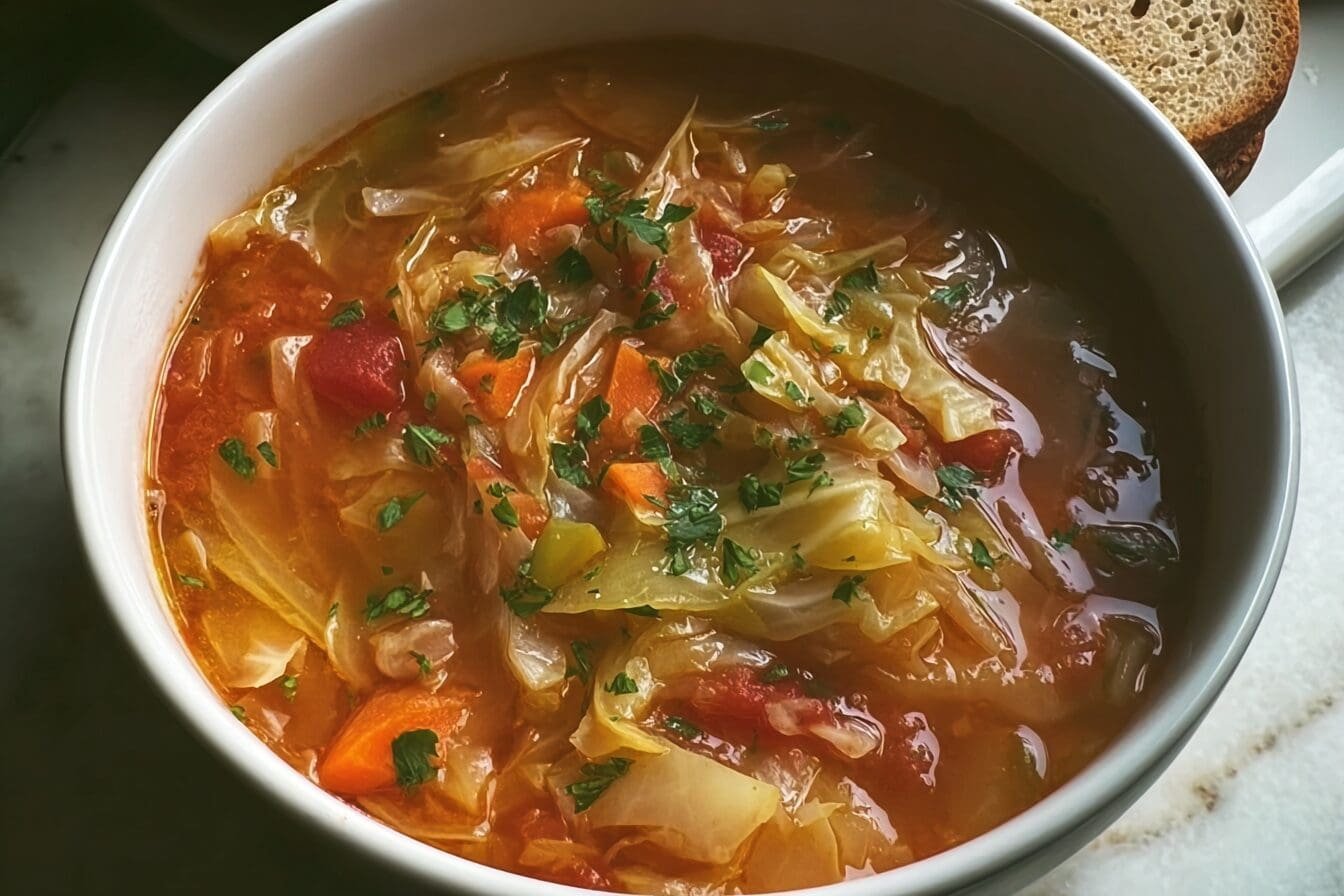
Why You’ll Love This Cabbage Soup
There’s something truly special about a warm bowl of cabbage soup on a chilly evening. When I first made this recipe, I was amazed at how such simple ingredients could transform into something so satisfying and delicious. This soup has become a staple in my kitchen, and I’m excited to share why it deserves a spot in yours too.
Ease of Preparation
This cabbage soup recipe is incredibly simple to make, even for beginner cooks. With just 15 minutes of prep time and about 35 minutes of cooking, you can have a hearty, homemade meal on the table in under an hour. The process involves basic chopping and simmering, so you don’t need any fancy equipment or advanced cooking skills. Just a pot, a knife, and a cutting board are all you need to create this nourishing dish.
Health Benefits
This soup is packed with nutrients from fresh vegetables and plant-based protein from white beans. Cabbage is rich in vitamins C and K, plus it provides fiber that supports digestive health. The addition of carrots, celery, and onions adds antioxidants, while the white beans contribute protein and fiber. A single serving contains moderate calories, making it an excellent choice for anyone looking to enjoy a filling meal without overindulging. According to Healthline, cabbage offers numerous health benefits, including anti-inflammatory properties and support for heart health.
Versatility
One of the best things about this cabbage soup is how easily it adapts to different dietary preferences. It’s naturally vegan and gluten-free as written, but you can easily customize it to suit your needs. Want extra protein? Add some cooked chicken or sausage. Following a low-calorie diet? This soup fits perfectly into your meal plan. You can also swap vegetables based on what’s in season or what you have on hand, making this recipe both flexible and budget-friendly.
Distinctive Flavor
The combination of fire-roasted tomatoes, white wine vinegar, and fresh garlic creates a flavor profile that’s both tangy and subtly sweet. As the cabbage cooks down, it releases natural sugars that balance beautifully with the acidity from the vinegar and tomatoes. The dried thyme adds an earthy note that ties everything together, resulting in a soup that feels like a cozy hug in a bowl.
Jump To
- 1. Why You’ll Love This Cabbage Soup
- 2. Essential Ingredients for Cabbage Soup
- 3. How to Prepare the Perfect Cabbage Soup: Step-by-Step Guide
- 4. Dietary Substitutions to Customize Your Cabbage Soup
- 5. Mastering Cabbage Soup: Advanced Tips and Variations
- 6. How to Store Cabbage Soup: Best Practices
- 7. FAQs: Frequently Asked Questions About Cabbage Soup
- 8. Cabbage Soup
Essential Ingredients for Cabbage Soup
Gathering the right ingredients is the first step to making a delicious pot of cabbage soup. Each component plays an important role in building flavor, texture, and nutritional value. Here’s everything you’ll need to create this hearty, plant-based dish:
Main Ingredients
- 1 small green cabbage (about 1 pound or 9 cups chopped) – The star of the show, cabbage adds volume, sweetness, and plenty of nutrients while keeping calories low.
- 2 carrots, chopped – Provide natural sweetness and a pop of color, plus beta-carotene and fiber.
- 1 medium yellow onion, diced – Creates a savory flavor base when sautéed with other aromatics.
- 1 celery rib, diced – Adds subtle herbal notes and crunch, enhancing the overall depth of flavor.
- 2 tablespoons extra-virgin olive oil – Used for sautéing the vegetables, it adds healthy fats and helps develop flavor.
- 2 tablespoons white wine vinegar – Brings brightness and acidity that balances the natural sweetness of the cabbage.
- 2 (14.5-ounce) cans diced fire-roasted tomatoes – Provide a rich, smoky tomato flavor and create the brothy base of the soup.
- 4 cups vegetable broth – Forms the liquid foundation, adding savory depth without overpowering the vegetables.
- 1 (15.5-ounce) can white beans (such as navy or cannellini), drained and rinsed – Adds plant-based protein and makes the soup more filling and satisfying.
- 4 garlic cloves, grated – Infuses the soup with aromatic, savory flavor throughout the cooking process.
- 2 Yukon Gold potatoes, diced – Contribute heartiness and help thicken the broth naturally as they cook.
- ¾ teaspoon dried thyme – Provides earthy, herbaceous notes that complement the vegetables beautifully.
- Salt and pepper to taste – Essential seasonings that enhance and balance all the other flavors.
- Fresh parsley for garnish – Adds a pop of fresh color and a bright, herbal finish when serving.
Special Dietary Options
- Vegan: This recipe is naturally vegan when made with vegetable broth as written.
- Gluten-free: All ingredients are naturally gluten-free, just verify your vegetable broth is certified gluten-free.
- Low-calorie: This soup is already low in calories, but skip the bread dip to keep it even lighter.
How to Prepare the Perfect Cabbage Soup: Step-by-Step Guide
Making this cabbage soup is a straightforward process that anyone can master. Follow these detailed steps to create a pot of warm, nourishing goodness that will fill your kitchen with incredible aromas.
Step 1: Prepare Your Vegetables
Before you start cooking, take some time to chop all your vegetables. Dice the onion and celery into small, even pieces so they cook uniformly. Chop the carrots into rounds or half-moons, depending on their thickness. Cut the cabbage into bite-sized pieces, discarding the tough core. Dice the Yukon Gold potatoes into half-inch cubes. Grate your garlic cloves or mince them finely. Having everything prepped beforehand makes the cooking process smooth and stress-free.
Step 2: Build Your Flavor Base
Place a large pot or Dutch oven over medium heat and add the two tablespoons of extra-virgin olive oil. Once the oil shimmers slightly, add the chopped carrots, diced onion, diced celery, and a generous pinch of salt and pepper. Stir everything together and let it cook for about 8 minutes, stirring occasionally. This step, known as creating a soffritto or mirepoix, allows the vegetables to soften and release their natural sugars, building a foundation of flavor that will permeate the entire soup.
Step 3: Add Brightness with Vinegar
After the vegetables have softened and become fragrant, pour in the two tablespoons of white wine vinegar. Stir well to combine and let it cook for about 30 seconds. The vinegar adds a wonderful brightness that will balance the sweetness of the cabbage and tomatoes. Adding the vinegar at this stage, rather than at the end, allows its sharpness to mellow while still providing that essential tangy note. If you love hearty vegetable dishes like my ground beef and cabbage recipe, you’ll appreciate how these flavors develop.
Step 4: Combine All Remaining Ingredients
Now it’s time to bring everything together. Add the two cans of fire-roasted diced tomatoes (with their juices), the four cups of vegetable broth, the drained and rinsed white beans, the grated garlic, the diced potatoes, the chopped cabbage, and the dried thyme. Give everything a good stir to combine. At this point, the pot will look very full, but don’t worry, the cabbage will cook down significantly.
Step 5: Simmer Until Tender
Increase the heat to bring the soup to a gentle boil, then reduce the heat to low and cover the pot with a lid. Let the soup simmer for 20 to 30 minutes, or until the potatoes are tender when pierced with a fork and the cabbage has softened to your liking. The simmering process allows all the flavors to meld together beautifully while the cabbage becomes silky and the potatoes turn perfectly tender. Check occasionally and give it a stir to make sure nothing sticks to the bottom.
Step 6: Season and Serve
Once everything is cooked through, taste the soup and adjust the seasonings with additional salt and pepper as needed. Remember that the flavors will continue to develop as the soup sits, so don’t be shy with the seasoning. Ladle the hot soup into bowls and garnish each serving with fresh chopped parsley for a pop of color and freshness. This cabbage soup pairs wonderfully with crusty bread for dipping or alongside a simple sandwich for a more substantial meal.
Pro Tip: The soup tastes even better the next day after the flavors have had time to meld together overnight in the refrigerator.

Dietary Substitutions to Customize Your Cabbage Soup
One of the wonderful things about this cabbage soup is how easily it adapts to different dietary needs and preferences. Whether you’re looking to change up the protein, accommodate food sensitivities, or simply use what you have on hand, here are plenty of ways to make this recipe your own.
Protein and Main Component Alternatives
While white beans provide excellent plant-based protein, you can easily switch things up. Cannellini or navy beans work beautifully, but feel free to try great northern beans or even chickpeas for a different texture. If you’re not following a plant-based diet, adding cooked shredded chicken, turkey, or even browned ground turkey can increase the protein content. For a heartier version similar to my creamed cabbage ground beef casserole, you could add browned ground beef or turkey. Sausage lovers might enjoy slices of cooked Italian sausage or andouille for a spicier twist. Tofu cubes or tempeh work well for vegans seeking additional protein.
Vegetable, Sauce, and Seasoning Modifications
The vegetable combination in this recipe is classic, but you can certainly mix things up based on what’s seasonal or available. Adding cauliflower florets increases the vegetable content without dramatically changing the flavor profile. Chopped bell peppers in any color bring sweetness and crunch. Zucchini or yellow squash work nicely, especially in summer months when they’re abundant. For seasoning variations, try adding a teaspoon of smoked paprika for depth, or a pinch of red pepper flakes for heat. Turmeric and ginger add anti-inflammatory benefits and warm, earthy notes. A splash of lemon juice can substitute for the white wine vinegar if that’s what you have on hand. Fresh herbs like rosemary or sage can replace or complement the dried thyme.
Mastering Cabbage Soup: Advanced Tips and Variations
Once you’ve mastered the basic cabbage soup recipe, there are plenty of ways to elevate it and make it uniquely yours. These tips and variations will help you get the most out of every batch.
Pro Cooking Techniques
For deeper flavor development, try roasting your vegetables before adding them to the soup. Roasted cabbage develops a caramelized sweetness that transforms the entire dish. You can also sauté the tomato paste briefly before adding the liquid to intensify the tomato flavor. Another technique is to blend a portion of the soup and return it to the pot, which creates a creamier texture without adding any dairy. If you prefer a more robust flavor profile, deglaze the pot after sautéing the vegetables with a splash of vegetable broth before adding the remaining ingredients.
Flavor Variations
The basic cabbage soup recipe serves as an excellent canvas for different flavor profiles. For an Italian-inspired version, add dried oregano, basil, and a parmesan cheese rind while simmering. A Mediterranean twist could include sun-dried tomatoes, olives, and fresh rosemary. For Asian-inspired flavors, add ginger, soy sauce or tamari, and a splash of sesame oil at the end. Mexican-style variations might include cumin, chili powder, cilantro, and a squeeze of lime. Each variation brings something unique while maintaining the comforting essence of the original recipe.
Presentation Tips
How you serve cabbage soup can make it feel extra special. Top each bowl with a drizzle of good quality olive oil and a sprinkle of flaky sea salt. Fresh herbs like parsley, chives, or dill add color and brightness. A dollop of plain Greek yogurt or a swirl of coconut cream creates visual appeal and adds creaminess. Serve with a side of crusty bread, cornbread, or even homemade croutons for texture contrast. For entertaining, consider serving the soup in bread bowls for an impressive presentation that’s also edible.
Make-Ahead Options
This soup is ideal for meal prep and batch cooking. You can chop all the vegetables up to three days in advance and store them in airtight containers in the refrigerator. The soup itself keeps beautifully, and the flavors actually improve after a day or two. Consider making a double batch and freezing half for a future meal. If you’re preparing for the week, portion the cooled soup into individual containers for grab-and-go lunches that reheat quickly.
How to Store Cabbage Soup: Best Practices
Proper storage ensures your cabbage soup stays fresh and delicious for as long as possible. Follow these guidelines to maximize both quality and safety.
Refrigeration Guidelines
Allow the soup to cool to room temperature before transferring it to storage containers, but don’t let it sit out for more than two hours. Place the cooled soup in airtight containers and store in the refrigerator for up to four days. Glass containers work particularly well as they don’t absorb odors and are easy to reheat in. For quicker cooling, divide large batches into smaller containers, which allows the temperature to drop more rapidly.
Freezing Instructions
This cabbage soup freezes excellently, making it perfect for batch cooking. After the soup has cooled completely, transfer it to freezer-safe containers or heavy-duty freezer bags, leaving about an inch of headspace to allow for expansion. Label with the date and contents, then freeze for up to three months. For convenient single servings, freeze portions in individual containers. The cabbage may become slightly softer after freezing, but the flavor remains excellent.
Reheating Recommendations
To thaw frozen soup, transfer it to the refrigerator overnight for gradual defrosting. For faster thawing, place the sealed container in a bowl of cold water, changing the water every 30 minutes. Reheat the soup in a pot over medium heat, stirring occasionally until it reaches a gentle simmer. You can also use a microwave, heating in one-minute intervals and stirring between each until hot throughout. Add a splash of vegetable broth or water if the soup has thickened too much during storage.
FAQs: Frequently Asked Questions About Cabbage Soup
What is cabbage soup and why is it popular?
Cabbage soup is a simple, low-calorie dish made primarily from cabbage, tomatoes, onions, green peppers, celery, carrots, and broth or water. It’s popular for its ease of preparation, affordability, and role in quick weight loss diets like the 7-day cabbage soup diet, where it’s eaten daily alongside specific fruits, vegetables, and proteins. The soup provides filling fiber and nutrients from veggies while keeping calories low—around 50 per serving—making it ideal for detox or slimming goals. To make a basic batch, chop 1 head of cabbage, 6 tomatoes, 2 onions, 2 green peppers, 3 celery stalks, 4 carrots, and simmer in 8 cups of water or broth with garlic, salt, and pepper for 1-2 hours until tender. This hearty soup curbs hunger and supports hydration without added fats.
How do you make cabbage soup at home?
Making cabbage soup is straightforward and takes about 30 minutes of prep plus 1-2 hours simmering. Ingredients for 8-10 servings: 1 large cabbage (shredded), 6 tomatoes (diced), 2 onions (chopped), 2 green bell peppers (sliced), 3 celery stalks (chopped), 4 carrots (sliced), 8 cups vegetable or beef broth, 4 garlic cloves (minced), salt, pepper, and optional herbs like thyme. Steps: Sauté onions, garlic, peppers, celery, and carrots in a large pot with a splash of oil for 5 minutes. Add cabbage, tomatoes, broth, and seasonings. Bring to a boil, then simmer covered for 1-2 hours until veggies are soft. Blend partially for creaminess if desired. Serve hot; it tastes better the next day. Store leftovers in the fridge for up to 5 days. This recipe yields under 100 calories per bowl.
How many calories are in cabbage soup?
A standard 2-cup serving of homemade cabbage soup has about 50-80 calories, depending on ingredients. Plain versions with water or broth, cabbage, tomatoes, onions, peppers, celery, and carrots total around 50 calories—mostly from veggies’ natural sugars and fiber. Adding lean beef or chicken bumps it to 100-150 calories. For accuracy, track: cabbage (22 cal/cup), tomatoes (27 cal/2), carrots (25 cal/2), etc. It’s low-carb (10-15g net carbs) and high-volume, promoting satiety. Avoid high-calorie add-ins like oil or cheese to keep it diet-friendly. Use apps like MyFitnessPal for custom calculations. Pair with proteins for balanced meals; one pot feeds a family for days under 500 calories total daily intake on restrictive plans.
Can you freeze cabbage soup?
Yes, cabbage soup freezes well. Allow it to cool to room temperature, then transfer it to freezer-safe containers or bags, leaving 1-inch headspace for expansion. Label with the date; it keeps for up to 3 months in the freezer. To thaw, place in the fridge overnight or use the cold water method (submerge sealed bag in cold water, changing every 30 minutes). Reheat on the stovetop over medium heat until bubbling, stirring occasionally, or microwave in short bursts. Cabbage may soften slightly after freezing, but flavor holds up great. Portion into single servings for convenience. Avoid repeated freeze-thaw cycles to maintain texture. This makes meal prep easy for busy weeks or diet adherence.
How long does cabbage soup last in the fridge?
Cabbage soup lasts 4-5 days in the fridge when stored properly in an airtight container at 40°F or below. Check for spoilage signs like off odors, sliminess, or mold before eating. Its high veggie content and acidity from tomatoes help preservation, but cool it quickly after cooking to under 140°F within 2 hours. For longer storage, freeze as noted earlier. Reheat to 165°F for safety. On the cabbage soup diet, make a big batch Sunday for the week, but consume within guidelines to avoid waste. Add fresh herbs before reheating for flavor boost. Pro tip: If it separates, stir vigorously—it recombines easily. This shelf life supports weekly meal planning with minimal effort.

Cabbage Soup
- Total Time: 50 minutes
- Yield: 6 servings
- Diet: Vegan, Gluten-Free
Description
🥬 Hearty, low-calorie cabbage soup bursting with veggies, beans, and tangy fire-roasted tomatoes – perfect for detox, weight loss, or cozy meals!
🍲 Nourishing vegan one-pot wonder that’s filling, freezes great, and ready in under an hour for easy weeknight dinners.
Ingredients
– 1 small green cabbage (about 1 pound or 9 cups chopped)
– 2 carrots, chopped
– 1 medium yellow onion, diced
– 1 celery rib, diced
– 2 tablespoons extra-virgin olive oil
– 2 tablespoons white wine vinegar
– 2 (14.5-ounce) cans diced fire-roasted tomatoes
– 4 cups vegetable broth
– 1 (15.5-ounce) can white beans (such as navy or cannellini), drained and rinsed
– 4 garlic cloves, grated
– 2 Yukon Gold potatoes, diced
– ¾ teaspoon dried thyme
– Salt and pepper to taste
– Fresh parsley for garnish
Instructions
1-Step 1: Prepare Your Vegetables Before you start cooking, take some time to chop all your vegetables. Dice the onion and celery into small, even pieces so they cook uniformly. Chop the carrots into rounds or half-moons, depending on their thickness. Cut the cabbage into bite-sized pieces, discarding the tough core. Dice the Yukon Gold potatoes into half-inch cubes. Grate your garlic cloves or mince them finely. Having everything prepped beforehand makes the cooking process smooth and stress-free.
2-Step 2: Build Your Flavor Base Place a large pot or Dutch oven over medium heat and add the two tablespoons of extra-virgin olive oil. Once the oil shimmers slightly, add the chopped carrots, diced onion, diced celery, and a generous pinch of salt and pepper. Stir everything together and let it cook for about 8 minutes, stirring occasionally. This step, known as creating a soffritto or mirepoix, allows the vegetables to soften and release their natural sugars, building a foundation of flavor that will permeate the entire soup.
3-Step 3: Add Brightness with Vinegar After the vegetables have softened and become fragrant, pour in the two tablespoons of white wine vinegar. Stir well to combine and let it cook for about 30 seconds. The vinegar adds a wonderful brightness that will balance the sweetness of the cabbage and tomatoes. Adding the vinegar at this stage, rather than at the end, allows its sharpness to mellow while still providing that essential tangy note. If you love hearty vegetable dishes like my ground beef and chopped cabbage recipe, you’ll appreciate how these flavors develop.
4-Step 4: Combine All Remaining Ingredients Now it’s time to bring everything together. Add the two cans of fire-roasted diced tomatoes (with their juices), the four cups of vegetable broth, the drained and rinsed white beans, the grated garlic, the diced potatoes, the chopped cabbage, and the dried thyme. Give everything a good stir to combine. At this point, the pot will look very full, but don’t worry, the cabbage will cook down significantly.
5-Step 5: Simmer Until Tender Increase the heat to bring the soup to a gentle boil, then reduce the heat to low and cover the pot with a lid. Let the soup simmer for 20 to 30 minutes, or until the potatoes are tender when pierced with a fork and the cabbage has softened to your liking. The simmering process allows all the flavors to meld together beautifully while the cabbage becomes silky and the potatoes turn perfectly tender. Check occasionally and give it a stir to make sure nothing sticks to the bottom.
6-Step 6: Season and Serve Once everything is cooked through, taste the soup and adjust the seasonings with additional salt and pepper as needed. Remember that the flavors will continue to develop as the soup sits, so don’t be shy with the seasoning. Ladle the hot soup into bowls and garnish each serving with fresh chopped parsley for a pop of color and freshness. This cabbage soup pairs wonderfully with crusty bread for dipping or alongside a simple sandwich for a more substantial meal.
Notes
🥬 Use a whole small cabbage for easy chopping and to avoid waste – it softens perfectly in the soup.
🍶 Add vinegar after initial sauté to prevent slowing down vegetable cooking.
❄️ Freezes well for up to 3 months; thaw overnight and reheat for quick meals anytime.
- Prep Time: 15 minutes
- Cook Time: 35 minutes
- Category: Soup
- Method: Stovetop
- Cuisine: American
Nutrition
- Serving Size: 1 bowl
- Calories: 220 kcal
- Sugar: 8 g
- Sodium: 700 mg
- Fat: 5 g
- Saturated Fat: 1 g
- Unsaturated Fat: 4 g
- Trans Fat: 0 g
- Carbohydrates: 38 g
- Fiber: 9 g
- Protein: 9 g
- Cholesterol: 0 mg
Keywords: cabbage soup recipe, vegan cabbage soup, healthy vegetable soup, one pot cabbage soup