
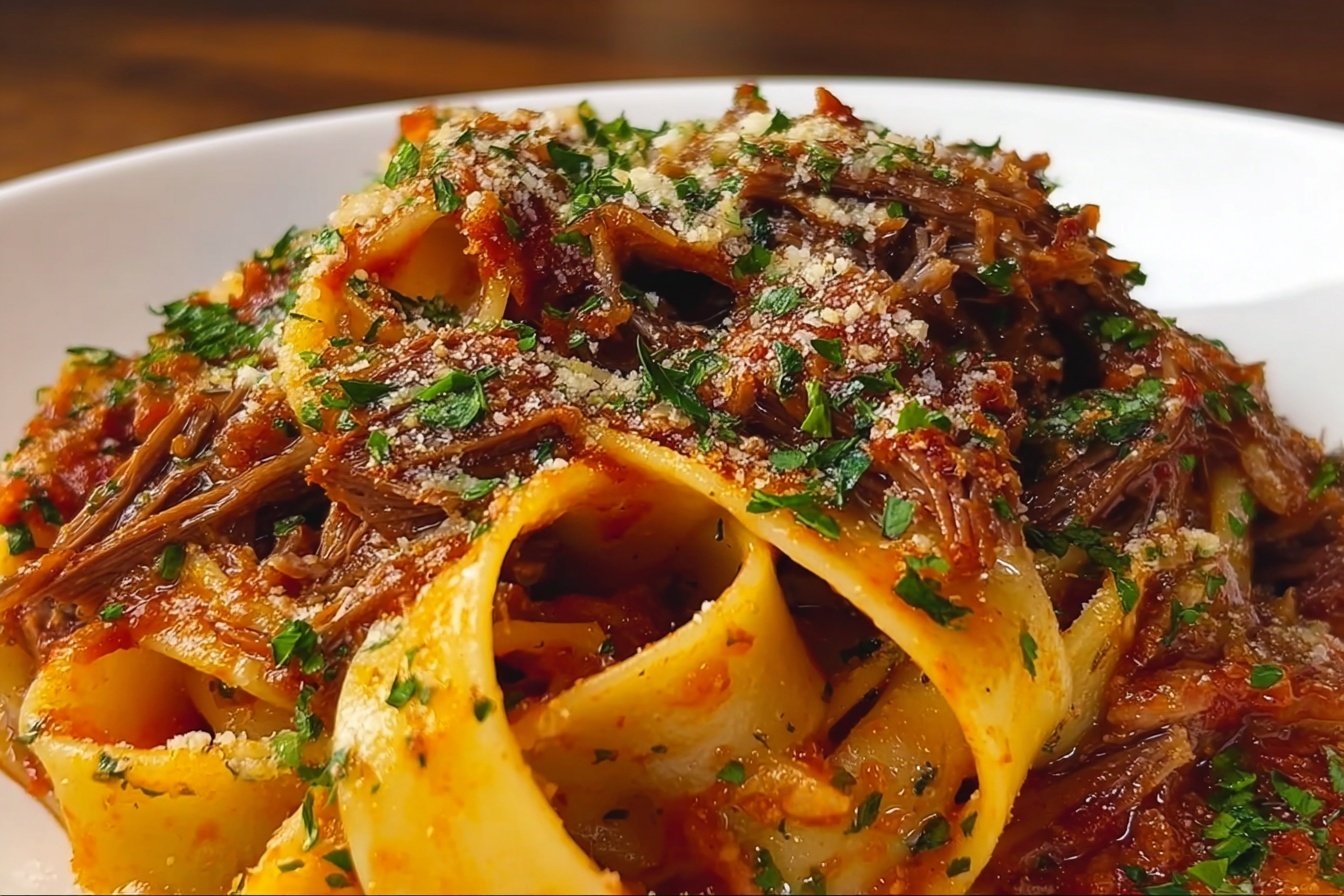
Why You’ll Love This Braised Beef Pasta
There’s something truly magical about a dish that practically cooks itself while filling your home with incredible aromas. This braised beef pasta is one of those recipes that makes you look like a culinary genius with minimal effort. The tender, shredded beef melts into a rich, velvety sauce that clings to every strand of pasta, creating a meal that feels like a warm hug on a plate.
Whether you’re cooking for a busy weeknight dinner or preparing a special meal for guests, this recipe delivers every single time. Here’s why this dish deserves a permanent spot in your recipe rotation:
- Ease of Preparation: This braised beef pasta might sound fancy, but it’s surprisingly simple to make. You only need about 20 minutes of active prep time before letting the oven do the heavy lifting. The slow cooking process transforms tough chuck beef into melt-in-your-mouth tenderness without any complicated techniques or constant monitoring. Just sear, simmer, and wait it’s that straightforward.
- Health Benefits: Beef is an excellent source of high-quality protein and essential nutrients, including iron, zinc, and B vitamins that support energy levels and immune function. Combined with fresh vegetables like carrots, celery, and onions, plus antioxidant-rich tomatoes and garlic with its numerous health benefits, this dish delivers genuine nutrition alongside incredible flavor.
- Versatility: This recipe adapts beautifully to different dietary preferences and ingredient availability. You can easily substitute the wine with extra beef broth, swap pappardelle for your favorite pasta shape, or even make it in a slow cooker for hands-off convenience. It’s also perfect for meal prep since the sauce freezes beautifully.
- Distinctive Flavor: What sets this braised beef pasta apart is the depth of flavor built through patience and proper technique. The searing step creates a flavorful crust on the beef, while the combination of red wine, tomato paste, and aromatics builds layers of complexity. After hours of gentle braising, you’re rewarded with a sauce that tastes like it came from an Italian grandmother’s kitchen.
Jump To
- 1. Why You’ll Love This Braised Beef Pasta
- 2. Essential Ingredients for Braised Beef Pasta
- 3. How to Prepare the Perfect Braised Beef Pasta: Step-by-Step Guide
- 4. Dietary Substitutions to Customize Your Braised Beef Pasta
- 5. Mastering Braised Beef Pasta: Advanced Tips and Variations
- 6. How to Store Braised Beef Pasta: Best Practices
- 7. FAQs: Frequently Asked Questions About Braised Beef Pasta
- 8. Braised Beef Pasta
Essential Ingredients for Braised Beef Pasta
Every great dish starts with quality ingredients, and this braised beef pasta is no exception. Understanding what each component brings to the table helps you make informed substitutions and appreciate the chemistry happening in your pot.
Main Ingredients List
- 1.2 kg (2.5 lb) chuck beef or other slow cooking beef cut, cut into 4 equal pieces Chuck is ideal because its connective tissue breaks down during slow cooking, creating that tender, shreddable texture. Other options include brisket, round, or shoulder cuts.
- 1 tbsp salt Essential for seasoning the beef before searing and building flavor throughout the dish.
- Black pepper to taste Adds subtle warmth and enhances the overall flavor profile.
- 3 tbsp olive oil, separated Used for searing the beef and sautéing aromatics. The healthy fat helps brown the meat beautifully.
- 3 cloves garlic, minced Provides aromatic depth and pairs perfectly with tomatoes and beef.
- 1 onion, diced Creates a sweet, savory base for the sauce.
- 1 cup carrots, diced Adds natural sweetness and texture while contributing vitamins and color.
- 1 cup celery, diced Part of the classic mirepoix that forms the flavor foundation.
- 800 g (28 oz) crushed canned tomatoes The base of your sauce, providing acidity, richness, and body.
- 3 tbsp tomato paste Concentrates tomato flavor and helps thicken the sauce.
- 2 beef bouillon cubes, crumbled Intensifies the beefy flavor without adding excess liquid.
- 1 cup (250 ml) red wine, full bodied (such as merlot or cabernet sauvignon) or substitute with beef broth/stock Deglazes the pan and adds complexity. The alcohol cooks off, leaving rich flavor behind.
- 1 1/2 cups (375 ml) water Provides the liquid needed for braising.
- 3/4 tsp dried thyme or 3 sprigs fresh thyme An earthy herb that complements beef beautifully.
- 3 dried bay leaves Infuses subtle herbal notes during the long cooking process.
- 500 g (1 lb) dried pappardelle or other pasta of choice The wide ribbons are perfect for catching chunks of tender beef and sauce.
- Freshly grated parmesan cheese Adds salty, nutty richness to finish the dish.
- Fresh parsley, finely chopped (optional) A pop of fresh color and flavor for garnish.
Special Dietary Options
For those with dietary restrictions, here are some simple adaptations:
| Dietary Need | Substitution |
|---|---|
| Gluten-Free | Use gluten-free pasta (corn or rice-based pappardelle) and verify bouillon cubes are gluten-free |
| Dairy-Free | Omit parmesan cheese or use nutritional yeast for similar savory depth |
| Lower Calorie | Use leaner beef cuts, reduce olive oil to 2 tbsp, and serve over zucchini noodles or shirataki pasta |
| Alcohol-Free | Replace wine entirely with additional beef broth or stock |
How to Prepare the Perfect Braised Beef Pasta: Step-by-Step Guide
Now that you have all your ingredients ready, let’s walk through the process of creating this incredible braised beef pasta. Don’t be intimidated by the number of steps each one is straightforward, and the results are absolutely worth it.
Step 1: Prepare and Season the Beef
Start by preheating your oven to 160°C (320°F). This lower temperature is perfect for slow braising. Take your 1.2 kg chuck beef and cut it into 4 equal pieces if it isn’t already. Pat the meat completely dry with paper towels this is crucial because wet meat won’t sear properly. Season all sides generously with the tablespoon of salt and black pepper to taste.
Pro tip: Let your seasoned beef sit at room temperature for about 20 minutes before cooking. This helps it cook more evenly and promotes better browning.
Step 2: Sear the Beef
Heat 2 tablespoons of olive oil in a large Dutch oven or heavy-bottomed pot over medium-high heat. When the oil shimmers, add the beef pieces. Don’t crowd the pot sear in batches if necessary. Brown the meat deeply on all sides, about 3-4 minutes per side. You want a rich, dark crust forming, which is where so much flavor lives. Transfer the seared beef to a plate and set aside.
This browning step triggers the Maillard reaction, creating hundreds of new flavor compounds that make your finished sauce incredibly complex and delicious. Don’t skip this step or rush through it patience here pays dividends later.
Step 3: Build the Aromatic Base
Reduce the heat to medium and add the remaining tablespoon of olive oil to the same pot. Add your diced onion, carrots, and celery. Cook for about 5-6 minutes, stirring occasionally, until the vegetables soften and the onions become translucent. The vegetables will pick up all those flavorful browned bits left behind by the beef.
Add the minced garlic and cook for another minute until fragrant. Be careful not to burn the garlic it should smell aromatic and sweet, not acrid. Stir in the tomato paste and cook for about 2 minutes, allowing it to caramelize slightly. This step deepens the tomato flavor and removes any metallic raw taste.
Step 4: Deglaze and Add Liquids
Pour in the cup of red wine, using a wooden spoon to scrape up all the browned bits from the bottom of the pot. These stuck-on pieces are pure gold deglazing releases them back into your sauce. Let the wine simmer for 3-4 minutes until it reduces by about half.
Add the crushed tomatoes, crumbled beef bouillon cubes, and water. Crumble the bouillon cubes between your fingers as you add them for even distribution. Toss in the dried thyme and bay leaves. Give everything a good stir to combine.
Step 5: Return the Beef and Braise
Nestle the seared beef pieces back into the pot, along with any juices that accumulated on the plate. The liquid should come about two-thirds up the side of the meat add a bit more water if needed. Bring everything to a simmer on the stovetop.
Once simmering, cover the pot with a tight-fitting lid and transfer it to your preheated oven. Let it braise for 3-4 hours, or until the beef is fork-tender and falls apart easily. You can check at the 3-hour mark by inserting a fork into the meat it should offer no resistance when it’s done.
Step 6: Shred the Beef
Remove the pot from the oven and transfer the beef pieces to a large plate or cutting board. Let them rest for about 10 minutes they’ll be incredibly hot. Using two forks, shred the beef into bite-sized pieces. The meat should pull apart effortlessly.
Discard the bay leaves from the sauce. Return the shredded beef to the pot, stirring to combine. If the sauce seems too thin, you can simmer it on the stovetop for 10-15 minutes to reduce and thicken. The sauce should coat the back of a spoon when it’s the right consistency.
Step 7: Cook the Pasta
While the sauce finishes, bring a large pot of salted water to a boil. Cook your pappardelle according to the package directions until al dente usually about 9-11 minutes. Reserve about 1 cup of the pasta cooking water before draining. This starchy water is liquid gold for adjusting your sauce consistency.
Step 8: Combine and Serve
Add the drained pasta directly to the pot with the sauce, or pour the sauce over the pasta in a large serving bowl. Toss everything together, adding splashes of reserved pasta water as needed to achieve a silky, cohesive coating. The pasta should be well-dressed but not swimming in sauce.
Serve immediately in warmed bowls, topped with freshly grated parmesan cheese and a sprinkle of chopped parsley if desired. For another comforting meal idea, check out this creamy beef and bowtie pasta recipe that’s equally satisfying.

Dietary Substitutions to Customize Your Braised Beef Pasta
One of the beautiful things about this braised beef pasta is how adaptable it is. Whether you’re working with what’s in your pantry or accommodating dietary restrictions, there are plenty of ways to make this recipe your own.
Protein and Main Component Alternatives
While chuck beef is traditional and delivers the best results for this recipe, you have options. Beef brisket or bottom round work similarly well the key is choosing a cut with enough connective tissue to break down during braising. For a leaner option, eye of round can work, though you’ll need to watch the cooking time more carefully to prevent drying out.
If you’re looking to reduce red meat consumption, consider these alternatives:
- Lamb shoulder: Creates an equally rich, slightly gamier ragu that’s traditional in many Italian regions
- Pork shoulder: Becomes incredibly tender and takes on the sauce flavors beautifully
- Short ribs: More expensive but delivers exceptional flavor and tenderness
For plant-based eaters, a mixture of mushrooms (portobello, cremini, and shiitake) can mimic the meaty texture. Cook them longer to develop deeper flavor, and consider adding a tablespoon of soy sauce or miso paste for umami depth.
Vegetable, Sauce, and Seasoning Modifications
The classic mirepoix of onions, carrots, and celery provides a foundational flavor base, but you can customize based on preference or season. Diced bell peppers add sweetness, while mushrooms contribute earthiness and additional umami.
For the sauce, consider these modifications:
- Wine alternatives: If you prefer not to use wine, additional beef broth with a tablespoon of balsamic vinegar provides similar depth and acidity
- Spicy kick: Add red pepper flakes when sautéing the aromatics for subtle heat
- Herb variations: Fresh rosemary or oregano can replace or complement the thyme
- Richer sauce: Stir in a tablespoon of butter at the end for extra silkiness
If you enjoy hearty beef dishes like this one, you might also appreciate this slow cooker pepper steak recipe for another fuss-free dinner option.
Mastering Braised Beef Pasta: Advanced Tips and Variations
Once you’ve mastered the basic recipe, there are several techniques and variations that can take your braised beef pasta from great to extraordinary.
Pro Cooking Techniques
The secret to restaurant-quality results lies in a few key techniques. First, never rush the searing process. Those deep brown bits form the foundation of your sauce’s flavor. If your pot seems dry during searing, add a touch more oil the investment is worth it.
Second, consider marinating your beef overnight in red wine, garlic, and herbs before cooking. This step isn’t necessary, but it adds another dimension of flavor. Just be sure to pat the meat completely dry before searing.
Finally, always taste and adjust seasoning at the end. The long cooking process concentrates flavors, and you might need less salt than expected. A splash of balsamic vinegar at the end can brighten everything up if the sauce tastes flat.
Flavor Variations
Try these creative variations to keep things interesting:
- Italian-inspired: Add a splash of cream and a handful of sun-dried tomatoes for richness
- Mediterranean twist: Include kalamata olives and finish with crumbled feta
- Spicy arrabbiata style: Increase the red pepper flakes and add a diced jalapeño
- Herb-forward: Finish with fresh basil and oregano instead of parsley
Presentation Tips
They say we eat with our eyes first, and presentation matters for special occasions. Serve your braised beef pasta in wide, shallow bowls that showcase the sauce. Twirl the pappardelle into a neat nest using a carving fork, then spoon extra sauce and beef over the top. Finish with a generous snowfall of freshly grated parmesan and a sprig of fresh herbs.
Make-Ahead Options
This dish is perfect for entertaining because most of the work happens hours before serving. The sauce actually improves after a day in the refrigerator, making it ideal for meal prep or dinner parties. Cook the sauce up to three days ahead, then reheat gently and toss with freshly cooked pasta when ready to serve.
How to Store Braised Beef Pasta: Best Practices
Proper storage ensures you can enjoy this delicious dish beyond the initial meal. Here’s how to handle leftovers like a pro.
Refrigeration Guidelines
Allow the sauce to cool completely before storing never put hot food directly into the refrigerator. Transfer to airtight containers and refrigerate within two hours of cooking. The sauce will keep for 4-5 days in the refrigerator. If you’ve already mixed it with pasta, consume within 3-4 days for best quality.
Freezing for Long-Term Storage
This braised beef sauce freezes exceptionally well. Portion it into meal-sized containers or freezer bags, leaving some room for expansion. Label with the date and freeze for up to 3-6 months. For best results, thaw overnight in the refrigerator before reheating. Avoid freezing pasta that’s already been mixed with the sauce, as it tends to become mushy upon thawing.
Smart tip: Freeze sauce in individual portions for quick weeknight dinners. Simply thaw, reheat, and toss with freshly cooked pasta for an effortless meal.
Reheating Best Practices
When reheating, add a splash of water or broth to loosen the sauce, as it will thicken in storage. Warm gently over medium-low heat, stirring occasionally, until heated through (165°F/74°C internally). Avoid high heat, which can cause the sauce to separate. If using a microwave, heat in 30-second intervals, stirring between each, until hot.
FAQs: Frequently Asked Questions About Braised Beef Pasta
What pasta works best with braised beef sauce?
Pappardelle is ideal for braised beef sauce because its wide, flat ribbons hold the tender shredded beef and thick sauce perfectly, preventing it from sliding off. Opt for egg-based pappardelle like San Remo brand for extra strength—it cooks evenly and won’t break when mixed with the hearty ragu. This pairing mimics traditional Italian dishes where the pasta’s texture complements slow-braised meats. If serving 4 people, use about 400g of dried pappardelle. Cook al dente, then toss directly with the hot sauce over low heat for 1-2 minutes to let it cling. This method ensures every bite is flavorful and saucy, elevating a simple pasta night into something restaurant-worthy. (92 words)
Can I substitute other pasta for pappardelle in braised beef pasta?
Yes, if pappardelle isn’t available, choose the widest pasta like tagliatelle, fettuccine, or mafaldine to mimic its sauce-clinging ability. Avoid thin spaghetti or penne, as they won’t capture the rich braised beef as well. Use 400g for 4 servings, cooking to al dente. The key is tossing the drained pasta with the warm sauce in the pan for 1-2 minutes—this emulsifies the sauce, coating every strand evenly for better flavor distribution. Test with a fork; if it holds shape without slipping, it’s ready. This swap keeps the dish authentic and satisfying even without the classic pasta. (98 words)
How do I make braised beef pasta in a slow cooker?
Absolutely—braised beef pasta adapts easily to a slow cooker. Prep by searing 1-1.5kg chuck beef (cut into 4 baseball-sized pieces, patted dry, seasoned with salt and pepper) in a skillet for flavor. Add to slow cooker with onions, garlic, canned tomatoes, wine, herbs, and broth. Cook on low for 6-8 hours until fork-tender and shreddable. Shred beef, simmer sauce 10-15 minutes to thicken, then toss with cooked pappardelle. This hands-off method yields melt-in-your-mouth results. Natural release pressure if using an Instant Pot alternative (high for 40 minutes). Serves 4-6 with leftovers. (102 words)
How should I store leftover braised beef pasta sauce?
Store braised beef sauce in an airtight container in the fridge for up to 5 days, or freeze in portions for 3-6 months—it’s perfect for meal prep. Cool completely before storing to avoid condensation. Reheat gently on stovetop with a splash of broth or water to loosen, simmering 5-10 minutes until hot (165°F/74°C internal temp). Use leftovers on toast, in lasagna, or over polenta. Label bags with dates. One batch often makes extra beyond pasta needs, saving time later. Thaw overnight in fridge; avoid microwaving from frozen to preserve texture. This keeps flavors intact for multiple meals. (105 words)
Why toss pasta with braised beef sauce instead of spooning it on top?
Tossing cooked pasta with braised beef sauce in the pan creates an emulsified coating that clings to every strand, delivering superior texture and flavor versus spooning. The pasta starch mixes with sauce fats for a silky finish—heat the pan low, add drained al dente pasta and 1/2 cup reserved pasta water, then stir 1-2 minutes until glossy. This prevents dry pasta and uneven sauce distribution. Spooning skips this, leading to sauce pooling at the bottom. Pro tip: grate Parmesan after tossing for extra silkiness. It’s a simple step that transforms homemade braised beef pasta into pro-level comfort food. (101 words)
Braised Beef Pasta
- Total Time: 8 hours 20 minutes
- Yield: 6 servings
- Diet: High-Protein
Description
🍝 Indulge in tender, slow-cooked shredded beef ragu over hearty pasta – packed with rich flavors and protein for ultimate satisfaction!
🥩 Hands-off slow cooker recipe yields restaurant-quality results in 8 hours, ideal for cozy family dinners with minimal effort.
Ingredients
– 1.2 kg (2.5 lb) chuck beef or other slow cooking beef cut, cut into 4 equal pieces
– 1 tbsp salt
– Black pepper to taste
– 3 tbsp olive oil, separated
– 3 cloves garlic, minced
– 1 onion, diced
– 1 cup carrots, diced
– 1 cup celery, diced
– 800 g (28 oz) crushed canned tomatoes
– 3 tbsp tomato paste
– 2 beef bouillon cubes, crumbled
– 1 cup (250 ml) red wine, full bodied (such as merlot or cabernet sauvignon) or substitute with beef broth/stock
– 1 1/2 cups (375 ml) water
– 3/4 tsp dried thyme or 3 sprigs fresh thyme
– 3 dried bay leaves
– 500 g (1 lb) dried pappardelle or other pasta of choice
– Freshly grated parmesan cheese
– Fresh parsley, finely chopped (optional)
Instructions
1-Step 1: Prepare and Season the Beef Start by preheating your oven to 160°C (320°F). This lower temperature is perfect for slow braising. Take your 1.2 kg chuck beef and cut it into 4 equal pieces if it isn’t already. Pat the meat completely dry with paper towels this is crucial because wet meat won’t sear properly. Season all sides generously with the tablespoon of salt and black pepper to taste.
2-Step 2: Sear the Beef Heat 2 tablespoons of olive oil in a large Dutch oven or heavy-bottomed pot over medium-high heat. When the oil shimmers, add the beef pieces. Don’t crowd the pot sear in batches if necessary. Brown the meat deeply on all sides, about 3-4 minutes per side. You want a rich, dark crust forming, which is where so much flavor lives. Transfer the seared beef to a plate and set aside. This browning step triggers the Maillard reaction, creating hundreds of new flavor compounds that make your finished sauce incredibly complex and delicious. Don’t skip this step or rush through it patience here pays dividends later.
3-Step 3: Build the Aromatic Base Reduce the heat to medium and add the remaining tablespoon of olive oil to the same pot. Add your diced onion, carrots, and celery. Cook for about 5-6 minutes, stirring occasionally, until the vegetables soften and the onions become translucent. The vegetables will pick up all those flavorful browned bits left behind by the beef. Add the minced garlic and cook for another minute until fragrant. Be careful not to burn the garlic it should smell aromatic and sweet, not acrid. Stir in the tomato paste and cook for about 2 minutes, allowing it to caramelize slightly. This step deepens the tomato flavor and removes any metallic raw taste.
4-Step 4: Deglaze and Add Liquids Pour in the cup of red wine, using a wooden spoon to scrape up all the browned bits from the bottom of the pot. These stuck-on pieces are pure gold deglazing releases them back into your sauce. Let the wine simmer for 3-4 minutes until it reduces by about half. Add the crushed tomatoes, crumbled beef bouillon cubes, and water. Crumble the bouillon cubes between your fingers as you add them for even distribution. Toss in the dried thyme and bay leaves. Give everything a good stir to combine.
5-Step 5: Return the Beef and Braise Nestle the seared beef pieces back into the pot, along with any juices that accumulated on the plate. The liquid should come about two-thirds up the side of the meat add a bit more water if needed. Bring everything to a simmer on the stovetop. Once simmering, cover the pot with a tight-fitting lid and transfer it to your preheated oven. Let it braise for 3-4 hours, or until the beef is fork-tender and falls apart easily. You can check at the 3-hour mark by inserting a fork into the meat it should offer no resistance when it’s done.
6-Step 6: Shred the Beef Remove the pot from the oven and transfer the beef pieces to a large plate or cutting board. Let them rest for about 10 minutes they’ll be incredibly hot. Using two forks, shred the beef into bite-sized pieces. The meat should pull apart effortlessly. Discard the bay leaves from the sauce. Return the shredded beef to the pot, stirring to combine. If the sauce seems too thin, you can simmer it on the stovetop for 10-15 minutes to reduce and thicken. The sauce should coat the back of a spoon when it’s the right consistency.
7-Step 7: Cook the Pasta While the sauce finishes, bring a large pot of salted water to a boil. Cook your pappardelle according to the package directions until al dente usually about 9-11 minutes. Reserve about 1 cup of the pasta cooking water before draining. This starchy water is liquid gold for adjusting your sauce consistency.
8-Step 8: Combine and Serve Add the drained pasta directly to the pot with the sauce, or pour the sauce over the pasta in a large serving bowl. Toss everything together, adding splashes of reserved pasta water as needed to achieve a silky, cohesive coating. The pasta should be well-dressed but not swimming in sauce. Serve immediately in warmed bowls, topped with freshly grated parmesan cheese and a sprinkle of chopped parsley if desired. For another comforting meal idea, check out this creamy beef and bowtie pasta recipe that’s equally satisfying.
Notes
⏲️ Chop veggies ahead and store in fridge for faster morning assembly.
🍷 Choose a full-bodied red wine like Merlot for deeper, authentic flavor.
🔪 Shred beef easily once tender; adjust sauce thickness with pasta water.
- Prep Time: 20 minutes
- Cook Time: 8 hours
- Category: Main Course
- Method: Slow Cooker
- Cuisine: Italian
Nutrition
- Serving Size: 1 serving
- Calories: 650 kcal
- Sugar: 8g
- Sodium: 900mg
- Fat: 25g
- Saturated Fat: 8g
- Unsaturated Fat: 15g
- Trans Fat: 0g
- Carbohydrates: 60g
- Fiber: 6g
- Protein: 40g
- Cholesterol: 100mg
Keywords: Slow Cooked Shredded Beef Ragu, Beef Ragu Pasta, Slow Cooker Ragu, Italian Beef Pasta