Description
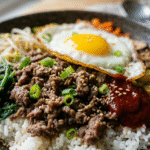
🍚 Whip up a vibrant Korean bibimbap bowl in under 30 minutes with protein-rich ground beef, fresh veggies, and a spicy-sweet sauce for a balanced, satisfying meal.
🥚 One-skillet wonder that’s customizable, budget-friendly, and family-approved—topped with a perfect fried egg for ultimate comfort.
Ingredients
– 2 tablespoons gochujang (Korean spicy-sweet condiment) for signature spicy-sweet Korean flavor
– 1 teaspoon toasted sesame oil for nutty aroma and depth
– 3 tablespoons low-sodium soy sauce for salty umami richness
– 1 tablespoon rice vinegar for brightness and balances the richness
– 1 pound lean ground beef (90% lean, 10% fat) for the main protein
– 8 ounces shiitake mushrooms, sliced for meaty texture and umami
– 3 cloves garlic, chopped for essential aromatic base
– 1 teaspoon grated ginger for warmth and complexity
– 1 cup grated or pre-shredded carrots for natural sweetness and color
– 5 ounces baby spinach, roughly chopped for leafy green nutrition
– 1 teaspoon avocado oil (for frying eggs) for neutral oil with high smoke point
– 4 large eggs for rich protein and classic bibimbap topping
– 3 cups cooked white or brown rice for the foundation of the bowl
– Mixed greens for serving for freshness and extra vegetables
– Sesame seeds for garnish for nutty crunch and visual appeal
Instructions
1-Step 1: Prepare the Bibimbap Sauce Start by whisking together the sauce ingredients. In a small bowl, combine 2 tablespoons gochujang, 1 teaspoon sesame oil, 3 tablespoons low-sodium soy sauce, and 1 tablespoon rice vinegar. Whisk until smooth and well combined, then set aside. This sauce will coat the beef and vegetables, tying all the flavors together. The gochujang provides the signature Korean spicy-sweet profile, while the rice vinegar adds a bright acidity that cuts through the richness of the beef.
2-Step 2: Cook the Ground Beef Heat a large skillet over medium-high heat. Add 1 pound of lean ground beef and cook, breaking it up with a wooden spoon or spatula as it browns. Continue cooking until the beef is mostly cooked through and no longer pink, which should take about 5-6 minutes. Once the beef is browned, drain any excess liquid from the pan. This step ensures that your final dish won’t be watery and that the seasonings will properly coat the meat. For more ground beef recipe inspiration, check out this Mediterranean Ground Beef Stir Fry that uses similar techniques.
3-Step 3: Add Aromatics and Mushrooms With the beef drained, add 8 ounces of sliced shiitake mushrooms, 3 cloves of chopped garlic, and 1 teaspoon of grated ginger to the skillet. Stir everything together and cook for about 5 minutes. The mushrooms will release their liquid and begin to shrink, while the garlic and ginger will become fragrant. This combination creates an aromatic base that infuses the entire dish with deep, savory flavor. Shiitake mushrooms are ideal here because they have a meaty texture and concentrated umami taste, but baby bella mushrooms work well too if that’s what you have available.
4-Step 4: Incorporate Vegetables Add 1 cup of grated carrots and 5 ounces of roughly chopped baby spinach to the skillet. Stir to combine everything evenly. Continue cooking for about 3 minutes, or until the spinach has wilted completely. The carrots add a subtle sweetness and satisfying crunch, while the spinach wilts down quickly to add nutrition without overwhelming the dish. The vegetables should retain some texture rather than becoming mushy, so watch carefully and don’t overcook at this stage.
5-Step 5: Add the Sauce and Finish the Mixture Pour the prepared bibimbap sauce over the beef and vegetable mixture. Stir thoroughly to ensure everything is evenly coated with the spicy-sweet sauce. Once combined, remove the skillet from the heat. The residual heat will keep everything warm while you prepare the eggs. Give the mixture a taste test and adjust seasonings if needed, though the sauce should provide well-balanced flavor on its own.
6-Step 6: Fry the Eggs In a nonstick skillet, heat 1 teaspoon of avocado oil over medium-low heat. Crack 4 large eggs into the pan, being careful not to break the yolks. Cover the skillet with a lid and cook for 4-6 minutes, or until the egg whites are completely set but the yolks are still runny. The steam created by covering the pan helps cook the tops of the eggs without needing to flip them. These sunny-side-up eggs are traditional for bibimbap, as the runny yolk mixes with the rice and sauce to create a creamy, rich coating when you stir everything together at the table.
7-Step 7: Assemble Your Bibimbap Bowls Now comes the fun part: assembling your bibimbap bowls. Start with a base of 3 cups of cooked rice (white or brown, depending on your preference), divided among 4 bowls. Add a bed of mixed greens alongside the rice. Spoon the beef and vegetable mixture generously over the rice and greens. Top each bowl with a fried egg, placing it right in the center for visual appeal. Finally, sprinkle with sesame seeds for garnish and serve with extra gochujang on the side for those who want more heat.
Notes
🌾 For gluten-free, replace soy sauce with tamari and use gluten-free gochujang.
🦃 Substitute ground beef with turkey or chicken for a leaner, economical option.
📦 Perfect for meal prep: store meat/veggies separately from rice and greens for up to 4 days.
- Prep Time: 10 minutes
- Cook Time: 20 minutes
- Category: Dinner
- Method: Skillet
- Cuisine: Korean
Nutrition
- Serving Size: 1 bowl
- Calories: 509 kcal
- Sugar: 6 g
- Sodium: 952 mg
- Fat: 16 g
- Saturated Fat: 6 g
- Unsaturated Fat: 10 g
- Trans Fat: 0 g
- Carbohydrates: 53 g
- Fiber: 3 g
- Protein: 38 g
- Cholesterol: 258 mg
Keywords: ground beef bibimbap, Korean rice bowl, quick skillet meal, gochujang beef