
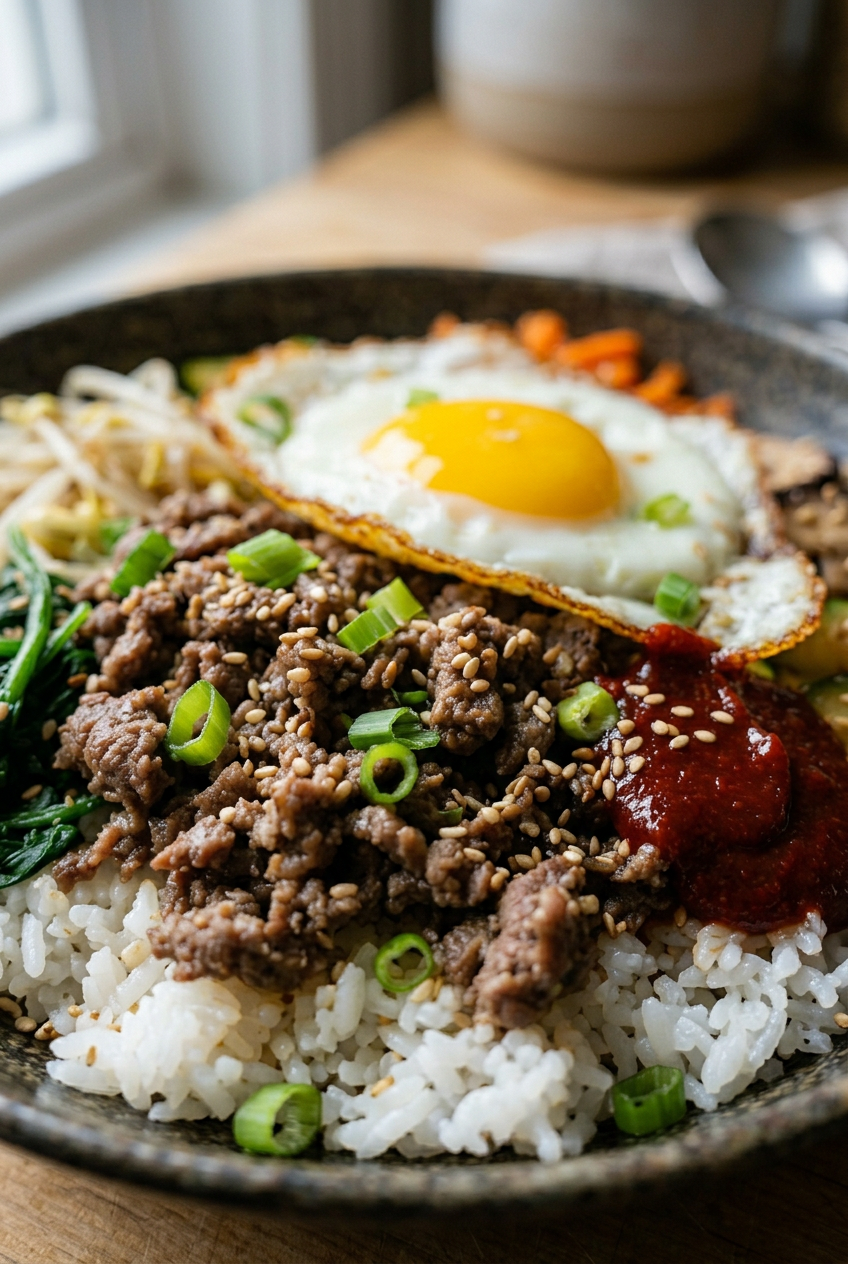
Why You’ll Love This Bibimbap With Ground Beef
Bibimbap with ground beef brings the vibrant flavors of Korean cuisine right to your weeknight dinner table without the fuss. This quick Korean-inspired bowl features seasoned ground beef and vegetables cooked together in one skillet, served over rice with a fried egg on top. Whether you’re new to Korean cooking or a seasoned home cook looking for simple meals, this recipe delivers on every front.
Quick and Easy Preparation
One of the biggest advantages of this recipe is how fast it comes together. You can have this satisfying meal on the table in under 30 minutes, making it perfect for busy weeknights when you need something nutritious without spending hours in the kitchen. The total time is just 30 minutes, including 10 minutes of prep and 20 minutes of cooking. Since everything cooks in one skillet, cleanup is minimal too.
Nutritious and Balanced
This dish offers an excellent balance of protein, carbohydrates, and vegetables in every bowl. Each serving provides 38 grams of protein and only 508.5 calories, making it a filling yet sensible choice for health-conscious eaters. According to Healthline, beef is an excellent source of high-quality protein and essential nutrients like iron and vitamin B12. The addition of spinach, carrots, and mushrooms adds fiber, vitamins, and antioxidants to the mix.
Budget-Friendly and Family-Approved
Using ground beef instead of traditional thinly sliced beef makes this recipe significantly more affordable while still delivering bold flavor. The ingredients are all available at regular supermarkets, so you won’t need to hunt down specialty items. This is also a family-friendly meal that appeals to both adults and kids, with flavors that are savory and satisfying without being too spicy for younger palates.
Fully Customizable
This bibimbap recipe adapts easily to whatever ingredients you have on hand or whatever dietary preferences your family follows. You can swap proteins, change up the vegetables, adjust the spice level, or make it gluten-free with simple substitutions. Everyone can build their own bowl exactly how they like it, which makes serving picky eaters much easier.
Jump To
- 1. Why You’ll Love This Bibimbap With Ground Beef
- 2. Essential Ingredients for Bibimbap With Ground Beef
- 3. How to Prepare the Perfect Bibimbap With Ground Beef: Step-by-Step Guide
- 4. Protein and Main Component Alternatives
- 5. Vegetable, Sauce, and Seasoning Modifications
- 6. Mastering Bibimbap With Ground Beef: Advanced Tips and Variations
- 7. Nutritional Benefits of Bibimbap With Ground Beef
- 8. How to Store Bibimbap With Ground Beef: Best Practices
- 9. FAQs: Frequently Asked Questions About Bibimbap With Ground Beef
- 10. Bibimbap With Ground Beef
Essential Ingredients for Bibimbap With Ground Beef
Gathering your ingredients beforehand makes the cooking process smooth and enjoyable. Here’s everything you’ll need to make this flavorful Korean rice bowl, along with why each component matters.
Complete Ingredient List
For the Bibimbap Sauce:
- 2 tablespoons gochujang (Korean spicy-sweet condiment) – provides the signature spicy-sweet Korean flavor
- 1 teaspoon toasted sesame oil – adds nutty aroma and depth
- 3 tablespoons low-sodium soy sauce – brings salty umami richness
- 1 tablespoon rice vinegar – adds brightness and balances the richness
For the Beef and Vegetable Mixture:
- 1 pound lean ground beef (90% lean, 10% fat) – the main protein; ground bison, turkey, or chicken work as alternatives
- 8 ounces shiitake mushrooms, sliced – add meaty texture and umami; baby bellas or other vegetables can substitute
- 3 cloves garlic, chopped – essential aromatic base
- 1 teaspoon grated ginger – adds warmth and complexity
- 1 cup grated or pre-shredded carrots – bring natural sweetness and color
- 5 ounces baby spinach, roughly chopped – leafy green nutrition; kale or Swiss chard can swap in
For Assembly:
- 1 teaspoon avocado oil (for frying eggs) – neutral oil with high smoke point
- 4 large eggs – provides rich protein and that classic bibimbap topping
- 3 cups cooked white or brown rice – the foundation of the bowl
- Mixed greens for serving – adds freshness and extra vegetables
- Sesame seeds for garnish – adds nutty crunch and visual appeal
Special Dietary Options
Gluten-Free Version:
- Replace soy sauce with tamari or coconut aminos
- Use certified gluten-free gochujang (check labels carefully)
- All other ingredients are naturally gluten-free
Vegetarian Version:
- Omit the ground beef entirely
- Add extra vegetables like bell peppers, edamame, or cucumbers
- Consider adding tofu or tempeh for protein
Low-Carb Option:
- Replace rice with cauliflower rice
- Serve over mixed greens alone for a lighter meal
How to Prepare the Perfect Bibimbap With Ground Beef: Step-by-Step Guide
Follow these detailed instructions to create a restaurant-quality Korean rice bowl at home. The process is straightforward, and each step builds on the previous one for maximum flavor development.
Step 1: Prepare the Bibimbap Sauce
Start by whisking together the sauce ingredients. In a small bowl, combine 2 tablespoons gochujang, 1 teaspoon sesame oil, 3 tablespoons low-sodium soy sauce, and 1 tablespoon rice vinegar. Whisk until smooth and well combined, then set aside. This sauce will coat the beef and vegetables, tying all the flavors together. The gochujang provides the signature Korean spicy-sweet profile, while the rice vinegar adds a bright acidity that cuts through the richness of the beef.
Step 2: Cook the Ground Beef
Heat a large skillet over medium-high heat. Add 1 pound of lean ground beef and cook, breaking it up with a wooden spoon or spatula as it browns. Continue cooking until the beef is mostly cooked through and no longer pink, which should take about 5-6 minutes. Once the beef is browned, drain any excess liquid from the pan. This step ensures that your final dish won’t be watery and that the seasonings will properly coat the meat. For more ground beef recipe inspiration, check out this Mediterranean Ground Beef Stir Fry that uses similar techniques.
Step 3: Add Aromatics and Mushrooms
With the beef drained, add 8 ounces of sliced shiitake mushrooms, 3 cloves of chopped garlic, and 1 teaspoon of grated ginger to the skillet. Stir everything together and cook for about 5 minutes. The mushrooms will release their liquid and begin to shrink, while the garlic and ginger will become fragrant. This combination creates an aromatic base that infuses the entire dish with deep, savory flavor. Shiitake mushrooms are ideal here because they have a meaty texture and concentrated umami taste, but baby bella mushrooms work well too if that’s what you have available.
Step 4: Incorporate Vegetables
Add 1 cup of grated carrots and 5 ounces of roughly chopped baby spinach to the skillet. Stir to combine everything evenly. Continue cooking for about 3 minutes, or until the spinach has wilted completely. The carrots add a subtle sweetness and satisfying crunch, while the spinach wilts down quickly to add nutrition without overwhelming the dish. The vegetables should retain some texture rather than becoming mushy, so watch carefully and don’t overcook at this stage.
Step 5: Add the Sauce and Finish the Mixture
Pour the prepared bibimbap sauce over the beef and vegetable mixture. Stir thoroughly to ensure everything is evenly coated with the spicy-sweet sauce. Once combined, remove the skillet from the heat. The residual heat will keep everything warm while you prepare the eggs. Give the mixture a taste test and adjust seasonings if needed, though the sauce should provide well-balanced flavor on its own.
Step 6: Fry the Eggs
In a nonstick skillet, heat 1 teaspoon of avocado oil over medium-low heat. Crack 4 large eggs into the pan, being careful not to break the yolks. Cover the skillet with a lid and cook for 4-6 minutes, or until the egg whites are completely set but the yolks are still runny. The steam created by covering the pan helps cook the tops of the eggs without needing to flip them. These sunny-side-up eggs are traditional for bibimbap, as the runny yolk mixes with the rice and sauce to create a creamy, rich coating when you stir everything together at the table.
Step 7: Assemble Your Bibimbap Bowls
Now comes the fun part: assembling your bibimbap bowls. Start with a base of 3 cups of cooked rice (white or brown, depending on your preference), divided among 4 bowls. Add a bed of mixed greens alongside the rice. Spoon the beef and vegetable mixture generously over the rice and greens. Top each bowl with a fried egg, placing it right in the center for visual appeal. Finally, sprinkle with sesame seeds for garnish and serve with extra gochujang on the side for those who want more heat.
Serving Tip: Traditionally, bibimbap is mixed together at the table before eating. Encourage everyone to break the egg yolk and stir everything together so the sauce and creamy yolk coat every bite of rice and vegetables.
Protein and Main Component Alternatives
One of the best things about this bibimbap recipe is how easily it adapts to different proteins and dietary preferences. Ground beef is delicious and budget-friendly, but you have plenty of other options.
Ground Meat Alternatives
Ground Turkey or Chicken: These leaner options work beautifully in this recipe and often cost less than beef. They have a milder flavor that lets the Korean seasonings shine through. Cook them exactly the same way as the beef, though they may cook slightly faster since they’re leaner.
Ground Bison: For a richer, slightly sweeter flavor, try ground bison. It’s leaner than most beef but still delivers plenty of flavor. It’s a great option if you want something a bit more special while still being easy to find at many grocery stores.
Vegetarian Protein Options
Tofu or Tempeh: Extra-firm tofu, pressed and cubed, can replace the beef entirely. Tempeh adds a nutty flavor and firmer texture. Both benefit from being marinated in the sauce for 15-20 minutes before cooking to absorb more flavor.
Edamame: Shelled edamame adds protein and a satisfying pop of texture. Add them along with the carrots and spinach so they heat through without becoming mushy.
Traditional Alternatives
While ground beef makes this recipe quick and accessible, traditional bibimbap often uses thinly sliced beef bulgogi. If you have access to a Korean market or want to try the authentic version, you can marinate thin beef slices in a similar sauce and quickly stir-fry them. The ground beef version is faster and easier for weeknight cooking while still delivering plenty of authentic Korean flavor.
Vegetable, Sauce, and Seasoning Modifications
The vegetables in bibimbap are completely flexible, making this an excellent way to use up what’s in your refrigerator or to adapt to seasonal availability.
Vegetable Substitutions
The recipe calls for shiitake mushrooms, carrots, and spinach, but traditional Korean bibimbap typically includes a variety of vegetables, each prepared separately. Here are some options:
- Bean sprouts: A classic bibimbap addition, briefly blanched and seasoned
- Zucchini: Sliced and sautéed until just tender
- Bell peppers: Thinly sliced for color and sweetness
- Cucumber: Thinly sliced or matchstick-cut, served fresh for crunch
- Kale or Swiss chard: Excellent substitutes for spinach with more texture
- Broccoli: Small florets, briefly steamed or roasted
- Cabbage: Shredded and sautéed, similar to what’s used in this ground beef and cabbage recipe
Sauce Variations
The gochujang-based sauce in this recipe strikes a balance between spicy and sweet. You can adjust it easily:
- More spicy: Add extra gochujang or a dash of Korean red pepper flakes
- Less spicy: Reduce the gochujang and add a touch more sesame oil and sugar
- Sweeter: Add a teaspoon of honey or brown sugar
- More savory: A splash of fish sauce adds depth (use sparingly)
According to discussions on Korean food forums, gochujang is not only flavorful but also contains beneficial ingredients like fermented soybeans, making it a healthier choice than many processed condiments.
Mastering Bibimbap With Ground Beef: Advanced Tips and Variations
Once you’ve mastered the basic recipe, try these techniques and variations to take your bibimbap to the next level.
Pro Cooking Techniques
The Dolsot Method: For an authentic touch, serve your bibimbap in a hot stone bowl (dolsot). Heat the stone bowl until very hot, then add rice and let it sit for 2-3 minutes. The rice at the bottom becomes crispy and golden, adding another layer of texture. Assemble the toppings as usual, and the egg will continue cooking from the residual heat.
Meal Prep Efficiency: Double the beef and vegetable mixture and store it separately for quick meals throughout the week. The flavors actually improve after a day in the refrigerator as they meld together.
Flavor Variations
Sesame-Ginger Intensified: Double the ginger and add a splash of extra sesame oil at the end for a more pronounced Asian flavor profile.
Spicy Garlic: Add more garlic and include Korean red pepper flakes for those who love bold, spicy flavors.
Umami Boost: A teaspoon of fish sauce or oyster sauce deepens the savory notes without making it fishy.
Presentation Tips
Bibimbap should be as beautiful as it is delicious. Arrange the beef and vegetables in sections rather than mixing them together, creating a colorful mosaic. Place the egg prominently in the center and sprinkle sesame seeds in a line across the top. Serve with extra gochujang in a small dish on the side so everyone can adjust their own spice level.
Nutritional Benefits of Bibimbap With Ground Beef
Understanding the nutritional profile of this dish helps you appreciate how it fits into a balanced diet. Here’s what each serving provides:
| Nutrient | Amount per Serving |
|---|---|
| Calories | 508.5 kcal |
| Protein | 38 grams |
| Carbohydrates | 52.5 grams |
| Fat | 15.5 grams |
| Saturated Fat | 5.5 grams |
| Cholesterol | 257.5 mg |
| Sodium | 952 mg |
| Fiber | 3 grams |
| Sugar | 5.5 grams |
At 508 calories per serving with 38 grams of protein, this dish provides substantial nutrition without excessive calories. The protein from the beef and egg combined with carbohydrates from rice creates a satisfying meal that keeps you full for hours. The vegetables add fiber and essential vitamins, making this a well-rounded option for lunch or dinner.
How to Store Bibimbap With Ground Beef: Best Practices
Proper storage ensures your bibimbap components stay fresh and tasty for future meals.
Refrigeration Guidelines
Store the beef and vegetable mixture in an airtight container for up to 4 days. Keep rice in a separate container for the same duration. Store mixed greens separately from everything else to prevent wilting. Eggs are best cooked fresh, so plan to fry them when you’re ready to eat rather than storing them ahead of time.
Freezing for Longer Storage
The beef and vegetable mixture freezes exceptionally well for up to 3 months. Portion it into individual servings before freezing for easy reheating. Thaw overnight in the refrigerator before reheating. Rice can also be frozen, though the texture may change slightly. Do not freeze the eggs or mixed greens.
Reheating Instructions
For best results, reheat the beef and vegetable mixture in a skillet over medium heat until hot throughout, about 3-4 minutes. Alternatively, microwave for 1-2 minutes, stirring halfway through. Rice can be reheated in the microwave with a sprinkle of water to restore moisture. Always cook eggs fresh when possible.
Meal Prep Strategy
For efficient meal prep, cook a double batch of the beef and vegetable mixture on Sunday. Portion it into 4 containers along with cooked rice. Store mixed greens in a separate container. Each day, simply reheat the beef and rice, prepare a fresh egg, and assemble your bowl. This approach gives you four ready-to-go meals with just 5 minutes of prep time each day.

FAQs: Frequently Asked Questions About Bibimbap With Ground Beef
What is bibimbap with ground beef?
Bibimbap with ground beef is a Korean rice bowl dish that means “mixed rice” in Korean. It features steamed rice topped with seasoned ground beef, colorful vegetables like spinach, carrots, bean sprouts, and mushrooms, plus a fried egg and gochujang sauce for spicy kick. Using ground beef makes it budget-friendly and quick—no slicing thin steak needed. Cook the beef in a simple marinade of soy sauce, garlic, sesame oil, and sugar for 10 minutes. Arrange toppings separately for that vibrant look, then mix at the table. This version serves 4 in under 45 minutes and costs about $10 total. It’s customizable for spice levels and great for beginners trying Korean food at home.
How do you make bibimbap with ground beef?
To make bibimbap with ground beef, start with 1 lb ground beef browned in a skillet with 3 tbsp soy sauce, 2 minced garlic cloves, 1 tbsp sesame oil, 1 tbsp brown sugar, and 1 tsp gochujang. Cook 8-10 minutes until caramelized. Prep veggies: sauté 2 cups spinach, julienne 1 carrot, blanch 1 cup bean sprouts, and slice 4 shiitake mushrooms—each for 2-3 minutes with salt. Cook 4 cups rice. Fry 4 eggs sunny-side up. Assemble in bowls: rice base, veggie sections, beef, egg, and extra gochujang. Serves 4 in 40 minutes. Pro tip: Use a hot stone bowl (dolsot) for crispy rice if available, or regular bowls work fine. Total prep is straightforward for weeknight dinners.
What’s the difference between bibimbap and bulgogi?
Bibimbap is a complete Korean rice bowl meal with mixed rice, assorted vegetables, protein like ground beef, a fried egg, and gochujang sauce—everything combined for balanced flavors. Bulgogi is just the marinated, grilled beef dish using thin sirloin or ribeye slices in soy-garlic-sesame marinade, often served as BBQ or a bibimbap topping. Bibimbap with ground beef skips fancy slicing for easier prep, while bulgogi needs 30-60 minutes marinating thin cuts. Bibimbap focuses on variety (4-7 toppings), bulgogi on sweet-savory beef alone. Use ground beef bulgogi-style in bibimbap for a hybrid. Both shine with rice, but bibimbap is more filling and veggie-packed at 500-600 calories per bowl versus bulgogi’s 300.
Can you meal prep bibimbap with ground beef?
Yes, bibimbap with ground beef meal preps well for 3-4 days. Cook rice, beef (soy-garlic-sesame mix), and sturdy veggies like carrots and mushrooms ahead. Store in airtight containers: rice and beef together, raw greens like spinach and sprouts separate to avoid sogginess. Portion into 4 meals. Reheat rice/beef in microwave 1-2 minutes to 165°F, then top with cold greens, fried egg (made fresh), and gochujang. Keeps texture crisp. Avoid prepping eggs—they get rubbery. Label containers with dates. This saves time for busy weeks, yielding 4 servings at 550 calories each with 30g protein. Freezes up to 1 month; thaw overnight before reheating.
Can you make fried eggs for bibimbap ahead of time?
Fried eggs for bibimbap taste best fresh for their runny yolk that mixes into the sauce, but you can prep them with compromises. Fry extra eggs sunny-side up, cool completely, then store on paper towels in a sealed container with rice and beef for up to 2 days. Reheat gently in microwave 20-30 seconds covered, or pan-fry briefly. Texture may firm up slightly. For meal prep, skip eggs and add at serving time—boil or poach fresh ones in 3 minutes. Alternative: Use sliced hard-boiled eggs for longer storage (5 days fridge). This keeps bibimbap with ground beef portable for lunch without mess. Always check for safe reheating temps.
Bibimbap With Ground Beef
- Total Time: 30 minutes
- Yield: 4 servings
Description
🍚 Whip up a vibrant Korean bibimbap bowl in under 30 minutes with protein-rich ground beef, fresh veggies, and a spicy-sweet sauce for a balanced, satisfying meal.
🥚 One-skillet wonder that’s customizable, budget-friendly, and family-approved—topped with a perfect fried egg for ultimate comfort.
Ingredients
– 2 tablespoons gochujang (Korean spicy-sweet condiment) for signature spicy-sweet Korean flavor
– 1 teaspoon toasted sesame oil for nutty aroma and depth
– 3 tablespoons low-sodium soy sauce for salty umami richness
– 1 tablespoon rice vinegar for brightness and balances the richness
– 1 pound lean ground beef (90% lean, 10% fat) for the main protein
– 8 ounces shiitake mushrooms, sliced for meaty texture and umami
– 3 cloves garlic, chopped for essential aromatic base
– 1 teaspoon grated ginger for warmth and complexity
– 1 cup grated or pre-shredded carrots for natural sweetness and color
– 5 ounces baby spinach, roughly chopped for leafy green nutrition
– 1 teaspoon avocado oil (for frying eggs) for neutral oil with high smoke point
– 4 large eggs for rich protein and classic bibimbap topping
– 3 cups cooked white or brown rice for the foundation of the bowl
– Mixed greens for serving for freshness and extra vegetables
– Sesame seeds for garnish for nutty crunch and visual appeal
Instructions
1-Step 1: Prepare the Bibimbap Sauce Start by whisking together the sauce ingredients. In a small bowl, combine 2 tablespoons gochujang, 1 teaspoon sesame oil, 3 tablespoons low-sodium soy sauce, and 1 tablespoon rice vinegar. Whisk until smooth and well combined, then set aside. This sauce will coat the beef and vegetables, tying all the flavors together. The gochujang provides the signature Korean spicy-sweet profile, while the rice vinegar adds a bright acidity that cuts through the richness of the beef.
2-Step 2: Cook the Ground Beef Heat a large skillet over medium-high heat. Add 1 pound of lean ground beef and cook, breaking it up with a wooden spoon or spatula as it browns. Continue cooking until the beef is mostly cooked through and no longer pink, which should take about 5-6 minutes. Once the beef is browned, drain any excess liquid from the pan. This step ensures that your final dish won’t be watery and that the seasonings will properly coat the meat. For more ground beef recipe inspiration, check out this Mediterranean Ground Beef Stir Fry that uses similar techniques.
3-Step 3: Add Aromatics and Mushrooms With the beef drained, add 8 ounces of sliced shiitake mushrooms, 3 cloves of chopped garlic, and 1 teaspoon of grated ginger to the skillet. Stir everything together and cook for about 5 minutes. The mushrooms will release their liquid and begin to shrink, while the garlic and ginger will become fragrant. This combination creates an aromatic base that infuses the entire dish with deep, savory flavor. Shiitake mushrooms are ideal here because they have a meaty texture and concentrated umami taste, but baby bella mushrooms work well too if that’s what you have available.
4-Step 4: Incorporate Vegetables Add 1 cup of grated carrots and 5 ounces of roughly chopped baby spinach to the skillet. Stir to combine everything evenly. Continue cooking for about 3 minutes, or until the spinach has wilted completely. The carrots add a subtle sweetness and satisfying crunch, while the spinach wilts down quickly to add nutrition without overwhelming the dish. The vegetables should retain some texture rather than becoming mushy, so watch carefully and don’t overcook at this stage.
5-Step 5: Add the Sauce and Finish the Mixture Pour the prepared bibimbap sauce over the beef and vegetable mixture. Stir thoroughly to ensure everything is evenly coated with the spicy-sweet sauce. Once combined, remove the skillet from the heat. The residual heat will keep everything warm while you prepare the eggs. Give the mixture a taste test and adjust seasonings if needed, though the sauce should provide well-balanced flavor on its own.
6-Step 6: Fry the Eggs In a nonstick skillet, heat 1 teaspoon of avocado oil over medium-low heat. Crack 4 large eggs into the pan, being careful not to break the yolks. Cover the skillet with a lid and cook for 4-6 minutes, or until the egg whites are completely set but the yolks are still runny. The steam created by covering the pan helps cook the tops of the eggs without needing to flip them. These sunny-side-up eggs are traditional for bibimbap, as the runny yolk mixes with the rice and sauce to create a creamy, rich coating when you stir everything together at the table.
7-Step 7: Assemble Your Bibimbap Bowls Now comes the fun part: assembling your bibimbap bowls. Start with a base of 3 cups of cooked rice (white or brown, depending on your preference), divided among 4 bowls. Add a bed of mixed greens alongside the rice. Spoon the beef and vegetable mixture generously over the rice and greens. Top each bowl with a fried egg, placing it right in the center for visual appeal. Finally, sprinkle with sesame seeds for garnish and serve with extra gochujang on the side for those who want more heat.
Notes
🌾 For gluten-free, replace soy sauce with tamari and use gluten-free gochujang.
🦃 Substitute ground beef with turkey or chicken for a leaner, economical option.
📦 Perfect for meal prep: store meat/veggies separately from rice and greens for up to 4 days.
- Prep Time: 10 minutes
- Cook Time: 20 minutes
- Category: Dinner
- Method: Skillet
- Cuisine: Korean
Nutrition
- Serving Size: 1 bowl
- Calories: 509 kcal
- Sugar: 6 g
- Sodium: 952 mg
- Fat: 16 g
- Saturated Fat: 6 g
- Unsaturated Fat: 10 g
- Trans Fat: 0 g
- Carbohydrates: 53 g
- Fiber: 3 g
- Protein: 38 g
- Cholesterol: 258 mg
Keywords: ground beef bibimbap, Korean rice bowl, quick skillet meal, gochujang beef