
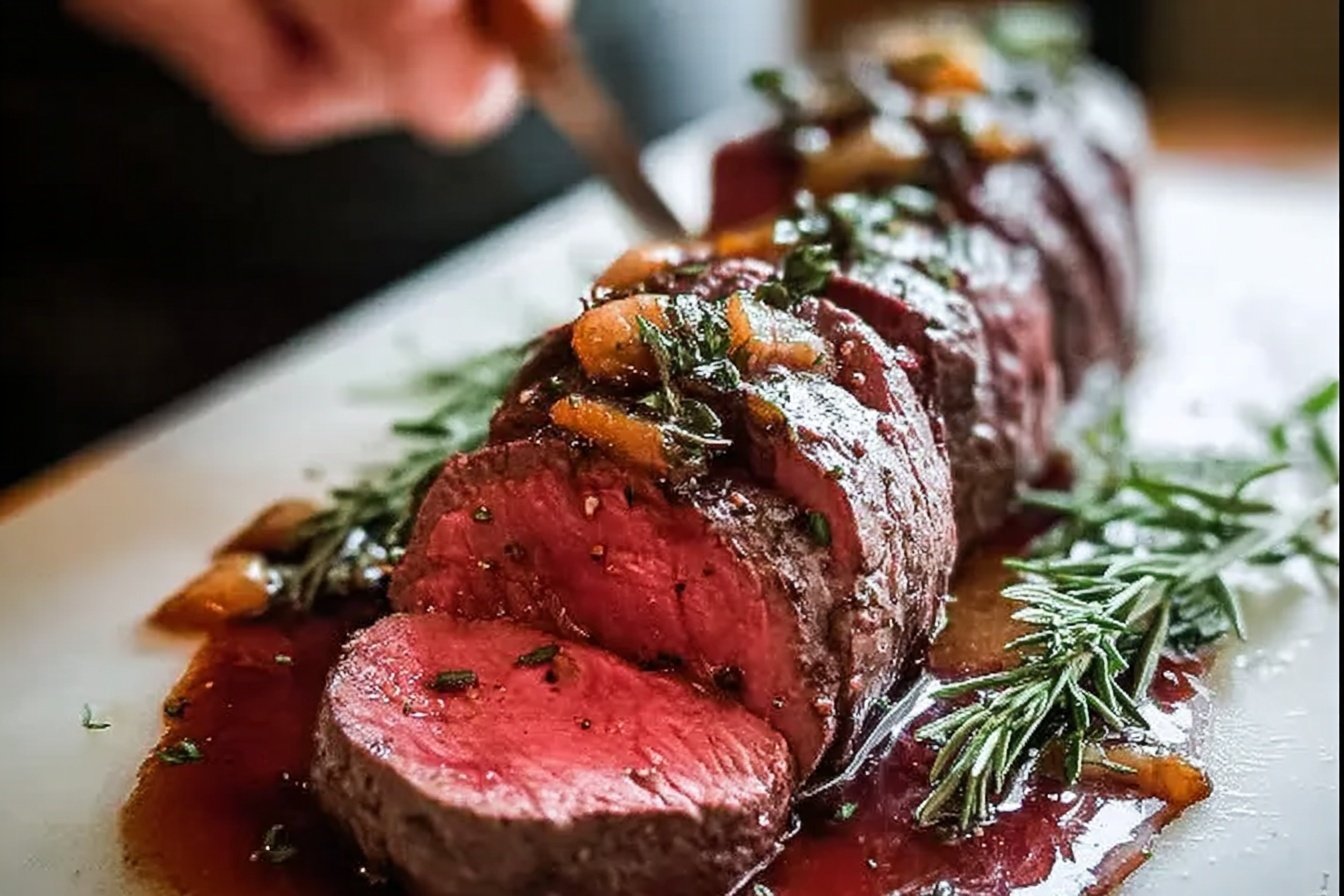
Why You'll Love This Beef Tenderloin
If you have been looking for a Beef Tenderloin recipe that feels special but still stays simple, this one is for you. This foolproof method gives you a tender center, a crisp herb crust, and a roast that looks polished enough for holidays, birthdays, or Sunday dinner. It is a great choice for home cooks who want reliable results without a lot of fuss.
- Easy enough for special occasions: This beef tenderloin recipe uses a short ingredient list and a clear two-temperature roasting method, so you get impressive results without constant attention. It is a smart pick when you need a roasted beef tenderloin that cooks gently and finishes beautifully.
- Rich flavor with simple ingredients: Fresh rosemary, thyme, olive oil, butter, salt, and pepper work together to create a deep, savory crust. The herbs add a clean, woodsy flavor that makes this oven roasted tenderloin taste like a restaurant-style main dish.
- Lean and satisfying: Beef tenderloin is naturally lean and tender, which makes it a nice option for guests who want a hearty meal without heavy sauce. Served in sensible portions, it fits into many meal plans while still feeling indulgent.
- Flexible for different tables: This roasted beef tenderloin with herbs pairs well with potatoes, salad, vegetables, or creamy horseradish sauce. It can also be served with lighter sides for a more balanced dinner.
When you want a dinner that feels calm, confident, and a little bit fancy, this foolproof oven roasted beef tenderloin brings it home.
For more dinner ideas that work well alongside a special roast, you might also like this creamy sweet potato casserole for a cozy side dish that fits holiday meals.
Jump To
- 1. Why You'll Love This Beef Tenderloin
- 2. Essential Ingredients for Beef Tenderloin
- 3. How to Prepare the Perfect Beef Tenderloin: Step-by-Step Guide
- 4. Dietary Substitutions to Customize Your Beef Tenderloin
- 5. Mastering Beef Tenderloin: Advanced Tips and Variations
- 6. How to Store Beef Tenderloin: Best Practices
- 7. FAQs: Frequently Asked Questions About Beef Tenderloin
- 8. Beef Tenderloin
Essential Ingredients for Beef Tenderloin
Before you start, gather everything you need for this oven roasted beef tenderloin recipe. The ingredient list is short, but each item matters. The beef needs time with salt and herbs, and the butter helps build a glossy crust as it roasts.
Main Ingredients
- One 3 to 3 1/2 pound whole beef tenderloin, trimmed and tied – The star of the recipe. A center-cut roast gives you even thickness, so the meat cooks more evenly and slices neatly.
- 1 tablespoon olive oil – Helps the herbs stick and adds a light base coat for roasting.
- 1 tablespoon finely chopped fresh rosemary (approximately 2 sprigs or 1 teaspoon dried rosemary) – Brings a piney, fragrant flavor that pairs perfectly with beef.
- 1 tablespoon finely chopped fresh thyme leaves (approximately 16 to 20 sprigs or 1 teaspoon dried thyme) – Adds an earthy, gentle herbal note.
- 2 tablespoons cold unsalted butter, diced into 8 small cubes – Melts over the roast during the final stages for flavor and browning.
- Kosher salt (approximately 1 teaspoon per pound of meat) and ground black pepper – Seasons the roast deeply and helps form the crust.
Optional Serving Ideas
- Creamy horseradish sauce
- Roasted potatoes
- Green beans or asparagus
- Simple salad with a sharp vinaigrette
Special Dietary Notes
- Gluten-free: This beef tenderloin is naturally gluten-free when served with gluten-free sides and sauces.
- Low-carb: The roast itself fits well into many low-carb meal plans.
- Low-calorie: Keep portions around 6 ounces and pair with vegetables for a lighter plate.
- Vegan: A plant-based substitute would be a roasted king oyster mushroom or cauliflower steak with the same herb rub, though the flavor and texture will be different from beef tenderloin.
Helpful nutrition note
According to Healthline's guide to beef nutrition, beef can be a good source of protein, iron, zinc, and B vitamins, which is one reason many cooks like it for a filling main dish.
How to Prepare the Perfect Beef Tenderloin: Step-by-Step Guide
This beef tenderloin recipe works best when you give it time. The overnight seasoning helps the surface dry out, which leads to better browning. Then the low-and-slow oven roast keeps the center tender before a short blast of high heat finishes the crust.
First Step: Prepare the roast the day before
Start by patting the beef tenderloin dry with paper towels. This matters because moisture on the surface can keep the meat from browning well. Tie the roast with butcher's twine every 2 to 3 inches so it holds a round, even shape while cooking. If one end is thinner, tuck it under slightly before tying.
Next, drizzle the roast with 1 tablespoon olive oil and rub it all over the surface. Season generously with kosher salt, using about 1 teaspoon per pound of meat, and add plenty of ground black pepper. Sprinkle the rosemary and thyme over the top so the herbs cling to the oil. Set the roast on a foil-lined rimmed baking sheet and refrigerate it uncovered overnight.
Second Step: Bring the beef to room temperature
Two hours before roasting, remove the beef tenderloin from the refrigerator and let it sit on the kitchen counter. This helps the meat cook more evenly from edge to center. While it comes up to temperature, preheat the oven to 225°F and place a rack in the center position.
Before the roast goes in, dot the top with the 2 tablespoons of cold butter cubes. The butter melts slowly and adds richness as the roast cooks.
Third Step: Roast low and slow
Place the beef in the oven and roast at 225°F until the internal temperature reaches 115 to 120°F. For a 3 to 3 1/2 pound roast, this usually takes about 60 to 70 minutes. A digital thermometer probe is the best tool here because you can check the temperature without opening the oven. Insert the probe into the thickest part of the meat for the most accurate reading.
Do not rush this part. Low heat is what keeps a beef tenderloin juicy and soft instead of dry.
Fourth Step: Raise the heat for browning
Once the roast reaches 115 to 120°F inside, increase the oven temperature to 450°F. Return the beef to the oven and roast for another 10 to 15 minutes. This final burst of heat builds a golden-brown herb crust and brings the internal temperature to about 130°F for medium-rare.
If you prefer your beef a little more done, let it climb a few degrees higher, but remember that beef tenderloin is lean. Pulling it too far past medium-rare can make it less juicy.
Final Step: Rest, slice, and serve
Remove the roast from the oven and tent it loosely with foil. Let it rest for 10 minutes so the juices settle back into the meat. Then remove the twine and slice the beef tenderloin into 1 1/2-inch thick steaks. Serve it warm with creamy horseradish sauce or your favorite sides.
For a hearty dinner spread, this roast also pairs nicely with creamy beef and bowtie pasta when you want a comforting make-ahead side or a second meal idea for the week.
Quick roasting timeline
| Stage | Temperature | Time | Goal |
|---|---|---|---|
| Dry brine overnight | Refrigerated | Overnight | Build flavor and dry the surface |
| Low roast | 225°F | 60 to 70 minutes | Reach 115 to 120°F internal |
| High-heat finish | 450°F | 10 to 15 minutes | Brown crust and reach 130°F for medium-rare |
| Rest | Covered with foil | 10 minutes | Keep juices inside the meat |

Dietary Substitutions to Customize Your Beef Tenderloin
This roasted beef tenderloin with herbs is already pretty friendly for many eating styles, but small changes can help you fit the dish to your needs or what you have in the kitchen.
Protein and Main Component Alternatives
If you cannot find a whole beef tenderloin, ask for a center-cut tenderloin or a trimmed tenderloin roast. This gives you a more even shape and better cooking results. For a smaller gathering, you can also use a trimmed tenderloin filet section, though the roasting time will be shorter.
If you are cooking for someone who does not eat beef, the same rosemary-thyme rub can work on thick king oyster mushrooms, cauliflower steaks, or a whole roasted portobello. These options will not taste the same, but they can still bring a nice savory feel to the table.
Vegetable, Sauce, and Seasoning Modifications
For the herb mix, you can swap in sage or parsley if rosemary or thyme are not available. Dill will change the flavor quite a bit, so it works better in a different dish. If you want a richer finish, brush the roast with softened butter near the end of cooking instead of adding all of it at once.
For a lighter plate, serve the beef with steamed green beans, roasted carrots, or a crisp salad instead of heavy sides. For a creamy sauce, horseradish cream is classic, but a mustard sauce or pan juices also work well.
- Gluten-free: Use gluten-free sides and check your sauce ingredients.
- Dairy-free: Skip the butter and brush the roast with a little extra olive oil.
- Lower sodium: Use less salt on the surface and let the herbs do more of the work.
Mastering Beef Tenderloin: Advanced Tips and Variations
Once you make this foolproof oven roasted beef tenderloin once, you will probably feel much more confident making it again. A few smart habits can help you get consistent results every time.
Pro cooking techniques
Use a digital probe thermometer if you can. It gives you a better read than guessing by time alone, especially because ovens can vary. Also, do not skip the overnight uncovered rest in the fridge. That dry surface is what helps create the beautiful crust people love on an easy oven beef tenderloin roast.
If your roast is shaped unevenly, fold the thin tail end under before tying it. This helps the whole piece cook at a similar pace. A uniform shape matters more than almost anything else when roasting tenderloin.
Flavor variations
For a slightly different spin, add minced garlic to the herb rub or mix in a little crushed black peppercorn. You can also swap thyme for chopped parsley after roasting if you want a fresh finish. A bit of lemon zest adds brightness, especially if you are serving the beef with roasted vegetables.
If you want a more classic holiday vibe, pair the roast with creamy mashed potatoes, green beans, and a rich gravy. For a lighter meal, serve it with a mustard vinaigrette salad and roasted Brussels sprouts.
Presentation tips
Slice the beef into thick, even pieces and fan them across a warm platter. Sprinkle extra herbs over the top for a fresh look. If you have pan juices, spoon a little around the plate for shine and flavor. A few lemon wedges or a small bowl of horseradish sauce make the spread feel complete.
Make-ahead options
This dish is naturally friendly for busy schedules because the main seasoning happens the day before. You can also prep sides in advance, which takes pressure off the day of serving. If you are planning a larger dinner, pair it with a dish like this hearty steak and potato bake for another make-ahead friendly comfort food idea.
The best beef tenderloin is not about fancy tricks. It is about calm timing, good seasoning, and watching the temperature closely.
How to Store Beef Tenderloin: Best Practices
Leftovers from this roasted beef tenderloin recipe are a gift. When stored properly, they stay tender enough for sandwiches, salads, and quick dinners the next day.
Refrigeration
Let the beef cool completely before storing. Place it in an airtight container and keep it in the refrigerator for 3 to 4 days. For best texture, store slices in a single layer if possible, or separate layers with parchment paper.
Freezing
For longer storage, wrap sliced beef tenderloin tightly in foil or freezer paper, then place it in a freezer-safe bag or container. It can stay frozen for up to 3 months. Thaw it overnight in the refrigerator before reheating.
Reheating
To keep the meat from drying out, reheat it gently. A low oven at 250°F works well, especially if you cover the slices loosely with foil. You can also warm slices in a skillet with a little butter for a quick sear.
Meal prep considerations
Slice any leftovers thinly and use them in sandwiches, grain bowls, or salads. This helps stretch the roast into more meals without wasting a single bite. If you are making dinner for a smaller group, the leftovers can feel like a bonus meal instead of an afterthought.
FAQs: Frequently Asked Questions About Beef Tenderloin
How much beef tenderloin do I need per person?
Plan for 6 to 8 ounces of raw beef tenderloin per person to account for shrinkage during cooking. A 3- to 3.5-pound center-cut tenderloin typically serves 6 to 8 adults generously. This cut is lean and boneless, so it yields about 70-75% edible meat after trimming and cooking. For a holiday dinner, buy a whole 4- to 5-pound tenderloin and have your butcher trim the chain and silver skin, or do it yourself with a sharp knife. This ensures even cooking and maximizes tenderness. Adjust for hearty appetites or bone-in sides by adding 2 ounces per serving. Always weigh the trimmed roast for accuracy.
How do I prepare beef tenderloin for roasting the day before?
Start by patting the beef tenderloin dry with paper towels to remove moisture. Trim any excess fat and silver skin with a sharp boning knife for better seasoning adhesion. Tie the roast every 2 inches with butcher’s twine to maintain a uniform shape for even cooking—fold the thinner tail end under itself if needed. Season generously with 2 tablespoons kosher salt, black pepper, and fresh herbs like rosemary and thyme per 3 pounds. Place uncovered on a wire rack in the fridge overnight. This dry-brining process draws out moisture for a crisp crust and deeper flavor. Remove 2-3 hours before roasting to reach room temperature.
What is the best way to roast beef tenderloin in the oven?
Roast at two temperatures for juicy results: Preheat oven to 225°F, season and sear the tied tenderloin in a hot cast-iron skillet with oil for 2-3 minutes per side. Insert a probe thermometer into the thickest part, then transfer to the oven. Cook low and slow to 115-120°F internal (about 45-60 minutes for a 3-pound roast). Crank to 450°F for 10-15 minutes to form a golden herb crust until 125-130°F for medium-rare. Total time varies by size—use the thermometer, not the clock. Rest 15 minutes tented in foil. This method prevents overcooking the ends while searing the exterior.
What internal temperature should beef tenderloin reach for medium-rare?
Target 125-130°F final internal temperature for medium-rare beef tenderloin, which rises 5-10°F during a 15-minute rest due to carryover cooking. Use an instant-read or oven-safe probe thermometer inserted into the center, avoiding bone or fat. During the low-heat phase at 225°F, pull at 115-120°F; finish at high heat to hit the mark. Medium-rare yields a warm red center (most tender for this lean cut), per USDA guidelines (safe at 145°F but less juicy). Check multiple spots for uniformity. Over 135°F risks dryness. Pair with a sauce like horseradish cream to complement the precise doneness.
How do I store and reheat leftover roasted beef tenderloin?
Cool roasted beef tenderloin completely, then wrap tightly in plastic and store in an airtight container in the fridge for 3-4 days. For freezing, slice into portions, wrap individually in foil, and place in a freezer bag for up to 3 months—thaw overnight in the fridge. Reheat gently to avoid toughness: sear slices in a hot skillet with butter for 30-60 seconds per side, or warm in a 250°F oven covered with foil until 110°F internal. Slice against the grain thinly for sandwiches or salads. Avoid microwaving whole pieces. Leftover sauce keeps 5 days refrigerated; use within safety guidelines to prevent bacterial growth.
Beef Tenderloin
- Total Time: 1 hour 55 minutes + overnight
- Yield: 6-8 servings
Description
🥩 Foolproof low-and-slow roast delivers juicy, tender beef tenderloin with a golden herb crust, perfect doneness every time.
🌿 Infused with rosemary and thyme for aromatic flavor, ideal for holidays, date nights, or impressive dinners with minimal effort.
Ingredients
– One 3 to 3 1/2 pound whole beef tenderloin, trimmed and tied
– 1 tablespoon olive oil
– 1 tablespoon finely chopped fresh rosemary (approximately 2 sprigs or 1 teaspoon dried rosemary)
– 1 tablespoon finely chopped fresh thyme leaves (approximately 16 to 20 sprigs or 1 teaspoon dried thyme)
– 2 tablespoons cold unsalted butter, diced into 8 small cubes
– Kosher salt (approximately 1 teaspoon per pound of meat) and ground black pepper
Instructions
1-First Step: Prepare the roast the day before Start by patting the beef tenderloin dry with paper towels. This matters because moisture on the surface can keep the meat from browning well. Tie the roast with butcher’s twine every 2 to 3 inches so it holds a round, even shape while cooking. If one end is thinner, tuck it under slightly before tying. Next, drizzle the roast with 1 tablespoon olive oil and rub it all over the surface. Season generously with kosher salt, using about 1 teaspoon per pound of meat, and add plenty of ground black pepper. Sprinkle the rosemary and thyme over the top so the herbs cling to the oil. Set the roast on a foil-lined rimmed baking sheet and refrigerate it uncovered overnight.
2-Second Step: Bring the beef to room temperature Two hours before roasting, remove the beef tenderloin from the refrigerator and let it sit on the kitchen counter. This helps the meat cook more evenly from edge to center. While it comes up to temperature, preheat the oven to 225°F and place a rack in the center position. Before the roast goes in, dot the top with the 2 tablespoons of cold butter cubes. The butter melts slowly and adds richness as the roast cooks.
3-Third Step: Roast low and slow Place the beef in the oven and roast at 225°F until the internal temperature reaches 115 to 120°F. For a 3 to 3 1/2 pound roast, this usually takes about 60 to 70 minutes. A digital thermometer probe is the best tool here because you can check the temperature without opening the oven. Insert the probe into the thickest part of the meat for the most accurate reading. Do not rush this part. Low heat is what keeps a beef tenderloin juicy and soft instead of dry.
4-Fourth Step: Raise the heat for browning Once the roast reaches 115 to 120°F inside, increase the oven temperature to 450°F. Return the beef to the oven and roast for another 10 to 15 minutes. This final burst of heat builds a golden-brown herb crust and brings the internal temperature to about 130°F for medium-rare. If you prefer your beef a little more done, let it climb a few degrees higher, but remember that beef tenderloin is lean. Pulling it too far past medium-rare can make it less juicy.
5-Final Step: Rest, slice, and serve Remove the roast from the oven and tent it loosely with foil. Let it rest for 10 minutes so the juices settle back into the meat. Then remove the twine and slice the beef tenderloin into 1 1/2-inch thick steaks. Serve it warm with creamy horseradish sauce or your favorite sides. For a hearty dinner spread, this roast also pairs nicely with creamy beef and bowtie pasta when you want a comforting make-ahead side or a second meal idea for the week.
Notes
🔢 Use a digital probe thermometer to monitor internal temp without opening the oven.
🧂 Season generously the day before for deeper flavor and better crust.
😌 Rest the roast tented in foil to redistribute juices for maximum tenderness.
- Prep Time: 25 minutes + overnight
- Room Temperature: 2 hours
- Cook Time: 1 hour 30 minutes
- Category: Main Dishes
- Method: Roasting
- Cuisine: American
Nutrition
- Serving Size: 6 oz
- Calories: 350 kcal
- Sugar: 0g
- Sodium: 450mg
- Fat: 22g
- Saturated Fat: 10g
- Unsaturated Fat: 12g
- Trans Fat: 0g
- Carbohydrates: 1g
- Fiber: 0g
- Protein: 40g
- Cholesterol: 120mg
Keywords: beef tenderloin recipe, oven roasted tenderloin, rosemary thyme beef, foolproof roast beef