
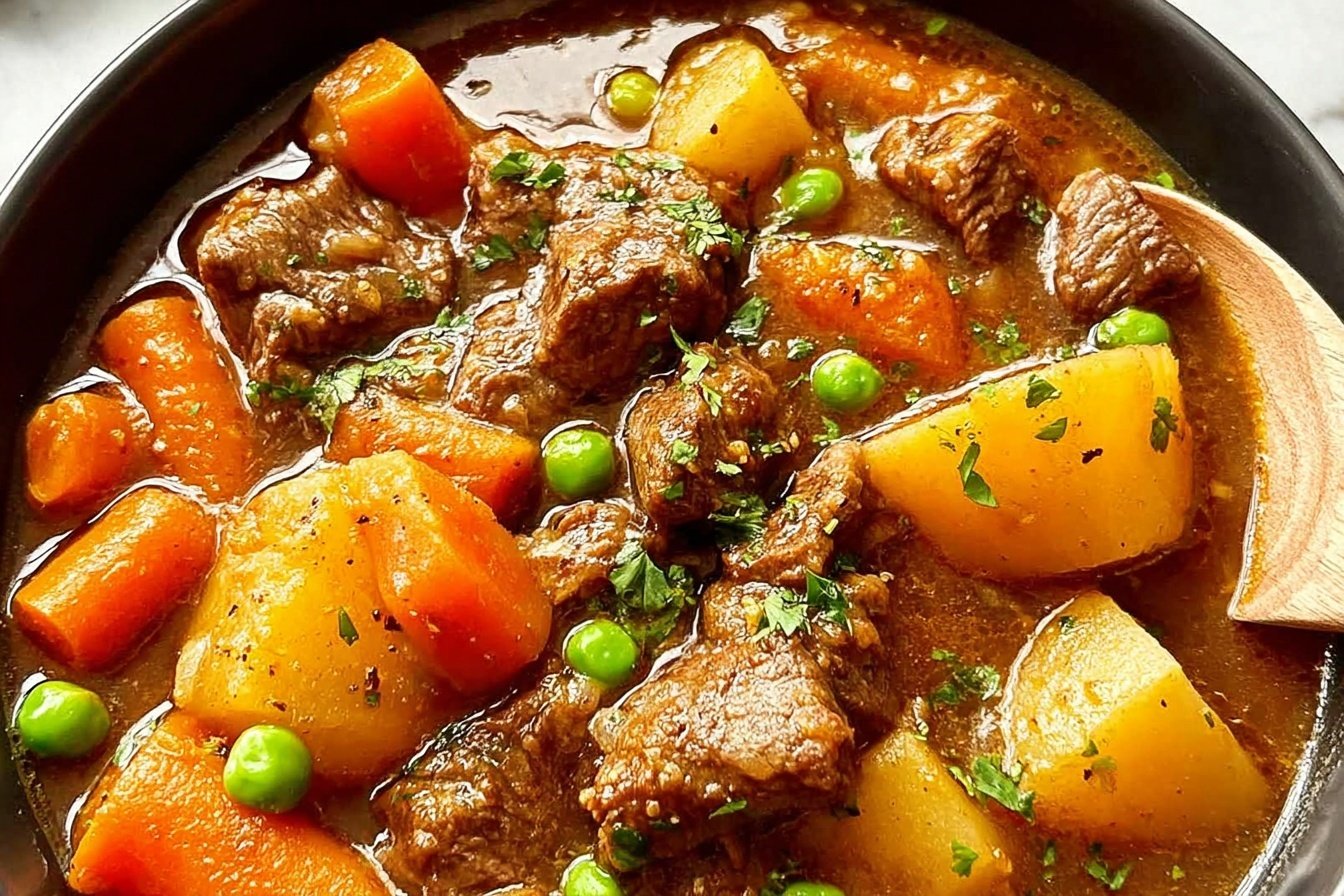
Why You’ll Love This Beef Stew
There’s something truly special about a pot of beef stew simmering on the stove, filling your kitchen with warm, savory aromas that promise comfort in every bite. This hearty beef stew recipe brings together tender chunks of beef and wholesome vegetables in a rich, flavorful broth that’s perfect for chilly evenings or anytime you crave a satisfying meal.
- Ease of preparation: This classic beef stew comes together with simple ingredients and straightforward steps. With just 20 minutes of prep time and hands-off simmering, you can go about your day while the flavors develop beautifully on their own.
- Health benefits: Packed with 25g of protein per serving and loaded with carrots, celery, and peas, this vegetable beef stew delivers essential nutrients including Vitamin A, Vitamin C, and iron. The balanced nutrition makes it a wholesome choice for the whole family.
- Versatility: This recipe adapts easily to your preferences and what you have on hand. You can swap vegetables, adjust seasonings, or even make it in a slow cooker for convenience.
- Distinctive flavor: The combination of browned beef, red wine, tomato paste, and rosemary creates layers of flavor that make this stew taste like it came from a restaurant.
What makes this beef stew recipe truly shine is the technique of browning the meat first, which creates deep caramelization and builds the foundation for an incredibly flavorful broth.
Jump To
- 1. Why You’ll Love This Beef Stew
- 2. Essential Ingredients for Beef Stew
- 3. How to Prepare the Perfect Beef Stew: Step-by-Step Guide
- 4. Protein and Main Component Alternatives
- 5. Vegetable, Sauce, and Seasoning Modifications
- 6. Mastering Beef Stew: Advanced Tips and Variations
- 7. How to Store Beef Stew: Best Practices
- 8. FAQs: Frequently Asked Questions About Beef Stew
- 9. Beef Stew
Essential Ingredients for Beef Stew
Creating the perfect beef stew recipe with tender beef and veggies starts with gathering quality ingredients. Each component plays an important role in building flavor and texture. Here’s everything you’ll need:
Main Ingredients
- 2 pounds stewing beef, trimmed and cubed – The star of the dish; choose well-marbled cuts that become tender through slow cooking.
- 3 tablespoons flour – Coats the beef for browning and helps thicken the stew naturally.
- ½ teaspoon garlic powder – Adds savory depth to the beef coating.
- ½ teaspoon salt – Seasons the meat and enhances all flavors.
- ½ teaspoon black pepper – Provides mild heat and complexity.
- 3 tablespoons olive oil, more as needed – Used for browning the beef and sautéing vegetables.
- 1 onion, chopped – Creates a sweet, aromatic base for the stew.
- 6 cups beef broth – Forms the flavorful cooking liquid that brings everything together.
- ½ cup red wine (optional) – Deglazes the pan and adds sophisticated depth to the broth.
- 1 pound potatoes, peeled and cubed – Provides hearty texture and helps thicken the stew naturally.
- 4 carrots, cut into 1 inch pieces – Adds natural sweetness and vibrant color.
- 4 ribs celery, cut into 1 inch pieces – Contributes aromatic flavor and satisfying crunch.
- 3 tablespoons tomato paste – Concentrates umami flavor and gives the broth a rich color.
- 1 teaspoon dried rosemary or 1 sprig fresh – Infuses the stew with woodsy, herbal notes.
- 2 tablespoons cornstarch or as needed – Creates a slurry for thickening at the end.
- 2 tablespoons water or as needed – Mixed with cornstarch for the thickening slurry.
- ¾ cup peas – Adds bright color and sweet flavor; added near the end to stay tender.
Special Dietary Options
You can easily adapt this traditional beef stew with vegetables for various dietary needs:
- Gluten-free: Replace the flour coating with cornstarch or a gluten-free flour blend, and ensure your beef broth is certified gluten-free.
- Dairy-free: This recipe is naturally dairy-free, making it suitable for those avoiding milk products.
- Lower sodium: Use low-sodium beef broth and reduce the added salt to control sodium intake.
How to Prepare the Perfect Beef Stew: Step-by-Step Guide
Making a tender beef stew is all about building layers of flavor through proper technique. Follow these detailed steps for the best results.
Step 1: Prepare and Season the Beef
Start by creating the seasoning mixture that will coat your beef. In a shallow bowl or plate, combine the 3 tablespoons flour, ½ teaspoon garlic powder, ½ teaspoon salt, and ½ teaspoon black pepper. Mix these dry ingredients thoroughly with a fork or whisk until evenly blended. This seasoned flour serves two purposes: it creates a flavorful crust on the beef and helps thicken your stew as it cooks.
Toss your 2 pounds of cubed stewing beef in the flour mixture, turning each piece to ensure complete coverage. Shake off any excess flour to prevent it from burning during the browning step. The thin coating is all you need for perfectly seasoned meat.
Step 2: Brown the Beef in Batches
Heat 3 tablespoons of olive oil in a large heavy-bottomed pot or Dutch oven over medium-high heat. Wait until the oil shimmers, indicating it’s hot enough for proper browning. Working in small batches, add the coated beef cubes to the pot in a single layer without overcrowding. This is crucial because overcrowding causes the meat to steam rather than brown.
Brown each piece for about 2-3 minutes per side until you see a deep golden crust forming. Transfer the browned beef to a plate and continue with the remaining batches, adding more oil if the pot becomes dry. Those browned bits stuck to the bottom of the pot are pure gold for flavor.
Step 3: Sauté the Aromatics
Once all the beef is browned and removed, check if you need to add more olive oil to the pot. Add the chopped onion and sauté for about 3 minutes until softened and translucent. The onion releases its natural sugars and creates another layer of flavor for your stew base. As you stir, use your spoon to scrape up those flavorful browned bits from the bottom of the pot.
Step 4: Deglaze and Build the Broth
Pour in the 6 cups of beef broth and ½ cup of red wine if using. The liquid will bubble enthusiastically as it hits the hot pot, which helps release all those caramelized bits from the bottom. Use a wooden spoon to scrape the pot thoroughly, incorporating all that concentrated flavor into your broth. This step, known as deglazing, is what separates a good stew from a great one.
If you prefer not to use wine, simply add an extra ½ cup of beef broth instead. The wine adds complexity but the stew remains delicious without it, making it perfect for family dinners.
Step 5: Add Vegetables and Simmer
Return the browned beef to the pot along with 1 pound of cubed potatoes, 4 cut carrots, 4 ribs of celery, 3 tablespoons of tomato paste, and rosemary. Stir everything together until the tomato paste dissolves into the broth. Bring the mixture to a boil, then reduce heat to medium-low.
Cover the pot with a tight-fitting lid and let it simmer for approximately 1 hour, or until the beef becomes fork-tender. Some cuts may require up to 90 minutes of simmering time. Check occasionally and add more broth if the liquid reduces too much.
Step 6: Thicken the Stew
Once the beef is tender, it’s time to thicken the broth. Create a slurry by mixing 2 tablespoons of cornstarch with 2 tablespoons of cold water until smooth. Stir this mixture into the simmering stew gradually, allowing it to return to a gentle boil. Cook for 1-2 minutes to eliminate any starchy taste from the cornstarch.
The stew should now have a gravy-like consistency that coats the back of a spoon. If you prefer it thicker, you can add more slurry in small amounts. For a thinner consistency, simply add a splash of broth.
Step 7: Add Finishing Touches
Stir in ¾ cup of peas and simmer for 5-10 minutes until they’re heated through and tender. Adding peas at the end preserves their bright color and sweet flavor. Taste your stew and adjust the seasoning with additional salt and pepper if needed.
Your hearty classic beef stew recipe is now ready to serve. Ladle into bowls and enjoy the satisfaction of creating a meal that warms both body and soul.
Protein and Main Component Alternatives
While this recipe calls for stewing beef, you have several options when it comes to the main protein. Understanding these alternatives helps you create the best beef stew recipe possible with what’s available at your grocery store.
Best Beef Cuts for Stew
Chuck roast is widely considered the ideal choice for stew. This cut comes from the shoulder area and contains good marbling that melts during cooking, making the meat tender while enriching the broth. Chuck roast is also budget-friendly and readily available at most butcher counters.
Other excellent options include brisket, which offers wonderful flavor but takes longer to become tender, and bottom round, which is leaner but works well with longer cooking times. Avoid lean cuts like sirloin, as they tend to dry out and become tough during the extended simmering process.
For a different take on beef dinners, you might enjoy this creamy beef and bowtie pasta recipe that offers another comforting way to enjoy beef.
Alternative Proteins
If you want to experiment beyond traditional beef, consider these substitutions:
| Original Ingredient | Substitution Option | Notes |
|---|---|---|
| Stewing beef | Lamb shoulder | Creates a richer, slightly gamey flavor |
| Stewing beef | Venison | Lean option; requires added fat or oil |
| Stewing beef | Pork shoulder | Milder flavor; reduces cooking time slightly |
Cut your alternative protein into 1-2 inch cubes just like you would with beef, and follow the same browning and simmering process for consistent results.
Vegetable, Sauce, and Seasoning Modifications
One of the beauties of vegetable beef stew is how adaptable it is to seasonal produce and personal preferences. Here are ways to customize the vegetables and seasonings.
Vegetable Variations
The classic trio of carrots, celery, and potatoes provides a solid foundation, but you can expand your stew with additional vegetables:
- Green beans: Add 1 cup trimmed beans during the last 15 minutes of cooking.
- Zucchini: Slice and add during the last 10 minutes to prevent mushiness.
- Mushrooms: Brown cremini or button mushrooms with the onions for earthy depth.
- Parsnips: Substitute or supplement carrots for a sweeter, earthier flavor profile.
- Turnips or rutabaga: These root vegetables add pleasant bitterness and pair beautifully with beef.
Herb and Seasoning Alternatives
While rosemary is the traditional herb choice, you can create different flavor profiles by swapping or adding herbs:
- Thyme: Use 1 teaspoon dried or several fresh sprigs for a subtle, earthy flavor.
- Bay leaves: Add 2 leaves during simmering and remove before serving.
- Fresh parsley: Stir in chopped parsley just before serving for brightness and color.
- Herbes de Provence: This French blend creates a more sophisticated flavor profile.
For a hands-off approach to hearty meals, check out this crockpot steak and potato bake that lets your slow cooker do the work.
Mastering Beef Stew: Advanced Tips and Variations
Taking your classic beef stew from good to exceptional requires understanding a few professional techniques and creative variations. These tips will help you achieve restaurant-quality results at home.
Pro Cooking Techniques
The Browning Technique: Never skip browning the beef. This step, called the Maillard reaction, creates hundreds of flavor compounds that form the backbone of your stew. Take your time with this step, working in batches and maintaining medium-high heat for the best crust.
Rest Before Serving: Like many dishes, beef stew benefits from resting. Let it sit for 10-15 minutes after cooking. This allows the flavors to settle and the meat to reabsorb some juices, making each bite more flavorful.
Make-Ahead Options
Beef stew actually tastes better the next day, making it perfect for meal prep. The flavors continue to meld overnight in the refrigerator. You can prepare the stew completely, cool it properly, and store it for up to 3 days before reheating.
For even more convenience, prep your vegetables and cut the beef a day ahead. Store each component separately in airtight containers in the refrigerator. When you’re ready to cook, everything is prepped and ready to go.
Flavor Variations
Try these creative twists on the classic recipe:
- Irish Stew Style: Skip the tomato paste and wine, add extra potatoes and a splash of stout beer.
- Mediterranean Version: Add olives, sun-dried tomatoes, and finish with lemon zest.
- Asian-Inspired: Include ginger, soy sauce, and star anise for completely different flavor notes.
Presentation Tips
Serve your stew in wide, shallow bowls to showcase the colorful vegetables and tender meat. Garnish with fresh herbs like parsley or thyme sprigs for a pop of color. Crusty bread on the side isn’t just delicious; it’s perfect for soaking up every bit of that flavorful broth.
Professional chefs know that patience is the secret ingredient. Low, slow cooking breaks down the connective tissue in tough cuts of beef, transforming them into melt-in-your-mouth morsels.
For more detailed guidance on techniques and timing, you can refer to this excellent beef stew resource that provides additional professional insights.
How to Store Beef Stew: Best Practices
Proper storage ensures your tender beef stew stays fresh and safe for future meals. Follow these guidelines to make the most of your cooking efforts.
Refrigeration Guidelines
Allow your stew to cool at room temperature for no more than 2 hours before refrigerating. Transfer to airtight containers with enough headspace for expansion. Properly stored, beef stew keeps in the refrigerator for 3-4 days. The flavor often improves after a day as the ingredients continue to meld together.
Freezing for Long-Term Storage
For longer storage, freeze your stew in portion-sized containers or freezer bags. Label with the date and contents. Frozen properly, beef stew maintains quality for up to 3 months. If your stew contains potatoes, they may become slightly grainy after freezing, but the flavor remains excellent.
To freeze optimally, flatten freezer bags for quick thawing and remove as much air as possible to prevent freezer burn. Individual portions are convenient for quick weeknight dinners.
Reheating Best Practices
Thaw frozen stew overnight in the refrigerator for best results. Reheat in a pot over medium-low heat, stirring occasionally until it reaches 165°F throughout. You can also use the microwave, stirring every few minutes to ensure even heating.
If the stew seems too thick after storage, add a splash of beef broth or water to reach your desired consistency. Taste and adjust seasonings before serving, as flavors can mellow during storage.

FAQs: Frequently Asked Questions About Beef Stew
What is the best cut of beef for stew?
The best cuts for beef stew are tough, flavorful ones like chuck roast, brisket, or bottom round, which break down during slow cooking to become tender. Chuck roast is ideal because its marbling melts into the broth, adding richness. Trim excess fat before cubing into 1-2 inch pieces. Avoid lean cuts like sirloin, as they dry out. For 2 pounds of stew, dredge in flour seasoned with salt and pepper before browning in oil over medium-high heat. This creates a flavorful base. Simmer for 2-3 hours until fork-tender. These cuts typically cost less and yield the best texture after long cooking. (92 words)
How do you thicken beef stew?
Thicken beef stew first with natural starches from potatoes and a flour dredge on the beef. For extra thickness, make a slurry with 2 tablespoons cornstarch mixed with 2 tablespoons cold water per quart of stew. Stir it in gradually while the stew boils, then simmer 1-2 minutes to cook out the starch taste. Avoid over-thickening; aim for a gravy-like consistency. If using flour, whisk 2 tablespoons into ¼ cup cold broth and add at the end. Test by coating the back of a spoon. This method works for stovetop, slow cooker, or Instant Pot recipes. (98 words)
Can you freeze beef stew?
Yes, beef stew freezes well for up to 3 months. Cool completely, then portion into freezer-safe bags or containers, removing air to prevent freezer burn. Flatten bags for quick thawing. Defrost overnight in the fridge or use the microwave’s defrost setting, stirring every few minutes. Reheat on the stovetop over medium heat until bubbling, or in the oven at 350°F for 20-30 minutes. Add a splash of broth if it thickens too much. Freezing enhances flavors as they meld. Label with dates for easy use. Not suitable for stews with potatoes if freezing longer than 2 months, as they may turn mushy. (104 words)
How do you make beef stew in a slow cooker?
Brown 2 pounds cubed chuck beef in a skillet with oil for flavor (optional but recommended), then transfer to a 6-quart slow cooker. Add chopped onions, carrots, potatoes, garlic, 4 cups beef broth, tomato paste, Worcestershire sauce, thyme, bay leaf, salt, and pepper. Cook on low for 8 hours or high for 4-5 hours until beef is tender. Thicken with cornstarch slurry if needed in the last 30 minutes. Stir before serving. This hands-off method tenderizes meat perfectly. For best results, don’t peek during cooking to maintain heat. Serves 6-8. (96 words)
What should I serve with beef stew?
Beef stew pairs well with crusty bread, dinner rolls, or buttermilk biscuits to soak up the broth. Try cornbread for a Southern twist or mashed potatoes as a hearty side. Add a simple green salad with vinaigrette for balance, or roasted vegetables like parsnips. For wine, go with a red like Cabernet Sauvignon. Serve in bread bowls for fun. These sides complement the stew’s savory depth without overpowering it. Prep sides ahead since stew improves with reheating. A complete meal for cold nights, feeding 4-6 easily. (92 words)

Beef Stew
- Total Time: 1 hour 30 minutes
- Yield: 6 servings
Description
🥩 Hearty beef stew features tender, melt-in-your-mouth beef and vibrant veggies in a rich broth – ultimate comfort food for cold days!
🍲 Classic recipe slow-simmered for deep flavors, nutritious and satisfying – perfect family meal that tastes even better as leftovers!
Ingredients
– 2 pounds stewing beef, trimmed and cubed
– 3 tablespoons flour
– ½ teaspoon garlic powder
– ½ teaspoon salt
– ½ teaspoon black pepper
– 3 tablespoons olive oil, more as needed
– 1 onion, chopped
– 6 cups beef broth
– ½ cup red wine (optional)
– 1 pound potatoes, peeled and cubed
– 4 carrots, cut into 1 inch pieces
– 4 ribs celery, cut into 1 inch pieces
– 3 tablespoons tomato paste
– 1 teaspoon dried rosemary or 1 sprig fresh
– 2 tablespoons cornstarch or as needed
– 2 tablespoons water or as needed
– ¾ cup peas
Instructions
1-Step 1: Prepare and Season the Beef Start by creating the seasoning mixture that will coat your beef. In a shallow bowl or plate, combine the 3 tablespoons flour, ½ teaspoon garlic powder, ½ teaspoon salt, and ½ teaspoon black pepper. Mix these dry ingredients thoroughly with a fork or whisk until evenly blended. This seasoned flour serves two purposes: it creates a flavorful crust on the beef and helps thicken your stew as it cooks. Toss your 2 pounds of cubed stewing beef in the flour mixture, turning each piece to ensure complete coverage. Shake off any excess flour to prevent it from burning during the browning step. The thin coating is all you need for perfectly seasoned meat.
2-Step 2: Brown the Beef in Batches Heat 3 tablespoons of olive oil in a large heavy-bottomed pot or Dutch oven over medium-high heat. Wait until the oil shimmers, indicating it’s hot enough for proper browning. Working in small batches, add the coated beef cubes to the pot in a single layer without overcrowding. This is crucial because overcrowding causes the meat to steam rather than brown. Brown each piece for about 2-3 minutes per side until you see a deep golden crust forming. Transfer the browned beef to a plate and continue with the remaining batches, adding more oil if the pot becomes dry. Those browned bits stuck to the bottom of the pot are pure gold for flavor.
3-Step 3: Sauté the Aromatics Once all the beef is browned and removed, check if you need to add more olive oil to the pot. Add the chopped onion and sauté for about 3 minutes until softened and translucent. The onion releases its natural sugars and creates another layer of flavor for your stew base. As you stir, use your spoon to scrape up those flavorful browned bits from the bottom of the pot.
4-Step 4: Deglaze and Build the Broth Pour in the 6 cups of beef broth and ½ cup of red wine if using. The liquid will bubble enthusiastically as it hits the hot pot, which helps release all those caramelized bits from the bottom. Use a wooden spoon to scrape the pot thoroughly, incorporating all that concentrated flavor into your broth. This step, known as deglazing, is what separates a good stew from a great one. If you prefer not to use wine, simply add an extra ½ cup of beef broth instead. The wine adds complexity but the stew remains delicious without it, making it perfect for family dinners.
5-Step 5: Add Vegetables and Simmer Return the browned beef to the pot along with 1 pound of cubed potatoes, 4 cut carrots, 4 ribs of celery, 3 tablespoons of tomato paste, and rosemary. Stir everything together until the tomato paste dissolves into the broth. Bring the mixture to a boil, then reduce heat to medium-low. Cover the pot with a tight-fitting lid and let it simmer for approximately 1 hour, or until the beef becomes fork-tender. Some cuts may require up to 90 minutes of simmering time. Check occasionally and add more broth if the liquid reduces too much.
6-Step 6: Thicken the Stew Once the beef is tender, it’s time to thicken the broth. Create a slurry by mixing 2 tablespoons of cornstarch with 2 tablespoons of cold water until smooth. Stir this mixture into the simmering stew gradually, allowing it to return to a gentle boil. Cook for 1-2 minutes to eliminate any starchy taste from the cornstarch. The stew should now have a gravy-like consistency that coats the back of a spoon. If you prefer it thicker, you can add more slurry in small amounts. For a thinner consistency, simply add a splash of broth.
7-Step 7: Add Finishing Touches Stir in ¾ cup of peas and simmer for 5-10 minutes until they’re heated through and tender. Adding peas at the end preserves their bright color and sweet flavor. Taste your stew and adjust the seasoning with additional salt and pepper if needed. Your hearty classic beef stew recipe is now ready to serve. Ladle into bowls and enjoy the satisfaction of creating a meal that warms both body and soul.
Notes
🔥 Brown beef in batches first for rich caramelized flavor and better texture.
🌱 Add peas at the end to keep them vibrant and prevent overcooking.
🥄 Use a cornstarch slurry slowly and boil briefly to thicken without starchy taste.
- Prep Time: 20 minutes
- Cook Time: 1 hour 10 minutes
- Category: Soups & Stews
- Method: Stovetop
- Cuisine: American
Nutrition
- Serving Size: 1 serving
- Calories: 444
- Sugar: 4g
- Sodium: 383mg
- Fat: 28g
- Saturated Fat: 9g
- Unsaturated Fat: 19g
- Trans Fat: 0g
- Carbohydrates: 22g
- Fiber: 4g
- Protein: 25g
- Cholesterol: 80mg
Keywords: beef stew, hearty beef stew, classic beef stew, tender beef veggies