
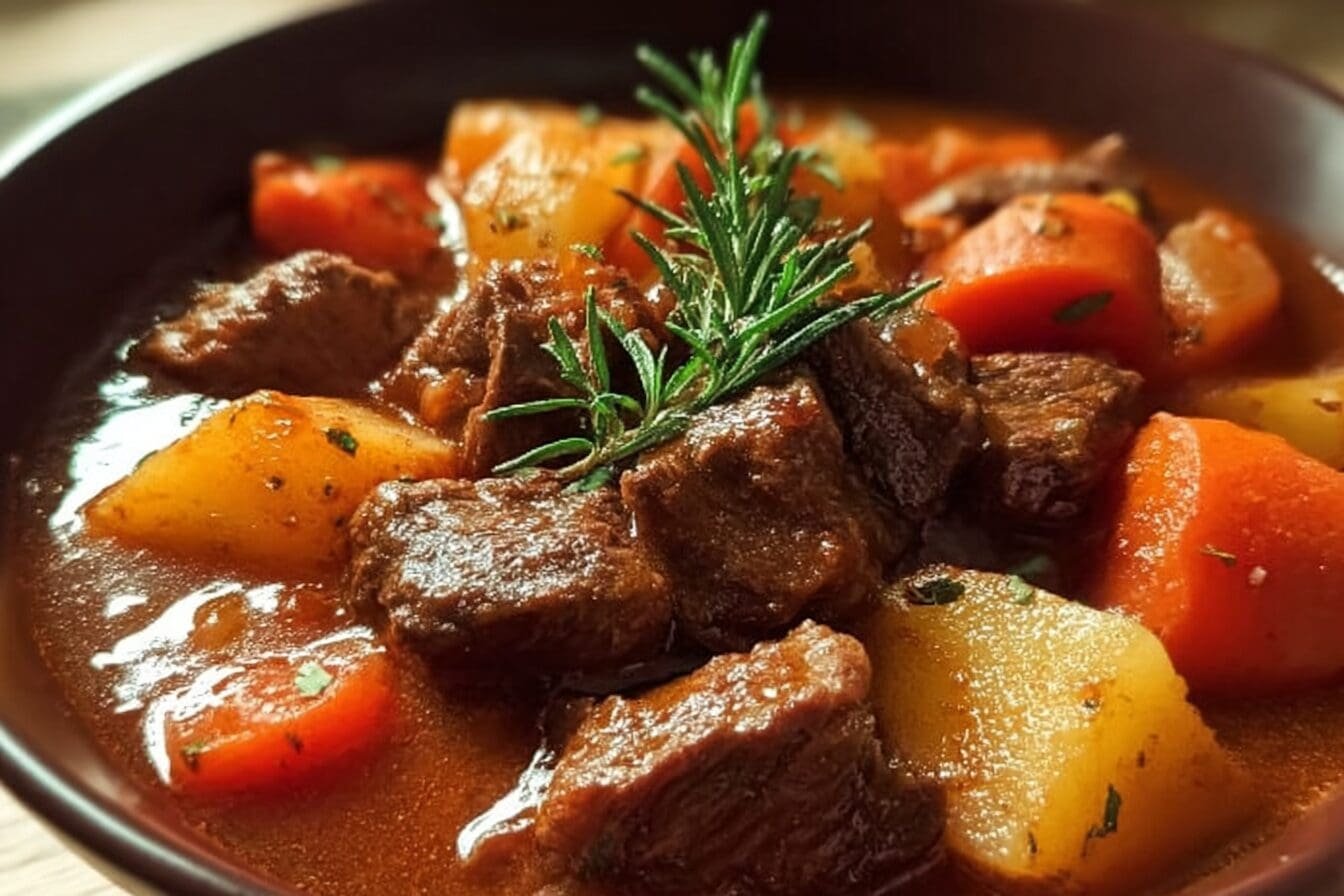
Why You’ll Love This Beef Stew
This beef stew recipe is designed for simplicity and comfort, making it perfect for busy weeknights when you need something satisfying without spending hours in the kitchen. The straightforward steps allow even novice cooks to create a hearty, comforting meal without extensive prep work or long simmering times. Packed with lean beef, nutrient-rich vegetables, and wholesome herbs, this beef stew offers a nutritious balance of protein, vitamins, and minerals. It’s a warming dish that supports wellness and provides essential energy-boosting nutrients. Plus, it’s adaptable to various dietary needs, accommodating modifications such as gluten-free thickeners, low-calorie ingredient swaps, and vegan alternatives without compromising flavor or texture. The hearty blend of savory beef, aromatic herbs, and slow-cooked vegetables creates a rich, comforting flavor profile that stands out among traditional stews, making it a memorable dish for any occasion. The depth of flavor comes from simple ingredients coming together through patient cooking techniques that anyone can master at home.Jump To
- 1. Why You’ll Love This Beef Stew
- 2. Essential Ingredients for Beef Stew
- 3. How to Prepare the Perfect Beef Stew: Step-by-Step Guide
- 4. Dietary Substitutions to Customize Your Beef Stew
- 5. Mastering Beef Stew: Advanced Tips and Variations
- 6. How to Store Beef Stew: Best Practices
- 7. Nutritional Information
- 8. FAQs: Frequently Asked Questions About Beef Stew
- 9. Beef Stew
Essential Ingredients for Beef Stew
Creating a delicious beef stew starts with gathering the right ingredients. Here’s what you’ll need to make this hearty dish that will warm you from the inside out:- 2 pounds stewing beef, trimmed and cubed
- 3 tablespoons flour
- ½ teaspoon garlic powder
- ½ teaspoon salt
- ½ teaspoon black pepper
- 3 tablespoons olive oil, more as needed
- 1 onion, chopped
- 6 cups beef broth
- ½ cup red wine (optional)
- 1 pound potatoes, peeled and cubed
- 4 carrots, cut into 1-inch pieces
- 4 ribs celery, cut into 1-inch pieces
- 3 tablespoons tomato paste
- 1 teaspoon dried rosemary or 1 sprig fresh
- 2 tablespoons cornstarch or as needed
- 2 tablespoons water or as needed
- ¾ cup peas
Main Ingredients Breakdown
The stewing beef provides a tender, flavorful protein base essential for authentic beef stew. Chuck roast or stewing beef works best as these cuts have the right amount of connective tissue to become tender during long cooking. Beef broth adds a rich, savory liquid that infuses the stew with depth. You can make your own or use store-bought versions depending on your time constraints. The optional red wine adds complexity and richness, but can be replaced with additional broth for those who prefer alcohol-free dishes. Carrots, celery, and onions form the aromatic base of the stew. These vegetables contribute sweetness and texture while boosting the nutritional value. Potatoes add substance and help thicken the stew naturally as they break down during cooking.Special Dietary Options
For a vegan version, replace beef with cubed seitan or mushrooms, and use vegetable broth instead of beef broth. This creates a plant-based stew with similar texture and depth of flavor. If you need a gluten-free option, substitute flour with cornstarch or gluten-free flour blends to thicken the stew. Make sure your beef broth is certified gluten-free as well, as some brands contain wheat-based additives. For those watching calories, use lean beef cuts or plant-based proteins, and reduce oil or butter usage. You can also add more vegetables to bulk up the stew without adding excess calories.How to Prepare the Perfect Beef Stew: Step-by-Step Guide
Preparing Your Ingredients
First, prepare all ingredients by cutting beef into cubes, peeling and slicing carrots, dicing onions, and chopping celery to ensure efficient cooking. Having everything ready before you start cooking will make the process smoother and less stressful. Combine the flour, garlic powder, salt, and pepper in a bowl. Toss the beef in the flour mixture until coated evenly. This flour coating will help thicken the stew later and create a nice crust on the beef when searing.Searing the Beef
Heat 3 tablespoons of olive oil in a large pot over medium-high heat. Shake off excess flour from the beef cubes and brown them in batches until seared on all sides. Remove and set aside to retain juices and flavor. This step is crucial for developing the rich flavor profile of the stew.Browning the beef enhances flavor through caramelization. Take your time with this step and don’t overcrowd the pan, as this will cause the meat to steam rather than sear.
Building the Stew Base
Add the chopped onions to the pot, adding more oil if needed, and cook until softened (about 3 minutes). This step begins building the flavor foundation of your stew. Pour in the beef broth and red wine (if using), scraping up the browned bits from the bottom of the pot. These browned bits contain concentrated flavor that will infuse your entire stew with depth.Simmering to Perfection
Return the beef to the pot and add the potatoes, carrots, celery, tomato paste, and rosemary. Reduce heat to medium-low, cover, and simmer for 1 to 1½ hours until beef is tender. The slow simmering allows the flavors to meld together and the connective tissue in the beef to break down, creating that melt-in-your-mouth texture.Thickening and Finishing
Mix cornstarch and water to make a slurry. Slowly stir into boiling stew to thicken. Boil for 1-2 minutes to remove the starchy flavor. Stir in the peas and simmer for 5-10 minutes. Adjust seasoning before serving. If you’re looking for other hearty beef recipes to add to your collection, try our Mediterranean Ground Beef Stir Fry for a lighter but equally satisfying meal.
Dietary Substitutions to Customize Your Beef Stew
Protein and Main Component Alternatives
Consider plant-based proteins such as seitan or tempeh for vegan adaptations, or lean chicken breast for a poultry variant. For a lighter version, you can even use turkey or make it completely vegetarian with hearty beans and mushrooms. For gluten-free needs, ensure all components, including broth and thickeners, are certified gluten-free. Cornstarch is an excellent gluten-free thickening option that creates a smooth, glossy finish to your stew.Vegetable, Sauce, and Seasoning Modifications
Swap traditional root vegetables with seasonal options like parsnips, turnips, or sweet potatoes to tailor flavor and texture. These alternatives add new dimensions to your stew while maintaining the comforting heartiness that makes this dish so beloved. Use tamari sauce in place of soy sauce to maintain gluten-free integrity if your recipe calls for soy-based additions. For low-sodium diets, reduce added salt and use fresh herbs to enhance taste naturally.Creamy Variations
If you enjoy creamier dishes, try adding a splash of heavy cream or coconut milk toward the end of cooking. This creates a luxurious texture without overpowering the traditional flavors of the stew. For a different take on beef and comfort food, you might enjoy our Creamy Beef and Bowtie Pasta, which combines similar flavors in a completely different dish.Mastering Beef Stew: Advanced Tips and Variations
Pro Cooking Techniques
Try searing beef over high heat for a caramelized crust, and use a heavy-bottomed pot or Dutch oven for even heat distribution to enhance stew richness. The right cookware makes a significant difference in the final result of your stew. Another professional technique is to deglaze the pan thoroughly after searing the meat. Adding a portion of the liquid and scraping up all those flavorful browned bits ensures you don’t leave any flavor behind.Flavor Variations
Experiment with smoked paprika, rosemary, or a splash of red wine for deeper complexity. A splash of balsamic vinegar added near the end of cooking can brighten the flavors without making the stew taste like vinegar. Different herbs can dramatically change the character of your stew. Try adding thyme, bay leaves, or even a sprig of fresh sage for different aromatic profiles that complement the beef and vegetables.Presentation Tips
Serve stew in rustic bowls garnished with fresh chopped parsley or thyme to add color and freshness. A slice of crusty bread on the side completes the presentation and provides something for soaking up the delicious broth.Make-Ahead Options
Prepare stew a day in advance; flavors actually improve overnight as the ingredients continue to meld together. Store in airtight containers and reheat gently to maintain texture and taste. This makes beef stew an excellent choice for entertaining or meal prep.How to Store Beef Stew: Best Practices
Refrigeration Guidelines
Store cooled beef stew in sealed containers for up to 3-4 days, maintaining optimal freshness. Allow the stew to cool completely before refrigerating to prevent condensation from making it watery and to keep your refrigerator working efficiently.Freezing Tips
Portion stew into freezer-safe bags or containers, removing excess air. Freeze for up to 3 months while preserving flavor and texture. The key to successful freezing is using proper containers that protect the stew from freezer burn. For easy meal prep, consider freezing in individual portions. This way, you can thaw only what you need for a quick, satisfying meal without having to thaw the entire batch.Reheating Instructions
Thaw frozen stew overnight in the refrigerator, then gently reheat on the stove over medium heat, stirring occasionally to prevent sticking. You may need to add a splash of water or broth if the stew appears too thick after reheating.Meal Prep Considerations
Divide stew into single servings for easy grab-and-go meals, labeling containers with dates for food safety. Having pre-portioned meals ready makes healthy eating convenient during busy weekdays.Nutritional Information
Understanding the nutritional content of your meals is important for maintaining a balanced diet. Here’s the breakdown for one serving of this hearty beef stew:| Nutrient | Amount Per Serving |
|---|---|
| Calories | 444 |
| Carbohydrates | 22 g |
| Protein | 25 g |
| Fat | 28 g |
| Saturated Fat | 9 g |
| Cholesterol | 80 mg |
| Sodium | 383 mg |
| Potassium | 1105 mg |
| Fiber | 4 g |
| Sugar | 4 g |
| Vitamin A | 5755 IU |
| Vitamin C | 27.1 mg |
| Calcium | 73 mg |
| Iron | 5.5 mg |
FAQs: Frequently Asked Questions About Beef Stew
How can I thicken beef stew without changing its flavor?
To thicken beef stew without altering the taste, you can mash a few cooked potatoes or vegetables directly in the pot to naturally release their starch. Another common method is to make a cornstarch slurry by mixing equal parts cornstarch and cold water, then stirring it into the simmering stew until it thickens. Avoid adding flour directly, as it might clump. Thickening usually occurs near the end of cooking, so add these thickeners once the beef is tender, and cook a few more minutes to reach the desired consistency.
Can I freeze beef stew and reheat it safely?
Yes, beef stew freezes well and can be stored for up to 3 months. Portion the stew into airtight freezer bags or containers, leaving space for expansion. Thaw it in the refrigerator overnight before reheating on the stove or in the microwave. Stir occasionally during reheating to warm evenly. Avoid refreezing once thawed to maintain quality and food safety. Freezing can slightly change the texture of some vegetables, so consider adding fresh vegetables when reheating if desired.
What’s the best cut of beef for making tender stew?
For tender, flavorful beef stew, choose cuts high in connective tissue that break down during long cooking. Popular options include chuck roast, stew beef, and brisket. These cuts become tender and juicy after slow simmering. Avoid lean cuts like sirloin or tenderloin, as they can dry out during the extended cooking time. Cutting the beef into uniform cubes helps them cook evenly and absorb the stew’s flavors.
Should I brown the beef before adding broth for stew?
Yes, browning the beef cubes before adding broth improves the stew’s flavor and appearance. Searing creates a caramelized crust through the Maillard reaction, which adds depth and richness to the dish. Use a hot pan with a little oil and avoid overcrowding to get a good sear. Brown the beef in batches if needed. Once all pieces are browned, deglaze the pan with broth or wine to capture the flavorful browned bits before combining everything to simmer.
When is the best time to add vegetables like peas to beef stew?
Add quick-cooking vegetables like peas or green beans in the last 5 to 10 minutes of cooking to keep their texture and bright color. Heartier vegetables such as carrots, potatoes, and onions should be added earlier, usually at the start of simmering, so they become tender. Adding delicate vegetables too early can cause them to overcook and lose flavor, so timing their addition ensures a stew with a good mix of textures.
Beef Stew
- Total Time: 1 hour 45 minutes
- Yield: 6 servings
Description
🍲 This Beef Stew Recipe delivers tender meat and rich, comforting flavors perfect for cozy meals.
🥔 Packed with vegetables and hearty broth, it offers a nutritious and satisfying dish for any occasion.
Ingredients
– 2 pounds stewing beef, trimmed and cubed
– 3 tablespoons flour
– ½ teaspoon garlic powder
– ½ teaspoon salt
– ½ teaspoon black pepper
– 3 tablespoons olive oil, more as needed
– 1 onion, chopped
– 6 cups beef broth
– ½ cup red wine (optional)
– 1 pound potatoes, peeled and cubed
– 4 carrots, cut into 1-inch pieces
– 4 ribs celery, cut into 1-inch pieces
– 3 tablespoons tomato paste
– 1 teaspoon dried rosemary or 1 sprig fresh
– 2 tablespoons cornstarch or as needed
– 2 tablespoons water or as needed
– ¾ cup peas
Instructions
1-Preparing Your Ingredients: First, prepare all ingredients by cutting beef into cubes, peeling and slicing carrots, dicing onions, and chopping celery to ensure efficient cooking. Having everything ready before you start cooking will make the process smoother and less stressful. Combine the flour, garlic powder, salt, and pepper in a bowl. Toss the beef in the flour mixture until coated evenly. This flour coating will help thicken the stew later and create a nice crust on the beef when searing.
2-Searing the Beef: Heat 3 tablespoons of olive oil in a large pot over medium-high heat. Shake off excess flour from the beef cubes and brown them in batches until seared on all sides. Remove and set aside to retain juices and flavor. This step is crucial for developing the rich flavor profile of the stew.
3-Building the Stew Base: Add the chopped onions to the pot, adding more oil if needed, and cook until softened (about 3 minutes). This step begins building the flavor foundation of your stew. Pour in the beef broth and red wine (if using), scraping up the browned bits from the bottom of the pot. These browned bits contain concentrated flavor that will infuse your entire stew with depth.
4-Simmering to Perfection: Return the beef to the pot and add the potatoes, carrots, celery, tomato paste, and rosemary. Reduce heat to medium-low, cover, and simmer for 1 to 1½ hours until beef is tender. The slow simmering allows the flavors to meld together and the connective tissue in the beef to break down, creating that melt-in-your-mouth texture.
5-Thickening and Finishing: Mix cornstarch and water to make a slurry. Slowly stir into boiling stew to thicken. Boil for 1-2 minutes to remove the starchy flavor. Stir in the peas and simmer for 5-10 minutes. Adjust seasoning before serving. If you’re looking for other hearty beef recipes to add to your collection, try our Mediterranean Ground Beef Stir Fry for a lighter but equally satisfying meal.
Notes
🍖 Browning the beef enhances flavor through caramelization.
🌱 Add peas near the end to keep their texture.
🥕 Use leftover vegetables for variations and to add nutritional value.
- Prep Time: 15 minutes
- Cook Time: 1 hour 30 minutes
- Category: Main Dish
- Method: Simmering and browning
- Cuisine: American
Nutrition
- Serving Size: 1 serving
- Calories: 444
- Sugar: 4 grams
- Sodium: 383 mg
- Fat: 28 grams
- Saturated Fat: 9 grams
- Trans Fat: 0 grams
- Carbohydrates: 22 grams
- Fiber: 4 grams
- Protein: 25 grams
- Cholesterol: 80 mg
Keywords: Beef, Stew, Tender Meat, Rich Flavor